
Euphorbia glauca



Common names
shore spurge, sea spurge, waiu-atua, sand milkweed
Biostatus
Native – Endemic taxon
Current conservation status
The conservation status of all known New Zealand vascular plant taxa at the rank of species and below were reassessed in 2022-2023 using the New Zealand Threat Classification System (NZTCS) – more information about this can be found on the NZTCS website. This report includes replaces all previous NZTCS lists for vascular plants. Previous assessments can be found here.
- Conservation status of vascular plants in Aotearoa New Zealand, 2023. 2024. Peter J. de Lange, Jane Gosden, Shannel P. Courtney, Alexander J. Fergus, John W. Barkla, Sarah M. Beadel, Paul D. Champion, Rowan Hindmarsh-Walls, Troy Makan and Pascale Michel Department of Conservation. Source: NZTCS and licensed by DOC for reuse under the Creative Commons Attribution 4.0 International licence.
2023 | Threatened – Nationally Vulnerable | Qualifiers: CI, DPS, DPT, PD, PF
Category
Vascular
Structural class
Herbs - Dicotyledons other than Composites
Flower colours
Red/Pink
Detailed description
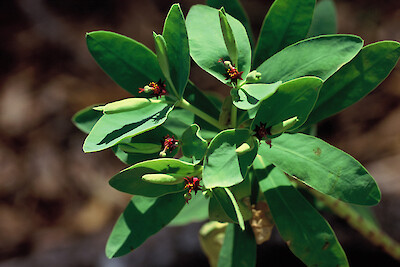
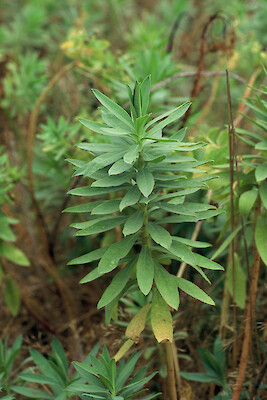
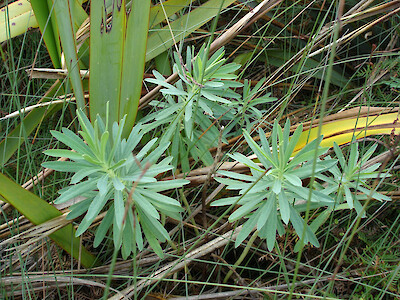
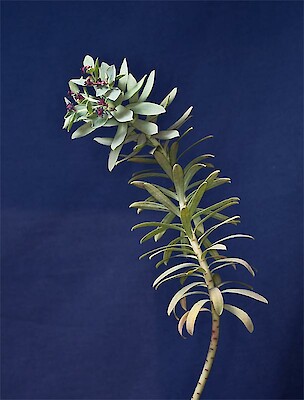
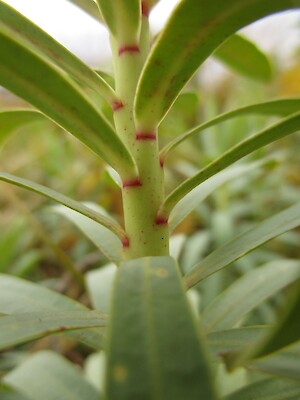
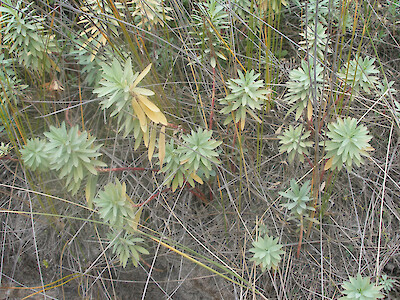
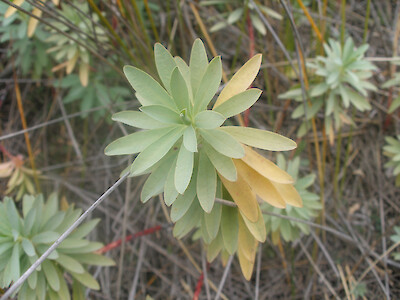
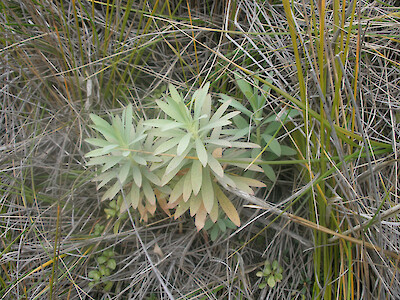
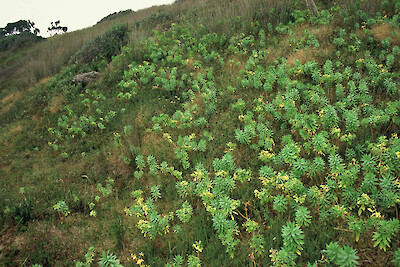
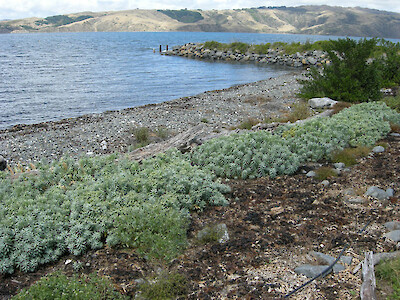
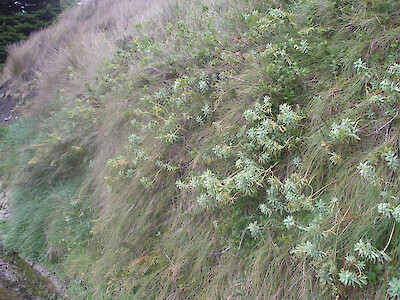
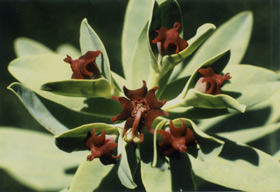
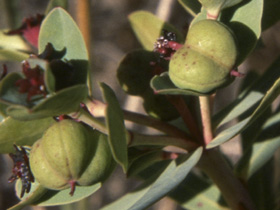
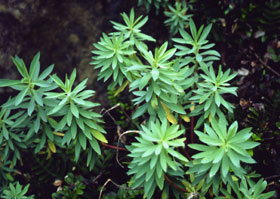
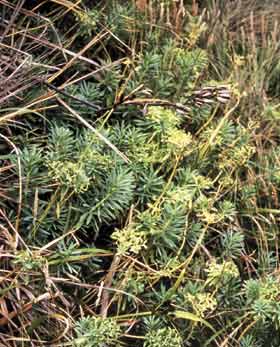
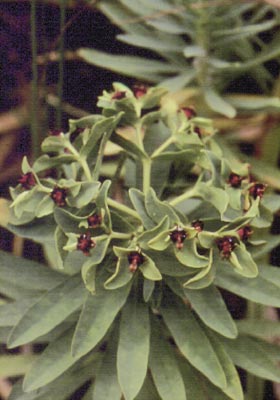
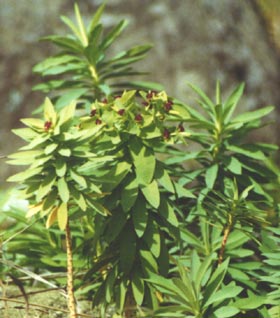
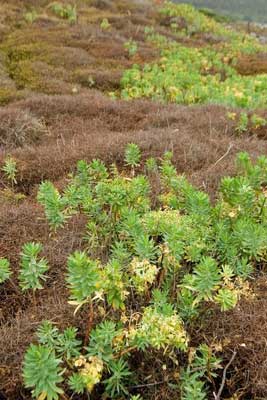
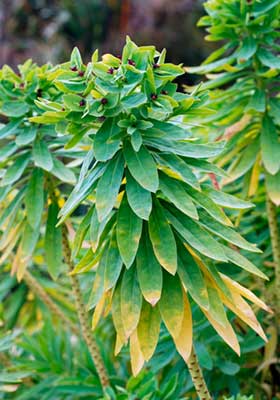
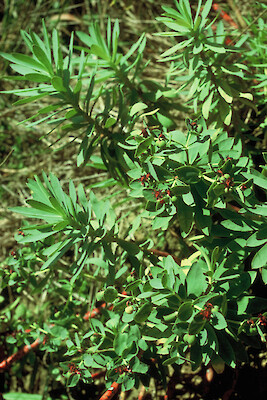
Perennial herb with multiple erect stems up to 1 m tall and underground rhizomes. Stems reddish; leaves alternate, blue-green. Flowers in terminal bunches, each flower surrounded by a deep red cup-like structure with purple glands. Sap a burning milky juice. Flowers are produced from October to February and fruit occur from December to May.
Similar taxa
The milky sap distinguishes it from many other coastal herbs. The large cigar-shaped leaves and red cups around the flower-like inflorescences (‘cyanthia’) distinguish this species from other Euphorbia species.
Distribution
Endemic to New Zealand and the Chatham Islands.
Habitat
Coastal cliffs, banks and talus slopes, sand dunes and rocky lake shore scarps.
Threats
Domestic and feral cattle, sheep, pigs and possums are the major threats throughout this species range, mainly through browse and trampling. Competition from taller vegetation is significant at many sites. Coastal development (e.g., road widening) and erosion are further common threats to most populations. Population fragmentation makes the remnants vulnerable to sudden decline. Some populations on the West Coast of the South Island appear to have succumbed to a fungal disease.
Detailed taxonomy
Genus
Family
Synonyms
None
Endemic taxon
Yes
Endemic genus
No
Endemic family
No
Ecology
Flowering
September to March (sporadic flowering throughout the year can occur)
Fruiting
December to July
Life cycle and dispersal
Pappate cypselae are dispersed by wind and water (Thorsen et al., 2009).
Propagation technique
Easy from fresh seed, cuttings and the division of whole plants.
Other information
Etymology
euphorbia: After Euphorbus, a Greek physician who served King Juba of Numidia in 12BC. Juba named a cactus to honour Euphorbus and later Linnaeus named the entire genus after the physician.
glauca: Bloom has thin powder
NVS code
The National Vegetation Survey (NVS) Databank is a physical archive and electronic databank containing records of over 94,000 vegetation survey plots - including data from over 19,000 permanent plots. NVS maintains a standard set of species code abbreviations that correspond to standard scientific plant names from the Ngä Tipu o Aotearoa - New Zealand Plants database.
EUPGLA
Chromosome number
2n = 20
Previous conservation statuses
The conservation status of all known New Zealand vascular plant taxa at the rank of species and below were reassessed in 2022-2023 using the New Zealand Threat Classification System (NZTCS) – more information about this can be found on the NZTCS website. This report includes replaces all previous NZTCS lists for vascular plants. Previous assessments can be found here.
- Conservation status of vascular plants in Aotearoa New Zealand, 2023. 2024. Peter J. de Lange, Jane Gosden, Shannel P. Courtney, Alexander J. Fergus, John W. Barkla, Sarah M. Beadel, Paul D. Champion, Rowan Hindmarsh-Walls, Troy Makan and Pascale Michel Department of Conservation. Source: NZTCS and licensed by DOC for reuse under the Creative Commons Attribution 4.0 International licence.
2017 | At Risk – Declining | Qualifiers: CD
2012 | At Risk – Declining | Qualifiers: CD
2009 | At Risk – Declining | Qualifiers: CD
2004 | Serious Decline
Regional conservation statuses
Auckland: 2025 | Regionally Threatened – Regionally Endangered | Qualifiers: PF
The regional threat classification system leverages off the national assessments in the NZTCS, providing information relevant for the regional context. Auckland conservation status information is sourced from the “Conservation status of vascular plant species in Tāmaki Makaurau / Auckland” Simpkins E et al. (2025) report.
Otago: 2025 | Regionally Threatened – Regionally Critical | Qualifiers: CI, PF, RF, RR
The regional threat classification system leverages off the national assessments in the NZTCS, providing information relevant for the regional context. Otago conservation status information is sourced from the “Conservation Status of Indigenous Vascular Plants in Otago, 2025” Jarvie S et al. (2025) report.
Referencing and citations
References and further reading
Thorsen, M. J.; Dickinson, K. J. M.; Seddon, P. J. 2009. Seed dispersal systems in the New Zealand flora. Perspectives in Plant Ecology, Evolution and Systematics 11: 285-309
Attribution
Fact sheet prepared by P.J. de Lange for NZPCN (1 June 2013)
NZPCN Fact Sheet citation
Please cite as: de Lange, P.J. (Year at time of access): Euphorbia glauca Fact Sheet (content continuously updated). New Zealand Plant Conservation Network. https://www.nzpcn.org.nz/flora/species/euphorbia-glauca/ (Date website was queried)