
Urtica perconfusa
Common name
swamp nettle
Synonyms
Urtica incisa var. linearifolia Hook.f.; Urtica linearifolia (Hook.f.) Cockayne
Family
Urticaceae
Flora category
Vascular – Native
Endemic taxon
Yes
Endemic genus
No
Endemic family
No
Structural class
Herbs - Dicotyledons other than Composites
NVS code
The National Vegetation Survey (NVS) Databank is a physical archive and electronic databank containing records of over 94,000 vegetation survey plots - including data from over 19,000 permanent plots. NVS maintains a standard set of species code abbreviations that correspond to standard scientific plant names from the Ngä Tipu o Aotearoa - New Zealand Plants database.
URTLIN
Chromosome number
2n = 24
Current conservation status
The conservation status of all known New Zealand vascular plant taxa at the rank of species and below were reassessed in 2017 using the New Zealand Threat Classification System (NZTCS) – more information about this can be found on the NZTCS website. This report includes a statistical summary and brief notes on changes since 2012 and replaces all previous NZTCS lists for vascular plants.
Please note, threat classifications are often suggested by authors when publications fall between NZTCS assessment periods – an interim threat classification status has not been assessed by the NZTCS panel.
- Conservation status of New Zealand indigenous vascular plants, 2017 . 2018. Peter J. de Lange, Jeremy R. Rolfe, John W. Barkla, Shannel P. Courtney, Paul D. Champion, Leon R. Perrie, Sarah M. Beadel, Kerry A. Ford, Ilse Breitwieser, Ines Schönberger, Rowan Hindmarsh-Walls, Peter B. Heenan and Kate Ladley. Department of Conservation. Source: NZTCS and licensed by DOC for reuse under the Creative Commons Attribution 4.0 International licence.
2017 | At Risk – Declining | Qualifiers: Sp
Previous conservation statuses
2012 | At Risk – Declining | Qualifiers: Sp
2009 | At Risk – Declining | Qualifiers: Sp
2004 | Gradual Decline
Brief description
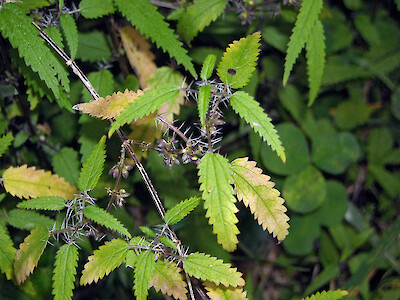
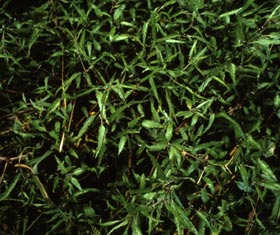
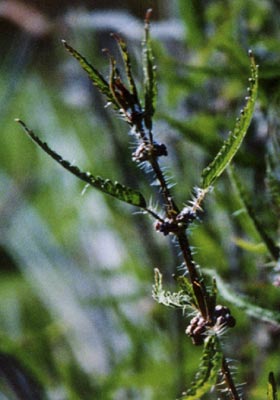
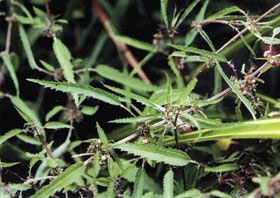
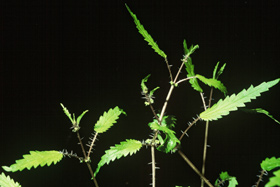
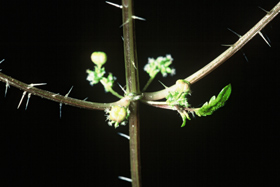
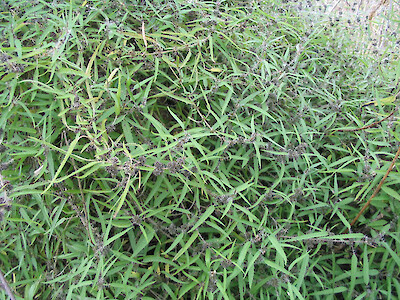
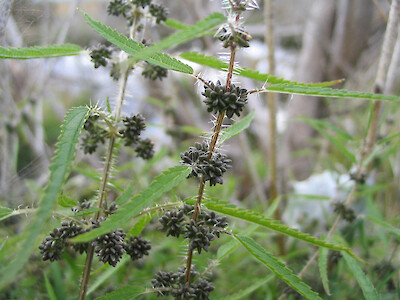
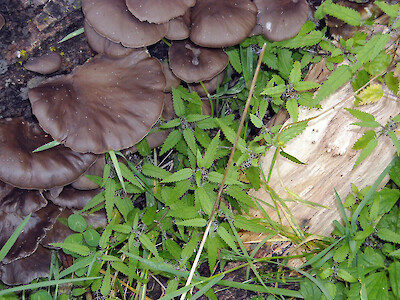
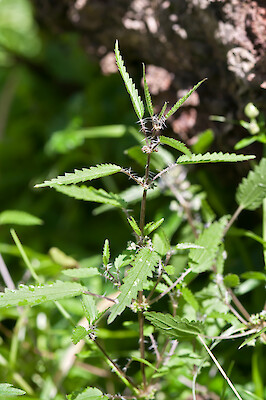
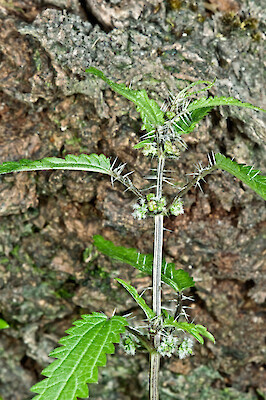
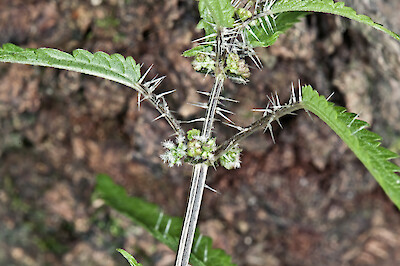
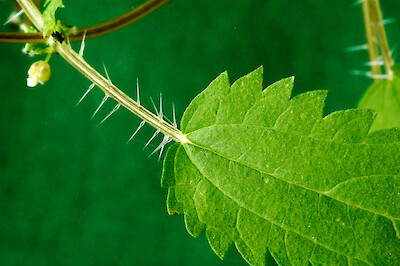
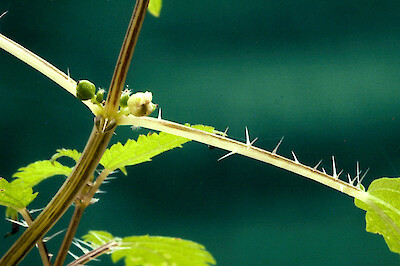
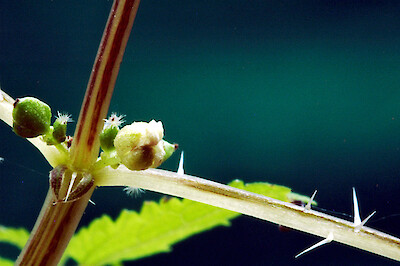
Scrambling to sprawling, much-branched herb forming patches up to 2 m long. All parts covered in stinging hairs (these conspicuous but sparse on leaves). Leaves narrow, 40–100 × 4–10 mm, margins sharply toothed. Flowers green to reddish, clustered in short spikes in leaf axils.
Distribution
Endemic. New Zealand - and North and South Island s from the Central North Island south.
Habitat
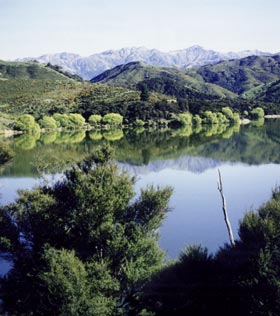
Fertile, lowland swamps, lakes and river margins, swampy shrubland and forest, often growing over tree stumps and rushes or through dense sedges such as swards of Carex secta.
Wetland plant indicator status rating
Information derived from the revised national wetland plant list prepared to assist councils in delineating and monitoring wetlands (Clarkson et al., 2021 Manaaki Whenua – Landcare Research Contract Report LC3975 for Hawke’s Bay Regional Council). The national plant list categorises plants by the extent to which they are found in wetlands and not ‘drylands’. The indicator status ratings are OBL (obligate wetland), FACW (facultative wetland), FAC (facultative), FACU (facultative upland), and UPL (obligate upland). If you have suggestions for the Wetland Indicator Status Rating, please contact: [Enable JavaScript to view protected content]
FACW: Facultative Wetland
Usually is a hydrophyte but occasionally found in uplands (non-wetlands).
Detailed description
Lianoid, slender, perennial, rhizomatous herb 0.45–2.0 m, usually much-branched, scrambling or climbing. Stem indumentum of few stinging hairs with pluricellular base c. 0.2–0.5 mm overall and erect setae 0.2–0.4 mm long and few simple trichomes 0.2–0.3 mm long. Leaf lamina 40–100 × 4–10 mm narrowly ovate; surface sparsely pubescent with short simple trichomes 0.2–0.5 mm long and few stinging hairs (abaxially only on the veins), adaxially with punctiform cystoliths; leaf base rounded; margins regularly dentate, rarely doubly dentate, with 12–20 teeth on each side; leaf apex acuminate; lamina thinly membranaceous; stipules free (4 per node) 2–4 mm long; petioles thin, flexuose, 15–45 mm long. Plants monoecious. Staminate flowers with tepals c. 1.3–1.8 mm long. Pistillate flowers with short tepals 0.5–0.8 mm long and long tepals 0.8–1.2 mm long, sparsely pubescent, esetulose. Inflorescence glomerulous, 3–10 mm long, usually shorter than petioles. Mature fruit with longer tepals 1.2–1.5 mm long, achenes subcircular in outline, rounded at base and at the tip, laterally flattened, c. 1.2–2.0 × 0.8–1.3 mm.
Similar taxa
Easily distinguished from all other New Zealand nettles (Urtica) by the vine-like (lianoid) stems, sprawling growth habit, narrowly ovate leaves with rounded bases and by the inflorescences which are glomerulose, and 3–10 mm long
Flowering
Flowering occurs throughout the year
Flower colours
Green, Red/Pink
Fruiting
Fruits may be found throughout the year
Propagation technique
Very easy from rooted pieces, stem cuttings and fresh seed. Often spontaneously self-sows in cultivation.
Threats
A sparsely distributed species of lowland to montane lake margins and fertile to semi-fertile wetlands. Easily overlooked because of its penchant for grow at the base of Carex secta trunks, or threaded through Phormium tenax. Being an adaptable species it is often found within willow (Salix spp.) car, sometimes as a low epiphyte on willow trunks. In all these habitats it is at risk from wetland clearance, drainage and also the spread of weeds such as wandering jew (Tradescantia fluminensis). Some large populations in the Horowhenua have been destroyed by the canalisation of streams and through willow control.
Etymology
urtica: From the Latin verb urere which means “to burn”
Where To Buy
Not commercially available. Some plants are held by specialist native plant growers and botanic gardens. An attractive plant but with a vicious sting! Will hybridise readily with U. aspera and U. sykesii. Such hybrids have been collected from the wild and in cultivation.
Attribution
Fact Sheet by Peter J. de Lange (15 February 2016). Description based on Grosse-Veldmann et al. (2016).
References and further reading
Grosse-Veldmann, B.; Conn, B.J.; Weigend, M. 2016: Weeding the nettles IV: A redefinition of Urtica incisa and allies in New Zealand and Australia, including the segregation of two new species Urtica sykesii and U. perconfusa. Phytotaxa 245(4): 251-261.
NZPCN Fact Sheet citation
Please cite as: de Lange, P.J. (Year at time of access): Urtica perconfusa Fact Sheet (content continuously updated). New Zealand Plant Conservation Network. https://www.nzpcn.org.nz/flora/species/urtica-perconfusa/ (Date website was queried)