
Pleurophyllum criniferum
Biostatus
Native – Endemic taxon
Current conservation status
The conservation status of all known New Zealand vascular plant taxa at the rank of species and below were reassessed in 2022-2023 using the New Zealand Threat Classification System (NZTCS) – more information about this can be found on the NZTCS website. This report includes replaces all previous NZTCS lists for vascular plants. Previous assessments can be found here.
- Conservation status of vascular plants in Aotearoa New Zealand, 2023. 2024. Peter J. de Lange, Jane Gosden, Shannel P. Courtney, Alexander J. Fergus, John W. Barkla, Sarah M. Beadel, Paul D. Champion, Rowan Hindmarsh-Walls, Troy Makan and Pascale Michel Department of Conservation. Source: NZTCS and licensed by DOC for reuse under the Creative Commons Attribution 4.0 International licence.
2023 | At Risk – Naturally Uncommon | Qualifiers: PD, RR
Category
Vascular
Structural class
Herbs - Dicotyledonous composites
Flower colours
Orange, Purple, Red/Pink, Violet/Purple
Detailed description
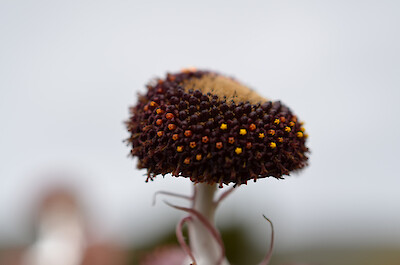
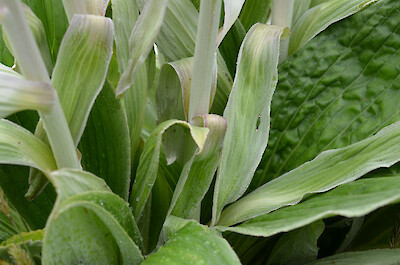
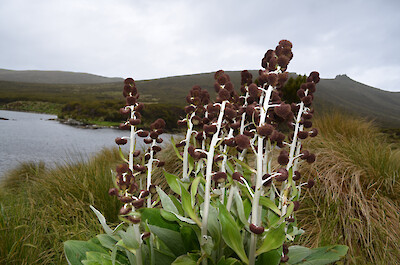
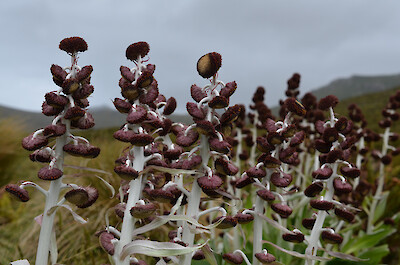
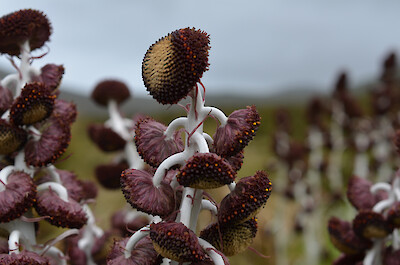
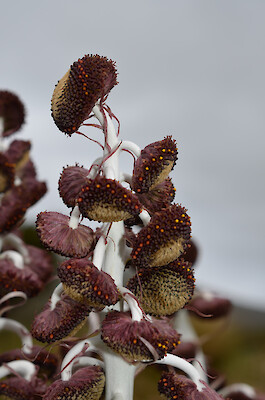
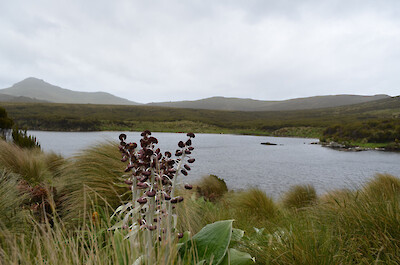
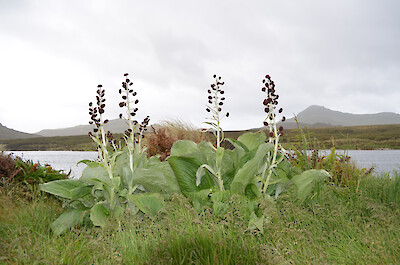
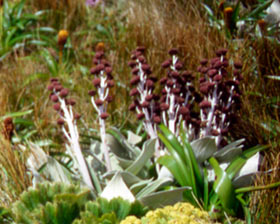
Radical leaves ascending, up to > 1 m long including petiole; lamina of diverse shape, usually of oblong-ovate to broadly lanceolate order, clad below in thin appressed white tomentum, above in scattered setose and moniliform hairs, submembr.; ribs up to 20, less prominent than in P. speciosum; margins rather distantly and obscurely crenate with conspicuous linear hydathodes. Scapes stout, grooved, up to 2 m tall; lower leaves linear-oblong, diminishing to linear bracts. Capitula c.15-30, in elongate racemes; ray-florets short, inconspicuous; disk-florets purple. Involucral bracts acuminate, ciliate. Achenes densely strigose. Pappus-hairs slightly thickened at tips
Similar taxa
Distinguished from Pleurophyllum speciosum by the submembranous, distinctly petioled leaves, and inconspicuous ray-florets. Pleurophyllum hookeri differs from both P. criniferum and P. speciosum by having leaves with both sides covered with silvery appressed tomentum.
Distribution
Endemic. Auckland, Campbell and Antipodes Islands
Habitat
Coastal and lower montane peaty herbfield
Threats
A naturally uncommon endemic. Widespread within its island habitants. The subantarctic islands on which it occurs are Nature Reserves and World Heritage sites with access only by permit, and strictly limited as to numbers of people.
Detailed taxonomy
Genus
Family
Synonyms
Pleurophyllum hombronii Decne; Albinia oresigenesa Homb. et Jacq. ex Decne
Endemic taxon
Yes
Endemic genus
Yes
Endemic family
No
Ecology
Flowering
December – February
Fruiting
January – May
Propagation technique
Difficult. Should not be removed from the wild
Other information
Etymology
pleurophyllum: From Greek pleuro- (rib, side) and phyllo- (leaf) components meaning ‘ribbed-leaved’.
Previous conservation statuses
The conservation status of all known New Zealand vascular plant taxa at the rank of species and below were reassessed in 2022-2023 using the New Zealand Threat Classification System (NZTCS) – more information about this can be found on the NZTCS website. This report includes replaces all previous NZTCS lists for vascular plants. Previous assessments can be found here.
- Conservation status of vascular plants in Aotearoa New Zealand, 2023. 2024. Peter J. de Lange, Jane Gosden, Shannel P. Courtney, Alexander J. Fergus, John W. Barkla, Sarah M. Beadel, Paul D. Champion, Rowan Hindmarsh-Walls, Troy Makan and Pascale Michel Department of Conservation. Source: NZTCS and licensed by DOC for reuse under the Creative Commons Attribution 4.0 International licence.
2017 | At Risk – Naturally Uncommon | Qualifiers: RR
2012 | At Risk – Naturally Uncommon | Qualifiers: RR
2009 | At Risk – Naturally Uncommon
2004 | Range Restricted
Referencing and citations
References and further reading
Allan HH. 1961. Flora of New Zealand, Volume I. Indigenous Tracheophyta: Psilopsida, Lycopsida, Filicopsida, Gymnospermae, Dicotyledones. Government Printer, Wellington, NZ. 1085 p.
Attribution
Description adapted from: Allan, H.H. 1961: Flora of New Zealand