
Pterophylla racemosa

Past favourite plant finalist
Common names
kāmahi, tawheo, tawhero, tawherowhero
Biostatus
Native – Endemic taxon
Current conservation status
The conservation status of all known New Zealand vascular plant taxa at the rank of species and below were reassessed in 2022-2023 using the New Zealand Threat Classification System (NZTCS) – more information about this can be found on the NZTCS website. This report includes replaces all previous NZTCS lists for vascular plants. Previous assessments can be found here.
- Conservation status of vascular plants in Aotearoa New Zealand, 2023. 2024. Peter J. de Lange, Jane Gosden, Shannel P. Courtney, Alexander J. Fergus, John W. Barkla, Sarah M. Beadel, Paul D. Champion, Rowan Hindmarsh-Walls, Troy Makan and Pascale Michel Department of Conservation. Source: NZTCS and licensed by DOC for reuse under the Creative Commons Attribution 4.0 International licence.
2023 | Not Threatened
Category
Vascular
Structural class
Trees & Shrubs - Dicotyledons
Simplified description
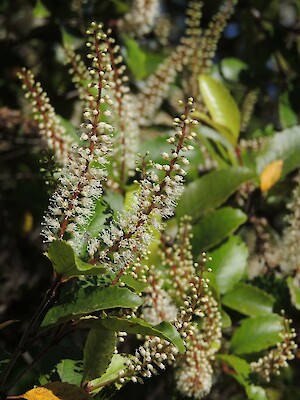
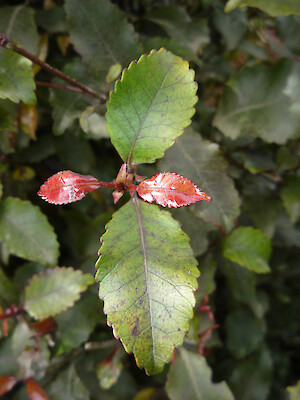
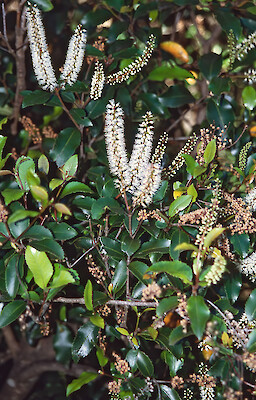
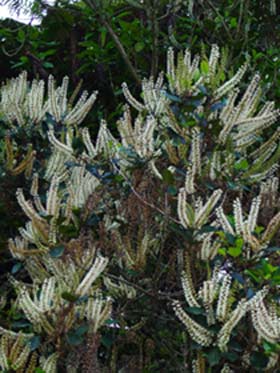
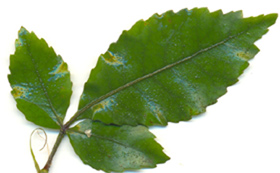
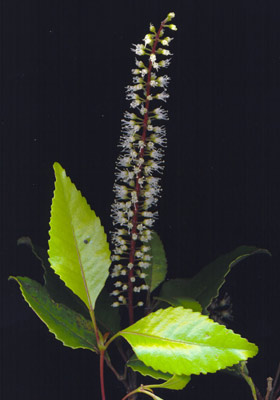
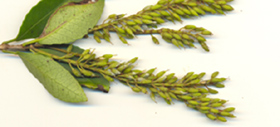
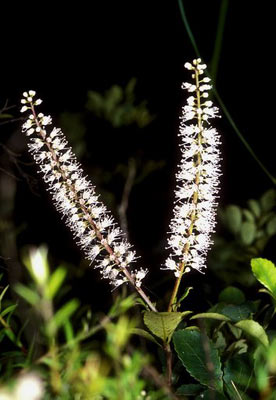
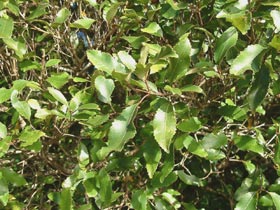
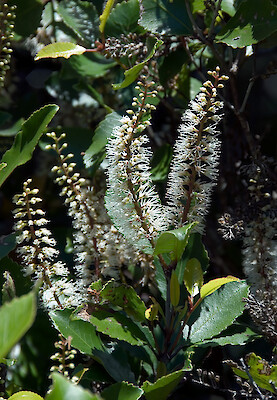
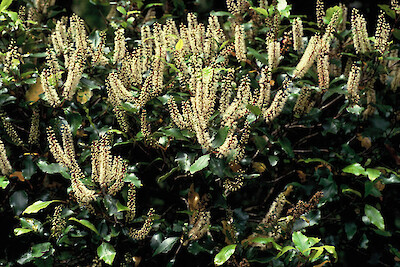
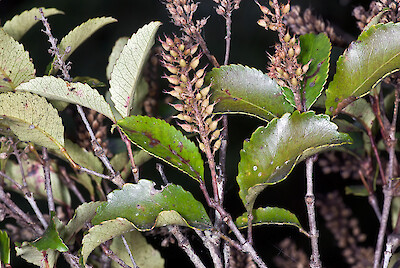
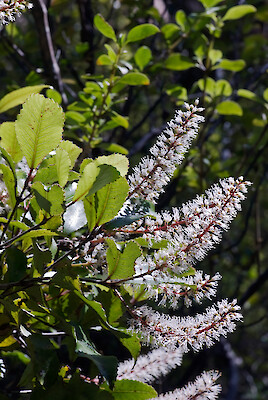
Tree to small shrub, young stems bearing deciduous stipules, leaves variable but as adults most simple, with deeply toothed margins, flowers white or pink, clustered in spike-like racemes
Flower colours
White
Detailed description
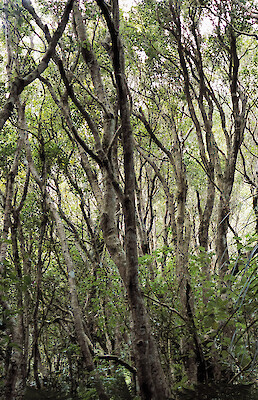
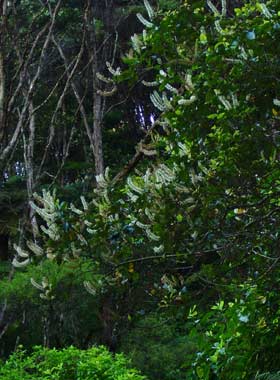
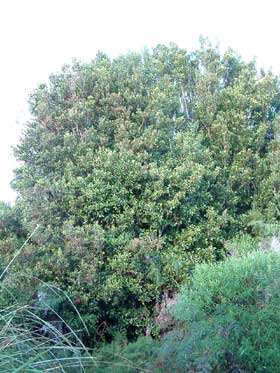
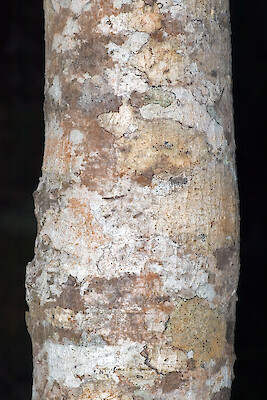
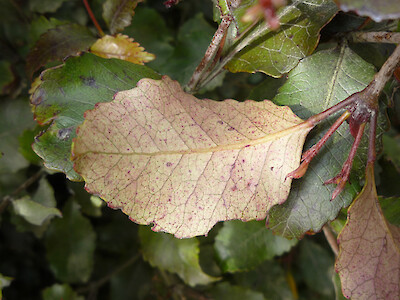
Tree up to 28 m tall often forming a narrowly domed canopy (but this will vary according to local conditions). Trunk up to 1.2 m diameter. Branches numerous, erect to spreading, Foliage heterophyllous, with distinct seedling, juvenile and adult leaves (reversion shoots common). Stipules caducous, 3–6 mm long, lanceolate, finely pubescent, yellow-green to pinkish. Seedling and juvenile leaves membranous to subcoriaceous, 10–60 × 10–30 mm; lamina simple to 3-lobed or 3-foliolate, ovate-elliptic to elliptic or lanceolate, apices subacute to acute, margins serrate to incised-serrate; adult leaves coriaceous, on petioles up to 20 mm long, lamina 30–100 × 20–40 mm lamina simple, elliptic, ovate-elliptic to broad-ovate, apices obtuse to subacute, margins rather coarsely, bluntly serrate. Inflorescences racemose; racemes 60–140 mm long, rachises and pedicels finely, pilose-pubescent; pedicels 2–4 mm long, clustered, ascending to spreading. Sepals 1.0–1.5 mm. long, ovate, persistent. Petals 4–(5), 2–3 mm long, ovate-oblong, white, cream or pale pink. Stamens 8–10, exserted; filaments up 10 mm long, white or pinkish white; anthers 0.2–0.3 mm diameter, cream. Nectaries 8, red; ovary, narrowly ovoid 0.8 mm diameter, covered in appressed hairs, carpels 2, free almost to base. Pistils: styles 3–4 mm long, pale pink, persistent; stigma 0.2–0.4 mm, pink or pale pink, punctate. Fruit a pubescent, broadly cylindrical capsule 4.0–5.8 × 2.7–3.1 mm, initially greyish drying honey-brown or dark brown. Seeds numerous, 1.0–1.5 mm long, narrowly elliptic to elliptic-oblong, orange-brown, apices bearing dense hair tufts, otherwise glabrous.
Distribution
Endemic. North Island, South Island and Stewart Island/Rakiura. The exact northern limits of Pterophylla racemosa are uncertain but probably lie somewhere along the Manukau Harbour and Hunua Ranges across the Kamai Range. North of here the distinction between P. racemosa and P. sylvicola is often confused. This needs further study.
Habitat
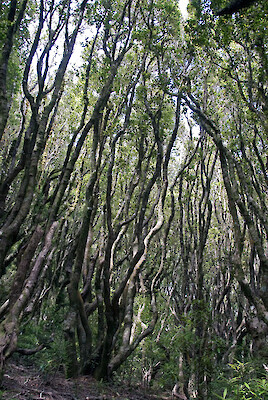
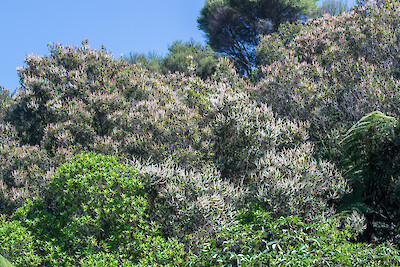
Coastal to subalpine. A widespread and common tree of disturbed habitats in coastal and lowland to montane forest, often becoming locally dominant in higher elevation montane forest in the higher ranges of the North Island and western South Island.
Detailed taxonomy
Genus
Family
Synonyms
Weinmannia racemosa L.f.
Endemic taxon
Yes
Endemic genus
No
Endemic family
No
Ecology
Flowering
July–January
Fruiting
October–May
Propagation technique
Easily grown from fresh seed. Can also be grown from semi-hardwood cuttings. This is an attractive tree tolerant of a wide range of conditions and soil types though it does best in high light, and in free-draining soil. The flowers are very attractive to a range of insects and birds.
Wetland plant indicator status rating
Information derived from the revised national wetland plant list prepared to assist councils in delineating and monitoring wetlands (Clarkson et al., 2021 Manaaki Whenua – Landcare Research Contract Report LC3975 for Hawke’s Bay Regional Council). The national plant list categorises plants by the extent to which they are found in wetlands and not ‘drylands’. The indicator status ratings are OBL (obligate wetland), FACW (facultative wetland), FAC (facultative), FACU (facultative upland), and UPL (obligate upland). If you have suggestions for the Wetland Indicator Status Rating, please contact: [Enable JavaScript to view protected content]
FACU: Facultative Upland
Occasionally is a hydrophyte but usually occurs in uplands (non-wetlands).
Other information
Etymology
racemosa: Raceme bearing
NVS code
The National Vegetation Survey (NVS) Databank is a physical archive and electronic databank containing records of over 94,000 vegetation survey plots - including data from over 19,000 permanent plots. NVS maintains a standard set of species code abbreviations that correspond to standard scientific plant names from the Ngä Tipu o Aotearoa - New Zealand Plants database.
PTERAC
Chromosome number
2n = 30
Previous conservation statuses
The conservation status of all known New Zealand vascular plant taxa at the rank of species and below were reassessed in 2022-2023 using the New Zealand Threat Classification System (NZTCS) – more information about this can be found on the NZTCS website. This report includes replaces all previous NZTCS lists for vascular plants. Previous assessments can be found here.
- Conservation status of vascular plants in Aotearoa New Zealand, 2023. 2024. Peter J. de Lange, Jane Gosden, Shannel P. Courtney, Alexander J. Fergus, John W. Barkla, Sarah M. Beadel, Paul D. Champion, Rowan Hindmarsh-Walls, Troy Makan and Pascale Michel Department of Conservation. Source: NZTCS and licensed by DOC for reuse under the Creative Commons Attribution 4.0 International licence.
2017 | Not Threatened
2012 | Not Threatened
2009 | Not Threatened
2004 | Not Threatened
Regional conservation statuses
Auckland: 2025 | Regionally Data Deficient
Current regional threat status assessments prepared according to Crisp et al. (2025) are displayed when available. The Auckland conservation status information is sourced from the “Conservation status of vascular plant species in Tāmaki Makaurau / Auckland” Simpkins E et al. 2025 report.
Otago: 2025 | Regionally Not Threatened
Current regional threat status assessments prepared according to Crisp et al. (2025) are displayed when available. The Otago conservation status information is sourced from the “Conservation Status of Indigenous Vascular Plants in Otago, 2025” Jarvie S et al. (2025) report.
Wellington: 2025 | Regionally Not Threatened
Current regional threat status assessments prepared according to Crisp et al. (2025) are displayed when available. The Wellington conservation status information is sourced from the “Conservation status of indigenous vascular plants in the Wellington region” Enright P et al. 2025 report.
Referencing and citations
References and further reading
McKenzie R. 1960. The distributional overlap of Weinmannia sylvicola and Weinmannia racemosa. Auckland Botanical Society Journal 17: 7–8.
Attribution
Fact sheet prepared for NZPCN by P.J. de Lange (13 October 2012). Description prepared by P.J. de Lange.
NZPCN Fact Sheet citation
Please cite as: de Lange, P.J. (Year at time of access): Pterophylla racemosa Fact Sheet (content continuously updated). New Zealand Plant Conservation Network. https://www.nzpcn.org.nz/flora/species/pterophylla-racemosa/ (Date website was queried)