
New Zealand Plant Conservation Network
  • Member login
  • Join
Facebook
  • Home
  • Flora
    • Flora species
    • Tag names
    • Vascular
    • Non-vascular
    • Lichens
    • Plant identification
    • Fungi
    • Make your own book
    • Quiz
  • Threats
    • Exotic Plants (Weeds)
    • Pest Animals
    • Other threats
  • Ecosystems
    • Plant communities
    • Ecosystem services
    • Novel ecosystems
  • Publications
    • Documents
    • Newsletter
    • Plant lists
    • Botanical Society journals
    • NZPCN publications
  • Conservation
    • Seedbank
    • Training
    • Restoration
    • Monitoring
    • Habitat protection
    • Funding
    • Botanic gardens
    • Botanic Societies
  • NZPCN
    • News
    • Trilepidea newsletter
    • Events
    • David Given Scholarship
    • Council members
    • Awards
    • Shop
    • Donate
    • Favourite Plant
    • Why join NZPCN?
    • Join
  • Help
    • FAQ
    • Query
    • Glossary
  • Contact us

Search flora

  1. Tracheophyta
    • Tracheophyta
  2. Magnoliopsida
    • Lycopodiopsida
    • Magnoliopsida
    • Pinopsida
    • Polypodiopsida
  3. Asterales
    • Alismatales
    • Apiales
    • Arecales
    • Asparagales
    • Asterales
    • Boraginales
    • Brassicales
    • Canellales
    • Caryophyllales
    • Celastrales
    • Chloranthales
    • Crossosomatales
    • Cucurbitales
    • Dioscoreales
    • Ericales
    • Fabales
    • Fagales
    • Gentianales
    • Geraniales
    • Gunnerales
    • Lamiales
    • Laurales
    • Liliales
    • Malpighiales
    • Malvales
    • Myrtales
    • Nymphaeales
    • Oxalidales
    • Pandanales
    • Paracryphiales
    • Piperales
    • Poales
    • Proteales
    • Ranunculales
    • Rosales
    • Santalales
    • Sapindales
    • Saxifragales
    • Solanales
  4. Campanulaceae
    • Alseuosmiaceae
    • Argophyllaceae
    • Asteraceae
    • Campanulaceae
    • Goodeniaceae
    • Menyanthaceae
    • Rousseaceae
    • Stylidiaceae
  5. Lobelia
    • Lobelia
    • Wahlenbergia
  6. Lobelia physaloides
    • Lobelia physaloides
    • Lobelia ionantha
    • Lobelia linnaeoides
    • Lobelia roughii
    • Lobelia angulata
    • Lobelia arenaria
    • Lobelia macrodon
    • Lobelia perpusilla
    • Lobelia fatiscens
    • Lobelia anceps
    • Lobelia glaberrima
    • Lobelia carens
    • Lobelia fugax
    • Lobelia pedunculata
    • Lobelia purpurascens
    • Lobelia erinus
    • Lobelia ×gerardii
    • Lobelia siphilitica
    • Lobelia laxiflora

Lobelia physaloides

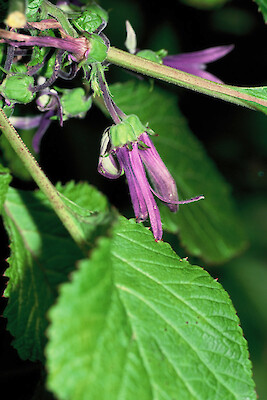
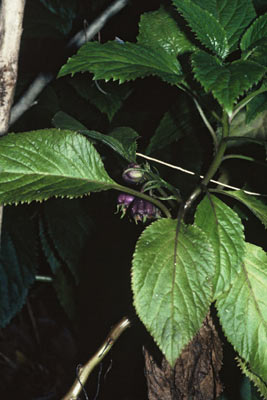
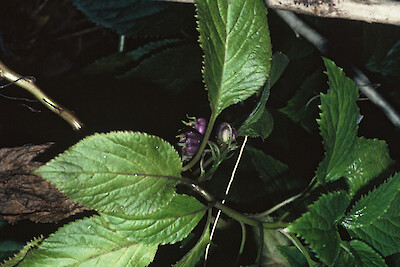
Te Paki.<br>Photographer: Gillian M. Crowcroft, Licence: All rights reserved. <a class='member-message' href='/nzpcn/why-join-nzpcn/' target='_blank'>Members can view a larger version of this image.</a>
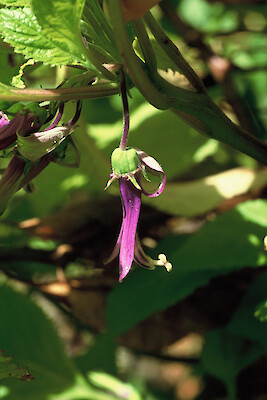
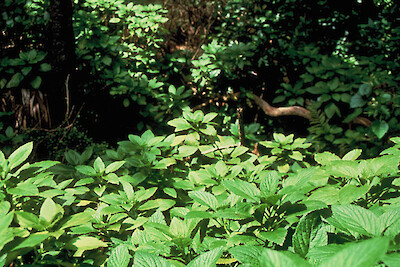
Spirits Bay (November).<br>Photographer: John Smith-Dodsworth, Licence: <a target='_blank' href='https://creativecommons.org/licenses/by-nc/4.0'>CC BY-NC</a>.
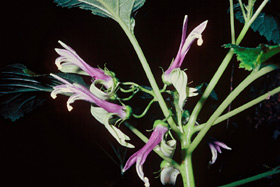
Spirits Bay (in November).<br>Photographer: John Smith-Dodsworth, Licence: <a target='_blank' href='https://creativecommons.org/licenses/by-nc/4.0'>CC BY-NC</a>.
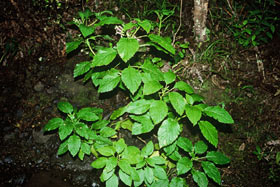
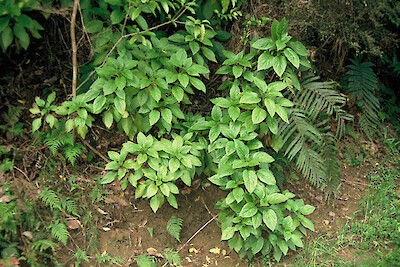
Whangaroa Harbour, Nov 1993.<br>Photographer: Gillian M. Crowcroft, Licence: All rights reserved.
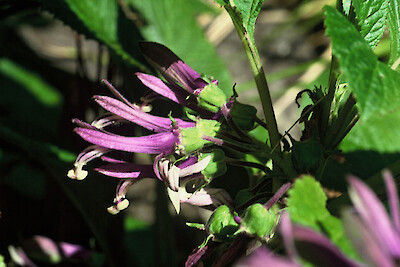
Whangaroa Harbour.<br>Photographer: Gillian M. Crowcroft, Licence: All rights reserved. <a class='member-message' href='/nzpcn/why-join-nzpcn/' target='_blank'>Members can view a larger version of this image.</a>
Upper Tasman Valley.<br>Photographer: Peter J de Lange, Licence: <a target='_blank' href='https://creativecommons.org/licenses/by-nc/4.0'>CC BY-NC</a>. <a class='member-message' href='/nzpcn/why-join-nzpcn/' target='_blank'>Members can view a larger version of this image.</a>
Te Paki.<br>Photographer: Gillian M. Crowcroft, Licence: All rights reserved. <a class='member-message' href='/nzpcn/why-join-nzpcn/' target='_blank'>Members can view a larger version of this image.</a>
Whangaroa Harbour.<br>Photographer: Gillian M. Crowcroft, Licence: All rights reserved. <a class='member-message' href='/nzpcn/why-join-nzpcn/' target='_blank'>Members can view a larger version of this image.</a>
Colensoa physaloides at Totara North.<br>Photographer: Bill Campbell, Date taken: 02/08/2007, Licence: <a target='_blank' href='https://creativecommons.org/licenses/by-nc/4.0'>CC BY-NC</a>. <a class='member-message' href='/nzpcn/why-join-nzpcn/' target='_blank'>Members can view a larger version of this image.</a>
Colensoa physaloides at Whatuwhiwhi, Karikari Peninsula.<br>Photographer: Bill Campbell, Date taken: 27/03/2008, Licence: <a target='_blank' href='https://creativecommons.org/licenses/by-nc/4.0'>CC BY-NC</a>. <a class='member-message' href='/nzpcn/why-join-nzpcn/' target='_blank'>Members can view a larger version of this image.</a>
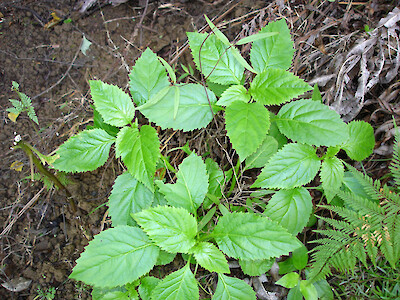
In cultivation, Mangonui.<br>Photographer: Ian Ivey, Date taken: 03/05/2018, Licence: <a target='_blank' href='https://creativecommons.org/licenses/by-nc/4.0'>CC BY-NC</a>.
In cultivation, Mangonui.<br>Photographer: Ian Ivey, Date taken: 19/05/2019, Licence: <a target='_blank' href='https://creativecommons.org/licenses/by-nc/4.0'>CC BY-NC</a>.
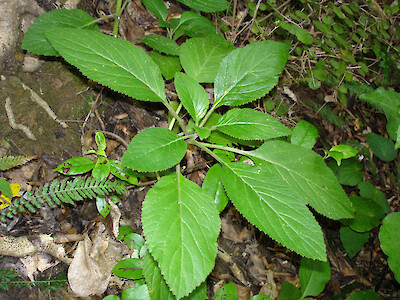
Photographer: Ian Ivey, Date taken: 08/06/2021, Licence: <a target='_blank' href='https://creativecommons.org/licenses/by-nc/4.0'>CC BY-NC</a>.
On cut roadside, Waima Northland.<br>Photographer: Marley Ford, Date taken: 09/05/2024, Licence: <a target='_blank' href='https://creativecommons.org/licenses/by/4.0'>CC BY</a>. <a class='member-message' href='/nzpcn/why-join-nzpcn/' target='_blank'>Members can view a larger version of this image.</a>
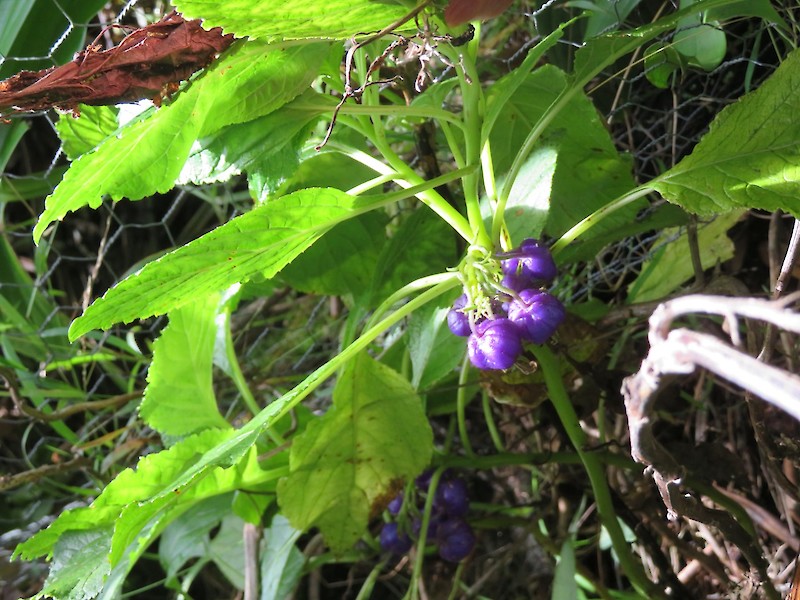
Exposed form in coastal forest opening.<br>Photographer: Marley Ford, Date taken: 11/12/2025, Licence: <a target='_blank' href='https://creativecommons.org/licenses/by-nc/4.0'>CC BY-NC</a>. <a class='member-message' href='/nzpcn/why-join-nzpcn/' target='_blank'>Members can view a larger version of this image.</a>
Download PDF Comment on factsheet

NZPCN members can select up to 20 plant species and automatically create a full colour, fully illustrated A4 book describing them (in PDF format).

  • Find out more...
  • Join NZPCN...
Find in plant lists
iNaturalist NZ View observations Biota of NZ Click here to view NZ Flora Click here to view Traditional Maori Uses Click here to view Herbarium View AVH specimens Donate Support NZPCN
Award ribbon

Past favourite plant finalist

Common names

colensoa, koru

Biostatus

Native – Endemic taxon

Current conservation status

The conservation status of all known New Zealand vascular plant taxa at the rank of species and below were reassessed in 2022-2023 using the New Zealand Threat Classification System (NZTCS) – more information about this can be found on the NZTCS website. This report includes replaces all previous NZTCS lists for vascular plants. Previous assessments can be found here.

  • Conservation status of vascular plants in Aotearoa New Zealand, 2023. 2024. Peter J. de Lange, Jane Gosden, Shannel P. Courtney, Alexander J. Fergus, John W. Barkla, Sarah M. Beadel, Paul D. Champion, Rowan Hindmarsh-Walls, Troy Makan and Pascale Michel Department of Conservation. Source: NZTCS and licensed by DOC for reuse under the Creative Commons Attribution 4.0 International licence.

2023 | Threatened – Nationally Vulnerable | Qualifiers: DPS, DPT, PD

Jump to previous conservation statuses

Category

Vascular

Structural class

Trees & Shrubs - Dicotyledons

Simplified description

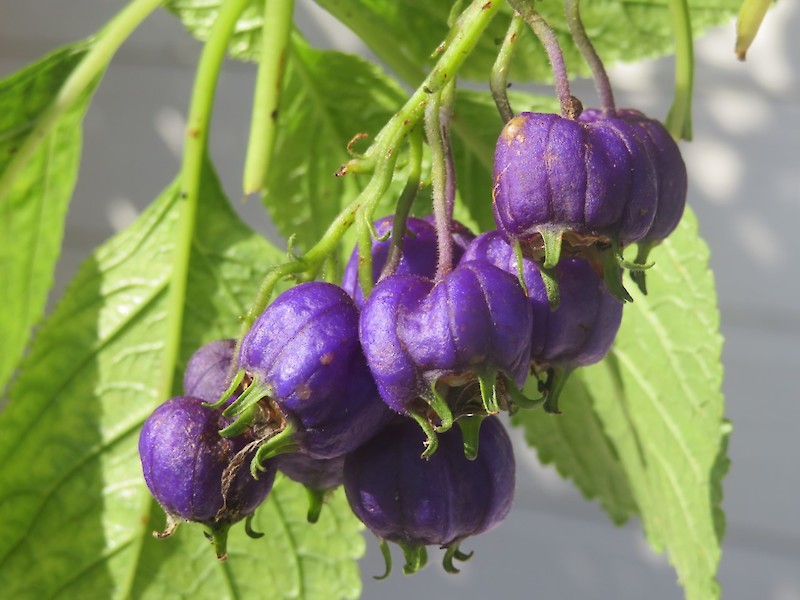
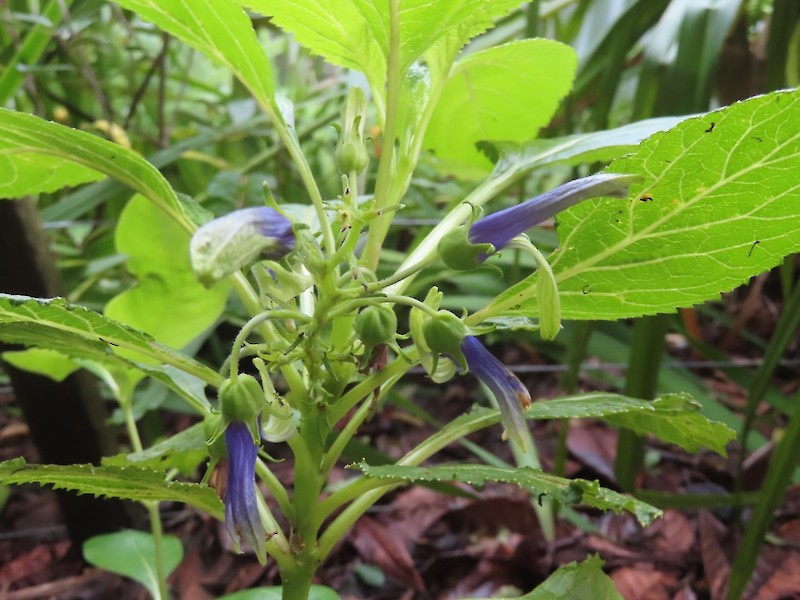
Rare large soft herb with clusters of long tubular purple flowers inhabiting coastal forest of the northern North Island. Leaves large, soft, with many small teeth along margin. Flower base a green cup and on purple fuzzy stalks. Fruit a non-fleshy 10–15 mm wide blueish or white capsule.

Flower colours

Blue, Violet/Purple

Detailed description

Densely branched shrub up to 1 × 1 m. Basal stems and rootstock woody. Branches and branchlets erect to spreading, square in cross-section, green or purple, softly hairy. Petioles stout, fleshy, up to 100 mm long. Leaves alternate, (50)–70–150–(200) × (30)–40–60–(100) mm, membraneous, dark green to green, broad-ovate to ovate-oblong or elliptic oblong, apex acute to subacuminate, glabrescent, or finely hairy, with hairs concentrated on veins, leaf margins coarsely serrate. Inflorescences terminal racemes, (5)–10–15–(20)-flowered. Peduncles pubescent. Flowers on slender, pubescent, pedicels 20 mm long; bracts linear. Calyx lobes 8 mm, narrow-triangular to filiform, ciliolate. Corolla pubescent, 30–50 mm long, violet, dark blue, or rarely white; lower lip 3-toothed, upper deeply 2-cleft. Fruit a subglobose berry, 10–15 mm diameter, blue, white with blue spots or streaks or white. Seed 0.6–0.9 mm, broadly elliptic, broadly obovate or circular, orange to orange-brown.

Similar taxa

None

Distribution

Endemic. New Zealand: Manawatāwhi / Three Kings Islands, North Island (from Te Paki to about Whangarei and Trounson Kauri Forest, Poor Knights Islands, Hen Island / Taranga Island, Rakitu Island). Its remote presence on Rakitu Island off the eastern side of Great Barrier Island suggests that it was probably more widespread on the mainland than the current distribution suggests.

Habitat

Coastal and lowland forest. Often along stream sides, or in damp sites in half-shade. Formerly common in these types of habitats within the more northerly kauri (Agathis australis) forest remnants.

Threats

As a high palatable herb this species has virtually vanished from most of its former mainland habitat. It remains abundant on islands free of browsing animals (such as Manawatāwhi / Three Kings Islands and Poor Knights Islands). On the mainland, plants can be found in locations inaccessible to browsing animals, such as boulder falls and cliff faces and in any location where prolonged animal control or human traffic has reduced or limited the affect of these creatures. If animal browse is removed this species can make a spectacular recovery.

Detailed taxonomy

Genus

Lobelia

Family

Campanulaceae

Authority

Lobelia physaloides A.Cunn.

Synonyms

Colensoa physaloides (A.Cunn.) Hook.f.; Pratia physaloides (A.Cunn.) Hemsley

Taxonomic notes

The generic position of this species has long been debated with various treatments accepting its placement in Lobelia, Pratia or the monotypic Colensoa. The most recent view advocated by Lammers (2011) is that this species is best treated as a Lobelia.

Endemic taxon

Yes

Endemic genus

No

Endemic family

No

Ecology

Flowering

May flower throughout the year. However plants are mostly found in flower between August and January

Fruiting

Fruit may be present throughout the year. However, they are more common between November and March

Life cycle and dispersal

Fleshy berries are dispersed by invertebrate frugivory (Thorsen et al., 2009).

Propagation technique

Easy from fresh seed and cuttings. Very fast growing and ideal in semi-shaded to shaded spots under trees, especially along stream sides. An excellent pot plant.

Other information

Plant of the Month

This plant has been featured as a Plant of the Month – see Trilepidea: NZPCN newsletter for June 2016 for the full story.

Etymology

lobelia: Named after Lobel, pioneer botanist

physaloides: Like a cape gooseberry

NVS code

The National Vegetation Survey (NVS) Databank is a physical archive and electronic databank containing records of over 94,000 vegetation survey plots - including data from over 19,000 permanent plots. NVS maintains a standard set of species code abbreviations that correspond to standard scientific plant names from the Ngä Tipu o Aotearoa - New Zealand Plants database.

LOBPHY

Chromosome number

2n = 26

Previous conservation statuses

The conservation status of all known New Zealand vascular plant taxa at the rank of species and below were reassessed in 2022-2023 using the New Zealand Threat Classification System (NZTCS) – more information about this can be found on the NZTCS website. This report includes replaces all previous NZTCS lists for vascular plants. Previous assessments can be found here.

  • Conservation status of vascular plants in Aotearoa New Zealand, 2023. 2024. Peter J. de Lange, Jane Gosden, Shannel P. Courtney, Alexander J. Fergus, John W. Barkla, Sarah M. Beadel, Paul D. Champion, Rowan Hindmarsh-Walls, Troy Makan and Pascale Michel Department of Conservation. Source: NZTCS and licensed by DOC for reuse under the Creative Commons Attribution 4.0 International licence.

2017 | Threatened – Nationally Vulnerable | Qualifiers: PD

2012 | At Risk – Declining | Qualifiers: PD

2009 | At Risk – Relict | Qualifiers: PD

2004 | Gradual Decline

Jump to current conservation status

Regional conservation statuses

Auckland: 2025 | Regionally Threatened – Regionally Critical | Qualifiers: CI

The regional threat classification system leverages off the national assessments in the NZTCS, providing information relevant for the regional context. Auckland conservation status information is sourced from the “Conservation status of vascular plant species in Tāmaki Makaurau / Auckland” Simpkins E et al. (2025) report.

Referencing and citations

References and further reading

Allan HH. 1961. Flora of New Zealand, Volume I. Indigenous Tracheophyta: Psilopsida, Lycopsida, Filicopsida, Gymnospermae, Dicotyledones. Government Printer, Wellington, NZ. 1085 p.

Lammers TG. 2011. Revision of the infrageneric classification of Lobelia L. (Campanulaceae: Lobelioideae). Annals of the Missouri Botanical Garden 98(1): 37–62. https://doi.org/10.3417/2007150.

Thorsen MJ, Dickinson KJM, Seddon PJ. 2009. Seed dispersal systems in the New Zealand flora. Perspectives in Plant Ecology, Evolution and Systematics 11: 285–309. https://doi.org/10.1016/j.ppees.2009.06.001.

Attribution

Fact Sheet prepared for NZPCN by P.J. de Lange 1 August 2003. Description based on Allan (1961) .

Some of this factsheet information is derived from Flora of New Zealand Online and is used under a Creative Commons Attribution 3.0 New Zealand licence.

NZPCN Fact Sheet citation

Please cite as: de Lange, P.J. (Year at time of access): Lobelia physaloides Fact Sheet (content continuously updated). New Zealand Plant Conservation Network. https://www.nzpcn.org.nz/flora/species/lobelia-physaloides/ (Date website was queried)

▲ Back to top
  • Home
  • Flora
  • Threats
  • Ecosystems
  • Publications
  • Conservation
  • NZPCN
  • Help
  • Contact us

© 2026 New Zealand Plant Conservation Network • Website by RS

Coastlands Plant Nursery Wildlands

Website sponsor

  • Home
  • Flora
    • Flora species
    • Tag names
    • Vascular
      • Ferns
        • King fern
        • True ferns
        • Adder's tongue ferns
        • Fork ferns and whisk ferns
        • Horsetails
      • Conifers
        • Celery pines
        • Kauri
        • Podocarps
          • Podocarpus
          • Dacrydium
          • Prumnopitys
          • Dacrycarpus
          • Halocarpus
          • Lepidothamnus
          • Manoao
        • Cypress
      • Flowering plants
        • Parasites
          • Leafy mistletoes
          • Pygmy mistletoes
            • Korthalsella flowers
            • Korthalsella hosts
            • Dispersal of Korthalsella
            • Associates of Korthalsella
          • Root parasites
          • Saprophytes
        • Epiphytes
          • NZ
            • Typical
            • Occasional
            • Hemi-epiphytes
            • Ephemeral
            • NZ list
        • Monocots
          • Orchids
            • Structure
          • Grasses
        • Dicots
          • Hebes
          • Kowhai
          • Coprosma
          • Beech
          • Rata
        • Carnivorous
        • Deciduous plants
        • Aquatic plants
      • Poisonous natives
      • Threatened plant lists
      • What's a vascular plant?
      • Club mosses
    • Non-vascular
      • Bryophytes
        • Liverworts
        • Mosses
        • Hornworts
      • Algae
        • Seaweeds
    • Lichens
    • Plant identification
      • Written descriptions
      • Experts
      • Plant keys
        • Key to parasitic plant genera
      • Collecting plants
        • Should I collect
        • Choosing a specimen
        • Field notes
        • Fresh plant material
        • Pressing and drying
        • Mounting specimens
        • Labelling specimens
    • Fungi
    • Make your own book
    • Quiz
  • Threats
    • Exotic Plants (Weeds)
      • Unwanted organisms
      • DOC weeds
      • Plant me instead
      • Pest Plant Accord
    • Pest Animals
      • Mammals
        • Mustelids
        • Rodents
        • Ungulates
        • Possums
      • Fish
      • Insects
    • Other threats
      • Natural events
        • Insects
      • Human induced
        • Habitat loss
        • Collection
        • Climate change
  • Ecosystems
    • Plant communities
      • Dunes
        • Volcanic
        • Coastal
          • Threats
          • Common species
          • Research on dunes
          • Pingao research
          • What you can do
      • Wetlands
        • Estuaries
          • Common estuarine species
          • Research on estuaries
        • Ephemeral
        • Restiad peat bogs
      • Forests
        • Kauri-podocarp-broadleaved
        • Podocarp broadleaved
        • Beech
      • Scrub/shrublands
        • Geothermal
          • Distribution of geothermal vegetation
          • Geothermal plants
          • Geothermal vegetation types
          • Threats to geothermal vegetation
        • Frost flat/hollow
        • Manuka fens
        • Gumlands
      • Grasslands
        • Tussock grasslands
      • Bare ground
        • Braided rivers
        • Alpine
        • Cliff
        • Scree and boulderfields
        • Shingle beaches
      • Herbfields
        • Saltpan
    • Ecosystem services
    • Novel ecosystems
  • Publications
    • Documents
    • Newsletter
    • Plant lists
      • Search plant lists
      • Plant lists by political region/district
      • Plant lists by ecological region/district
      • National plant lists
      • How to prepare a plant list
    • Botanical Society journals
    • NZPCN publications
  • Conservation
    • Seedbank
      • Project 1 - Pohutukawa, Rata and Myrtaceae
      • Project 2 - Alpine flora and the Forget-Me-Nots
      • Project 3 - Kowhai and its relatives
      • Project 4 - Podocarps and trees of the forest
    • Training
      • Module 1: Plant life
      • Module 2: Covenants
      • Module 3: Propagation
      • Module 4: Wetlands
      • Pilot course 2006
    • Restoration
      • Gardening
        • Being weed wise
        • Garden plants
          • Trees and shrubs
          • Broad-leaved herbs
          • Grass-like herbs
          • Climbers
          • Ferns
        • Attracting wildlife
        • Planting for lizards
          • Rules
      • Species recovery
        • Plant translocations
      • Ecological restoration
        • Case studies
          • Tavora Reserve
          • Waiwhakareke
      • Revegetation
      • Eco-sourcing
      • Find a restoration group
    • Monitoring
      • Number count
        • Number count method
        • Pros and cons of number counts
        • Data analysis and interpretation
      • Presence/absence surveys
        • Presence/absence survey methods
        • Pros and cons of presence/absence surveys
        • Data analysis and interpretation
      • Mapping spatial extent
        • Spatial extent mapping methods
        • Pros and cons of spatial extent mapping
        • Data analysis and interpretation
      • Photo points
        • Photo point guidelines
    • Habitat protection
      • Legal protection
        • Nga Whenua Rahui
        • QEII covenants
        • DOC Covenants
      • Animal pest control
      • Weed control
      • Fencing
    • Funding
    • Botanic gardens
    • Botanic Societies
  • NZPCN
    • News
    • Trilepidea newsletter
    • Events
      • 2026 NZPCN conference
        • 2026 Conference field trips
        • 2026 Conference workshops
        • 2026 conference sponsors
        • 2026 Conference keynote speakers
      • 2024 AGM
      • Conference 2024
        • 2024 conference overview
        • Conference 2024 workshops
        • Conference 2024 Field Trips
        • 2024 conference sponsors
        • Conference 2024 accommodation options
        • 2024 Conference Programme
      • Conference 2022
        • Conference programme summary
        • 2022 conference workshops
        • 2022 conference field trips
        • Code of conduct
        • COVID-19 information
        • 2022 conference sponsors
        • Abstract and poster submission
        • 2022 Conference venue and accommodation
        • Conference Workshop: Restoration Pathways
        • 2022 conference postponement
      • Conference 2019
      • Conference 2017
      • Conference 2015
        • Speakers
        • Workshops
        • Field trips
        • Charity auction
      • Conference 2013
        • Speakers
        • Timetable
      • 2023 Restoration Pathways Workshop
      • 2023 AGM
    • David Given Scholarship
      • David Given Scholarship Recipients
    • Council members
      • NZPCN council member profiles
      • Council 2023
      • Council 2022
      • Council 2021
      • Council 2020
      • Council 2019
      • Council 2018
      • Council 2017
      • Council 2016
      • Council 2015
      • Council 2014
      • Council 2024
      • Council 2013
      • Council 2012
      • Council 2011
      • Council 2010
      • Council 2009
      • Council 2008
      • Council 2007
      • Council 2006
      • Council 2005
      • Council 2004
      • Council 2003
    • Awards
      • NZPCN Awards
        • 2024 Plant Conservation Awards
        • 2022
        • 2019
        • 2018
        • 2017
        • 2016
        • 2015
        • 2014
        • 2013
        • 2012
        • 2011
        • 2010
        • 2009
        • 2008
        • 2007
        • 2006
        • 2005
    • Shop
    • Donate
    • Favourite Plant
    • Why join NZPCN?
    • Join
  • Help
    • FAQ
      • Joining the Network
      • The Network
      • Network website
      • New Zealand plants
      • The law
      • Your discoveries
    • Query
    • Glossary
  • Contact us
  • Facebook