
Didymocheton spectabilis





Common names
kohekohe, New Zealand mahogany
Biostatus
Native – Endemic taxon
Current conservation status
The conservation status of all known New Zealand vascular plant taxa at the rank of species and below were reassessed in 2022-2023 using the New Zealand Threat Classification System (NZTCS) – more information about this can be found on the NZTCS website. This report includes replaces all previous NZTCS lists for vascular plants. Previous assessments can be found here.
- Conservation status of vascular plants in Aotearoa New Zealand, 2023. 2024. Peter J. de Lange, Jane Gosden, Shannel P. Courtney, Alexander J. Fergus, John W. Barkla, Sarah M. Beadel, Paul D. Champion, Rowan Hindmarsh-Walls, Troy Makan and Pascale Michel Department of Conservation. Source: NZTCS and licensed by DOC for reuse under the Creative Commons Attribution 4.0 International licence.
2023 | Not Threatened
Category
Vascular
Structural class
Trees & Shrubs - Dicotyledons
Simplified description
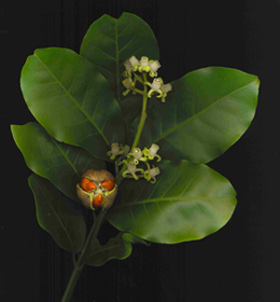
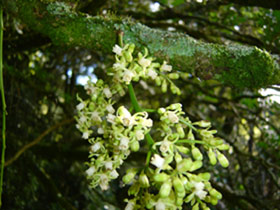
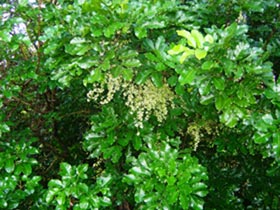
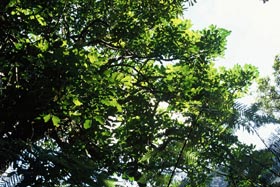
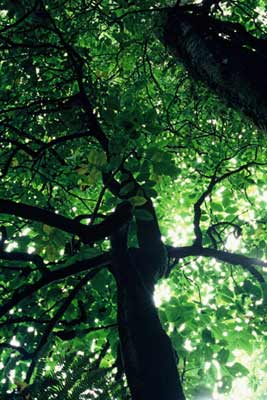
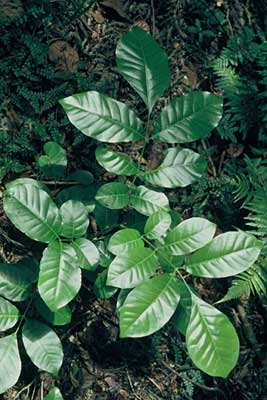
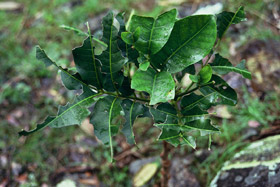
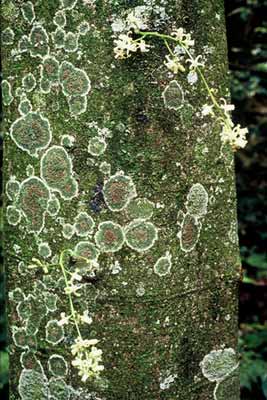
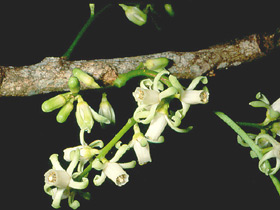
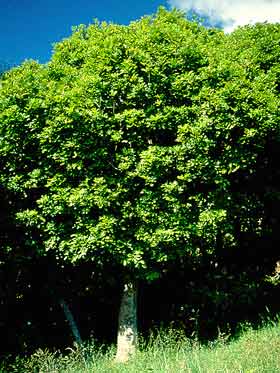
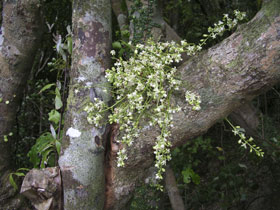
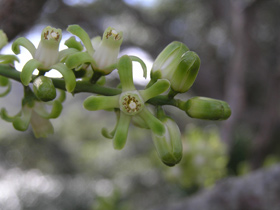
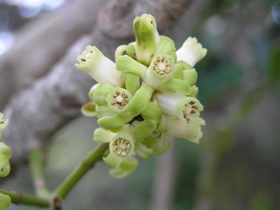
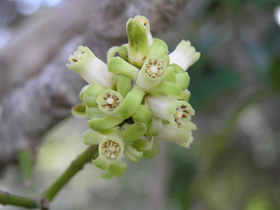
Canopy tree bearing leaves with 4 pairs of large dark green glossy leaflets along a stem with fifth leaflet at the tip and a swollen base where leaf stem joins the twig. Inhabiting warmer forests. Flowers small, in sprays projecting from trunk and branches. Fruit orange, covered by a husk.
Flower colours
Green, White
Detailed description
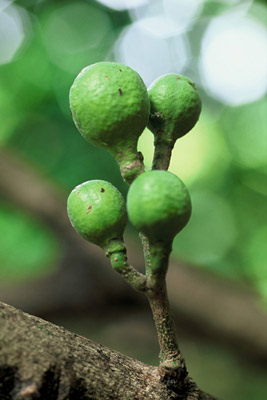
Tree up to 15 m tall usually with abroad, spreading canopy. Trunk up to 1 m diam., branches stout, erect then spreading. Bark pale brown, under bark green. Leaves compound, imparipinnate, alternate on pulvinate petioles up to 40 mm long, leaflet pairs 4-6, (50-)-150(-200) x (20-)30(-80) mm, opposite to subopposite, bright green, yellow-green to dark green, ovate to obovate-oblong, leathery, margins somewhat undulate. Plants gynodioecious, with fixed female and inconstant males on different trees. Inflorescence a cymose, drooping, panicle arising from trunk and branches (cauliflorous). Flowers c. 30 mm diam., fleshy. Pedicels short. Calyx divided to base, lobes broad-oblong, abruptly pointed, ciliate, petals linear, 10 mm, spreading, waxy white or greenish. Capsules, woody, broad-obovoid to subglobose, 3-4-celled, c. 25 mm long, green. Seeds 2 per cell, orange or scarlet.
Similar taxa
A very distinctive tree which with its large compound green leaves and cauliflorous flowering habit could not easily be confused with any other indigenous, naturalised or exotic species present in New Zealand.
Distribution
Endemic. North and South Islands. In the South Island not extending much beyond the Marlborough Sounds, reaching a southern limit near the Hurunui River (Napenape).
Habitat
Common and sometimes dominant or co-dominant tree of coastal to lowland forest.
Threats
Not Threatened. However, where possum and rat numbers are high this species is not actively regenerating. Possums defoliolate trees, and will heavily browse inflorescences such that few succeed in flowering and setting fruit. Rats are major seed predators. Only where control of these animals is undertaken, or on possum and rodent-free offshore islands can one see kohekohe flowering, fruiting and regenerating freely. If numbers of these introduced animals remain unchecked, it is clear that kohekohe will decline and vanish from large parts of its natural range.
Detailed taxonomy
Genus
Family
Synonyms
Trichilla spectabilis G.Forst., Hartighsea spectabilis Juss., Dysoxylum spectabile (G.Forst.) Hook.f.
Taxonomic notes
We follow Holzmeyer et al. (2021) in placing Dysoxylum spectabile in the genus Didymocheton Blume.
Endemic taxon
Yes
Endemic genus
No
Endemic family
No
Ecology
Flowering
March - June
Fruiting
April - August
Tolerances
Easily grown in a variety of situations and moisture levels. Intolerant of cold, and frost-sensitive.
Life cycle and dispersal
Arillate seeds are dispersed by frugivory (Thorsen et al., 2009).
Propagation technique
Easy from fresh seed.
Other information
Extra information
The name of Pukekohe, a town south of Auckland, is an abbreviation of “Puke kohekohe” which means “Hill of the kohekohe”.
Etymology
spectabilis: Notable
NVS code
The National Vegetation Survey (NVS) Databank is a physical archive and electronic databank containing records of over 94,000 vegetation survey plots - including data from over 19,000 permanent plots. NVS maintains a standard set of species code abbreviations that correspond to standard scientific plant names from the Ngä Tipu o Aotearoa - New Zealand Plants database.
DIDSPE
Chromosome number
2n = 84
Previous conservation statuses
The conservation status of all known New Zealand vascular plant taxa at the rank of species and below were reassessed in 2022-2023 using the New Zealand Threat Classification System (NZTCS) – more information about this can be found on the NZTCS website. This report includes replaces all previous NZTCS lists for vascular plants. Previous assessments can be found here.
- Conservation status of vascular plants in Aotearoa New Zealand, 2023. 2024. Peter J. de Lange, Jane Gosden, Shannel P. Courtney, Alexander J. Fergus, John W. Barkla, Sarah M. Beadel, Paul D. Champion, Rowan Hindmarsh-Walls, Troy Makan and Pascale Michel Department of Conservation. Source: NZTCS and licensed by DOC for reuse under the Creative Commons Attribution 4.0 International licence.
2017 | Not Threatened
2012 | Not Threatened
2009 | Not Threatened
2004 | Not Threatened
Regional conservation statuses
Auckland: 2025 | Regionally Not Threatened | Qualifiers: DPS, DPT
Current regional threat status assessments prepared according to Crisp et al. (2025) are displayed when available. The Auckland conservation status information is sourced from the “Conservation status of vascular plant species in Tāmaki Makaurau / Auckland” Simpkins E et al. (2025) report.
Referencing and citations
References and further reading
Holzmeyer, L.; Hauenschild, F.; Mabberley, D.J.; Muellner-Riehl, A.N. 2021: Confirmed polyphyly, generic recircumscription and typification of Dysoxylum (Meliaceae), with revised disposition of currently accepted species. Taxon. DOI https://doi.org/10.1002/tax.12591
Thorsen, M. J.; Dickinson, K. J. M.; Seddon, P. J. 2009. Seed dispersal systems in the New Zealand flora. Perspectives in Plant Ecology, Evolution and Systematics 11: 285-309
Attribution
Fact sheet prepared by P.J. de Lange for NZPCN (1 June 2013)
NZPCN Fact Sheet citation
Please cite as: de Lange, P.J. (Year at time of access): Didymocheton spectabilis Fact Sheet (content continuously updated). New Zealand Plant Conservation Network. https://www.nzpcn.org.nz/flora/species/didymocheton-spectabilis/ (Date website was queried)