
Calystegia soldanella

Common name
shore bindweed, shore convolvulus, rauparaha
Synonyms
Convolvulus soldanella L.
Family
Convolvulaceae
Flora category
Vascular – Native
Endemic taxon
No
Endemic genus
No
Endemic family
No
Structural class
Lianes & Related Trailing Plants - Dicotyledons
NVS code
The National Vegetation Survey (NVS) Databank is a physical archive and electronic databank containing records of over 94,000 vegetation survey plots - including data from over 19,000 permanent plots. NVS maintains a standard set of species code abbreviations that correspond to standard scientific plant names from the Ngä Tipu o Aotearoa - New Zealand Plants database.
CALSOL
Chromosome number
2n = 22
Current conservation status
The conservation status of all known New Zealand vascular plant taxa at the rank of species and below were reassessed in 2017 using the New Zealand Threat Classification System (NZTCS) – more information about this can be found on the NZTCS website. This report includes a statistical summary and brief notes on changes since 2012 and replaces all previous NZTCS lists for vascular plants.
Please note, threat classifications are often suggested by authors when publications fall between NZTCS assessment periods – an interim threat classification status has not been assessed by the NZTCS panel.
- Conservation status of New Zealand indigenous vascular plants, 2017 . 2018. Peter J. de Lange, Jeremy R. Rolfe, John W. Barkla, Shannel P. Courtney, Paul D. Champion, Leon R. Perrie, Sarah M. Beadel, Kerry A. Ford, Ilse Breitwieser, Ines Schönberger, Rowan Hindmarsh-Walls, Peter B. Heenan and Kate Ladley. Department of Conservation. Source: NZTCS and licensed by DOC for reuse under the Creative Commons Attribution 4.0 International licence.
2017 | Not Threatened | Qualifiers: SO
Previous conservation statuses
2012 | Not Threatened
2009 | Not Threatened
2004 | Not Threatened
Distribution
Indigenous. Kermadec, Three Kings, North, South, Stewart and Chatham Islands. Indigenous to both Northern and Southern Hemisphere temperate regions.
Habitat
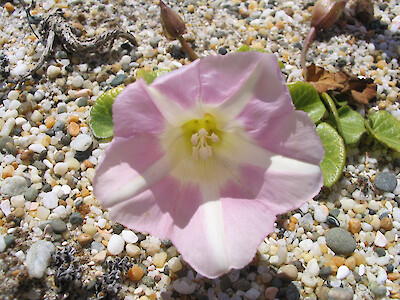
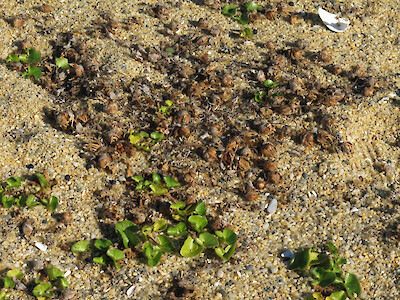
Coastal or inland along lake shorelines. Usually in sand or shell banks but also grows in fine gravel or pumice, talus slopes and on occasion in coastal turf or on cliff faces.
Wetland plant indicator status rating
Information derived from the revised national wetland plant list prepared to assist councils in delineating and monitoring wetlands (Clarkson et al., 2021 Manaaki Whenua – Landcare Research Contract Report LC3975 for Hawke’s Bay Regional Council). The national plant list categorises plants by the extent to which they are found in wetlands and not ‘drylands’. The indicator status ratings are OBL (obligate wetland), FACW (facultative wetland), FAC (facultative), FACU (facultative upland), and UPL (obligate upland). If you have suggestions for the Wetland Indicator Status Rating, please contact: [Enable JavaScript to view protected content]
UPL: Obligate Upland
Rarely is a hydrophyte, almost always in uplands (non-wetlands).
Detailed description
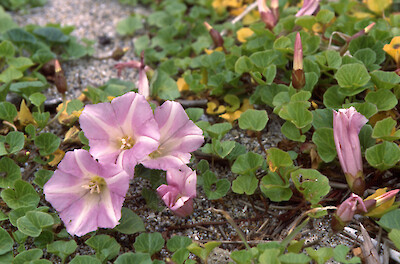
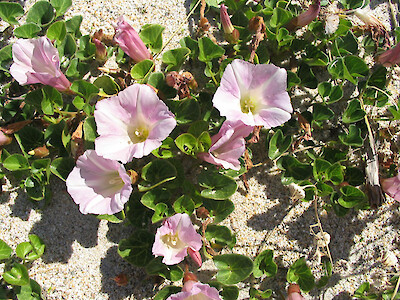
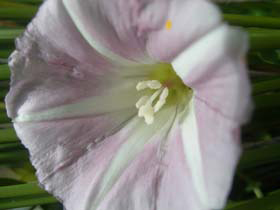
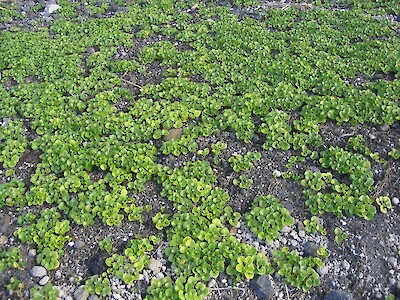
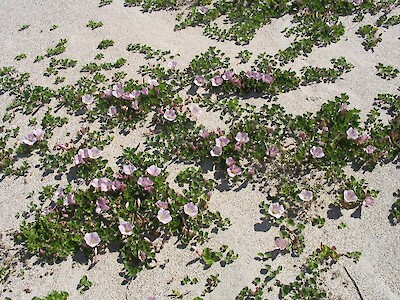
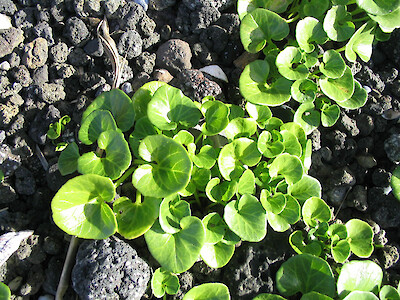
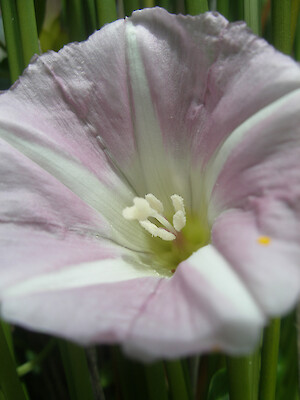
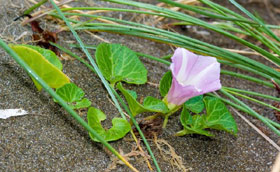
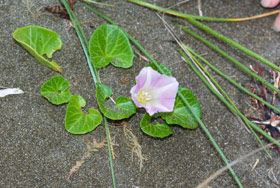
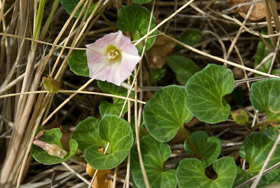
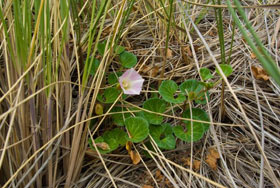
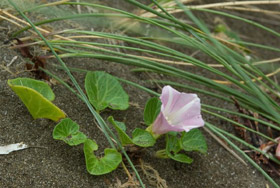
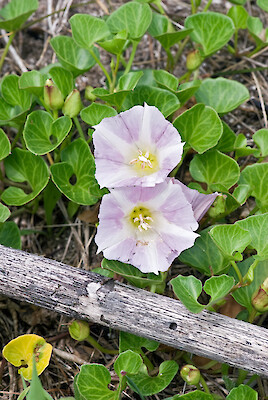
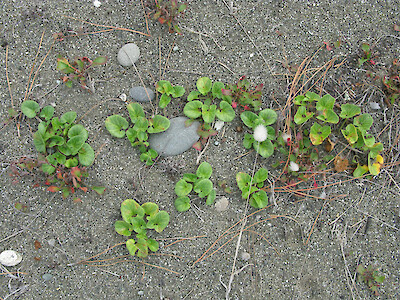
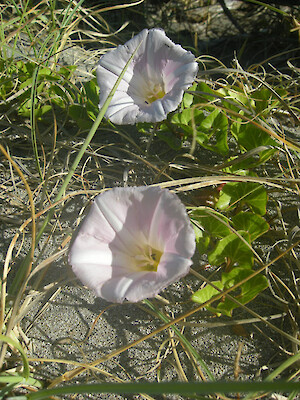
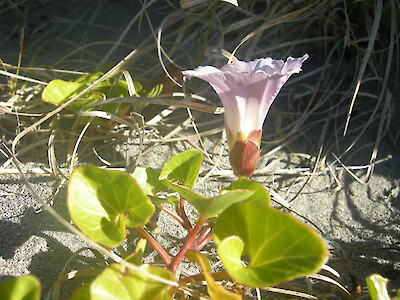
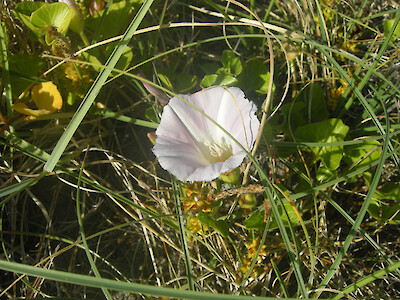
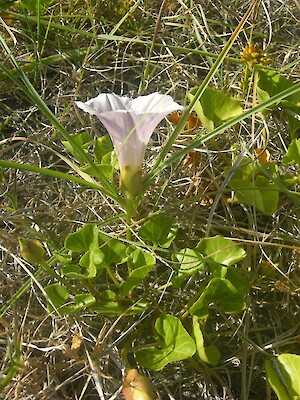
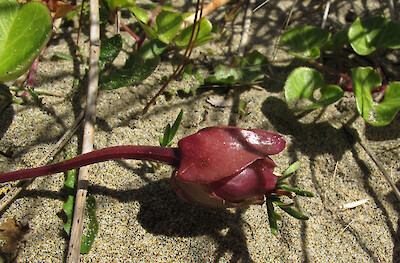
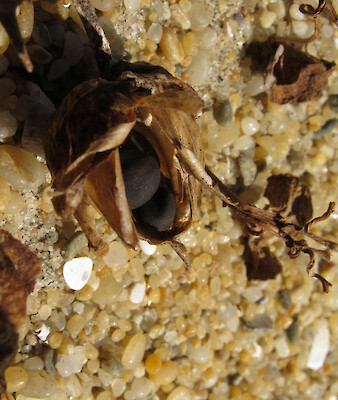
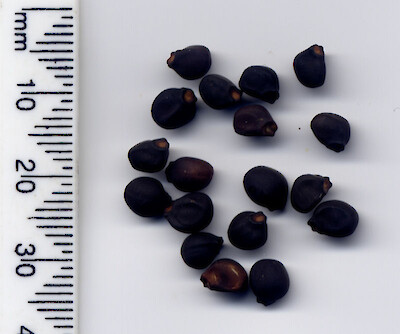
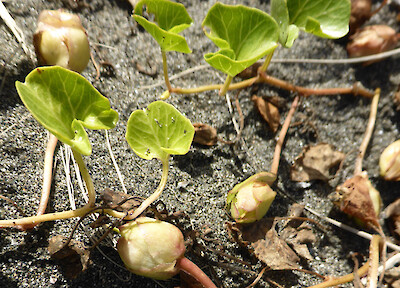
Perennial herb with stout, white, deeply descending, fleshy roots and numerous prostrate branching stems forming dense patches. Stems glabrous. Petioles 80 mm or less, slender. Leaves (10-)50(-80) x (10-)50(-75) mm, reniform, fleshy, glossy, entire; sinus shallow and rounded; apex emarginate, obtuse or acute. Flowers solitary; peduncles ribbed, 100 mm long. Bracts ovate. cordate, obtuse 12-18 mm long. Sepals nearly = bracts, obtuse. Corolla 20-40 x 25-50 mm, campanulate, pink with white mid-petaline bands. Capsule 15-20 mm long, broad-ovoid, apiculate. Seeds dark brown, smooth.
Similar taxa
None - the prostrate habit and reniform leaves clearly distinguish this species from all other indigenous and introduced Calystegia species. However, C. soldanella forms hybrids with C. tuguriorum, and these can be recognised by their weakly lianoid habit, puberulent, subsucculent stems and leaves, reniform to deltoid leaves, and pale pink subcampanulate flowers. C. soldanella is also suspected to hybridise with C. sepium subsp. roseata, and C. marginata.
Flowering
August-March
Flower colours
Red/Pink, White
Fruiting
Present throughout the year
Life cycle
Capsules are water and possibly also wind dispersed (Thorsen et al., 2009).
Propagation technique
Easy from seed or rooted pieces. Once established very hard to eradicate! An attractive ground cover for a difficult, dry, sunny or exposed spot. For a bit of variety try growing it in bach lawns - its does not require mowing and is much more interesting than kikuyu grass (Pennisetum clandestinum Chiov.)
Etymology
calystegia: Name is derived from the Greek words kalyx ‘cup’, and stege ‘a covering’, meaning ‘a covered cup’, the calyx of some bindweeds being enclosed in two bracts.
soldanella: From Latin ‘soldo’ a type of coin, referring to the shape of the leaves
Cultural Use/Importance
The Maori gathered the thick, white, fleshy roots and pounded these to form a pulp, this was then used as a relish to flavour some meats.
Attribution
Fact sheet prepared for NZPCN by P.J. de Lange 1 November 2005. Description adapted from Allan (1961) and Webb et al. (1988), supplemented with observations made from fresh and dried material.
References and further reading
Allan, H.H. 1961: Flora of New Zealand. Vol. I. Wellington, Government Printer.
Thorsen, M. J.; Dickinson, K. J. M.; Seddon, P. J. 2009. Seed dispersal systems in the New Zealand flora. Perspectives in Plant Ecology, Evolution and Systematics 11: 285-309
Webb, C.J.; Sykes, W.R.; Garnock-Jones, P.J. 1988: Flora of New Zealand. Vol. IV. Naturalised Pteridophytes, Gymnosperms, Dicotyledons.Christchurch, New Zealand, Botany Division, D.S.I.R..
NZPCN Fact Sheet citation
Please cite as: de Lange, P.J. (Year at time of access): Calystegia soldanella Fact Sheet (content continuously updated). New Zealand Plant Conservation Network. https://www.nzpcn.org.nz/flora/species/calystegia-soldanella/ (Date website was queried)