
Anisotome latifolia


Biostatus
Native – Endemic taxon
Current conservation status
The conservation status of all known New Zealand vascular plant taxa at the rank of species and below were reassessed in 2022-2023 using the New Zealand Threat Classification System (NZTCS) – more information about this can be found on the NZTCS website. This report includes replaces all previous NZTCS lists for vascular plants. Previous assessments can be found here.
- Conservation status of vascular plants in Aotearoa New Zealand, 2023. 2024. Peter J. de Lange, Jane Gosden, Shannel P. Courtney, Alexander J. Fergus, John W. Barkla, Sarah M. Beadel, Paul D. Champion, Rowan Hindmarsh-Walls, Troy Makan and Pascale Michel Department of Conservation. Source: NZTCS and licensed by DOC for reuse under the Creative Commons Attribution 4.0 International licence.
2023 | At Risk – Naturally Uncommon | Qualifiers: CD, PD, RR
Category
Vascular
Structural class
Herbs - Dicotyledons other than Composites
Simplified description
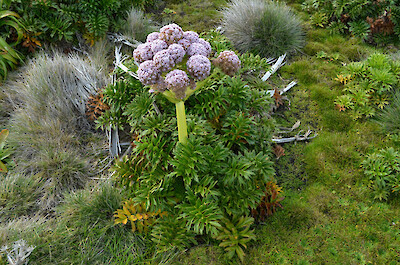
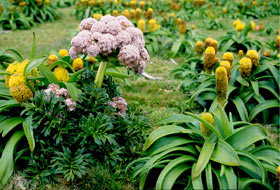
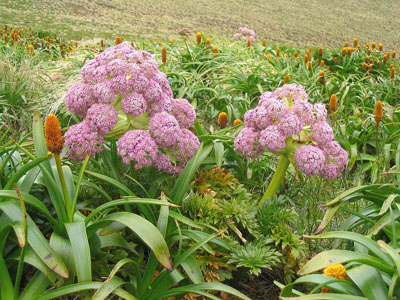
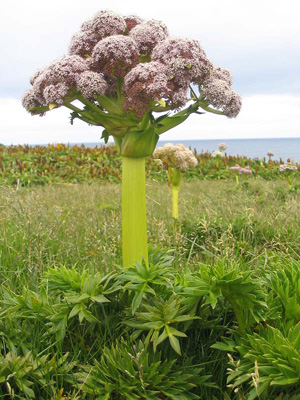
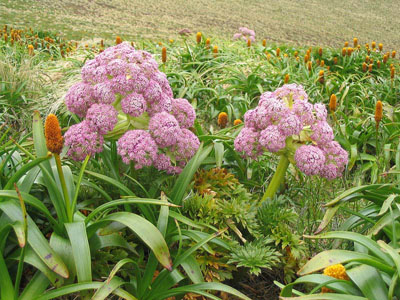
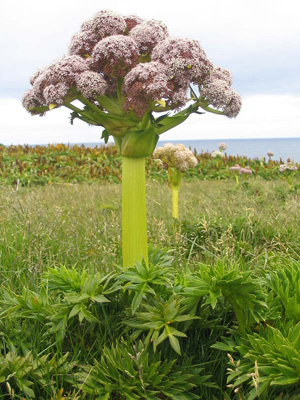
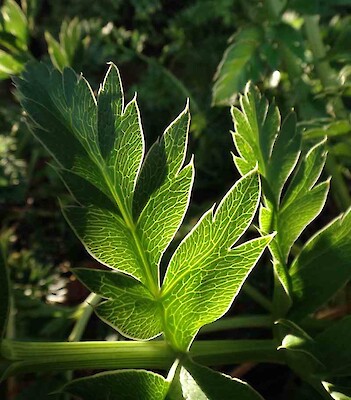
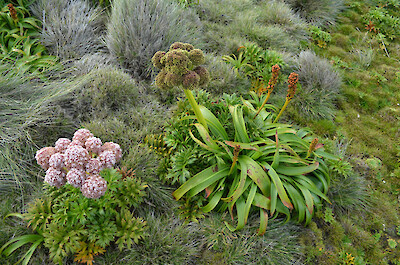
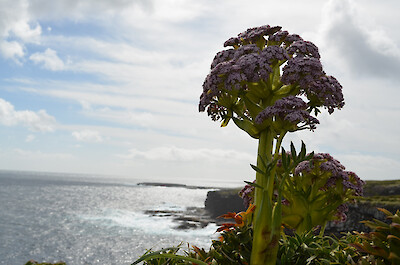
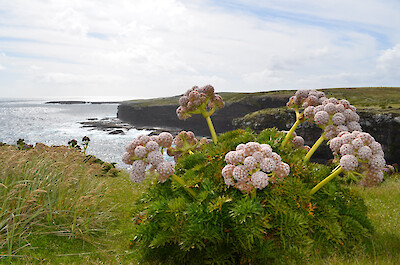
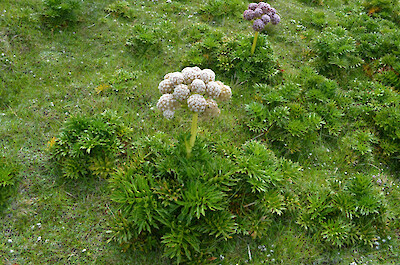
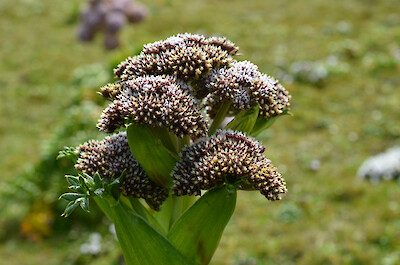
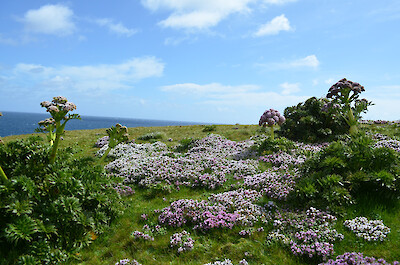
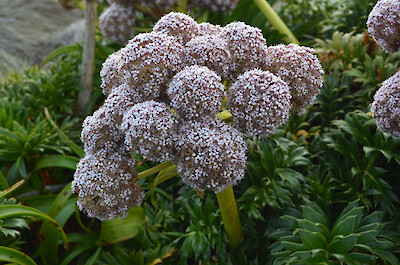
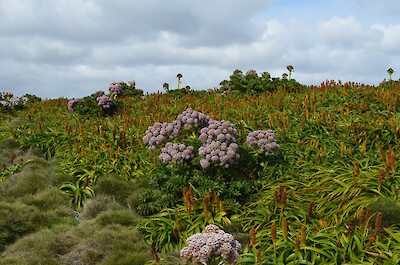
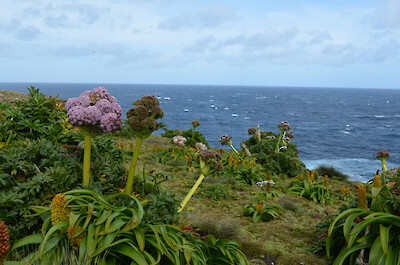
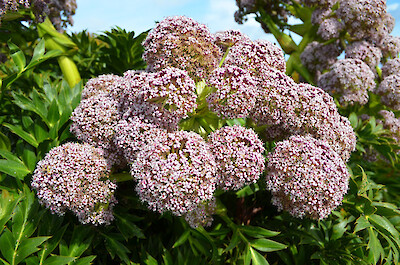
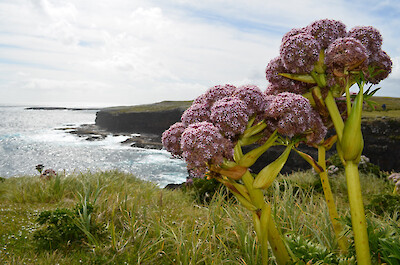
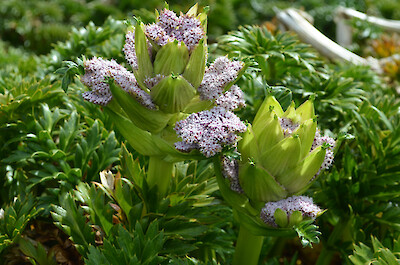
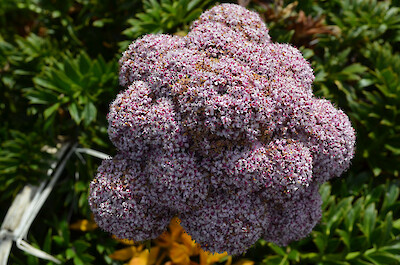
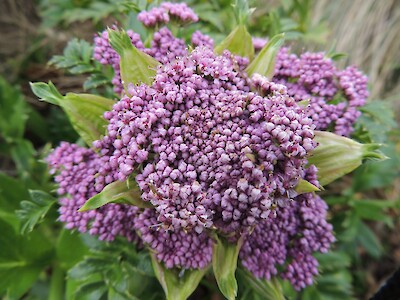
A large perennial member of the carrot family reaching up to 1 metre across and up to 2 metres in height when flowering. The large twice-pinnate leaves are yellow-green to dark green, overtopped by a robust pale green flower stem which has clusters of pale-pink or mauve flowers on top. Found only on the Campbell Island and the Auckland Islands group.
Flower colours
Cream, White
Detailed description
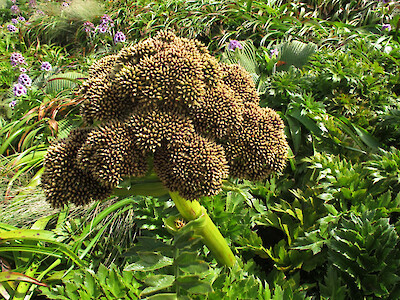
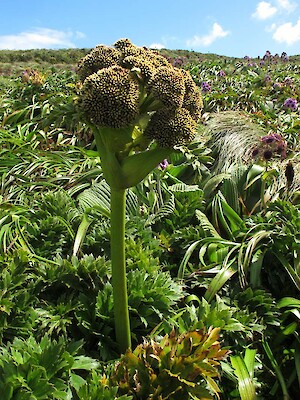
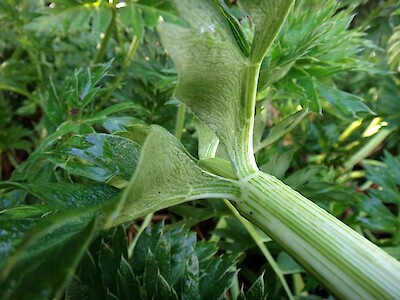
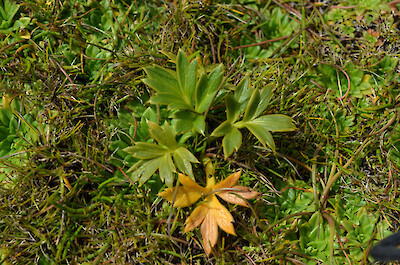
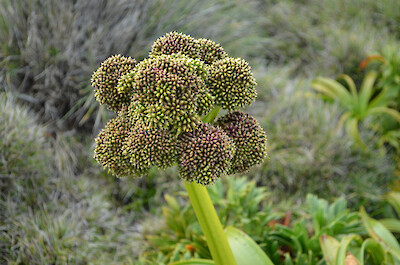
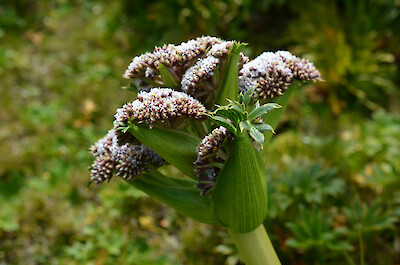
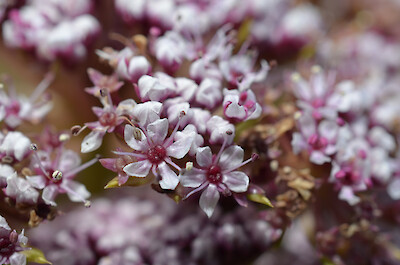
Robust perennial herb reaching up to 2 m tall. Basal leaves firmly coriaceous, ovate 0.3–0.6 × 0.1–0.2 dm; 2-pinnate, leaflets in 5–7 pairs, dark green to yellow-green, ovate to lanceolate, shortly petiolulate or sessile; leaflet margins cartilaginous, pinnatifid or deeply incised into broad toothed or incised segments; teeth acute, piliferous with hairs 2.0–3.5 mm long; petioles 0.15–0.3m × 7.0–15.0 mm, subterete, with a central ridge on the somewhat flattened adaxial surface; sheaths 50–80 × 35–50 mm, prolonged at the apex into two broad lobes free from the petioles by 2–3 mm; cauline leaf sheaths markedly inflated; peduncles 20–150 mm long. Inflorescence axis up to 2 m × 10–15 mm diameter at first node. Flowers off white to pale creamy pink. Staminate flowers held within an involucre of linear to lanceolate bracts 5–15 × 1–2 mm; involucel of several linear to lanceolate bracteoles 3.0–7.0 × 0.5–1.5 mm; rays 20–40, 5–20 mm long; pedicels 20–40, 2–5 mm long. Pistillate flowers similar, involucre bracts linear to broadly lanceolate, 10–35 × 1–5 mm, involucel bracteoles linear to lanceolate 2.0–10.0 × 0.5–2.0 mm, rays 20–40, 10–35 mm long, pedicels 15–30, 1–5 mm long; styles slender, 1–2 mm long, divergent. Mericarp elliptic, elliptic-ovate, elliptic-oblong or narrowly elliptic, 3.5–5.5–7.0 mm long; apex usually slightly narrowed and obtuse, sometimes rounded, base obtuse to truncate; 2–5-ribbed; ribs usually even, sometimes irregular, equal thin, finely winged with a narrow hyaline margin; surface dull; ribs yellow, dark yellow or orange; vittae usually obscured in mature mericarps, if visible dark red-brown.
Similar taxa
Probably allied to Anisotome acutifolia Kirk, A. antipoda Hook.f. and A. lyallii Hook.f., four species that can grow as tall as 2 m when flowering and are confined to the southern South Island and Stewart Island/Rakiura (A. lyallii) or the Subantarctic Islands (A. acutifolia, A. antipoda and A. latifolia). Anisotome latifolia is sympatric on the Auckland Islands and Campbell Island/Motu Ihupuku with A. antipoda from which it can be easily distinguished by its muich more coarsely divided leaves, and off white to pale pink rather than dark pink to magenta flowers.
Distribution
Endemic. Auckland Islands and Motu Ihupuku | Campbell Island.
Habitat
Coastal to montane on peaty ground amongst boulders, tussocks and other megaherbs, more rarely under scrub and low forest. Most abundant at lower alitudes.
Threats
No apparent threats. Listed because it is naturally confined to a small geographic area. It is abundant on Campbell Island/Motu Ihupuku and common on those islands of the Auckland group free of browsing animals.
Detailed taxonomy
Genus
Family
Synonyms
Ligusticum latifolium (Hook.f.) Hook.f., Calosciadium latifolium (Hook.f.) Endl. ex Walp., Aciphylla latifolia (Hook.f.) Cockayne
Endemic taxon
Yes
Endemic genus
No
Endemic family
No
Ecology
Flowering
October – February.
Fruiting
January – March.
Life cycle and dispersal
Winged mericarps are dispersed by wind (Thorsen et al., 2009).
Propagation technique
Easy from fresh seed. Easily grown in a deep, peaty, permanently damp soil. Resent hot, humid weather and prone to collapse under such conditions. A beautiful plant that deserves to be more widely cultivated than it currently is.
Other information
Etymology
anisotome: Unequal sided
latifolia: From the Latin latus meaning broad, and folium meaning leaf, relating to the “broad-leaved” foliage of the plant.
NVS code
The National Vegetation Survey (NVS) Databank is a physical archive and electronic databank containing records of over 94,000 vegetation survey plots - including data from over 19,000 permanent plots. NVS maintains a standard set of species code abbreviations that correspond to standard scientific plant names from the Ngä Tipu o Aotearoa - New Zealand Plants database.
ANILAT
Previous conservation statuses
The conservation status of all known New Zealand vascular plant taxa at the rank of species and below were reassessed in 2022-2023 using the New Zealand Threat Classification System (NZTCS) – more information about this can be found on the NZTCS website. This report includes replaces all previous NZTCS lists for vascular plants. Previous assessments can be found here.
- Conservation status of vascular plants in Aotearoa New Zealand, 2023. 2024. Peter J. de Lange, Jane Gosden, Shannel P. Courtney, Alexander J. Fergus, John W. Barkla, Sarah M. Beadel, Paul D. Champion, Rowan Hindmarsh-Walls, Troy Makan and Pascale Michel Department of Conservation. Source: NZTCS and licensed by DOC for reuse under the Creative Commons Attribution 4.0 International licence.
2017 | At Risk – Naturally Uncommon | Qualifiers: CD, RR
2012 | At Risk – Naturally Uncommon | Qualifiers: CD
2009 | At Risk – Naturally Uncommon
2004 | Range Restricted
Referencing and citations
References and further reading
Dawson JW. 1961. A revision of the genus Anisotome (Umbelliferae). University of California Publications in Botany 33: 1–98.
Thorsen MJ, Dickinson KJM, Seddon PJ. 2009. Seed dispersal systems in the New Zealand flora. Perspectives in Plant Ecology, Evolution and Systematics 11: 285–309. https://doi.org/10.1016/j.ppees.2009.06.001.
Attribution
Fact Sheet prepared for NZPCN by P.J. de Lange 14 April 2007. Description based on Dawson (1961).