
Lepidium aegrum
Common names
Banks Peninsula scurvy grass
Biostatus
Native – Endemic taxon
Current conservation status
The conservation status of all known New Zealand vascular plant taxa at the rank of species and below were reassessed in 2022-2023 using the New Zealand Threat Classification System (NZTCS) – more information about this can be found on the NZTCS website. This report includes replaces all previous NZTCS lists for vascular plants. Previous assessments can be found here.
- Conservation status of vascular plants in Aotearoa New Zealand, 2023. 2024. Peter J. de Lange, Jane Gosden, Shannel P. Courtney, Alexander J. Fergus, John W. Barkla, Sarah M. Beadel, Paul D. Champion, Rowan Hindmarsh-Walls, Troy Makan and Pascale Michel Department of Conservation. Source: NZTCS and licensed by DOC for reuse under the Creative Commons Attribution 4.0 International licence.
2023 | Threatened – Nationally Critical | Qualifiers: CD, DPT, OL
Category
Vascular
Structural class
Herbs - Dicotyledons other than Composites
Simplified description
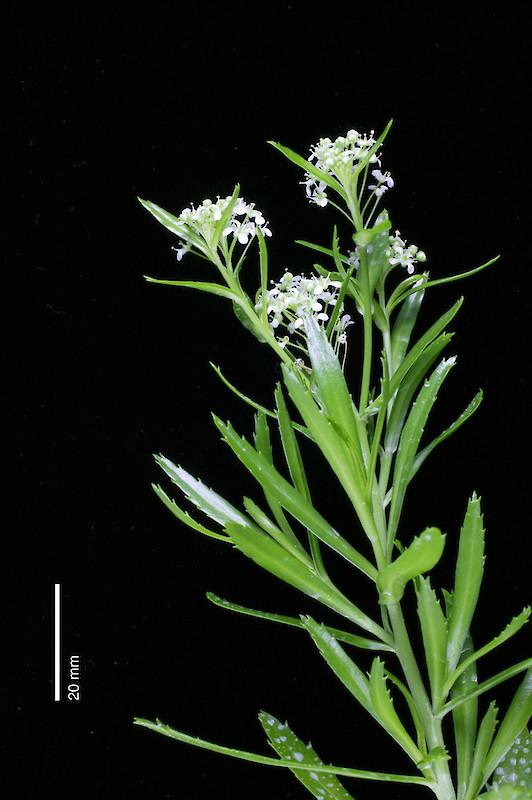
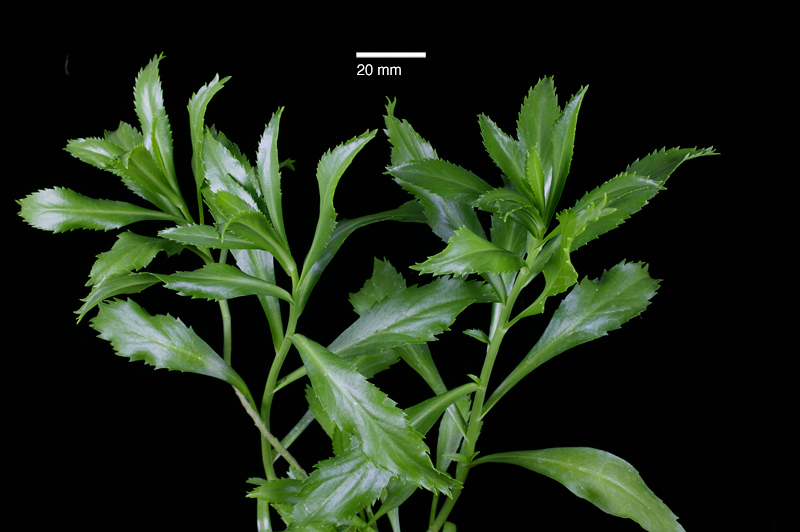
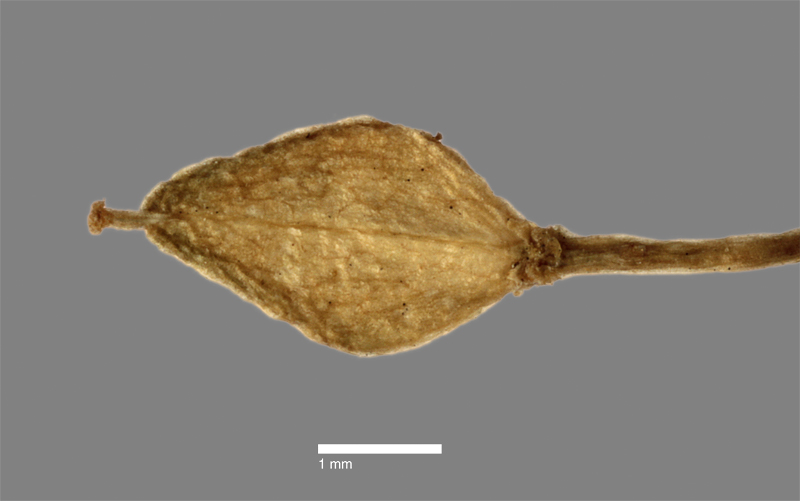
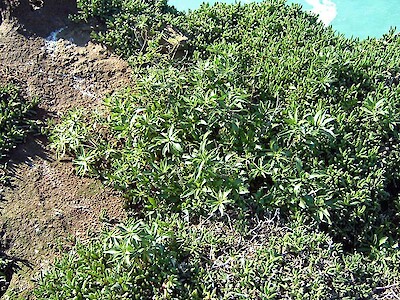
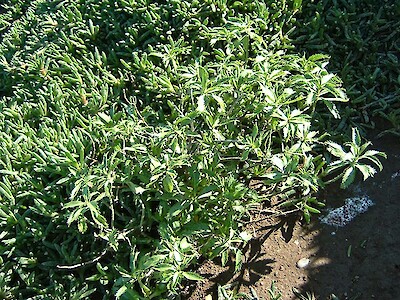
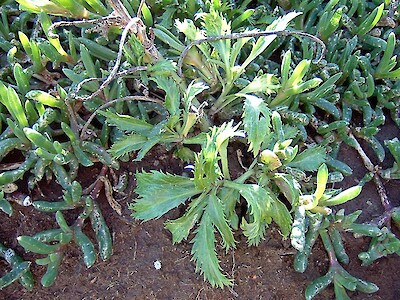
Perennial herb arising from stout tap-root. Plants with numerous erect, leafy branches. Leaves dark green, narrow, with deeply toothed margins and smelling of cress when crushed. Inflorescences at branch tips, Flowers white with four stamens. Fruits rhomboid, apices very shallowly notched, splitting cleanly into two valves, seeds brown or orange-brown.
Detailed description
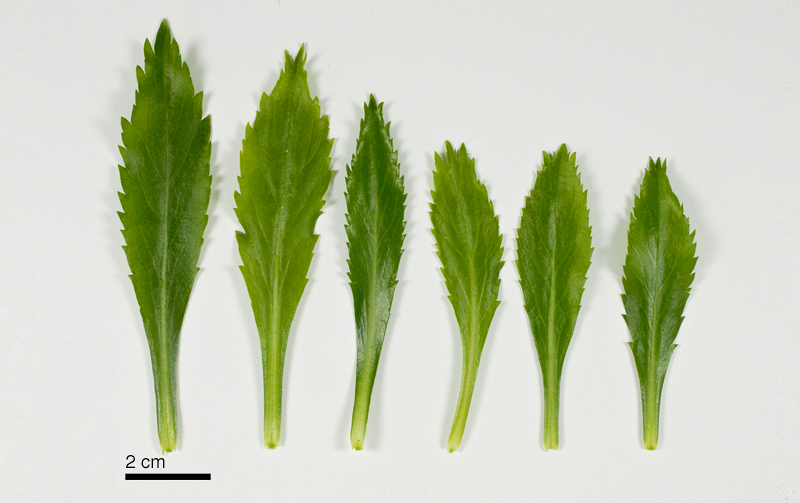
Tap-rooted, strongly pungent smelling, perennial herb. Growth habit open, up to 50 cm tall, stems arising from basal woody stems. Stems upright, slender, flexible; mature stems woody, 100–500 × 10–12 mm, often devoid of foliage on middle and lower parts of stems; new stems 80–200 × 3–4 mm, leafy, glabrous. Leaves glabrous, membranous, light green, planar, pellucid glands sometimes scattered on abaxial surface, rosette and stem leaves usually withering, variable in size and shape. Leaves of young and vigorous plants and stems: lamina 35–80 × 10–20 mm, lanceolate, elliptic-lanceolate, narrowly elliptic; apex subacute, with a single prominent tooth; margin singly serrate, with 8–12 pairs of teeth; teeth up to 3.5 mm deep, not overlapping; base attenuate, tapering to distinct petiole. Leaves of mature plants and cauline stems: lamina 30–65 × 4–11 mm, narrowly lanceolate, elliptic-lanceolate, narrowly elliptic; apex acute to subacute, with a single prominent tooth; margin singly serrate in upper and/or lower half, with 2–10 pairs of teeth; teeth up to 1.2 mm deep, not overlapping; base attenuate, tapering to petiole. Inflorescence terminal and lateral, racemose, often branched, up to 95 mm long, rachis up to 2.1 mm diameter, glabrous; pedicels 4–10 mm long, erecto-patent, glabrous. Flowers 4.0–4.5 mm diameter. Sepals 4, 1.0–1.5 mm long, saccate, green, apex obtuse, margin white, shape dimorphic; lateral sepals broad, 1.0–1.1 mm diameter, orbicular, abaxial surface often hairy, hairs entirely eglandular or with glandular tip, 0.2–0.3 mm long; median sepals narrow, 0.8–0.9 mm diameter, broadly elliptic, glabrous. Petals white, 2.3–2.5 × 1.2–1.4 mm, spreading, claw 0.7–0.9 mm long; limb broadly elliptic to orbicular, apex obtuse to rounded. Stamens 4; filaments 1.7–2.0 mm long, base 0.3–0.4 mm diam., equal; anthers 0.4–0.5 mm long. Ovary 0.9–1.0 × 0.9–1.0 mm, broadly ovate to broadly elliptic, green, apex usually with shoulders; style 0.3–0.4 mm long, cylindrical; stigma 0.3–0.4 mm diameter. Nectaries 4, 0.2–0.3 × c. 0.1 mm, oblong, green. Silicles cartilaginous when fresh, coriaceous when dry, 4.0–4.7 × 3.2–3.5 mm, elliptic-rhomboid to orbicular-rhomboid, apex shallowly notched, valves pale brown, glabrous, not winged; style 0.3–0.4 mm long, exserted. Seeds 1.6–1.7 × 0.9–1.0 mm, narrowly ovoid, brown to orange-brown, not winged.
Similar taxa
Lepidium aegrum is distinguished from all other New Zealand Lepidium by its slender flexible stems, light green membranous leaves that are lanceolate, elliptic-lanceolate or narrowly elliptic with a prominent acute to subacute apex, and margins that are serrate with prominent and deep teeth.
Distribution
Endemic. New Zealand. South island (Banks Peninsula) - historically known from a number of locations around Banks Peninsula, now confined to a single rock stack of Island Bay. The species has been translocated to Quail and Motunau Islands and at Stony bay, Banks Peninsula.
Habitat
Coastal. The only known population occurs within a petrel colony where it grows with Disphyma australe subsp. australe.
Threats
Lepidium aegrum is known from a single wild population and three additional populations that have been established with nursery-raised plants. The single wild population and unknown recruitment patterns means that this species is especially vulnerable to stochastic events. Furthermore, turnip mosiac virus, which deforms and retards growth, is common in plants at the wild population, and this will likely reduce reproductive success.
Detailed taxonomy
Genus
Family
Synonyms
None (first described in 2013)
Endemic taxon
Yes
Endemic genus
No
Endemic family
No
Ecology
Flowering
March
Fruiting
March
Propagation technique
Easily grown from fresh seed. However, all known wild plants are infected by turnip-mosaic virus, which retards growth and probably affects flowering and seed set (Fletcher et al. 2009). Very few plants are known from cultivation.
Other information
Etymology
lepidium: Scale-shaped (pods)
aegrum: From the Latin aeger ‘diseased, sick’
Previous conservation statuses
The conservation status of all known New Zealand vascular plant taxa at the rank of species and below were reassessed in 2022-2023 using the New Zealand Threat Classification System (NZTCS) – more information about this can be found on the NZTCS website. This report includes replaces all previous NZTCS lists for vascular plants. Previous assessments can be found here.
- Conservation status of vascular plants in Aotearoa New Zealand, 2023. 2024. Peter J. de Lange, Jane Gosden, Shannel P. Courtney, Alexander J. Fergus, John W. Barkla, Sarah M. Beadel, Paul D. Champion, Rowan Hindmarsh-Walls, Troy Makan and Pascale Michel Department of Conservation. Source: NZTCS and licensed by DOC for reuse under the Creative Commons Attribution 4.0 International licence.
2017 | Threatened – Nationally Critical | Qualifiers: CD, DP, OL
2012 | Threatened – Nationally Critical | Qualifiers: CD, DP, OL
Referencing and citations
References and further reading
de Lange, P.J.; Heenan, P.B.; Houliston, G.; Rolfe, J.R.; Mitchell, A.D. 2013: New Lepidium (Brassicaceae) from New Zealand. Phytokeys 24:1-147pp. , doi: 10.3897/phytokeys.24.4375.
Fletcher JD, Bulman S, Fletcher PJ, Houliston GJ (2009) First record of Turnip mosaic virus in Cooks scurvy grass (Lepidium oleraceum agg). An endangered native plant in New Zealand. Australasian Plant Disease notes 4: 9–11. doi: 10.1071/DN09004
Attribution
P.J. de Lange (17 August 2013). Description from de Lange et al. (2013) - see references for free download link for that paper. Threats information from Fletcher et al. (2009).
NZPCN Fact Sheet citation
Please cite as: de Lange, P.J. (Year at time of access): Lepidium aegrum Fact Sheet (content continuously updated). New Zealand Plant Conservation Network. https://www.nzpcn.org.nz/flora/species/lepidium-aegrum/ (Date website was queried)