
Sonchus novae-zelandiae
Common names
native sow thistle, kirkianella
Biostatus
Native – Endemic taxon
Current conservation status
The conservation status of all known New Zealand vascular plant taxa at the rank of species and below were reassessed in 2022-2023 using the New Zealand Threat Classification System (NZTCS) – more information about this can be found on the NZTCS website. This report includes replaces all previous NZTCS lists for vascular plants. Previous assessments can be found here.
- Conservation status of vascular plants in Aotearoa New Zealand, 2023. 2024. Peter J. de Lange, Jane Gosden, Shannel P. Courtney, Alexander J. Fergus, John W. Barkla, Sarah M. Beadel, Paul D. Champion, Rowan Hindmarsh-Walls, Troy Makan and Pascale Michel Department of Conservation. Source: NZTCS and licensed by DOC for reuse under the Creative Commons Attribution 4.0 International licence.
2023 | Threatened – Nationally Vulnerable | Qualifiers: RR
Category
Vascular
Structural class
Herbs - Dicotyledonous composites
Flower colours
Yellow
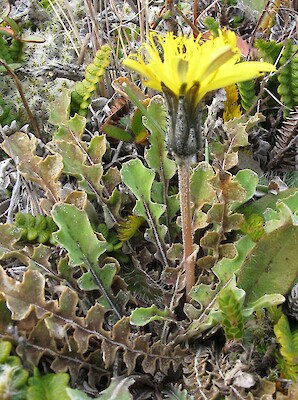
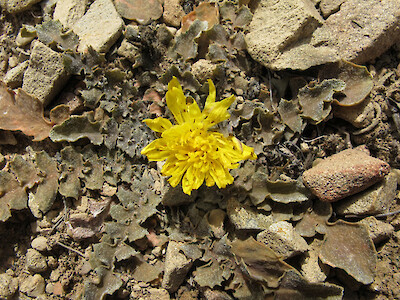
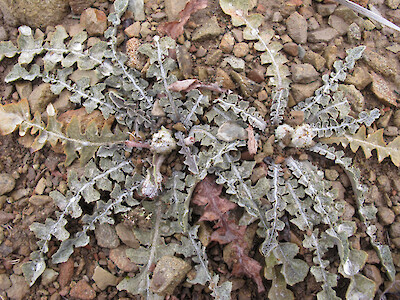
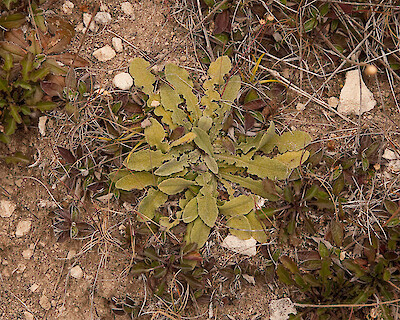
Detailed description
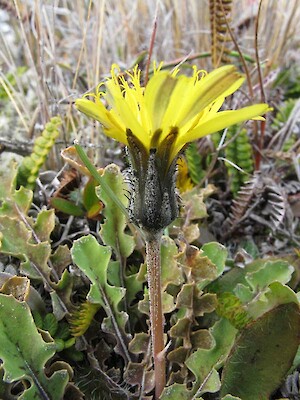
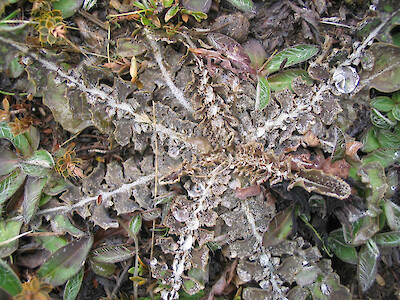
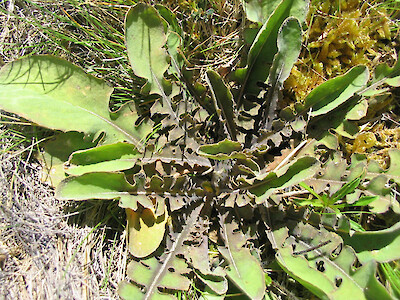
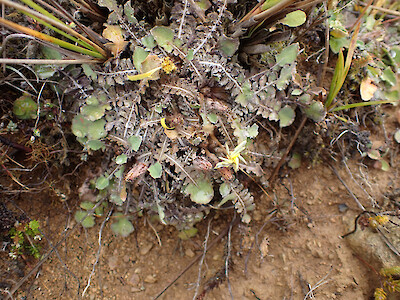
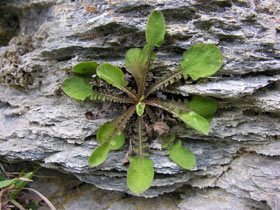
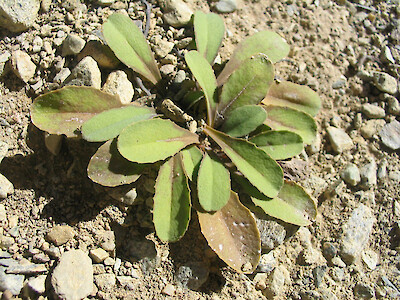
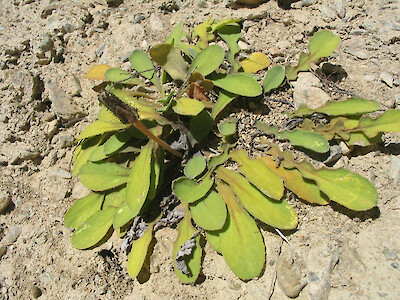
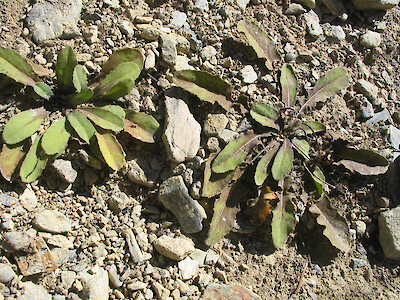
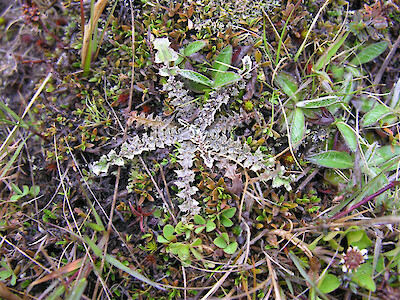
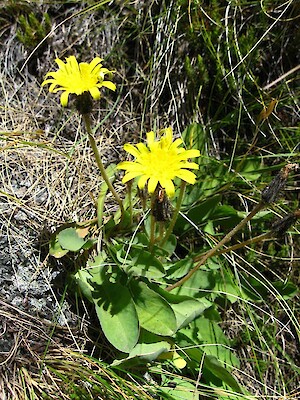
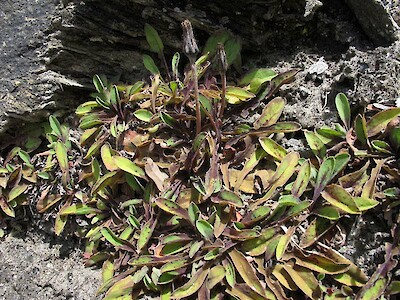
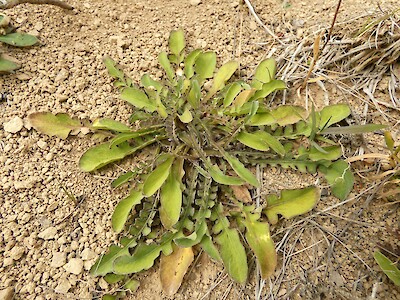
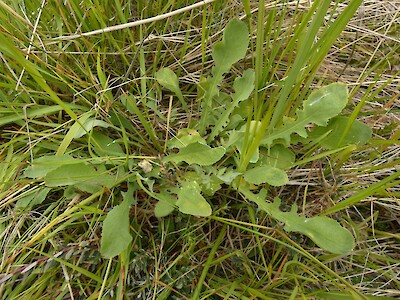
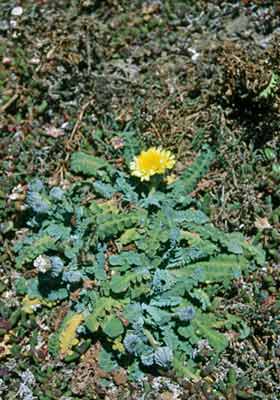
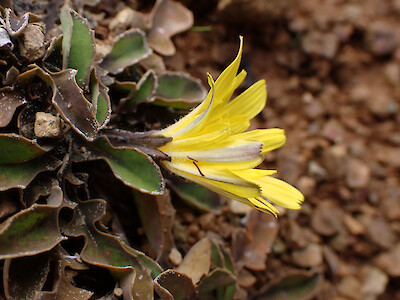
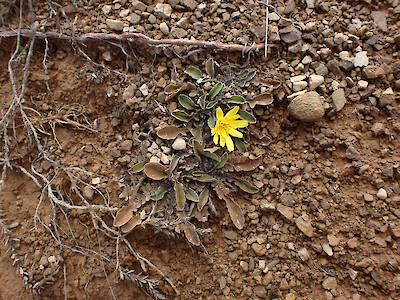
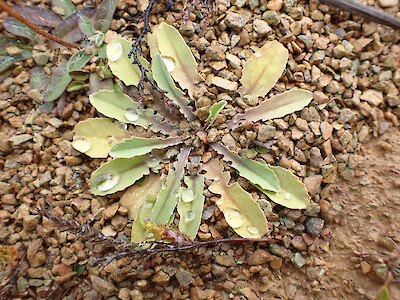
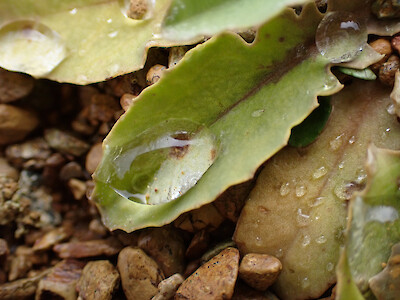
Rosulate, perennial, scapigerous herb arising from a stout, deeply descending, often multicipital tap root. All parts when broken leaking copious amounts of white latex exudate. Leaves and petiole 20-150 mm long, flattened, and more or less held appressed to the surrounding substrate; lamina crisply membranous, glabrous, lyrate, bright green, yellow-green, or glaucous, sinuately shallowly to deeply, closely or distantly lobulate, or pinnatifid; lobules rounded, apical, often mottled with darker brown pigmentation or glaucous; terminal lobes 30-50 x 20-30 mm, lateral lobes diminishing in size from 10 to 1 mm, confluent, merging into the broadly winged petiole. Scapes 150 mm or more long, slender, initially sparsely and finely tomentose, becoming glabrous, except near capitulum; bracteate, bracts 1-5, linear, tomentose mainly with eglandular hairs, glandular hairs either absent or sparse. Capitula 15-30 x 10-40 mm, receptacle shallowly concave, alveolate. Involucrum 4-seriate, imbricating, membranous with scarious margins; outer involucral bracts 3-5 mm long, narrow-ovate, undersides densely tomentose with dark spreading glandular hairs; inner bracts narrowly ovate-oblong up to 15 mm long, dark brown-green, undersides intially clad in white tomentum and glandular hairs becoming glabrous, margins scarious with rather fine teeth. Florets 30-36, ligulate; limb pale lemon-yellow, about equal in length to the slender claw, apex deeply 5-fid. Style arms long, densely covered in minute processes, finely coiled. Anthers conspicuous. Fertile achenes few, 2-3 mm long, dark brown, slightly compressed, broad at first, apices bluntly obtuse to rounded, narrowed slightly to base, crowned with minute asperities glabrous, primary ribs longitudinal, 4-5, prominent; secondary ribs 4-5, less obvious, otherwise strongly transversely wrinkled towards base. Sterile achenes numerous, narrowly subcylindric, pale and finely ribbed. Pappus hairs up to 7 mm long, copious, white, slender and soft, fused at base otherwise barbellate in upper half.
Similar taxa
Sonchus novaezelandiae is set well apart from other members of Sonchus in New Zealand by its involucral bracts which are characteristically covered in dark, spreading glandular hairs, and often secondarily white tomentose (rarely glabrous), and by its flattened achenes, and slender white, fluffy, pappus hairs.
Distribution
Endemic. Three Kings Islands and South Island from the Marlborough Sounds to Southland and Fiordland.
Habitat
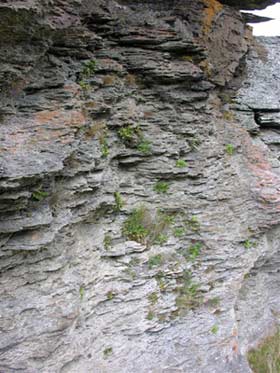
Coastal to subalpine (10 - 1200 m a.s.l.) amongst sea bird colonies or within open stony ground, short and tall tussock grassland, on or near rock outcrops (on rock ledges, within crevices, and on talus slopes), sometimes on recently exposed alluvium. Rarely in open ground under grey scrub.
Threats
Sonchus novae-zelandiae appears to have always been biologically sparse but recent ad hoc field surveys for this species have found that it has declined from large parts of its former range. Many populations are at risk from the spread of hawkweeds (Pilosella), and in some sites Sonchus novae-zelandiae is now confined to cliff and rock outcrop refugia.
Detailed taxonomy
Genus
Family
Synonyms
Crepis novae-zelandiae Hook.f., Kirkianella novae-zelandiae (Hook.f.) Allan; Kirkianella novae-zelandiae f. minor Allan nom. inval. Kirkianella novae-zelandiae f. glauca Allan nom. inval.;
Taxonomic notes
Allan (1961, Flora of New Zealand Vol. I, pp. 762-763) did not designate types or provide Latin diagnoses for his Kirkianella novae-zelandiae f. minor Allan and f. glauca Allan. These names are therefore illegitimate. Although Garnock-Jones (2014) published a new combination for Kirkianella in Sonchus, a thorough study of the variation within that species is still required.
The native Sonchus found in dryland/grassland habitats in Canterbury and Otago is now understood to be an undescribed entity known as Sonchus aff. novae-zelandiae (a) (CHR 517718; “grassland”) (see de Lange et al. 2024 and https://nztcs.org.nz/assessments/113313), whereas the name Sonchus novae-zelandiae applies to a more restricted species found in Marlborough (see https://nztcs.org.nz/assessments/113024). There is also another undescribed entity known as Sonchus aff. novae-zelandiae (b) (CHR 440071; “calcicole”), which appears to be restricted to limestone habitats in the Castle Hill basin - this is classified as Threatened-Nationally Critical (see https://nztcs.org.nz/assessments/169364).
Endemic taxon
Yes
Endemic genus
No
Endemic family
No
Ecology
Flowering
November - April
Fruiting
November - May
Life cycle and dispersal
Pappate cypselae are wind dispersed (Thorsen et al., 2009).
Propagation technique
Easy from fresh seed - the unusual foliage and colourful leaf markings make it a rather attractive pot plant or plant for a dry, free draining, sunny place in a rockery.
Other information
Etymology
sonchus: Sow thistle
novae-zelandiae: Of New Zealand
NVS code
The National Vegetation Survey (NVS) Databank is a physical archive and electronic databank containing records of over 94,000 vegetation survey plots - including data from over 19,000 permanent plots. NVS maintains a standard set of species code abbreviations that correspond to standard scientific plant names from the Ngä Tipu o Aotearoa - New Zealand Plants database.
SONNOV
Chromosome number
2n = 90, 126
Previous conservation statuses
The conservation status of all known New Zealand vascular plant taxa at the rank of species and below were reassessed in 2022-2023 using the New Zealand Threat Classification System (NZTCS) – more information about this can be found on the NZTCS website. This report includes replaces all previous NZTCS lists for vascular plants. Previous assessments can be found here.
- Conservation status of vascular plants in Aotearoa New Zealand, 2023. 2024. Peter J. de Lange, Jane Gosden, Shannel P. Courtney, Alexander J. Fergus, John W. Barkla, Sarah M. Beadel, Paul D. Champion, Rowan Hindmarsh-Walls, Troy Makan and Pascale Michel Department of Conservation. Source: NZTCS and licensed by DOC for reuse under the Creative Commons Attribution 4.0 International licence.
2017 | Threatened – Nationally Vulnerable | Qualifiers: RR
2012 | Threatened – Nationally Vulnerable | Qualifiers: De, DP, Sp
2009 | Threatened – Nationally Vulnerable | Qualifiers: DP
2004 | Sparse
Regional conservation statuses
Northland: 2026 | Regionally Threatened – Regionally Critical | Qualifiers: DPS DPT
Current regional threat status assessments prepared according to Crisp et al. (2025) are displayed when available. The Northland conservation status information is sourced from the “Conservation status of indigenous vascular plants in Northland | Taitokerau” Ford et al. 2026 report.
Referencing and citations
References and further reading
Allan HH. 1961. Flora of New Zealand, Volume I. Indigenous Tracheophyta: Psilopsida, Lycopsida, Filicopsida, Gymnospermae, Dicotyledones. Government Printer, Wellington, NZ. 1085 p.
de Lange, P.J.; Heenan, P.B.; Norton, D.A.; Rolfe, J.R.; Sawyer, J.W.D. 2010: Threatened Plants of New Zealand. Canterbury University Press, Christchurch.
de Lange PJ, Gosden J, Courtney SP, Fergus AJ, Barkla JW, Beadel SM, Champion PD, Hindmarsh-Walls R, Makan T and Michel P 2024. Conservation status of vascular plants in Aotearoa New Zealand, 2023. New Zealand Threat Classification Series 43. Department of Conservation, Wellington. 105 pp.
Garnock-Jones PJ. 2014: Evidence-based review of the taxonomic status of New Zealand’s endemic seed plant genera, New Zealand Journal of Botany, DOI: 10.1080/0028825X.2014.902854
Heenan, P.B.; Mitchell, A.D.; de Lange, P.J.; Keeling, J.; Paterson, A.M. 2010: Late Cenozoic origin and diversification of Chatham Islands endemic plant species revealed by analyses of DNA sequence data. New Zealand Journal of Botany 48: 83–136.
Thorsen, M. J.; Dickinson, K. J. M.; Seddon, P. J. 2009. Seed dispersal systems in the New Zealand flora. Perspectives in Plant Ecology, Evolution and Systematics 11: 285-309
Attribution
Fact sheet prepared for NZPCN by P.J. de Lange (6 August 2006). Description adapted from Allan (1961) supplemented with observations made from fresh and dried material (see also de Lange et al. 2010).
Some of this factsheet information is derived from Flora of New Zealand Online and is used under a Creative Commons Attribution 3.0 New Zealand licence.
NZPCN Fact Sheet citation
Please cite as: de Lange, P.J. (Year at time of access): Sonchus novae-zelandiae Fact Sheet (content continuously updated). New Zealand Plant Conservation Network. https://www.nzpcn.org.nz/flora/species/sonchus-novae-zelandiae/ (Date website was queried)