
Syzygium paniculatum
Biostatus
Exotic
Conservation status
Not applicable
Category
Vascular
Structural class
Trees & Shrubs - Dicotyledons
Simplified description
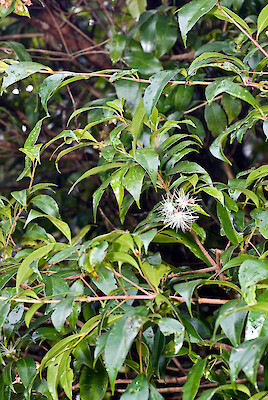
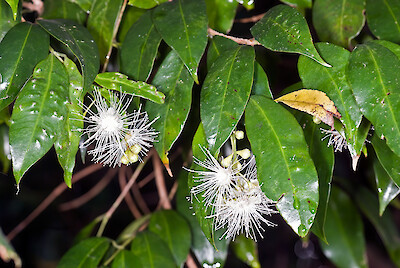
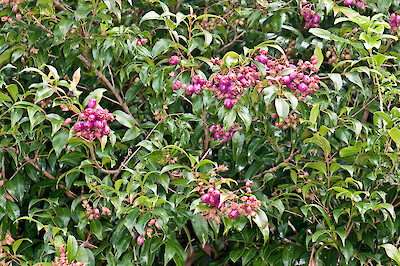
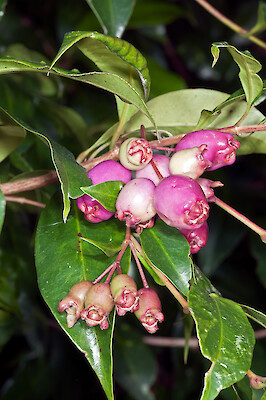
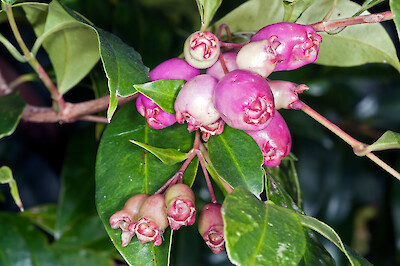
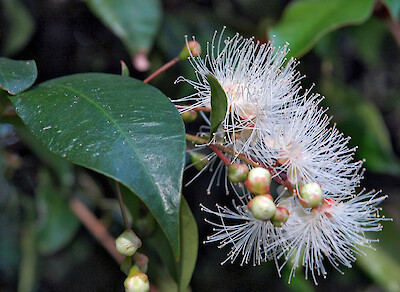
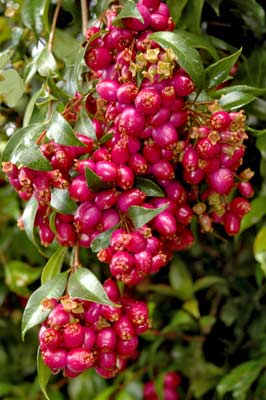
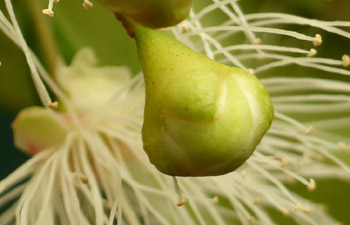
A dense bushy tree to 15 m tall. Leaves are 3–9 cm long, opposite, obovate, tapering at the leaf base; dark glossy green above, paler below. Flowers with white stamens and petals. The edible fruit is usually magenta, but can be white, pink or purple.
Flower colours
White
Similar taxa
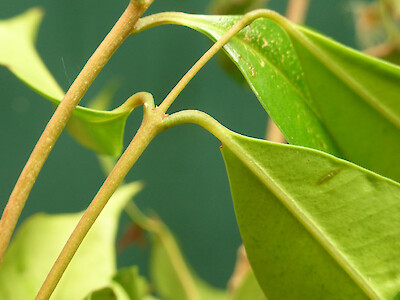
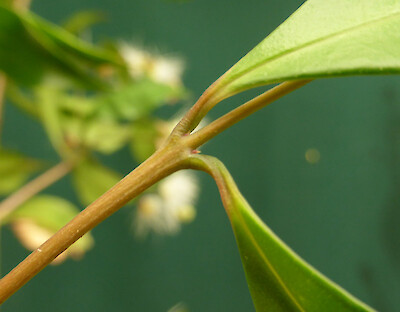
Syzygium australe q.v. (under which name S. paniculatum is sometimes sold, erroneously). The two can be distinguished even when young from the leafy twigs, which in S. paniculatum have smooth internodes above and below the nodes, whereas S. australe has its leafy twigs “generally 4-angled or shortly 4-winged, pairs of wings running down from each petiole but amalgamating and forming a pocket or hump above the next lower pair of leaves.” http://keys.trin.org.au/key-server/data/0e0f0504-0103-430d-8004-060d07080d04/media/Html/taxon/Syzygium_australe.htm
S. australe appears to be a lot less common in cultivation than S. paniculatum and, compared with the latter, wild seedlings are uncommon in S. australe.
Habitat
Self establishes freely in shade, including native forest, parks, gardens
Threats
This taxon may be prone to Myrtle Rust (Austropuccinia psidii) is an invasive fungus which threatens myrtle species - learn more myrtlerust.org.nz
Detailed taxonomy
Genus
Family
Synonyms
Eugenia paniculata Gaertn. J.Britt. nom. illeg.
Endemic genus
No
Endemic family
No
Other information
Etymology
syzygium: From the Greek syzygos ‘joined’, referring to the paired leaves