New Zealand Plant Conservation Network
  • Member login
  • Join
Facebook
  • Home
  • Flora
    • Flora species
    • Tag names
    • Vascular
    • Non-vascular
    • Lichens
    • Plant identification
    • Fungi
    • Make your own book
    • Quiz
  • Threats
    • Exotic Plants (Weeds)
    • Pest Animals
    • Other threats
  • Ecosystems
    • Plant communities
    • Ecosystem services
    • Novel ecosystems
  • Publications
    • Documents
    • Newsletter
    • Plant lists
    • Botanical Society journals
    • NZPCN publications
  • Conservation
    • Seedbank
    • Training
    • Restoration
    • Monitoring
    • Habitat protection
    • Funding
    • Botanic gardens
    • Botanic Societies
  • NZPCN
    • News
    • Trilepidea newsletter
    • Events
    • David Given Scholarship
    • Council members
    • Awards
    • Shop
    • Donate
    • Favourite Plant
    • Why join NZPCN?
    • Join
  • Help
    • FAQ
    • Query
    • Glossary
  • Contact us

Search flora

  1. Home
  2. Flora
  3. Flora species
  4. Veronica ligustrifolia

Veronica ligustrifolia
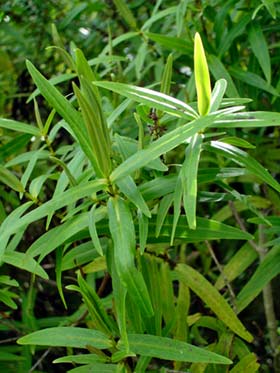
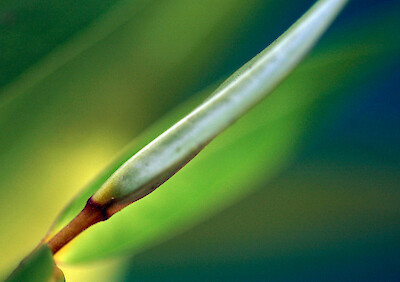
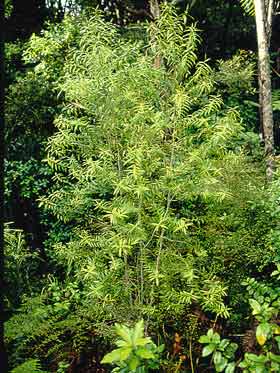
Hebe ligustrifolia showing leaf bud and foliage, Ex Cult. (Waima Forest), 3 Sept 2006, Mt Albert, Auckland.<br>Photographer: Peter J de Lange, Licence: <a target='_blank' href='https://creativecommons.org/licenses/by-nc/4.0'>CC BY-NC</a>.
Leaf bud showing absence of sinus. In cultivation (Wanganui) ex Te Paki.<br>Photographer: Colin C. Ogle, Date taken: 16/01/2011, Licence: <a target='_blank' href='https://creativecommons.org/licenses/by-nc/4.0'>CC BY-NC</a>. <a class='member-message' href='/nzpcn/why-join-nzpcn/' target='_blank'>Members can view a larger version of this image.</a>
In cultivation (Wanganui) ex Te Paki.<br>Photographer: Colin C. Ogle, Date taken: 16/01/2011, Licence: <a target='_blank' href='https://creativecommons.org/licenses/by-nc/4.0'>CC BY-NC</a>. <a class='member-message' href='/nzpcn/why-join-nzpcn/' target='_blank'>Members can view a larger version of this image.</a>
Dec 2006.<br>Photographer: Peter J de Lange, Licence: <a target='_blank' href='https://creativecommons.org/licenses/by-nc/4.0'>CC BY-NC</a>.
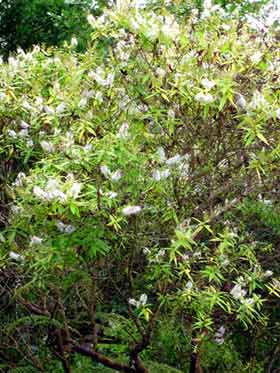
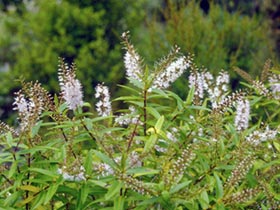
Growth habit, Spirits Bay (November).<br>Photographer: John Smith-Dodsworth, Licence: <a target='_blank' href='https://creativecommons.org/licenses/by-nc/4.0'>CC BY-NC</a>.
Unuwhao. Dec 1990.<br>Photographer: Colin C. Ogle, Licence: <a target='_blank' href='https://creativecommons.org/licenses/by-nc/4.0'>CC BY-NC</a>.
In cultivation (Wanganui) ex Te Paki.<br>Photographer: Colin C. Ogle, Date taken: 16/01/2011, Licence: <a target='_blank' href='https://creativecommons.org/licenses/by-nc/4.0'>CC BY-NC</a>. <a class='member-message' href='/nzpcn/why-join-nzpcn/' target='_blank'>Members can view a larger version of this image.</a>
Hikurua / de Surville Cliffs.<br>Photographer: Jeremy R. Rolfe, Date taken: 26/02/2011, Licence: <a target='_blank' href='https://creativecommons.org/licenses/by/4.0'>CC BY</a>. <a class='member-message' href='/nzpcn/why-join-nzpcn/' target='_blank'>Members can view a larger version of this image.</a>
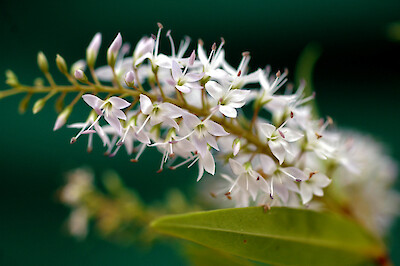
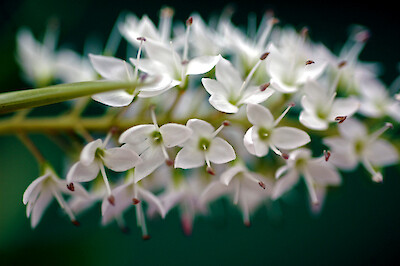
Flowers (Spirits Bay Road (November).<br>Photographer: John Smith-Dodsworth, Licence: <a target='_blank' href='https://creativecommons.org/licenses/by-nc/4.0'>CC BY-NC</a>.
Download PDF Comment on factsheet

NZPCN members can select up to 20 plant species and automatically create a full colour, fully illustrated A4 book describing them (in PDF format).

  • Find out more...
  • Join NZPCN...
Find in plant lists
iNaturalist NZ View observations Biota of NZ Click here to view NZ Flora Click here to view Te Papa View specimens Herbarium View AVH specimens Donate Support NZPCN

Common names

hebe

Biostatus

Native – Endemic taxon

Current conservation status

The conservation status of all known New Zealand vascular plant taxa at the rank of species and below were reassessed in 2022-2023 using the New Zealand Threat Classification System (NZTCS) – more information about this can be found on the NZTCS website. This report includes replaces all previous NZTCS lists for vascular plants. Previous assessments can be found here.

  • Conservation status of vascular plants in Aotearoa New Zealand, 2023. 2024. Peter J. de Lange, Jane Gosden, Shannel P. Courtney, Alexander J. Fergus, John W. Barkla, Sarah M. Beadel, Paul D. Champion, Rowan Hindmarsh-Walls, Troy Makan and Pascale Michel Department of Conservation. Source: NZTCS and licensed by DOC for reuse under the Creative Commons Attribution 4.0 International licence.

2023 | Not Threatened

Jump to previous conservation statuses

Category

Vascular

Structural class

Trees & Shrubs - Dicotyledons

Simplified description

Bushy yellowish shrub bearing pairs of narrow leaves inhabiting eastern Northland. Young twigs and central vein of leaf yellow. Leaves variable, to 100mm long by 20mm wide, widest at base tapering to a narrow blunt tip. Flowers white to pinkish, in a spike to 8cm long.

Flower colours

White

Detailed description

Openly branched, usually a bushy shrub or spreading low shrub, rarely a small tree (near Te Paki), to 2.5 (-8) m tall. Branches erect to spreading, old stems brown or grey; branchlets olive-green to more or less orange or sometimes purplish, minutely puberulent, hairs uniform; internodes (1.9-) 4-10 (-17.5) mm; leaf decurrencies evident (often with a narrow ridge along medial line) or obscure. Leaf bud distinct; sinus absent. Leaves erecto-patent to patent; lamina elliptic or oblong-elliptic or linear-lanceolate, subcoriaceous, flat or slightly m-shaped in traverse section, (12-) 26-50 (-100) x (4.2-) 6- 10 (-20) mm; apex subacute to obtuse; 2 lateral veins arising from base or brochidodromous secondary veins evident in fresh leaves; midrib thickened below and either slightly thickened above or depressed to grooved above; margin sometimes narrowly cartilaginous, puberulent or glabrous, rarely tinged red; upper surface light to dark green (with midrib and base of lamina often yellow), dull to slightly glossy, without evident stomata, usually minutely hairy along midrib or sometimes glabrous; lower surface light green, glabrous (mostly) or hairy along midrib (only toward base) or rarely covered with minute glandular hairs (on youngest leaves). Inflorescences with (15-) 20-70 flowers, lateral, unbranched, (2.5-) 3-8 cm; peduncle 0.45-1.5 (-2.2) cm; rachis 1.5-6.5 cm. Bracts alternate or lowermost pair opposite, then subopposite or alternate above, ovate or narrowly lanceolate, acute or subacute, rarely hairy outside. Flowers hermaphrodite. Pedicels usually longer than or equal to bracts, 1-2.5 mm. Calyx (1.5-) 2-3 mm; lobes lanceolate or elliptic, acute or subacute or acuminate, sometimes hairy outside. Corolla tube hairy inside and sometimes outside, (1.2-) 1.6-3 x 1.8-2.2 mm, funnelform, shorter than (usually) or equalling or sometimes slightly longer than calyx; lobes white or tinged mauve at anthesis, ovate to deltoid or lanceolate or elliptic (last two states mostly in anterior lobes), acute or subacute, suberect to recurved, longer than corolla tube, bluntly ciliate (often) or with a few hairs toward base on inner surface and sometimes hairy outside. Stamen filaments white or mauve, 5-6.5 mm; anthers mauve or purple, (1.5-) 1.7- 2.5 mm. Ovary 0.75-1 mm; ovules approximately 6-15 per locule; style 4-6 mm. Capsules acute or subacute, 2.5-4 (-6) x 1.7-3 (-3.7) mm, loculicidal split extending ½-¾-way to base. Seeds flattened, broad ellipsoid to more or less discoid, straw-yellow, 0.9-1.5 x 0.7-1.1 mm, micropylar rim 0.2-0.4 mm.

Similar taxa

Distinguished from most large-leaved “Occlusae” (see Bayley & Kellow 2006) by the combination of: leaf shape and size; having corolla tubes mostly shorter than calyces; and broad, acute, to subacute corolla lobes that are longer than the corolla tube. The leaves are generally less robust than those of V. perbella and broader than those of V. rivularis both of which have similar flowers. The outsides of calyces are frequently, though not always, glabrous; this can distinguish plants with only fruit or buds from V. stricta var. stricta, with which it may co-occur. It is probably most similar to V. flavida (see notes under that species); both often have midribs that are conspicuously yellow above.

Distribution

Endemic to Northland, North Island, from North Cape to Whangarei Heads, mostly on the eastern and northern coasts (between North Cape and Cape Reinga). It might also occur in western Northland (see notes below).

Habitat

Grows chiefly in near-coastal sites in scrub, in forest, on cliffs or on slips.

Detailed taxonomy

Genus

Veronica

Family

Plantaginaceae

Authority

Veronica ligustrifolia A.Cunn.
Synonyms

Hebe ligustrifolia (A.Cunn.) Cockayne et Allan

Taxonomic notes

It is possible that V. ligustrifolia also occurs in western Northland, particularly around and south of Hokianga Harbour, including Waima (P. J. de Lange pers. comm. 2005) and Waipoua forests. Some similar specimens from that area are identified here as V. flavida (but see notes under that species). We have had few opportunities for fieldwork in these areas and cannot identify all herbarium specimens with confidence.

V. ligustrifolia is variable in habit (from sprawling to, more commonly, erect) and leaf size, and two

informal segregates have been proposed: Hebe sp. “m” of Druce (1980) and Eagle (1982), also called H. “Whangarei” by Druce (1993); H. aff. ligustrifolia of de Lange & Murray (2002), databased at AK as H. ligustrifolia “var. Surville” and also listed, without an informal name, by Druce (1993). Neither is considered sufficiently distinct for recognition here.

A suite of specimens from Matai Bay, Karikari Peninsula (e.g. WELT 81894-81896), representing the only Hebe seen there, may have some affinity to V. ligustrifolia, but they are difficult to identify with any certainty. They have: long hairs on the branchlets, undersides of midribs, leaf margins and outsides of calyx lobes (all uncommon in V. ligustrifolia); corolla tubes slightly to conspicuously longer than calyces; and leaf flavonoids roughly intermediate between those of V. stricta var. stricta and V. ligustrifolia (Mitchell et al. in prep.).

Endemic taxon

Yes

Endemic genus

No

Endemic family

No

Ecology

Flowering

January-December

Fruiting

January-December

Life cycle and dispersal

Seeds are wind dispersed (Thorsen et al., 2009).

Other information

Etymology

veronica: Named after Saint Veronica, who gave Jesus her veil to wipe his brow as he carried the cross through Jerusalem, perhaps because the common name of this plant is ‘speedwell’. The name Veronica is often believed to derive from the Latin vera ‘truth’ and iconica ‘image’, but it is actually derived from the Macedonian name Berenice which means ‘bearer of victory’.

ligustrifolia: From the genus Ligustrum privet and the Greek word phylum ‘leaf’, meaning privet-leaved

NVS code

The National Vegetation Survey (NVS) Databank is a physical archive and electronic databank containing records of over 94,000 vegetation survey plots - including data from over 19,000 permanent plots. NVS maintains a standard set of species code abbreviations that correspond to standard scientific plant names from the Ngä Tipu o Aotearoa - New Zealand Plants database.

VERLIG

Chromosome number

2n = 40

Previous conservation statuses

The conservation status of all known New Zealand vascular plant taxa at the rank of species and below were reassessed in 2022-2023 using the New Zealand Threat Classification System (NZTCS) – more information about this can be found on the NZTCS website. This report includes replaces all previous NZTCS lists for vascular plants. Previous assessments can be found here.

  • Conservation status of vascular plants in Aotearoa New Zealand, 2023. 2024. Peter J. de Lange, Jane Gosden, Shannel P. Courtney, Alexander J. Fergus, John W. Barkla, Sarah M. Beadel, Paul D. Champion, Rowan Hindmarsh-Walls, Troy Makan and Pascale Michel Department of Conservation. Source: NZTCS and licensed by DOC for reuse under the Creative Commons Attribution 4.0 International licence.

2017 | Not Threatened

2012 | Not Threatened

2009 | Not Threatened

2004 | Not Threatened

Jump to current conservation status

Referencing and citations

References and further reading

Bayly, M.J., Kellow, A.V. 2006. An illustrated guide to New Zealand Hebes. Wellington, N.Z.: Te Papa press pg. 196-197.

de Lange, P. J. and Murray, B. G. 2002. Contributions to a chromosome atlas of the New Zealand Flora - 37. Miscellaneous families. New Zealand Journal of Botany 40:1-23.

Druce, A. P. 1993. Indigenous vascular plants of New Zealand. 9th revision. Unpublished checklist held at Landcare Research, Lincoln, New Zealand. Copy also held in the library of the Museum of New Zealand Te Papa Tongarewa, Wellington.

Druce, A. P. I980. Trees, shrubs, and Lianes of New Zealand (including wild hybrids). Unpublished checklist held at Landcare Research, Lincoln, New Zealand. (Copy also held in the library of the Museum of New Zealand Te Papa Tongarewa, Wellington.)

Eagle, A. 1982. Eagle’s Trees and Shrubs of New Zealand. 2nd series. Auckland: Collins.

Thorsen, M. J.; Dickinson, K. J. M.; Seddon, P. J. 2009. Seed dispersal systems in the New Zealand flora. Perspectives in Plant Ecology, Evolution and Systematics 11: 285-309

Attribution

Description adapted by M. Ward from Bayly & Kellow (2006).

▲ Back to top
  • Home
  • Flora
  • Threats
  • Ecosystems
  • Publications
  • Conservation
  • NZPCN
  • Help
  • Contact us
  • Facebook

© 2026 New Zealand Plant Conservation Network • Website by RS

Coastlands Plant Nursery Wildlands

Website sponsor

  • Home
  • Flora
    • Flora species
    • Tag names
    • Vascular
      • Ferns
        • King fern
        • True ferns
        • Adder's tongue ferns
        • Fork ferns and whisk ferns
        • Horsetails
      • Conifers
        • Celery pines
        • Kauri
        • Podocarps
          • Podocarpus
          • Dacrydium
          • Prumnopitys
          • Dacrycarpus
          • Halocarpus
          • Lepidothamnus
          • Manoao
        • Cypress
      • Flowering plants
        • Parasites
          • Leafy mistletoes
          • Pygmy mistletoes
            • Korthalsella flowers
            • Korthalsella hosts
            • Dispersal of Korthalsella
            • Associates of Korthalsella
          • Root parasites
          • Saprophytes
        • Epiphytes
          • NZ
            • Typical
            • Occasional
            • Hemi-epiphytes
            • Ephemeral
            • NZ list
        • Monocots
          • Orchids
            • Structure
          • Grasses
        • Dicots
          • Hebes
          • Kowhai
          • Coprosma
          • Beech
          • Rata
        • Carnivorous
        • Deciduous plants
        • Aquatic plants
      • Poisonous natives
      • Threatened plant lists
      • What's a vascular plant?
      • Club mosses
    • Non-vascular
      • Bryophytes
        • Liverworts
        • Mosses
        • Hornworts
      • Algae
        • Seaweeds
    • Lichens
    • Plant identification
      • Written descriptions
      • Experts
      • Plant keys
        • Key to parasitic plant genera
      • Collecting plants
        • Should I collect
        • Choosing a specimen
        • Field notes
        • Fresh plant material
        • Pressing and drying
        • Mounting specimens
        • Labelling specimens
    • Fungi
    • Make your own book
    • Quiz
  • Threats
    • Exotic Plants (Weeds)
      • Unwanted organisms
      • DOC weeds
      • Plant me instead
      • Pest Plant Accord
    • Pest Animals
      • Mammals
        • Mustelids
        • Rodents
        • Ungulates
        • Possums
      • Fish
      • Insects
    • Other threats
      • Natural events
        • Insects
      • Human induced
        • Habitat loss
        • Collection
        • Climate change
  • Ecosystems
    • Plant communities
      • Dunes
        • Volcanic
        • Coastal
          • Threats
          • Common species
          • Research on dunes
          • Pingao research
          • What you can do
      • Wetlands
        • Estuaries
          • Common estuarine species
          • Research on estuaries
        • Ephemeral
        • Restiad peat bogs
      • Forests
        • Kauri-podocarp-broadleaved
        • Podocarp broadleaved
        • Beech
      • Scrub/shrublands
        • Geothermal
          • Distribution of geothermal vegetation
          • Geothermal plants
          • Geothermal vegetation types
          • Threats to geothermal vegetation
        • Frost flat/hollow
        • Manuka fens
        • Gumlands
      • Grasslands
        • Tussock grasslands
      • Bare ground
        • Braided rivers
        • Alpine
        • Cliff
        • Scree and boulderfields
        • Shingle beaches
      • Herbfields
        • Saltpan
    • Ecosystem services
    • Novel ecosystems
  • Publications
    • Documents
    • Newsletter
    • Plant lists
      • Search plant lists
      • Plant lists by political region/district
      • Plant lists by ecological region/district
      • National plant lists
      • How to prepare a plant list
    • Botanical Society journals
    • NZPCN publications
  • Conservation
    • Seedbank
      • Project 1 - Pohutukawa, Rata and Myrtaceae
      • Project 2 - Alpine flora and the Forget-Me-Nots
      • Project 3 - Kowhai and its relatives
      • Project 4 - Podocarps and trees of the forest
    • Training
      • Module 1: Plant life
      • Module 2: Covenants
      • Module 3: Propagation
      • Module 4: Wetlands
      • Pilot course 2006
    • Restoration
      • Gardening
        • Being weed wise
        • Garden plants
          • Trees and shrubs
          • Broad-leaved herbs
          • Grass-like herbs
          • Climbers
          • Ferns
        • Attracting wildlife
        • Planting for lizards
          • Rules
      • Species recovery
        • Plant translocations
      • Ecological restoration
        • Case studies
          • Tavora Reserve
          • Waiwhakareke
      • Revegetation
      • Eco-sourcing
      • Find a restoration group
    • Monitoring
      • Number count
        • Number count method
        • Pros and cons of number counts
        • Data analysis and interpretation
      • Presence/absence surveys
        • Presence/absence survey methods
        • Pros and cons of presence/absence surveys
        • Data analysis and interpretation
      • Mapping spatial extent
        • Spatial extent mapping methods
        • Pros and cons of spatial extent mapping
        • Data analysis and interpretation
      • Photo points
        • Photo point guidelines
    • Habitat protection
      • Legal protection
        • Nga Whenua Rahui
        • QEII covenants
        • DOC Covenants
      • Animal pest control
      • Weed control
      • Fencing
    • Funding
    • Botanic gardens
    • Botanic Societies
  • NZPCN
    • News
    • Trilepidea newsletter
    • Events
      • 2026 NZPCN conference
        • 2026 Conference field trips
        • 2026 Conference workshops
        • 2026 conference sponsors
      • 2024 AGM
      • Conference 2024
        • 2024 conference overview
        • Conference 2024 workshops
        • Conference 2024 Field Trips
        • 2024 conference sponsors
        • Conference 2024 accommodation options
        • 2024 Conference Programme
      • Conference 2022
        • Conference programme summary
        • 2022 conference workshops
        • 2022 conference field trips
        • Code of conduct
        • COVID-19 information
        • 2022 conference sponsors
        • Abstract and poster submission
        • 2022 Conference venue and accommodation
        • Conference Workshop: Restoration Pathways
        • 2022 conference postponement
      • Conference 2019
      • Conference 2017
      • Conference 2015
        • Speakers
        • Workshops
        • Field trips
        • Charity auction
      • Conference 2013
        • Speakers
        • Timetable
      • 2023 Restoration Pathways Workshop
      • 2023 AGM
    • David Given Scholarship
      • David Given Scholarship Recipients
    • Council members
      • NZPCN council member profiles
      • Council 2023
      • Council 2022
      • Council 2021
      • Council 2020
      • Council 2019
      • Council 2018
      • Council 2017
      • Council 2016
      • Council 2015
      • Council 2014
      • Council 2024
      • Council 2013
      • Council 2012
      • Council 2011
      • Council 2010
      • Council 2009
      • Council 2008
      • Council 2007
      • Council 2006
      • Council 2005
      • Council 2004
      • Council 2003
    • Awards
      • NZPCN Awards
        • 2024 Plant Conservation Awards
        • 2022
        • 2019
        • 2018
        • 2017
        • 2016
        • 2015
        • 2014
        • 2013
        • 2012
        • 2011
        • 2010
        • 2009
        • 2008
        • 2007
        • 2006
        • 2005
    • Shop
    • Donate
    • Favourite Plant
    • Why join NZPCN?
    • Join
  • Help
    • FAQ
      • Joining the Network
      • The Network
      • Network website
      • New Zealand plants
      • The law
      • Your discoveries
    • Query
    • Glossary
  • Contact us
  • Facebook