
Banksia aemula
Common names
wallum
Biostatus
Exotic
Conservation status
Not applicable
Category
Vascular
Structural class
Trees & Shrubs - Dicotyledons
Flower colours
Green, Yellow
Similar taxa
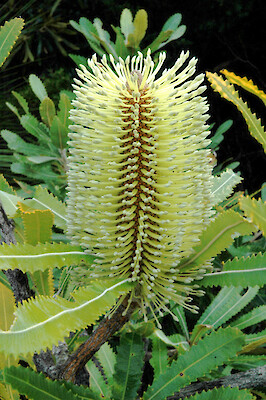
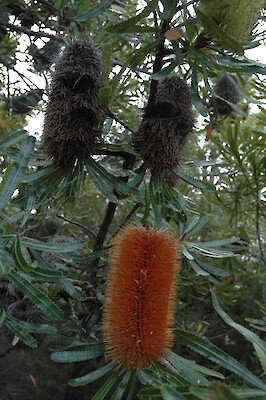
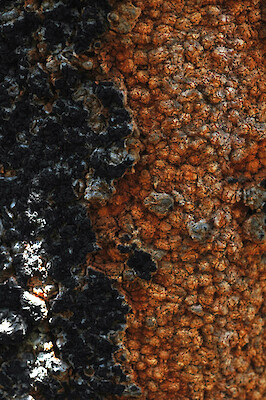
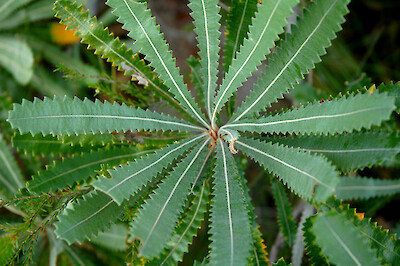
Banksia serrata. “B. aemula closely resembles B. serrata, but the latter can be distinguished by a greyer, not orange-brown, trunk, and adult leaves wider than 2 cm. Inflorescences of B. serrata are generally a duller grey-yellow in colour, and have longer (2–3 mm), more fusiform (spindle-shaped) or cylindrical pollen presenters tipping unopened flowers. In B. serrata the follicles are smaller.” Adapted from https://en.wikipedia.org/wiki/Banksia_aemula
Habitat
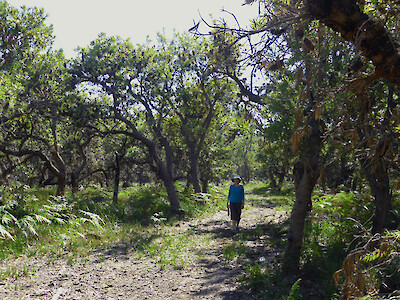
Peaty sand on coastal dunes in Australia
Detailed taxonomy
Genus
Family
Endemic family
No
Ecology
Year naturalised
2000
Origin
Eastern Australia
Reason for introduction
Ornamental
Life cycle and dispersal
Long-lived, held in cones and only released on death of branch or following fire. Reproduces exclusively by seed, which is long-lived, held in cones and only released on death of branch or following fire. Dispersed by wind and gravity. However, seedlings most typically establish from carelessly discarded garden waste
Other information
Etymology
banksia: Named after Sir Joseph Banks, 1st Baronet, GCB, PRS (24 February 1743 - 19 June 1820) was an English naturalist, botanist and patron of the natural sciences.
aemula: From the Latin aemula ‘rival’