
Chlorovibrissea tasmanica
Biostatus
Native
Category
Fungi
Detailed description
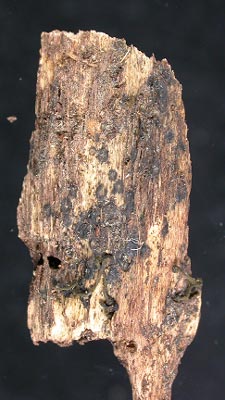
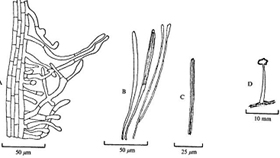
The ascomata are superficial, solitary or several arise from a common mycelial pad. They are stipitate, up to 14 mm high. The fertile head is subglobose or lobed, up to 3–4 mm in diameter, pale green when fresh, becoming pale brown on dried specimens. It is totally covered with the hymenium except where the stem is inserted in an umbilicus. The stalk is 1 mm thick at the base, tapering upward, pale green fading to pale brown at the apex. It is covered with a dense layer of superficial, septate hairs. The asci are cylindrical with a long slightly tapering stalk, with 8 spores, 105–120 x 4–5 µm. The ascospores are filiform, slightly tapering, 80–120 x 1–1.5 µm, about 10-septate.
Distribution
Gisborne, Australia (Tasmania)
Substrate details
On decorticated wood.
Detailed taxonomy
Genus
Synonyms
Vibrissea tasmanica Rodway
Ecology
Fruiting
May
Other information
Where To Buy
Etymology
tasmanica: Named after Abel Janzoon Tasman (1603-1659) who in the 17th century was the first European to sight Van Dieman’s land (now known as Tasmania)