
Drucella integristipula



Common names
Liverwort
Biostatus
Native
Current conservation status
The conservation status of the New Zealand hornwort and liverwort flora is reassessed using the New Zealand Threat Classification System (NZTCS). A full list is presented, along with a statistical summary and brief notes on the most important changes. This list replaces all previous NZTCS lists for New Zealand hornworts and liverworts which previously had been part of a generic bryophyte conservation status assessment that included mosses. Authors: P.J. de Lange, D. Glenny, K. Frogley, M.A.M. Renner, M. von Konrat, J.J. Engel, C. Reeb and J.R. Rolfe.
Source: NZTCS and licensed by DOC for reuse under the Creative Commons Attribution 4.0 International licence.
2020 | Not Threatened | Qualifiers: SO
Category
Non-vascular
Structural class
Liverworts
Detailed description
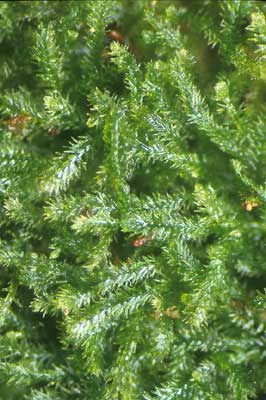
Anisophyllous, pallid green, nitid plants arising from a basalt system of creeping, microphyllous, strongly elongated, rarely branched rhizomatous or stoloniform axes from which arise ascending to erect branches. Branching irregular, intercalary, lateral. Stem rigid, wiry. Rhizoids occasional, arising at underleaf bases of older sectors of shoots, leaf bases and underleaves of rhizomes and stolons. Leaves contiguous to weakly imbricate, stiff and widely spreading, 160-250 micrometre long, separated by 1-3 cortical cells either side, insertion incubous; leaves asymmetrically cuneate to obtrapezoidal, 2-3-fid. Lobes unequal, entire, dorsal lobe linear-lanceolate, 2-4 cells wide at base, terminating in uniseriate row of 2-4 elongated cells, middle lobe similar to dorsal, ventral lobe smaller. Disc 2-4 cells high 5-6 cells wide, cells pellucid, thick walled, without trigones. Underleaves inserted on 2-3 rows of stem cells, obtrapezoid-quadrate, 2-3-lobed, lobes unequal. Dioecious. Androecia on short ventral-intercalary branches; bracts larger than vegetative leaves, concave, bifid; antheridia 1 per bract, stalk uniseriate. Gynoecia on short intercalary branches; bracts 2-3-seriate, appressed to perianth, 2-5-fid, lobes 2-4 cells wide at base. Perianth ovoid-cylindrical, mouth wide, lobulate-ciliate, cilia terminating in a uniseriate row of 4-8 cells; perianth unistratose. Seta with 8 rows of outer cells core of 14-16 smaller cells. Capsule short-ovoid, small, valves 140-145 x 315-330 micrometre, bistratose. Spores 8.6-13.2 micrometre diameter, reddish-brown or yellow-brown, reticulate. Elaters rigid 8.2-16 micrometre wide, slightly tapered, bispiral, spirals 2.4-2.9 micrometre wide.
Distribution
Indigenous. Kermadec (Raoul I.), North, South and Chatham Islands. Also Australia (Queensland) and Fiji
Substrate details
Clay, impoverished soil and saprolite (rarely rock). Usually on damp, heavily shaded banks where it often grows under the overhanging fronds of kiokio (Blechnum novae-zelandiae) in association with Paracromastigium and Lepidozia species. Rarely it has been found on peat.
Threats
A biologically sparse, naturally uncommon plant that is widespread but rarely abundant at any particular site.
Detailed taxonomy
Genus
Family
Synonyms
Lepidozia integristipula Steph.
Endemic taxon
No
Endemic genus
No
Endemic family
No
Ecology
Fruiting
October - January
Other information
Previous conservation statuses
The conservation status of the New Zealand hornwort and liverwort flora is reassessed using the New Zealand Threat Classification System (NZTCS). A full list is presented, along with a statistical summary and brief notes on the most important changes. This list replaces all previous NZTCS lists for New Zealand hornworts and liverworts which previously had been part of a generic bryophyte conservation status assessment that included mosses. Authors: P.J. de Lange, D. Glenny, K. Frogley, M.A.M. Renner, M. von Konrat, J.J. Engel, C. Reeb and J.R. Rolfe.
Source: NZTCS and licensed by DOC for reuse under the Creative Commons Attribution 4.0 International licence.
2009 | Not Threatened
2004 | Sparse
Referencing and citations
Attribution
Fact Sheet Prepared for NZPCN by: P.J. de Lange 31 August 2007.