
Eccremocarpus scaber

NPPA pest plant
Environmental Weed (2024)
Common names
Chilean glory creeper
Biostatus
Exotic
Conservation status
Not applicable
Category
Vascular
Structural class
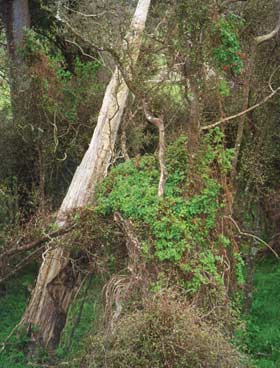
Lianes & Related Trailing Plants - Dicotyledons
Flower colours
Orange, Red/Pink
Detailed description
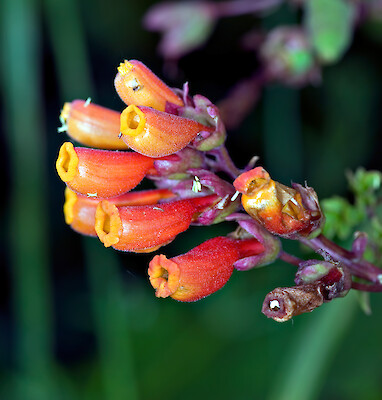
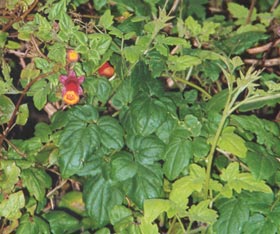
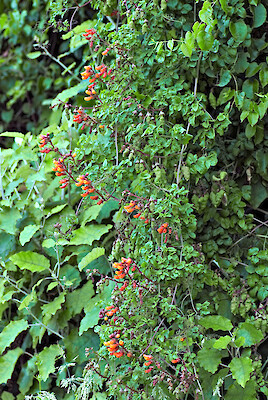
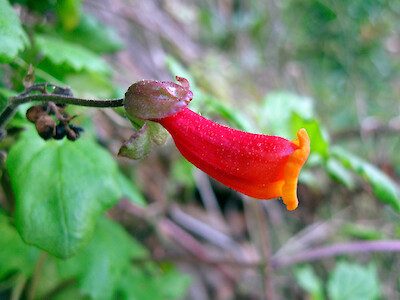
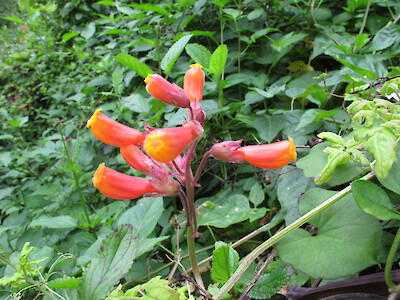
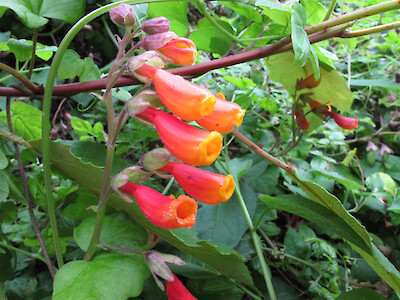
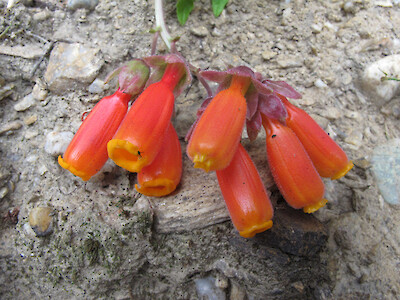
A multi-branched climbing subshrub. Evergreen, or deciduous in colder climates, with aerial shoots dying back in winter. Leaves are in opposite pairs, each leaf comprising 2-3 (-7) leaflets, arranged alternately to sub-opposite. The leaflets are thin, variable in size and shape but are generally oval and about 2 cm long. Flowers are numerous and are a showy orange-red outside and orange within. Petals are c. 2.5 cm long, rounded, and slightly rolled backwards at the tips. Flowering occurs from Sept-May. Fruit capsules are glossy, slightly wrinkled and oval shaped; 4.5 x 2 cm. Seeds are black with a prominent wing that aids wind dispersal.
Detailed taxonomy
Genus
Family
Endemic family
No
Ecology
Year naturalised
1940
Origin
Chile- Andes
Reason for introduction
Eccremocarpus scaber
Other information
Etymology
eccremocarpus: From the Greek ekkremes ‘pendent’ and karpos ‘seed’, the seed vessels being pendulous.
National Pest Plant Accord species
This plant is listed in the 2020 National Pest Plant Accord. The National Pest Plant Accord (NPPA) is an agreement to prevent the sale and/or distribution of specified pest plants where either formal or casual horticultural trade is the most significant way of spreading the plant in New Zealand. For up to date information and an electronic copy of the 2020 Pest Plant Accord manual (including plant information and images) visit the MPI website.
Environmental Weed (2024)
This plant is named in a list of 386 environmental weeds in New Zealand 2024 prepared by DOC. 759 candidate species were considered for inclusion on this new comprehensive list of environmental weeds in New Zealand. The species considered were drawn from published lists of weed species, lists of plants that must be reported or managed by law if observed, existing national and regional programmes and agreements for pest management, and species already managed by the Department of Conservation (DOC). Candidate species were then assessed to see if they were fully naturalised and whether they have more than minor impacts in natural ecosystems. Read the full report here.
NVS code
The National Vegetation Survey (NVS) Databank is a physical archive and electronic databank containing records of over 94,000 vegetation survey plots - including data from over 19,000 permanent plots. NVS maintains a standard set of species code abbreviations that correspond to standard scientific plant names from the Ngä Tipu o Aotearoa - New Zealand Plants database.
ECCSCA