
Ficus rubiginosa

NPPA pest plant
Common names
Port Jackson fig
Biostatus
Exotic
Conservation status
Not applicable
Category
Vascular
Structural class
Trees & Shrubs - Dicotyledons
Detailed description
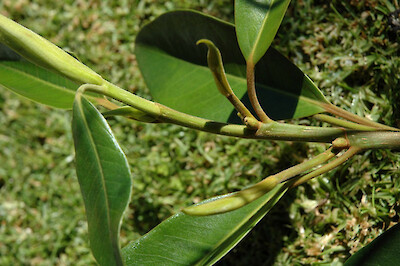
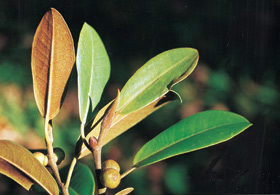
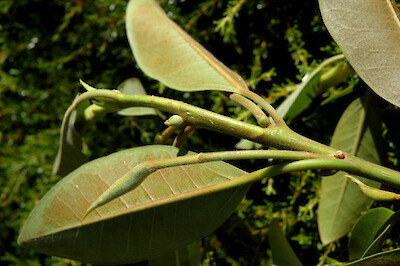
Evergreen small to large tree often starting life as an epiphyte. Leaves smooth above, densely clothed in fine reddish hairs below, oval, 4-12 cm long. Fruit yellow to dull red to 20 mm wide.
Similar taxa
Can be distinguished from Morton Bay fig (Ficus macrophylla) by the smaller, hairy leaves, and smaller fruit.
Habitat
Terrestrial. Rock walls, firm rocky outcrops. Phoenix palm trunks
Detailed taxonomy
Genus
Family
Endemic family
No
Ecology
Flowering
December, January, February
Year naturalised
1981
Origin
NSW, Queensland
Reason for introduction
Ornamental
Life cycle and dispersal
Perennial. Reproduces from seed. Some layering and resprouting from aerial roots may occur. Dispersed by birds.
Other information
Etymology
ficus: The Latin name for fig tree, possibly derived from the Hebrew word fag
rubiginosa: Rust-coloured
National Pest Plant Accord species
This plant is listed in the 2020 National Pest Plant Accord. The National Pest Plant Accord (NPPA) is an agreement to prevent the sale and/or distribution of specified pest plants where either formal or casual horticultural trade is the most significant way of spreading the plant in New Zealand. For up to date information and an electronic copy of the 2020 Pest Plant Accord manual (including plant information and images) visit the MPI website.
NVS code
The National Vegetation Survey (NVS) Databank is a physical archive and electronic databank containing records of over 94,000 vegetation survey plots - including data from over 19,000 permanent plots. NVS maintains a standard set of species code abbreviations that correspond to standard scientific plant names from the Ngä Tipu o Aotearoa - New Zealand Plants database.
FICRUB