New Zealand Plant Conservation Network
  • Member login
  • Join
Facebook
  • Home
  • Flora
    • Flora species
    • Tag names
    • Vascular
    • Non-vascular
    • Lichens
    • Plant identification
    • Fungi
    • Make your own book
    • Quiz
  • Threats
    • Exotic Plants (Weeds)
    • Pest Animals
    • Other threats
  • Ecosystems
    • Plant communities
    • Ecosystem services
    • Novel ecosystems
  • Publications
    • Documents
    • Newsletter
    • Plant lists
    • Botanical Society journals
    • NZPCN publications
  • Conservation
    • Seedbank
    • Training
    • Restoration
    • Monitoring
    • Habitat protection
    • Funding
    • Botanic gardens
    • Botanic Societies
  • NZPCN
    • News
    • Trilepidea newsletter
    • Events
    • David Given Scholarship
    • Council members
    • Awards
    • Shop
    • Donate
    • Favourite Plant
    • Why join NZPCN?
    • Join
  • Help
    • FAQ
    • Query
    • Glossary
  • Contact us

Search flora

  1. Home
  2. Flora
  3. Flora species
  4. Fissidens integerrimus

Fissidens integerrimus

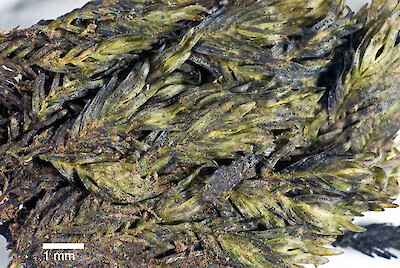
Waitakere Range (specimen collected by Jessica Beever).<br>Photographer: Jeremy R. Rolfe, Licence: <a target='_blank' href='https://creativecommons.org/licenses/by/4.0'>CC BY</a>. <a class='member-message' href='/nzpcn/why-join-nzpcn/' target='_blank'>Members can view a larger version of this image.</a>
Photographed dry. Waitakere Range (specimen collected by Jessica Beever).<br>Photographer: Jeremy R. Rolfe, Licence: <a target='_blank' href='https://creativecommons.org/licenses/by/4.0'>CC BY</a>. <a class='member-message' href='/nzpcn/why-join-nzpcn/' target='_blank'>Members can view a larger version of this image.</a>
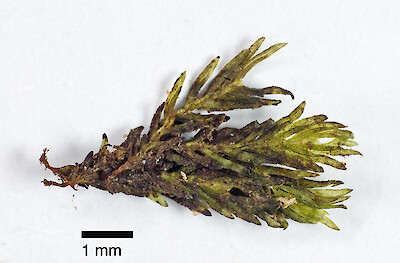
Photographed dry. Waitakere Range, (specimen collected by Jessica Beever).<br>Photographer: Jeremy R. Rolfe, Licence: <a target='_blank' href='https://creativecommons.org/licenses/by/4.0'>CC BY</a>. <a class='member-message' href='/nzpcn/why-join-nzpcn/' target='_blank'>Members can view a larger version of this image.</a>
Waitakere Range (specimen collected by Jessica Beever).<br>Photographer: Jeremy R. Rolfe, Licence: <a target='_blank' href='https://creativecommons.org/licenses/by/4.0'>CC BY</a>. <a class='member-message' href='/nzpcn/why-join-nzpcn/' target='_blank'>Members can view a larger version of this image.</a>
Waitakere Range (specimen collected by Jessica Beever).<br>Photographer: Jeremy R. Rolfe, Licence: <a target='_blank' href='https://creativecommons.org/licenses/by/4.0'>CC BY</a>.
Download PDF Comment on factsheet

NZPCN members can select up to 20 plant species and automatically create a full colour, fully illustrated A4 book describing them (in PDF format).

  • Find out more...
  • Join NZPCN...
Find in plant lists
iNaturalist NZ View observations Biota of NZ Click here to view Herbarium View AVH specimens Donate Support NZPCN

Common names

moss

Biostatus

Native

Current conservation status

This is the first complete assessment of all known species of mosses found in the wild in Aotearoa New Zealand with a total of 560 species being assessed. The conservation status of mosses, published in the NZTCS database, replaces all previous assessments of mosses. Data supporting the 2025 NZTCS assessment of mosses has been published on the NZTCS database at https://nztcs.org.nz/reports/1155.

Source: NZTCS and licensed by DOC for reuse under the Creative Commons Attribution 4.0 International licence.

2025 | Threatened – Nationally Endangered | Qualifiers: DPS, DPT, RR, TO

Jump to previous conservation statuses

Category

Non-vascular

Structural class

Mosses

Detailed description

Plants medium sized for the genus, saxicolous, rheophytic, dark green; all but youngest leaves usually encrusted with diatoms and detritus; shoots forming dense smooth mats of parallel prostrate stems in fast flowing water, more sparsely gregarious with more or less erect stems in slower moving water, falcate, 5-15 mm long, up to 2 mm wide, frequently branched; shoot branches readily detached; rhizoids at base of shoots and base of shoot branches, occasionally in leaf axils; stems with central strand, small axillary hyaline nodules differentiated, uniseriate axillary hairs present; leaves in 10-45 pairs, when moist slightly falcate, when dry little altered, mid-stem leaves slightly overlapping to distant, oblong lanceolate, 1.25- 2 mm long, 0.25-0.35 mm wide; leaf apex obtuse to acute; vaginant lamina 1/2-2/3 of leaf length, junction only along nerve or up to mid-way across lamina; dorsal lamina narrow, reaching to stem; nerve curved below, bent at apex of vaginant lamina, failing before leaf apex, surface cells with small lumina in cross-section, deuter cells exposed on the adaxial face; leaf margins serrulate; intramarginal border usually well developed in proximal half of vaginant lamina but sometimes very weak or absent, distal half of vaginant lamina unbordered; laminae unistratose; cells of apical and dorsal laminae quadrate to hexagonal, thick-walled (8-) 11-16(-20) microns long, clear, smooth, those in 1-4 marginal rows smaller than those nearer the nerve. Apparently dioicous or cladautoicous; female inflorescences terminal on main and axillary stems; perichaetial leaves narrower than vegetative leaves; archegonia 300-350 microns long; setae 2.5-3.5 mm long; capsule inclined, symmetrical, urn 0.4-0.6 mm long, exothecial cells quadrate to short rectangular, numbering about 30 around perimeter at midcapsule; operculum rostrate with an erect beak, equaling the length of the urn; peristome teeth 50-60 microns wide at base, bifurcate from below mid-tooth, lamellae ornamented with closely packed smooth ridges bearing intramural papilla-like thickenings in basal part of tooth, smooth at the zone of bifurcation, filaments spirally thickened; spores 13-20 microns; calyptra slightly scabrous above, mitriform, not completely covering operculum.

Distribution

Indigenous. Australia and New Zealand. In New Zealand known only from the North Island (at four sites (Puketi Forest, near Kerikeri, and from two locations in the Waitakere Ranges) and the Chatham Islands (Rangiauria (Pitt Island)).

Habitat

Aquatic. Saxicolous on base rich rocks such as basalt and gabbro. Confined to lowland streams in forest or formerly forested areas.

Substrate details

Saxicolous aquatic moss growing on basalt and andesite rock, in well aerated, fast flowing streams within forest

Threats

Extremely vulnerable to changes in water levels, aeration and quality. Also susceptible to trampling as a result of the recreational activity known as canyoning, aquatic weed invasion, deforestation and subsequent increased light levels and siltation.

Detailed taxonomy

Genus

Fissidens

Family

Fissidentaceae

Authority

Fissidens integerrimus Mitt.
Synonyms

Fissidens tasmanicus Broth, ex Rodw.; Fissidens hunteri Willis

Endemic taxon

No

Endemic genus

No

Endemic family

No

Ecology

Fruiting

Fruit may be found throughout the year

Other information

Etymology

fissidens: From the Latin fissio ‘fission’ and dens ‘tooth, prong’ meaning split tooth and referring to shape of the lamina.

Previous conservation statuses

This is the first complete assessment of all known species of mosses found in the wild in Aotearoa New Zealand with a total of 560 species being assessed. The conservation status of mosses, published in the NZTCS database, replaces all previous assessments of mosses. Data supporting the 2025 NZTCS assessment of mosses has been published on the NZTCS database at https://nztcs.org.nz/reports/1155.

Source: NZTCS and licensed by DOC for reuse under the Creative Commons Attribution 4.0 International licence.

2014 | Threatened – Nationally Vulnerable | Qualifiers: DP, RR, TO

2010 | Threatened – Nationally Vulnerable | Qualifiers: DP, RR, TO

2005 | Threatened – Nationally Endangered | Qualifiers: S?O

Jump to current conservation status

Referencing and citations

References and further reading

Beever, J.E.; Stone, I.G. 1992: Studies of Fissidens (Bryophyta: Musci) in New Zealand: F. taxifolius Hedw. and F. integerrimus Mitt . New Zealand Journal of Botany 30: 237–246.

Attribution

Fact Sheet Prepared for NZPCN by: P.J. de Lange August 2007. Description adapted from Beever & Stone (1992).

▲ Back to top
  • Home
  • Flora
  • Threats
  • Ecosystems
  • Publications
  • Conservation
  • NZPCN
  • Help
  • Contact us

© 2026 New Zealand Plant Conservation Network • Website by RS

Coastlands Plant Nursery Wildlands

Website sponsor

  • Home
  • Flora
    • Flora species
    • Tag names
    • Vascular
      • Ferns
        • King fern
        • True ferns
        • Adder's tongue ferns
        • Fork ferns and whisk ferns
        • Horsetails
      • Conifers
        • Celery pines
        • Kauri
        • Podocarps
          • Podocarpus
          • Dacrydium
          • Prumnopitys
          • Dacrycarpus
          • Halocarpus
          • Lepidothamnus
          • Manoao
        • Cypress
      • Flowering plants
        • Parasites
          • Leafy mistletoes
          • Pygmy mistletoes
            • Korthalsella flowers
            • Korthalsella hosts
            • Dispersal of Korthalsella
            • Associates of Korthalsella
          • Root parasites
          • Saprophytes
        • Epiphytes
          • NZ
            • Typical
            • Occasional
            • Hemi-epiphytes
            • Ephemeral
            • NZ list
        • Monocots
          • Orchids
            • Structure
          • Grasses
        • Dicots
          • Hebes
          • Kowhai
          • Coprosma
          • Beech
          • Rata
        • Carnivorous
        • Deciduous plants
        • Aquatic plants
      • Poisonous natives
      • Threatened plant lists
      • What's a vascular plant?
      • Club mosses
    • Non-vascular
      • Bryophytes
        • Liverworts
        • Mosses
        • Hornworts
      • Algae
        • Seaweeds
    • Lichens
    • Plant identification
      • Written descriptions
      • Experts
      • Plant keys
        • Key to parasitic plant genera
      • Collecting plants
        • Should I collect
        • Choosing a specimen
        • Field notes
        • Fresh plant material
        • Pressing and drying
        • Mounting specimens
        • Labelling specimens
    • Fungi
    • Make your own book
    • Quiz
  • Threats
    • Exotic Plants (Weeds)
      • Unwanted organisms
      • DOC weeds
      • Plant me instead
      • Pest Plant Accord
    • Pest Animals
      • Mammals
        • Mustelids
        • Rodents
        • Ungulates
        • Possums
      • Fish
      • Insects
    • Other threats
      • Natural events
        • Insects
      • Human induced
        • Habitat loss
        • Collection
        • Climate change
  • Ecosystems
    • Plant communities
      • Dunes
        • Volcanic
        • Coastal
          • Threats
          • Common species
          • Research on dunes
          • Pingao research
          • What you can do
      • Wetlands
        • Estuaries
          • Common estuarine species
          • Research on estuaries
        • Ephemeral
        • Restiad peat bogs
      • Forests
        • Kauri-podocarp-broadleaved
        • Podocarp broadleaved
        • Beech
      • Scrub/shrublands
        • Geothermal
          • Distribution of geothermal vegetation
          • Geothermal plants
          • Geothermal vegetation types
          • Threats to geothermal vegetation
        • Frost flat/hollow
        • Manuka fens
        • Gumlands
      • Grasslands
        • Tussock grasslands
      • Bare ground
        • Braided rivers
        • Alpine
        • Cliff
        • Scree and boulderfields
        • Shingle beaches
      • Herbfields
        • Saltpan
    • Ecosystem services
    • Novel ecosystems
  • Publications
    • Documents
    • Newsletter
    • Plant lists
      • Search plant lists
      • Plant lists by political region/district
      • Plant lists by ecological region/district
      • National plant lists
      • How to prepare a plant list
    • Botanical Society journals
    • NZPCN publications
  • Conservation
    • Seedbank
      • Project 1 - Pohutukawa, Rata and Myrtaceae
      • Project 2 - Alpine flora and the Forget-Me-Nots
      • Project 3 - Kowhai and its relatives
      • Project 4 - Podocarps and trees of the forest
    • Training
      • Module 1: Plant life
      • Module 2: Covenants
      • Module 3: Propagation
      • Module 4: Wetlands
      • Pilot course 2006
    • Restoration
      • Gardening
        • Being weed wise
        • Garden plants
          • Trees and shrubs
          • Broad-leaved herbs
          • Grass-like herbs
          • Climbers
          • Ferns
        • Attracting wildlife
        • Planting for lizards
          • Rules
      • Species recovery
        • Plant translocations
      • Ecological restoration
        • Case studies
          • Tavora Reserve
          • Waiwhakareke
      • Revegetation
      • Eco-sourcing
      • Find a restoration group
    • Monitoring
      • Number count
        • Number count method
        • Pros and cons of number counts
        • Data analysis and interpretation
      • Presence/absence surveys
        • Presence/absence survey methods
        • Pros and cons of presence/absence surveys
        • Data analysis and interpretation
      • Mapping spatial extent
        • Spatial extent mapping methods
        • Pros and cons of spatial extent mapping
        • Data analysis and interpretation
      • Photo points
        • Photo point guidelines
    • Habitat protection
      • Legal protection
        • Nga Whenua Rahui
        • QEII covenants
        • DOC Covenants
      • Animal pest control
      • Weed control
      • Fencing
    • Funding
    • Botanic gardens
    • Botanic Societies
  • NZPCN
    • News
    • Trilepidea newsletter
    • Events
      • 2026 NZPCN conference
        • 2026 Conference field trips
        • 2026 Conference workshops
        • 2026 conference sponsors
        • 2026 Conference keynote speakers
      • 2024 AGM
      • Conference 2024
        • 2024 conference overview
        • Conference 2024 workshops
        • Conference 2024 Field Trips
        • 2024 conference sponsors
        • Conference 2024 accommodation options
        • 2024 Conference Programme
      • Conference 2022
        • Conference programme summary
        • 2022 conference workshops
        • 2022 conference field trips
        • Code of conduct
        • COVID-19 information
        • 2022 conference sponsors
        • Abstract and poster submission
        • 2022 Conference venue and accommodation
        • Conference Workshop: Restoration Pathways
        • 2022 conference postponement
      • Conference 2019
      • Conference 2017
      • Conference 2015
        • Speakers
        • Workshops
        • Field trips
        • Charity auction
      • Conference 2013
        • Speakers
        • Timetable
      • 2023 Restoration Pathways Workshop
      • 2023 AGM
    • David Given Scholarship
      • David Given Scholarship Recipients
    • Council members
      • NZPCN council member profiles
      • Council 2023
      • Council 2022
      • Council 2021
      • Council 2020
      • Council 2019
      • Council 2018
      • Council 2017
      • Council 2016
      • Council 2015
      • Council 2014
      • Council 2024
      • Council 2013
      • Council 2012
      • Council 2011
      • Council 2010
      • Council 2009
      • Council 2008
      • Council 2007
      • Council 2006
      • Council 2005
      • Council 2004
      • Council 2003
    • Awards
      • NZPCN Awards
        • 2024 Plant Conservation Awards
        • 2022
        • 2019
        • 2018
        • 2017
        • 2016
        • 2015
        • 2014
        • 2013
        • 2012
        • 2011
        • 2010
        • 2009
        • 2008
        • 2007
        • 2006
        • 2005
    • Shop
    • Donate
    • Favourite Plant
    • Why join NZPCN?
    • Join
  • Help
    • FAQ
      • Joining the Network
      • The Network
      • Network website
      • New Zealand plants
      • The law
      • Your discoveries
    • Query
    • Glossary
  • Contact us
  • Facebook