
New Zealand Plant Conservation Network
  • Member login
  • Join
Facebook
  • Home
  • Flora
    • Flora species
    • Tag names
    • Vascular
    • Non-vascular
    • Lichens
    • Plant identification
    • Fungi
    • Make your own book
    • Quiz
  • Threats
    • Exotic Plants (Weeds)
    • Pest Animals
    • Other threats
  • Ecosystems
    • Plant communities
    • Ecosystem services
    • Novel ecosystems
  • Publications
    • Documents
    • Newsletter
    • Plant lists
    • Botanical Society journals
    • NZPCN publications
  • Conservation
    • Seedbank
    • Training
    • Restoration
    • Monitoring
    • Habitat protection
    • Funding
    • Botanic gardens
    • Botanic Societies
  • NZPCN
    • News
    • Trilepidea newsletter
    • Events
    • David Given Scholarship
    • Council members
    • Awards
    • Shop
    • Donate
    • Favourite Plant
    • Why join NZPCN?
    • Join
  • Help
    • FAQ
    • Query
    • Glossary
  • Contact us

Search flora

  1. Home
  2. Flora
  3. Flora species
  4. Frullania wairua

Frullania wairua

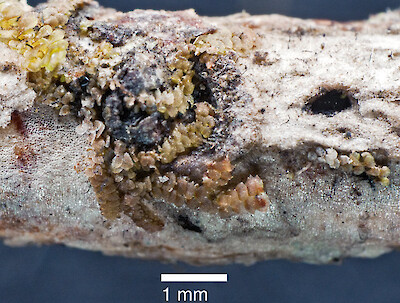
Te Paki. Sep 2011.<br>Photographer: Jeremy R. Rolfe, Licence: <a target='_blank' href='https://creativecommons.org/licenses/by/4.0'>CC BY</a>. <a class='member-message' href='/nzpcn/why-join-nzpcn/' target='_blank'>Members can view a larger version of this image.</a>
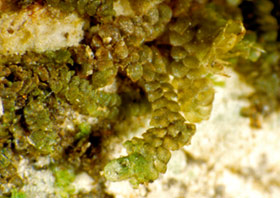
Frullania wairua.<br>Photographer: John E. Braggins, Licence: All rights reserved.
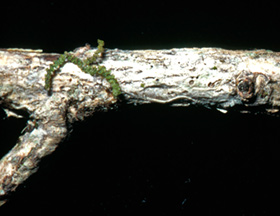
Frullania wairua on Bartletts Rata twig.<br>Photographer: John E. Braggins, Licence: All rights reserved.
Download PDF Comment on factsheet

NZPCN members can select up to 20 plant species and automatically create a full colour, fully illustrated A4 book describing them (in PDF format).

  • Find out more...
  • Join NZPCN...
Find in plant lists
iNaturalist NZ View observations Biota of NZ Click here to view Herbarium View AVH specimens Donate Support NZPCN
Award ribbon

Past favourite plant finalist

Common names

Liverwort

Biostatus

Native – Endemic taxon

Current conservation status

  • Conservation status of New Zealand hornworts and liverworts, 2020

The conservation status of the New Zealand hornwort and liverwort flora is reassessed using the New Zealand Threat Classification System (NZTCS). A full list is presented, along with a statistical summary and brief notes on the most important changes. This list replaces all previous NZTCS lists for New Zealand hornworts and liverworts which previously had been part of a generic bryophyte conservation status assessment that included mosses. Authors: P.J. de Lange, D. Glenny, K. Frogley, M.A.M. Renner, M. von Konrat, J.J. Engel, C. Reeb and J.R. Rolfe.

Source: NZTCS and licensed by DOC for reuse under the Creative Commons Attribution 4.0 International licence.

2020 | Threatened – Nationally Critical | Qualifiers: CD

Jump to previous conservation statuses

Category

Non-vascular

Structural class

Liverworts

Detailed description

Plants small, main shoots to 750 micrometre wide, olive-green. Branching frequently pinnate, branches mainly of Frullania-type. First branch underleaf with three distinct segments, the ventral lamina divided for half its length into two subequally sized lobes + 1 dorsal saccate lobe. First branch leaf with two distinct segments, a strap-shaped dorsal segment +1 saccate ventral segment (+ a stylus), otherwise ± characteristic in form to those of the main stem. Stem leaves of main shoot flat, slightly imbricate, ovate, to 300 x 225 micrometre, distal margins flat, lobe apices rounded, acute or abruptly apiculate, especially on younger shoots; base truncate or rounded; dorsal surface smooth. Lobules remote from stem, obliquely spreading, at angle of 30–50 degrees so that they are tilted outwards, clavate-cylindric, somewhat dorsiventrally compressed near mouth otherwise upper half gibbous, apex obtuse, the lobule obscuring the exposed area of the dorsal lobe to 125 x 80 micrometre, the opening of the mouth wide, free margin of lobular mouth crenulate-sinuate. Stylus small, uniseriate to triangular, up to 40 micrometre long, of 4–8 cells, 2–3 cells wide at base. Underleaves to 0.05–0.1x size of leaf lobes, distant, to 75(100) x 50(75) micrometre, 4–6 cells wide, 0.5–0.6 bifid, lateral margins entire, lobes 2–3 cells wide, attenuate apex of 3–5 uniseriate row of cells. Lobules of secondary stems ± similar in size, but lobes and underleaves of secondary branches markedly smaller than those of leading stems. Leaf lobe composed of relatively large cells with major axis to c.20 cells long, minor axis to c.15 cells wide. Median cells of leaf lobe subquadrate to polygonal, with distinct, hyaline triangular trigones. Underleaf median cells with distinct trigones, particularly in the underleaf lobes. Lobule median cells with flexuose walls formed by indistinct heavily pigmented olive-brown to dark brown trigones in contrast to the hyaline walls of the lobe and stem underleaf, 1.5–2.25x longer than wide, cell cavities 8.5-14 x 5–8 micrometre. Oil-bodies of the lobe median cells 2-6 per cell. Dioicous? Gynoecia terminal on leading stems, bearing 1 subfloral innovation with a branch replacing the bract-lobule of the outermost series of bracts, and 1–2 subfloral branches immediately posterior to the outermost series of bracts. Innermost bract unequally bilobed for 0.5–0.6 its length; bract-lobe mostly entire with several coarse serrations; bract-lobule coarsely and sparingly dentate. Innermost bracteole about half bilobed, sinus narrow, lobes acuminate, free lateral margins with 2–4 coarse serrations. Median cells of female bract and bracteole with walls similar to those of underleaf median cells with comparable variation. Archegonia 3 per gynoecium. Perianth half exserted, oblong-ovate, c. 1000 x 750 micrometre. Sporophyte and spores not known.

Distribution

Endemic. North Island, Te Paki.

Habitat

Corticolous. Confined to the twigs of Metrosideros bartlettii

Threats

Known from three sites at Te Paki where it grows only on the canopy twigs of four Bartletts Rata (Metrosideros bartlettii). In April 2015 a helicopter Bartletts rata canopy survey found no Frullania wairua on other associated canopy trees (rata (Metrosideros robusta), pohutukawa (M. excelsa), mamangi (Coprosma arborea) and maire tawake (Syzygium maire)). Even on Bartlett’s rata Frullania wairua is scarce, and as its ‘host tree’ is in serious decline this makes Frullania wairua one of the few New Zealand liverworts that we can confidently say is highly threatened

Detailed taxonomy

Genus

Frullania

Family

Frullaniaceae

Authority

Frullania wairua von Konrat et Braggins

Synonyms

None (first described in 2005)

Endemic taxon

Yes

Endemic genus

No

Endemic family

No

Ecology

Fruiting

Fruiting perianths have been seen in September

Other information

Extra information

Story in Trilepidea Issue 28 (March 2006)

Previous conservation statuses

  • Conservation status of New Zealand hornworts and liverworts, 2020

The conservation status of the New Zealand hornwort and liverwort flora is reassessed using the New Zealand Threat Classification System (NZTCS). A full list is presented, along with a statistical summary and brief notes on the most important changes. This list replaces all previous NZTCS lists for New Zealand hornworts and liverworts which previously had been part of a generic bryophyte conservation status assessment that included mosses. Authors: P.J. de Lange, D. Glenny, K. Frogley, M.A.M. Renner, M. von Konrat, J.J. Engel, C. Reeb and J.R. Rolfe.

Source: NZTCS and licensed by DOC for reuse under the Creative Commons Attribution 4.0 International licence.

2009 | Threatened – Nationally Critical | Qualifiers: OL

2004 | Threatened – Nationally Critical

Jump to current conservation status

Referencing and citations

References and further reading

von Konrat, M; Braggins, J.E .2005: Frullania wairua, a new and seemingly rare liverwort species from Northland, New Zealand. New Zealand Journal of Botany 43: 885–893.

Attribution

Fact Sheet Prepared for NZPCN by: P.J. de Lange (12 December 2005). Description adapted from von Konrat & Braggins (2005).

▲ Back to top
  • Home
  • Flora
  • Threats
  • Ecosystems
  • Publications
  • Conservation
  • NZPCN
  • Help
  • Contact us

© 2026 New Zealand Plant Conservation Network • Website by RS

Coastlands Plant Nursery Wildlands

Website sponsor

  • Home
  • Flora
    • Flora species
    • Tag names
    • Vascular
      • Ferns
        • King fern
        • True ferns
        • Adder's tongue ferns
        • Fork ferns and whisk ferns
        • Horsetails
      • Conifers
        • Celery pines
        • Kauri
        • Podocarps
          • Podocarpus
          • Dacrydium
          • Prumnopitys
          • Dacrycarpus
          • Halocarpus
          • Lepidothamnus
          • Manoao
        • Cypress
      • Flowering plants
        • Parasites
          • Leafy mistletoes
          • Pygmy mistletoes
            • Korthalsella flowers
            • Korthalsella hosts
            • Dispersal of Korthalsella
            • Associates of Korthalsella
          • Root parasites
          • Saprophytes
        • Epiphytes
          • NZ
            • Typical
            • Occasional
            • Hemi-epiphytes
            • Ephemeral
            • NZ list
        • Monocots
          • Orchids
            • Structure
          • Grasses
        • Dicots
          • Hebes
          • Kowhai
          • Coprosma
          • Beech
          • Rata
        • Carnivorous
        • Deciduous plants
        • Aquatic plants
      • Poisonous natives
      • Threatened plant lists
      • What's a vascular plant?
      • Club mosses
    • Non-vascular
      • Bryophytes
        • Liverworts
        • Mosses
        • Hornworts
      • Algae
        • Seaweeds
    • Lichens
    • Plant identification
      • Written descriptions
      • Experts
      • Plant keys
        • Key to parasitic plant genera
      • Collecting plants
        • Should I collect
        • Choosing a specimen
        • Field notes
        • Fresh plant material
        • Pressing and drying
        • Mounting specimens
        • Labelling specimens
    • Fungi
    • Make your own book
    • Quiz
  • Threats
    • Exotic Plants (Weeds)
      • Unwanted organisms
      • DOC weeds
      • Plant me instead
      • Pest Plant Accord
    • Pest Animals
      • Mammals
        • Mustelids
        • Rodents
        • Ungulates
        • Possums
      • Fish
      • Insects
    • Other threats
      • Natural events
        • Insects
      • Human induced
        • Habitat loss
        • Collection
        • Climate change
  • Ecosystems
    • Plant communities
      • Dunes
        • Volcanic
        • Coastal
          • Threats
          • Common species
          • Research on dunes
          • Pingao research
          • What you can do
      • Wetlands
        • Estuaries
          • Common estuarine species
          • Research on estuaries
        • Ephemeral
        • Restiad peat bogs
      • Forests
        • Kauri-podocarp-broadleaved
        • Podocarp broadleaved
        • Beech
      • Scrub/shrublands
        • Geothermal
          • Distribution of geothermal vegetation
          • Geothermal plants
          • Geothermal vegetation types
          • Threats to geothermal vegetation
        • Frost flat/hollow
        • Manuka fens
        • Gumlands
      • Grasslands
        • Tussock grasslands
      • Bare ground
        • Braided rivers
        • Alpine
        • Cliff
        • Scree and boulderfields
        • Shingle beaches
      • Herbfields
        • Saltpan
    • Ecosystem services
    • Novel ecosystems
  • Publications
    • Documents
    • Newsletter
    • Plant lists
      • Search plant lists
      • Plant lists by political region/district
      • Plant lists by ecological region/district
      • National plant lists
      • How to prepare a plant list
    • Botanical Society journals
    • NZPCN publications
  • Conservation
    • Seedbank
      • Project 1 - Pohutukawa, Rata and Myrtaceae
      • Project 2 - Alpine flora and the Forget-Me-Nots
      • Project 3 - Kowhai and its relatives
      • Project 4 - Podocarps and trees of the forest
    • Training
      • Module 1: Plant life
      • Module 2: Covenants
      • Module 3: Propagation
      • Module 4: Wetlands
      • Pilot course 2006
    • Restoration
      • Gardening
        • Being weed wise
        • Garden plants
          • Trees and shrubs
          • Broad-leaved herbs
          • Grass-like herbs
          • Climbers
          • Ferns
        • Attracting wildlife
        • Planting for lizards
          • Rules
      • Species recovery
        • Plant translocations
      • Ecological restoration
        • Case studies
          • Tavora Reserve
          • Waiwhakareke
      • Revegetation
      • Eco-sourcing
      • Find a restoration group
    • Monitoring
      • Number count
        • Number count method
        • Pros and cons of number counts
        • Data analysis and interpretation
      • Presence/absence surveys
        • Presence/absence survey methods
        • Pros and cons of presence/absence surveys
        • Data analysis and interpretation
      • Mapping spatial extent
        • Spatial extent mapping methods
        • Pros and cons of spatial extent mapping
        • Data analysis and interpretation
      • Photo points
        • Photo point guidelines
    • Habitat protection
      • Legal protection
        • Nga Whenua Rahui
        • QEII covenants
        • DOC Covenants
      • Animal pest control
      • Weed control
      • Fencing
    • Funding
    • Botanic gardens
    • Botanic Societies
  • NZPCN
    • News
    • Trilepidea newsletter
    • Events
      • 2026 NZPCN conference
        • 2026 Conference field trips
        • 2026 Conference workshops
        • 2026 conference sponsors
        • 2026 Conference keynote speakers
      • 2024 AGM
      • Conference 2024
        • 2024 conference overview
        • Conference 2024 workshops
        • Conference 2024 Field Trips
        • 2024 conference sponsors
        • Conference 2024 accommodation options
        • 2024 Conference Programme
      • Conference 2022
        • Conference programme summary
        • 2022 conference workshops
        • 2022 conference field trips
        • Code of conduct
        • COVID-19 information
        • 2022 conference sponsors
        • Abstract and poster submission
        • 2022 Conference venue and accommodation
        • Conference Workshop: Restoration Pathways
        • 2022 conference postponement
      • Conference 2019
      • Conference 2017
      • Conference 2015
        • Speakers
        • Workshops
        • Field trips
        • Charity auction
      • Conference 2013
        • Speakers
        • Timetable
      • 2023 Restoration Pathways Workshop
      • 2023 AGM
    • David Given Scholarship
      • David Given Scholarship Recipients
    • Council members
      • NZPCN council member profiles
      • Council 2023
      • Council 2022
      • Council 2021
      • Council 2020
      • Council 2019
      • Council 2018
      • Council 2017
      • Council 2016
      • Council 2015
      • Council 2014
      • Council 2024
      • Council 2013
      • Council 2012
      • Council 2011
      • Council 2010
      • Council 2009
      • Council 2008
      • Council 2007
      • Council 2006
      • Council 2005
      • Council 2004
      • Council 2003
    • Awards
      • NZPCN Awards
        • 2024 Plant Conservation Awards
        • 2022
        • 2019
        • 2018
        • 2017
        • 2016
        • 2015
        • 2014
        • 2013
        • 2012
        • 2011
        • 2010
        • 2009
        • 2008
        • 2007
        • 2006
        • 2005
    • Shop
    • Donate
    • Favourite Plant
    • Why join NZPCN?
    • Join
  • Help
    • FAQ
      • Joining the Network
      • The Network
      • Network website
      • New Zealand plants
      • The law
      • Your discoveries
    • Query
    • Glossary
  • Contact us
  • Facebook