
Kalanchoe pinnata

Environmental Weed (2024)
Common names
air plant
Biostatus
Exotic
Conservation status
Not applicable
Category
Vascular
Structural class
Herbs - Dicotyledons other than Composites
Flower colours
Red/Pink
Detailed description
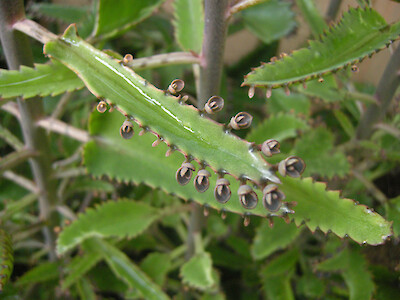
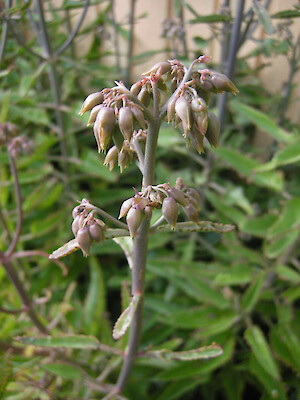
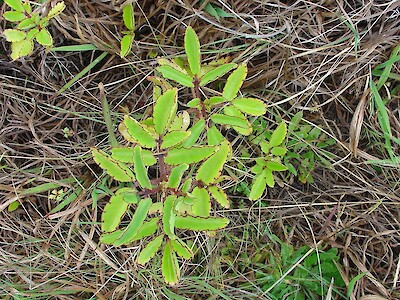
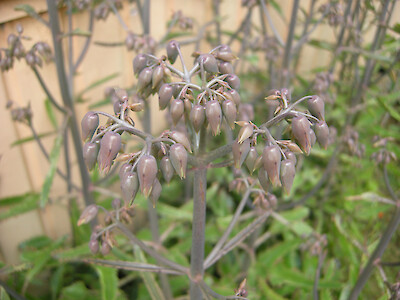
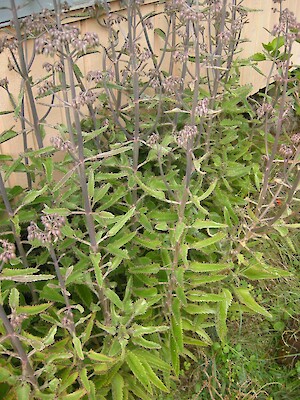
A succulent that grows to about 1 m tall, with basal rosette. Stem is purple with green flecks, becoming slightly woody. Leaves are fleshy and alternate, coarsely toothed but rounded, edges of leaves are purple. Flowers occur in corymb/raceme and are bell-like and pendulous. Flower has four fused sepals with pointed tips; four fused petals are red and pointed at tip and green at base. Eight stamens with green filaments and purple anthers; four pistils stuck very close together are much shorter than stamen.
Similar taxa
Can de distinguished from B. delagoense by the flat broadly elliptic leaves, uniform green or reddish-green, with prominent purple crenate margins.
Habitat
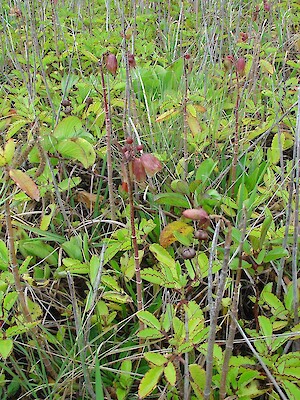
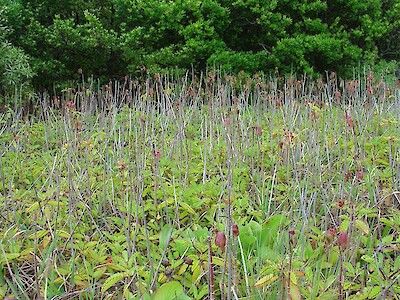
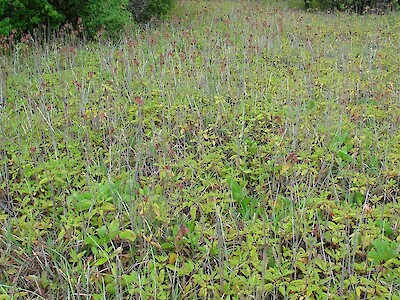
Terrestrial. Grows behind beaches on sand, forming dense stands in open places, also occurs in light shade under forest.
Detailed taxonomy
Genus
Family
Synonyms
Bryophyllum pinnatum (Lam.) Oken
Endemic family
No
Ecology
Flowering
November, December, January, February, April, May
Year naturalised
1977
Origin
Probably Madagascar but long naturalised in other tropical regions
Reason for introduction
Ornamental
Tolerances
Tolerates coastal conditions. Probably not hardy enough for southern regions of mainland NZ.
Life cycle and dispersal
Flowers freely, but seed is doubtfully fertile. Probably vegetative spread. Dispersed by water and gravity.
Other information
Etymology
pinnata: From the Latin pinna ‘feather’, in botany pinnatus ‘pinnate’ refers an arrangement of leaves, veins or branches in rows along a central axis, similar to the structure of a feather.
Environmental Weed (2024)
This plant is named in a list of 386 environmental weeds in New Zealand 2024 prepared by DOC. 759 candidate species were considered for inclusion on this new comprehensive list of environmental weeds in New Zealand. The species considered were drawn from published lists of weed species, lists of plants that must be reported or managed by law if observed, existing national and regional programmes and agreements for pest management, and species already managed by the Department of Conservation (DOC). Candidate species were then assessed to see if they were fully naturalised and whether they have more than minor impacts in natural ecosystems. Read the full report here.