
Myricaria germanica

Environmental Weed (2024)
Common names
false tamarisk
Biostatus
Exotic
Conservation status
Not applicable
Category
Vascular
Structural class
Trees & Shrubs - Dicotyledons
Flower colours
Red/Pink
Detailed description
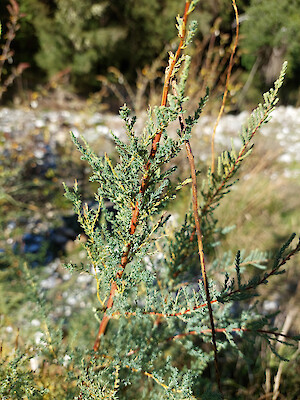
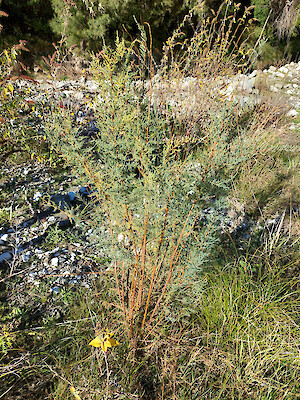
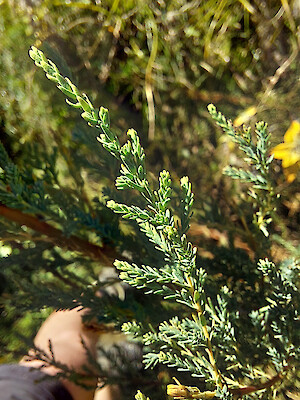
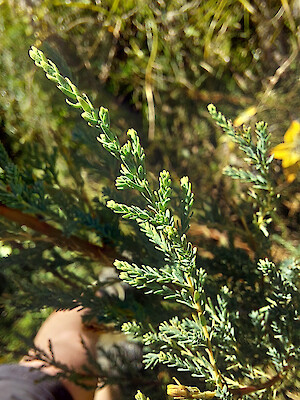
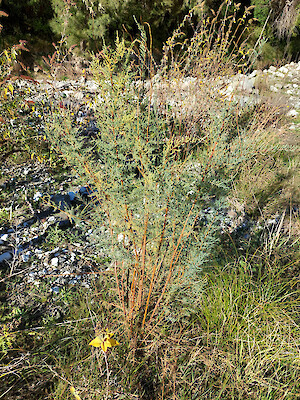
Evergreen woody shrub growing up to 1.5m high. Upright and multi-branched from base. Small pink flowers at ends of branches in summer. Small green leaves give it an appearance similar to common tamarisk or conifer. (CHCCO-33498)
Similar taxa
False tamarisk can look similar to young tamarisk trees (Tamarisk chinensis), but the trees have finer leaves and can grow up to 10 m tall.
Habitat
Terrestrial. Stony or muddy ground within braided river beds. (CHCCO-33498)
Detailed taxonomy
Genus
Family
Ecology
Flowering
December, January, February
Year naturalised
1999
Origin
Europe
Reason for introduction
Accidental
Tolerances
Can survive flooding - may thrive under flood conditions to increase its spread. (CHCCO-33498)
Life cycle and dispersal
Perennial. Appears to be quite dominant in established areas, competing with and shading other species. Another woody invasive species to be aware of especially in braided river systems. Appears to have well developed dispersal techniques - probably by wind and possibly vegetatively. May spread downstream during floods. As areas get filled up with mud or silt each stem grows up through these layers and continues growing as a new plant. (CHCCO-33498)
Other information
Etymology
germanica: Of Germany
Environmental Weed (2024)
This plant is named in a list of 386 environmental weeds in New Zealand 2024 prepared by DOC. 759 candidate species were considered for inclusion on this new comprehensive list of environmental weeds in New Zealand. The species considered were drawn from published lists of weed species, lists of plants that must be reported or managed by law if observed, existing national and regional programmes and agreements for pest management, and species already managed by the Department of Conservation (DOC). Candidate species were then assessed to see if they were fully naturalised and whether they have more than minor impacts in natural ecosystems. Read the full report here.
NVS code
The National Vegetation Survey (NVS) Databank is a physical archive and electronic databank containing records of over 94,000 vegetation survey plots - including data from over 19,000 permanent plots. NVS maintains a standard set of species code abbreviations that correspond to standard scientific plant names from the Ngä Tipu o Aotearoa - New Zealand Plants database.
MYRGER