New Zealand Plant Conservation Network
  • Member login
  • Join
Facebook
  • Home
  • Flora
    • Flora species
    • Tag names
    • Vascular
    • Non-vascular
    • Lichens
    • Plant identification
    • Fungi
    • Make your own book
    • Quiz
  • Threats
    • Exotic Plants (Weeds)
    • Pest Animals
    • Other threats
  • Ecosystems
    • Plant communities
    • Ecosystem services
    • Novel ecosystems
  • Publications
    • Documents
    • Newsletter
    • Plant lists
    • Botanical Society journals
    • NZPCN publications
  • Conservation
    • Seedbank
    • Training
    • Restoration
    • Monitoring
    • Habitat protection
    • Funding
    • Botanic gardens
    • Botanic Societies
  • NZPCN
    • News
    • Trilepidea newsletter
    • Events
    • David Given Scholarship
    • Council members
    • Awards
    • Shop
    • Donate
    • Favourite Plant
    • Why join NZPCN?
    • Join
  • Help
    • FAQ
    • Query
    • Glossary
  • Contact us

Search flora

  1. Home
  2. Flora
  3. Flora species
  4. Neckeromnion lepineanum

Neckeromnion lepineanum
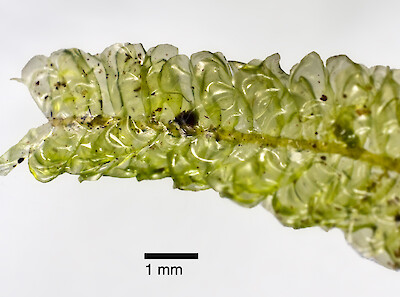
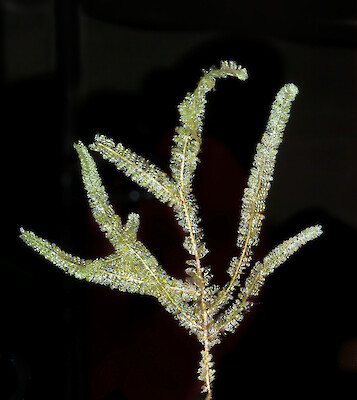
Raoul Island, Kermadec Islands (from a specimen collected by Peter de Lange), Feb 2012.<br>Photographer: Jeremy R. Rolfe, Licence: <a target='_blank' href='https://creativecommons.org/licenses/by/4.0'>CC BY</a>. <a class='member-message' href='/nzpcn/why-join-nzpcn/' target='_blank'>Members can view a larger version of this image.</a>
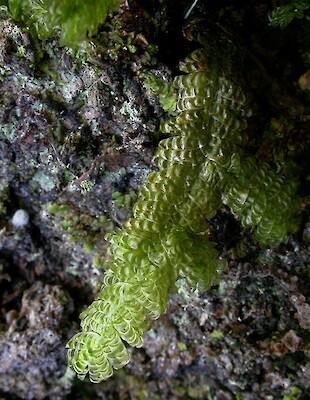
Photographer: Thomas Hallingbaeck, Licence: All rights reserved. <a class='member-message' href='/nzpcn/why-join-nzpcn/' target='_blank'>Members can view a larger version of this image.</a>
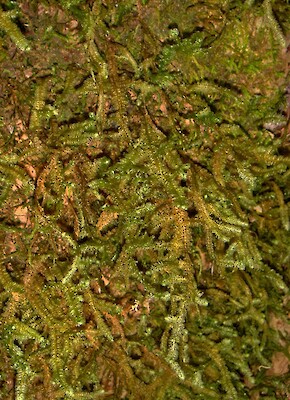
Neckeropsis on Rhopalostylis baueri, Raoul Island May 2009.<br>Photographer: Peter J de Lange, Licence: <a target='_blank' href='https://creativecommons.org/licenses/by-nc/4.0'>CC BY-NC</a>. <a class='member-message' href='/nzpcn/why-join-nzpcn/' target='_blank'>Members can view a larger version of this image.</a>
Kermadec Islands, Raoul Island from a specimen collected by PJ de Lange.<br>Photographer: Jeremy R. Rolfe, Date taken: 10/02/2012, Licence: <a target='_blank' href='https://creativecommons.org/licenses/by/4.0'>CC BY</a>. <a class='member-message' href='/nzpcn/why-join-nzpcn/' target='_blank'>Members can view a larger version of this image.</a>
Kermadec Islands, Raoul Island from a specimen collected by PJ de Lange, 2012.<br>Photographer: Jeremy R. Rolfe, Date taken: 09/02/2012, Licence: <a target='_blank' href='https://creativecommons.org/licenses/by/4.0'>CC BY</a>. <a class='member-message' href='/nzpcn/why-join-nzpcn/' target='_blank'>Members can view a larger version of this image.</a>
Download PDF Comment on factsheet

NZPCN members can select up to 20 plant species and automatically create a full colour, fully illustrated A4 book describing them (in PDF format).

  • Find out more...
  • Join NZPCN...
Find in plant lists
Herbarium View AVH specimens Donate Support NZPCN

Common names

moss

Biostatus

Native

Current conservation status

This is the first complete assessment of all known species of mosses found in the wild in Aotearoa New Zealand with a total of 560 species being assessed. The conservation status of mosses, published in the NZTCS database, replaces all previous assessments of mosses. Data supporting the 2025 NZTCS assessment of mosses has been published on the NZTCS database at https://nztcs.org.nz/reports/1155.

Source: NZTCS and licensed by DOC for reuse under the Creative Commons Attribution 4.0 International licence.

2025 | At Risk – Uncommon | Qualifiers: DPS, DPT, OL, S?O

Jump to previous conservation statuses

Category

Non-vascular

Structural class

Mosses

Detailed description

Dioicous; robust plants, yellowish-green, glossy, in pendulous masses. Secondary stems up to 30 mm long, very flat, irregularly branches, to 6 mm wide with leaves. Leaves horizontally spreading, strongly undulate, broadly lingulate from a clasping, decurrent base, inflexed on one side below, broadly rounded or nearly truncate at apex, minutely crenulate above; costa very short and faint, with unequal forks; cells rhomboidal, with firm irregularly thickened walls, 5-6 µm wide and 3-6x as long, shorter at apex, more elongate and porose below. Sporophyte on a short, lateral branch; capsule immersed on a very short seta; peristome teeth papillose, segments of endostome narrow from a low basal membrane (n/b fruiting material not seen in Kermadec material).

Distribution

Indigenous. New Zealand: Raoul Island where it is known from several gatherings made in 2009 and 2011. Present throughout south-east Asia, Australia (Queensland), Papua New Guinea, and most of the larger Pacific Islands

Habitat

Corticolous on the trunk of nikau (Rhopalostylis baueri) and on the upper canopy branches of a range of forest trees typical of the ‘wet forest’ of Raoul island, Kermadec Islands group.

Substrate details

The Kermadec Islands gatherings came from wet forest on Raoul Island where planted were collected from the lower trunk of a nikau (Rhopalostylis baueri) amongst Plagiochila pacifica and fromt he fallen branches of Kermadec pohutukawa (Metrosideros kermadecensis)

Threats

Neckeromnion is known from several gatherings made in May 2009 and 2011 from the ‘wet forest’ type on the high ridges of Raoul Island (Moumoukai, Smiths Bluff Track) . It is probably more widespread on Raoul Island, however even if this is so it is obviously fairly uncommon as it is a very distinctive, large moss, which, were it more common would have been collected long before now. Although listed as Data Deficient by Glenny et al. (2011), this species probably now merits listing as “Naturally Uncommon” qualified OL (One Location), SO (Secure Overseas), Sp (Sparse). As far as is known there are no obvious threats to this species on Raoul Island, which is a nature reserve.

Detailed taxonomy

Genus

Neckeromnion

Family

Neckeraceae

Authority

Neckeromnion lepineanum (Mont.) S.Olsson, Enroth, Huttunen et D.Quandt
Synonyms

Neckeropsis lepineana (Mont.) Fleisch

Endemic taxon

No

Endemic genus

No

Endemic family

No

Ecology

Fruiting

Not seen in New Zealand specimens

Other information

Previous conservation statuses

This is the first complete assessment of all known species of mosses found in the wild in Aotearoa New Zealand with a total of 560 species being assessed. The conservation status of mosses, published in the NZTCS database, replaces all previous assessments of mosses. Data supporting the 2025 NZTCS assessment of mosses has been published on the NZTCS database at https://nztcs.org.nz/reports/1155.

Source: NZTCS and licensed by DOC for reuse under the Creative Commons Attribution 4.0 International licence.

2014 | Data Deficient

2010 | Data Deficient | Qualifiers: OL, SO

Jump to current conservation status

Referencing and citations

References and further reading

Bartram, E.D. 1939: Mosses of the Philippines. The Philipine Journal of Science 68: 1-437.

Glenny, D.; Fife, A.J.; Brownsey, P.J.; Renner, M.A.M.; Braggins, J.E.; Beever, J.E.; Hitchmough, R. 2011: Threatened and uncommon bryophytes of New Zealand (2010 Revision). New Zealand Journal of Botany 49: 305-327.

Attribution

Fact Sheet Prepared for NZPCN by: P.J. de Lange (5 July 2009). Description adapted from Bartram (1939).

NZPCN Fact Sheet citation

Please cite as: de Lange, P.J. (Year at time of access): Neckeromnion lepineanum Fact Sheet (content continuously updated). New Zealand Plant Conservation Network. https://www.nzpcn.org.nz/flora/species/neckeromnion-lepineanum/ (Date website was queried)
▲ Back to top
  • Home
  • Flora
  • Threats
  • Ecosystems
  • Publications
  • Conservation
  • NZPCN
  • Help
  • Contact us

© 2026 New Zealand Plant Conservation Network • Website by RS

Coastlands Plant Nursery Wildlands

Website sponsor

  • Home
  • Flora
    • Flora species
    • Tag names
    • Vascular
      • Ferns
        • King fern
        • True ferns
        • Adder's tongue ferns
        • Fork ferns and whisk ferns
        • Horsetails
      • Conifers
        • Celery pines
        • Kauri
        • Podocarps
          • Podocarpus
          • Dacrydium
          • Prumnopitys
          • Dacrycarpus
          • Halocarpus
          • Lepidothamnus
          • Manoao
        • Cypress
      • Flowering plants
        • Parasites
          • Leafy mistletoes
          • Pygmy mistletoes
            • Korthalsella flowers
            • Korthalsella hosts
            • Dispersal of Korthalsella
            • Associates of Korthalsella
          • Root parasites
          • Saprophytes
        • Epiphytes
          • NZ
            • Typical
            • Occasional
            • Hemi-epiphytes
            • Ephemeral
            • NZ list
        • Monocots
          • Orchids
            • Structure
          • Grasses
        • Dicots
          • Hebes
          • Kowhai
          • Coprosma
          • Beech
          • Rata
        • Carnivorous
        • Deciduous plants
        • Aquatic plants
      • Poisonous natives
      • Threatened plant lists
      • What's a vascular plant?
      • Club mosses
    • Non-vascular
      • Bryophytes
        • Liverworts
        • Mosses
        • Hornworts
      • Algae
        • Seaweeds
    • Lichens
    • Plant identification
      • Written descriptions
      • Experts
      • Plant keys
        • Key to parasitic plant genera
      • Collecting plants
        • Should I collect
        • Choosing a specimen
        • Field notes
        • Fresh plant material
        • Pressing and drying
        • Mounting specimens
        • Labelling specimens
    • Fungi
    • Make your own book
    • Quiz
  • Threats
    • Exotic Plants (Weeds)
      • Unwanted organisms
      • DOC weeds
      • Plant me instead
      • Pest Plant Accord
    • Pest Animals
      • Mammals
        • Mustelids
        • Rodents
        • Ungulates
        • Possums
      • Fish
      • Insects
    • Other threats
      • Natural events
        • Insects
      • Human induced
        • Habitat loss
        • Collection
        • Climate change
  • Ecosystems
    • Plant communities
      • Dunes
        • Volcanic
        • Coastal
          • Threats
          • Common species
          • Research on dunes
          • Pingao research
          • What you can do
      • Wetlands
        • Estuaries
          • Common estuarine species
          • Research on estuaries
        • Ephemeral
        • Restiad peat bogs
      • Forests
        • Kauri-podocarp-broadleaved
        • Podocarp broadleaved
        • Beech
      • Scrub/shrublands
        • Geothermal
          • Distribution of geothermal vegetation
          • Geothermal plants
          • Geothermal vegetation types
          • Threats to geothermal vegetation
        • Frost flat/hollow
        • Manuka fens
        • Gumlands
      • Grasslands
        • Tussock grasslands
      • Bare ground
        • Braided rivers
        • Alpine
        • Cliff
        • Scree and boulderfields
        • Shingle beaches
      • Herbfields
        • Saltpan
    • Ecosystem services
    • Novel ecosystems
  • Publications
    • Documents
    • Newsletter
    • Plant lists
      • Search plant lists
      • Plant lists by political region/district
      • Plant lists by ecological region/district
      • National plant lists
      • How to prepare a plant list
    • Botanical Society journals
    • NZPCN publications
  • Conservation
    • Seedbank
      • Project 1 - Pohutukawa, Rata and Myrtaceae
      • Project 2 - Alpine flora and the Forget-Me-Nots
      • Project 3 - Kowhai and its relatives
      • Project 4 - Podocarps and trees of the forest
    • Training
      • Module 1: Plant life
      • Module 2: Covenants
      • Module 3: Propagation
      • Module 4: Wetlands
      • Pilot course 2006
    • Restoration
      • Gardening
        • Being weed wise
        • Garden plants
          • Trees and shrubs
          • Broad-leaved herbs
          • Grass-like herbs
          • Climbers
          • Ferns
        • Attracting wildlife
        • Planting for lizards
          • Rules
      • Species recovery
        • Plant translocations
      • Ecological restoration
        • Case studies
          • Tavora Reserve
          • Waiwhakareke
      • Revegetation
      • Eco-sourcing
      • Find a restoration group
    • Monitoring
      • Number count
        • Number count method
        • Pros and cons of number counts
        • Data analysis and interpretation
      • Presence/absence surveys
        • Presence/absence survey methods
        • Pros and cons of presence/absence surveys
        • Data analysis and interpretation
      • Mapping spatial extent
        • Spatial extent mapping methods
        • Pros and cons of spatial extent mapping
        • Data analysis and interpretation
      • Photo points
        • Photo point guidelines
    • Habitat protection
      • Legal protection
        • Nga Whenua Rahui
        • QEII covenants
        • DOC Covenants
      • Animal pest control
      • Weed control
      • Fencing
    • Funding
    • Botanic gardens
    • Botanic Societies
  • NZPCN
    • News
    • Trilepidea newsletter
    • Events
      • 2026 NZPCN conference
        • 2026 Conference field trips
        • 2026 Conference workshops
        • 2026 conference sponsors
        • 2026 Conference keynote speakers
      • 2024 AGM
      • Conference 2024
        • 2024 conference overview
        • Conference 2024 workshops
        • Conference 2024 Field Trips
        • 2024 conference sponsors
        • Conference 2024 accommodation options
        • 2024 Conference Programme
      • Conference 2022
        • Conference programme summary
        • 2022 conference workshops
        • 2022 conference field trips
        • Code of conduct
        • COVID-19 information
        • 2022 conference sponsors
        • Abstract and poster submission
        • 2022 Conference venue and accommodation
        • Conference Workshop: Restoration Pathways
        • 2022 conference postponement
      • Conference 2019
      • Conference 2017
      • Conference 2015
        • Speakers
        • Workshops
        • Field trips
        • Charity auction
      • Conference 2013
        • Speakers
        • Timetable
      • 2023 Restoration Pathways Workshop
      • 2023 AGM
    • David Given Scholarship
      • David Given Scholarship Recipients
    • Council members
      • NZPCN council member profiles
      • Council 2023
      • Council 2022
      • Council 2021
      • Council 2020
      • Council 2019
      • Council 2018
      • Council 2017
      • Council 2016
      • Council 2015
      • Council 2014
      • Council 2024
      • Council 2013
      • Council 2012
      • Council 2011
      • Council 2010
      • Council 2009
      • Council 2008
      • Council 2007
      • Council 2006
      • Council 2005
      • Council 2004
      • Council 2003
    • Awards
      • NZPCN Awards
        • 2024 Plant Conservation Awards
        • 2022
        • 2019
        • 2018
        • 2017
        • 2016
        • 2015
        • 2014
        • 2013
        • 2012
        • 2011
        • 2010
        • 2009
        • 2008
        • 2007
        • 2006
        • 2005
    • Shop
    • Donate
    • Favourite Plant
    • Why join NZPCN?
    • Join
  • Help
    • FAQ
      • Joining the Network
      • The Network
      • Network website
      • New Zealand plants
      • The law
      • Your discoveries
    • Query
    • Glossary
  • Contact us
  • Facebook