New Zealand Plant Conservation Network
  • Member login
  • Join
Facebook
  • Home
  • Flora
    • Flora species
    • Tag names
    • Vascular
    • Non-vascular
    • Lichens
    • Plant identification
    • Fungi
    • Make your own book
    • Quiz
  • Threats
    • Exotic Plants (Weeds)
    • Pest Animals
    • Other threats
  • Ecosystems
    • Plant communities
    • Ecosystem services
    • Novel ecosystems
  • Publications
    • Documents
    • Newsletter
    • Plant lists
    • Botanical Society journals
    • NZPCN publications
  • Conservation
    • Seedbank
    • Training
    • Restoration
    • Monitoring
    • Habitat protection
    • Funding
    • Botanic gardens
    • Botanic Societies
  • NZPCN
    • News
    • Trilepidea newsletter
    • Events
    • David Given Scholarship
    • Council members
    • Awards
    • Shop
    • Donate
    • Favourite Plant
    • Why join NZPCN?
    • Join
  • Help
    • FAQ
    • Query
    • Glossary
  • Contact us

Search flora

  1. Home
  2. Flora
  3. Flora species
  4. Osteospermum moniliferum subsp. moniliferum

Osteospermum moniliferum subsp. moniliferum
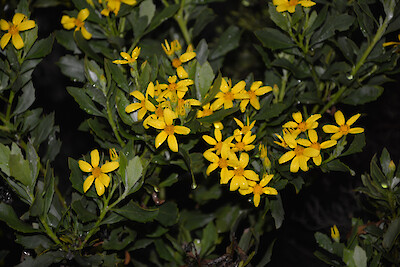
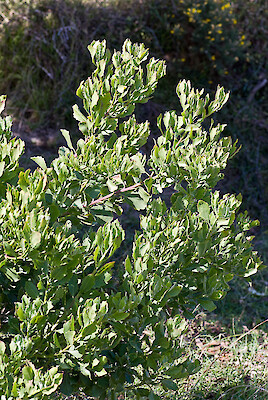
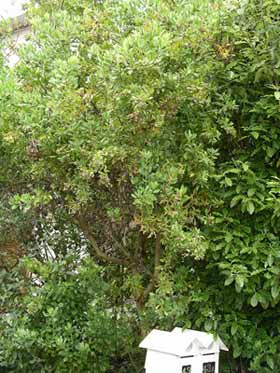
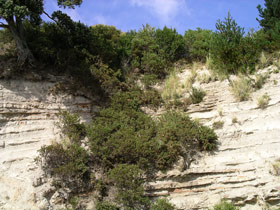
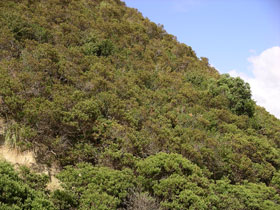
Waihopo, Far North.<br>Photographer: John Sawyer, Date taken: 31/08/2013, Licence: <a target='_blank' href='https://creativecommons.org/licenses/by-nc/4.0'>CC BY-NC</a>.
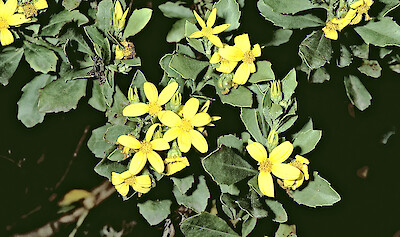
Eastbourne.<br>Photographer: Jeremy R. Rolfe, Date taken: 04/12/2009, Licence: <a target='_blank' href='https://creativecommons.org/licenses/by/4.0'>CC BY</a>.
Algies Bay, north of Auckalnd.<br>Photographer: John Sawyer, Date taken: 01/07/2013, Licence: <a target='_blank' href='https://creativecommons.org/licenses/by-nc/4.0'>CC BY-NC</a>.
Waihopo, Far North.<br>Photographer: John Sawyer, Date taken: 31/08/2013, Licence: <a target='_blank' href='https://creativecommons.org/licenses/by-nc/4.0'>CC BY-NC</a>.
Eastbourne.<br>Photographer: Jeremy R. Rolfe, Date taken: 20/03/2011, Licence: <a target='_blank' href='https://creativecommons.org/licenses/by/4.0'>CC BY</a>.
Eastbourne.<br>Photographer: Jeremy R. Rolfe, Date taken: 22/08/1984, Licence: <a target='_blank' href='https://creativecommons.org/licenses/by/4.0'>CC BY</a>.
Chrysanthemoides monilifera subsp. monilifera.<br>Photographer: Nicholas J. D. Singers, Licence: All rights reserved.
Chrysanthemoides monilifera subsp.<br>Photographer: Auckland Regional Council, Licence: Public domain.
Chrysanthemoides monilifera subsp. monilifera.<br>Photographer: Richard Hursthouse, Licence: <a target='_blank' href='https://creativecommons.org/licenses/by/4.0'>CC BY</a>.
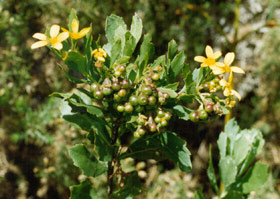
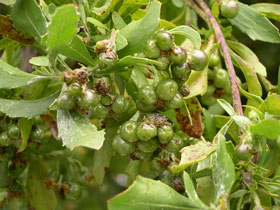
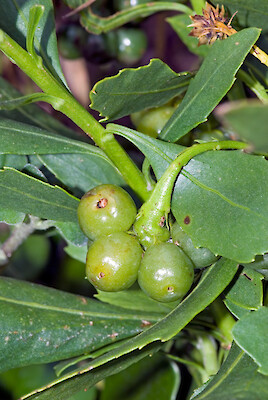
Immature fruit. Riversdale.<br>Photographer: Jeremy R. Rolfe, Date taken: 01/11/2006, Licence: <a target='_blank' href='https://creativecommons.org/licenses/by/4.0'>CC BY</a>.
Boneseed.<br>Photographer: Graeme La Cock, Licence: <a target='_blank' href='https://creativecommons.org/licenses/by-nc/4.0'>CC BY-NC</a>.
Quail Island.<br>Photographer: John Barkla, Licence: <a target='_blank' href='https://creativecommons.org/licenses/by/4.0'>CC BY</a>.
Waihopo, Far North.<br>Photographer: John Sawyer, Date taken: 31/08/2013, Licence: <a target='_blank' href='https://creativecommons.org/licenses/by-nc/4.0'>CC BY-NC</a>.
Pest plant

NPPA pest plant

Environmental Weed

Environmental Weed (2024)

Download PDF Comment on factsheet

NZPCN members can select up to 20 plant species and automatically create a full colour, fully illustrated A4 book describing them (in PDF format).

  • Find out more...
  • Join NZPCN...
Find in plant lists
iNaturalist NZ View observations Biota of NZ Click here to view NZ Flora Click here to view Weedbusters Control techniques Herbarium View AVH specimens Donate Support NZPCN

Common names

boneseed, bitou bush

Biostatus

Exotic

Conservation status

Not applicable

Category

Vascular

Structural class

Trees & Shrubs - Dicotyledons

Flower colours

Yellow

Detailed description

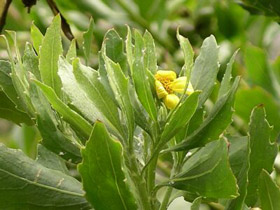
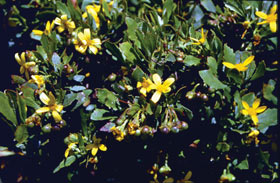
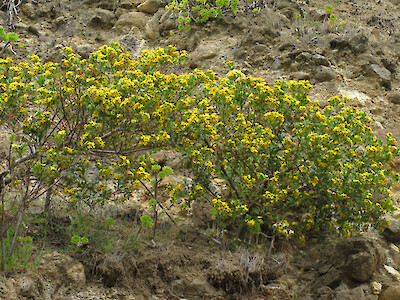
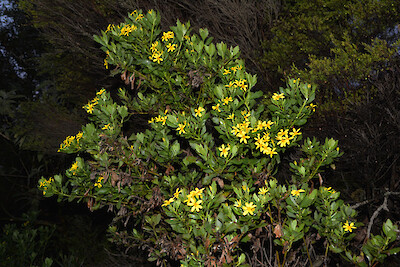
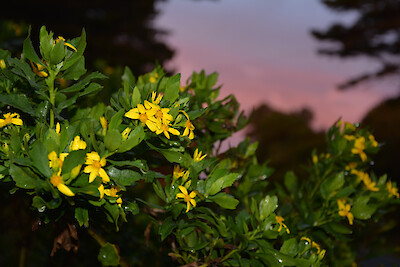
Bushy, semi-woody, much branched shrub or small tree to 2-3 m. Young stems ribbed and woolly, becoming smooth. Leaves alternate, smooth, leathery, entire, 70 x 35 mm, margins irregularly toothed. Bright yellow daisy-like flowers, 25-30 mm diam, Sep-Feb. Fruit an oval green drupe, 6-9 mm, hard with thin fleshy covering, turning black, with very hard seed.

Similar taxa

The other subspecies (Osteospermum moniliferum subsp. rotundatum) is very weedy in Australia, but not known to be present in NZ. It has a more prostrate habit, has rounder leaves, and the flowers have more than 12 petals. Foliage is superficially similar to Dimorphotheca (Osteospermum fruticosum) but the habit and flowers of these plants are very different.

Habitat

Terrestrial. mainly coastal areas, coastal cliffs, inshore islands, dry shrublands, shrubland margins, consolidated sand dunes, gumlands, roadsides, quarries, wastelands, exotic plantations and a threat to offshore islands.

Detailed taxonomy

Genus

Osteospermum

Family

Asteraceae

Authority

Osteospermum moniliferum L. subsp. moniliferum
Synonyms

Chrysanthemoides monilifera (L.) Norl. subsp. monilifera

Endemic genus

No

Endemic family

No

Ecology

Flowering

September, October, November, December, January, February

Year naturalised

1870

Origin

S.W. Cape area, South Africa

Reason for introduction

Ornamental

Tolerances

Intolerant to shade and poor drainage and tolerant to drought. Fire kills plants but assists germination of seeds and the plant is reasonably tolerant to other physical damage. It is tolerant of low soil fertility, poor soils and sand.

Life cycle and dispersal

Perennial. Suspected seed bank viability extensive because seed is covered in hard coating i.e. bone-seed. Primarily reproduces via seed but vegetative reproduction is possible if stems come into contact with the soil. A mature bush can produce up to 50,000 seeds per year. Research indicates that 6-13% seeds remain viable after 3 yrs of burial with numbers increasing depending on depth of burial (Weiss 1984). Initially just over half the seeds are viable and can remain dormant inside the unsplit seed coat for up to 10 years. Seed is dispersed by birds, possums, humans and mammals.

Other information

National Pest Plant Accord species

This plant is listed in the 2020 National Pest Plant Accord. The National Pest Plant Accord (NPPA) is an agreement to prevent the sale and/or distribution of specified pest plants where either formal or casual horticultural trade is the most significant way of spreading the plant in New Zealand. For up to date information and an electronic copy of the 2020 Pest Plant Accord manual (including plant information and images) visit the MPI website.

Environmental Weed (2024)

This plant is named in a list of 386 environmental weeds in New Zealand 2024 prepared by DOC. 759 candidate species were considered for inclusion on this new comprehensive list of environmental weeds in New Zealand. The species considered were drawn from published lists of weed species, lists of plants that must be reported or managed by law if observed, existing national and regional programmes and agreements for pest management, and species already managed by the Department of Conservation (DOC). Candidate species were then assessed to see if they were fully naturalised and whether they have more than minor impacts in natural ecosystems. Read the full report here.

▲ Back to top
  • Home
  • Flora
  • Threats
  • Ecosystems
  • Publications
  • Conservation
  • NZPCN
  • Help
  • Contact us
  • Facebook

© 2026 New Zealand Plant Conservation Network • Website by RS

Coastlands Plant Nursery Wildlands

Website sponsor

  • Home
  • Flora
    • Flora species
    • Tag names
    • Vascular
      • Ferns
        • King fern
        • True ferns
        • Adder's tongue ferns
        • Fork ferns and whisk ferns
        • Horsetails
      • Conifers
        • Celery pines
        • Kauri
        • Podocarps
          • Podocarpus
          • Dacrydium
          • Prumnopitys
          • Dacrycarpus
          • Halocarpus
          • Lepidothamnus
          • Manoao
        • Cypress
      • Flowering plants
        • Parasites
          • Leafy mistletoes
          • Pygmy mistletoes
            • Korthalsella flowers
            • Korthalsella hosts
            • Dispersal of Korthalsella
            • Associates of Korthalsella
          • Root parasites
          • Saprophytes
        • Epiphytes
          • NZ
            • Typical
            • Occasional
            • Hemi-epiphytes
            • Ephemeral
            • NZ list
        • Monocots
          • Orchids
            • Structure
          • Grasses
        • Dicots
          • Hebes
          • Kowhai
          • Coprosma
          • Beech
          • Rata
        • Carnivorous
        • Deciduous plants
        • Aquatic plants
      • Poisonous natives
      • Threatened plant lists
      • What's a vascular plant?
      • Club mosses
    • Non-vascular
      • Bryophytes
        • Liverworts
        • Mosses
        • Hornworts
      • Algae
        • Seaweeds
    • Lichens
    • Plant identification
      • Written descriptions
      • Experts
      • Plant keys
        • Key to parasitic plant genera
      • Collecting plants
        • Should I collect
        • Choosing a specimen
        • Field notes
        • Fresh plant material
        • Pressing and drying
        • Mounting specimens
        • Labelling specimens
    • Fungi
    • Make your own book
    • Quiz
  • Threats
    • Exotic Plants (Weeds)
      • Unwanted organisms
      • DOC weeds
      • Plant me instead
      • Pest Plant Accord
    • Pest Animals
      • Mammals
        • Mustelids
        • Rodents
        • Ungulates
        • Possums
      • Fish
      • Insects
    • Other threats
      • Natural events
        • Insects
      • Human induced
        • Habitat loss
        • Collection
        • Climate change
  • Ecosystems
    • Plant communities
      • Dunes
        • Volcanic
        • Coastal
          • Threats
          • Common species
          • Research on dunes
          • Pingao research
          • What you can do
      • Wetlands
        • Estuaries
          • Common estuarine species
          • Research on estuaries
        • Ephemeral
        • Restiad peat bogs
      • Forests
        • Kauri-podocarp-broadleaved
        • Podocarp broadleaved
        • Beech
      • Scrub/shrublands
        • Geothermal
          • Distribution of geothermal vegetation
          • Geothermal plants
          • Geothermal vegetation types
          • Threats to geothermal vegetation
        • Frost flat/hollow
        • Manuka fens
        • Gumlands
      • Grasslands
        • Tussock grasslands
      • Bare ground
        • Braided rivers
        • Alpine
        • Cliff
        • Scree and boulderfields
        • Shingle beaches
      • Herbfields
        • Saltpan
    • Ecosystem services
    • Novel ecosystems
  • Publications
    • Documents
    • Newsletter
    • Plant lists
      • Search plant lists
      • Plant lists by political region/district
      • Plant lists by ecological region/district
      • National plant lists
      • How to prepare a plant list
    • Botanical Society journals
    • NZPCN publications
  • Conservation
    • Seedbank
      • Project 1 - Pohutukawa, Rata and Myrtaceae
      • Project 2 - Alpine flora and the Forget-Me-Nots
      • Project 3 - Kowhai and its relatives
      • Project 4 - Podocarps and trees of the forest
    • Training
      • Module 1: Plant life
      • Module 2: Covenants
      • Module 3: Propagation
      • Module 4: Wetlands
      • Pilot course 2006
    • Restoration
      • Gardening
        • Being weed wise
        • Garden plants
          • Trees and shrubs
          • Broad-leaved herbs
          • Grass-like herbs
          • Climbers
          • Ferns
        • Attracting wildlife
        • Planting for lizards
          • Rules
      • Species recovery
        • Plant translocations
      • Ecological restoration
        • Case studies
          • Tavora Reserve
          • Waiwhakareke
      • Revegetation
      • Eco-sourcing
      • Find a restoration group
    • Monitoring
      • Number count
        • Number count method
        • Pros and cons of number counts
        • Data analysis and interpretation
      • Presence/absence surveys
        • Presence/absence survey methods
        • Pros and cons of presence/absence surveys
        • Data analysis and interpretation
      • Mapping spatial extent
        • Spatial extent mapping methods
        • Pros and cons of spatial extent mapping
        • Data analysis and interpretation
      • Photo points
        • Photo point guidelines
    • Habitat protection
      • Legal protection
        • Nga Whenua Rahui
        • QEII covenants
        • DOC Covenants
      • Animal pest control
      • Weed control
      • Fencing
    • Funding
    • Botanic gardens
    • Botanic Societies
  • NZPCN
    • News
    • Trilepidea newsletter
    • Events
      • 2026 NZPCN conference
        • 2026 Conference field trips
        • 2026 Conference workshops
        • 2026 conference sponsor
      • 2024 AGM
      • Conference 2024
        • 2024 conference overview
        • Conference 2024 workshops
        • Conference 2024 Field Trips
        • 2024 conference sponsors
        • Conference 2024 accommodation options
        • 2024 Conference Programme
      • Conference 2022
        • Conference programme summary
        • 2022 conference workshops
        • 2022 conference field trips
        • Code of conduct
        • COVID-19 information
        • 2022 conference sponsors
        • Abstract and poster submission
        • 2022 Conference venue and accommodation
        • Conference Workshop: Restoration Pathways
        • 2022 conference postponement
      • Conference 2019
      • Conference 2017
      • Conference 2015
        • Speakers
        • Workshops
        • Field trips
        • Charity auction
      • Conference 2013
        • Speakers
        • Timetable
      • 2023 Restoration Pathways Workshop
      • 2023 AGM
    • David Given Scholarship
      • David Given Scholarship Recipients
    • Council members
      • NZPCN council member profiles
      • Council 2023
      • Council 2022
      • Council 2021
      • Council 2020
      • Council 2019
      • Council 2018
      • Council 2017
      • Council 2016
      • Council 2015
      • Council 2014
      • Council 2024
      • Council 2013
      • Council 2012
      • Council 2011
      • Council 2010
      • Council 2009
      • Council 2008
      • Council 2007
      • Council 2006
      • Council 2005
      • Council 2004
      • Council 2003
    • Awards
      • NZPCN Awards
        • 2024 Plant Conservation Awards
        • 2022
        • 2019
        • 2018
        • 2017
        • 2016
        • 2015
        • 2014
        • 2013
        • 2012
        • 2011
        • 2010
        • 2009
        • 2008
        • 2007
        • 2006
        • 2005
    • Shop
    • Donate
    • Favourite Plant
    • Why join NZPCN?
    • Join
  • Help
    • FAQ
      • Joining the Network
      • The Network
      • Network website
      • New Zealand plants
      • The law
      • Your discoveries
    • Query
    • Glossary
  • Contact us
  • Facebook