
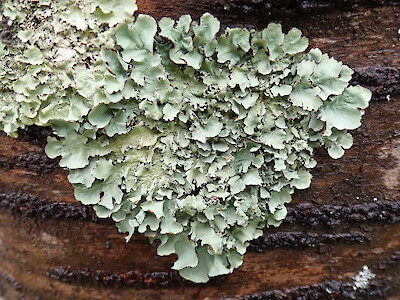
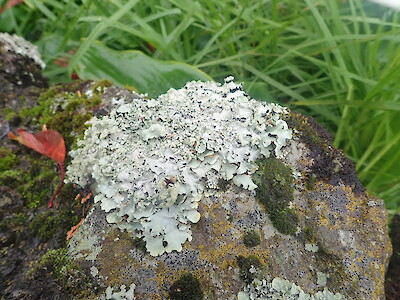
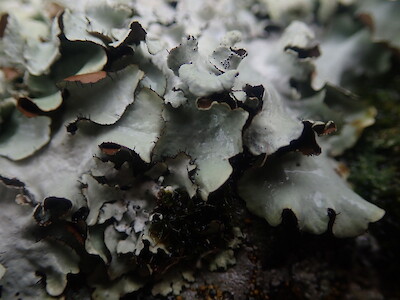
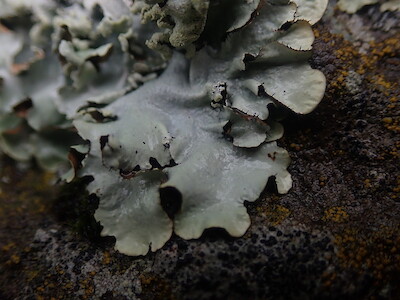
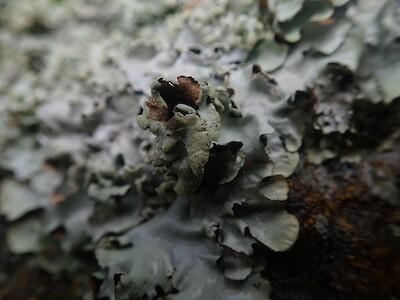
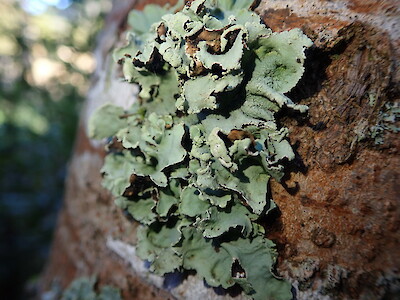
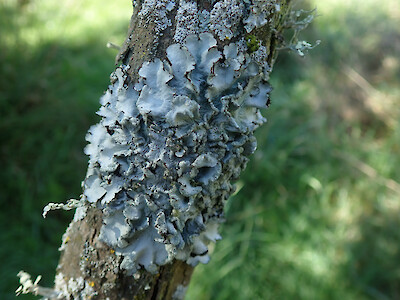
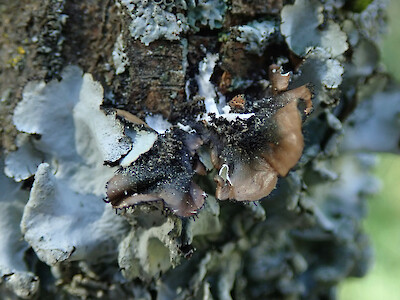
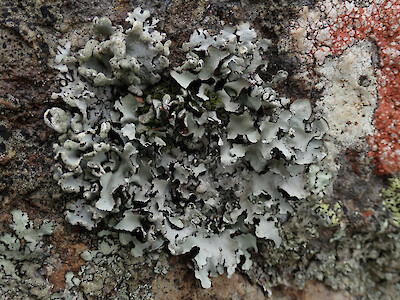
Parmotrema perlatum


Common names
Black stone flower
Biostatus
Native
Current conservation status
2018 | Not Threatened | Qualifiers: SO
Category
Lichen
Structural class
Lichens - Foliose
Lichen substrates
Corticolous (bark, wood), Saxicolous (rock)
Substrate details
Corticolous, saxicolous
Detailed taxonomy
Genus
Family
Synonyms
Lichen chinensis, Lichen perlatus, Parmelia perlata, Parmotrema chinense
Endemic taxon
No
Endemic genus
No
Endemic family
No
Other information
Parmotrema perlatum is typically used in meat dishes like nihari (paaya), Bombay biryani, and goat meat stews, it is also used in vegetarian dishes (Wikipedia 2021). It is one of the ingredients in East Indian bottle masala, used for cooking meats, fish, and vegetables. In its raw state, black stone flower does not have much taste or fragrance. However, when put in contact with heat, especially cooking oil and ghee, it releases a distinctive earthy, smoky flavour and aroma. This property of black stone flower is especially valued in the tempering step of cooking a number of Indian dishes.
NVS code
The National Vegetation Survey (NVS) Databank is a physical archive and electronic databank containing records of over 94,000 vegetation survey plots - including data from over 19,000 permanent plots. NVS maintains a standard set of species code abbreviations that correspond to standard scientific plant names from the Ngä Tipu o Aotearoa - New Zealand Plants database.
PARPER
Referencing and citations
References and further reading
Galloway D.J. 1985: Flora of New Zealand: Lichens. Wellington: PD Hasselberg, Government Printer. 662 pp.
Galloway D.J. 2007: Flora of New Zealand: Lichens, including lichen-forming and lichenicolous fungi. 2nd edition. Lincoln, Manaaki Whenua Press. 2261 pp.
Wikipedia 2021: https://en.wikipedia.org/wiki/Parmotrema_perlatum. Date accessed: 28 September 2021.