
Platanus orientalis
Common names
Oriental plane
Biostatus
Exotic
Conservation status
Not applicable
Category
Vascular
Structural class
Trees & Shrubs - Dicotyledons
Simplified description
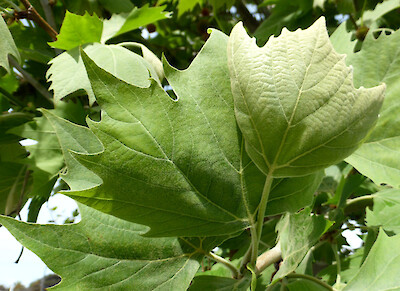
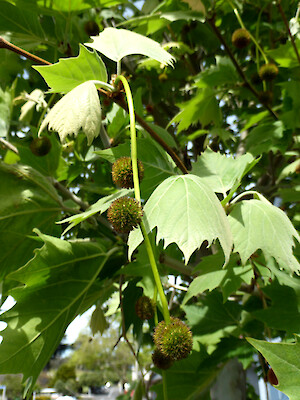
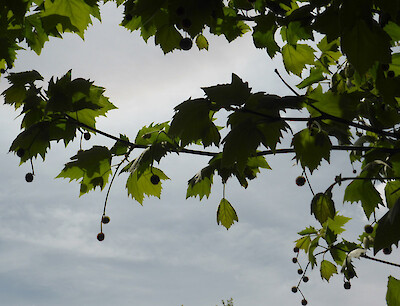
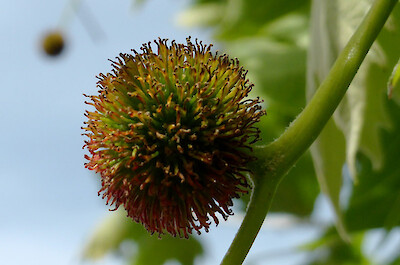
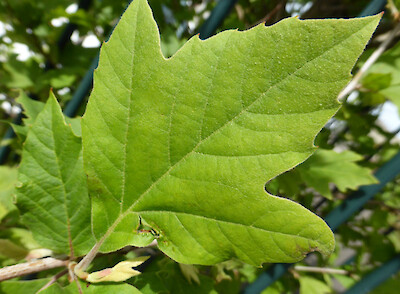
Large deciduous tree with usually peeling bark in small flakes (cf. London plane which has larger flakes), sometimes becoming thick and rugged; leaves 5-7 lobed, the lobes being narrower and deeper than in London plane; monoecious. London plane (P.X acerifolia) has P. orientalis as one parent and has leaves less deeply lobed than in P. orientalis, and 5-lobed cf. 5-7 lobes. London plane has seed balls typically two [(1)-2-(4)] per stem cf. 3-6 in P. orientalis.
Flower colours
Green
Distribution
Planted in NZ since at least 1870 (https://www.ccc.govt.nz/assets/Documents/Parks-Gardens/Christchurch-Botanic-Gardens/BotanicGardensWalkingGuide.pdf)
Detailed taxonomy
Genus
Family
Synonyms
A number of cultivars are available in NZ, the most common being ‘Autumn Glory’ increasingly used to replace London Planes as a street tree.
Ecology
Year naturalised
2010
Origin
South-east Europe to South-west Asia
Reason for introduction
Ornamental; shade
Other information
Etymology
orientalis: From the Latin orientale, meaning ‘eastern’ but sometimes also translated as ‘from the Orient’.
Referencing and citations
References and further reading
https://en.wikipedia.org/wiki/Platanus_orientalis
Attribution
Fact sheet prepared by Colin C Ogle, Sep 2016