
Psilolechia lucida

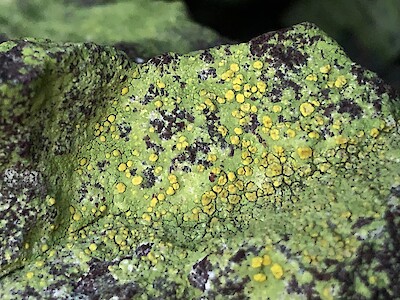
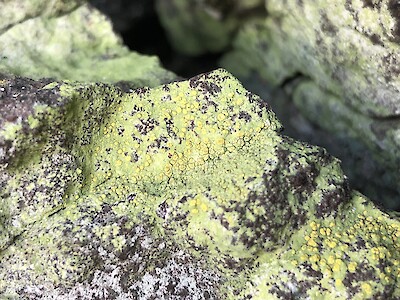
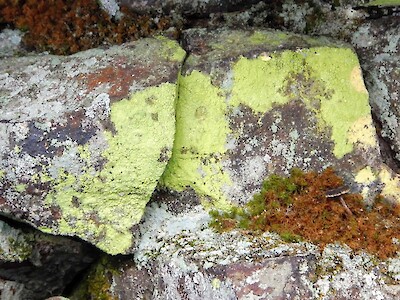

Common names
Sulphur dust lichen
Biostatus
Native
Current conservation status
2018 | Data Deficient | Qualifiers: SO
Category
Lichen
Structural class
Lichens - Leprose
Lichen substrate
Terricolous (soil)
Substrate details
Terricolous
Detailed taxonomy
Genus
Family
Synonyms
Lichen lucidus
Endemic taxon
No
Endemic genus
No
Endemic family
No
Other information
Psilolechia is a genus of four species, formerly included in the family Micareaceae (Eriksson et al. 2004; Pennycook & Galloway 2004), but now transferred to Pilocarpaceae (Andersen & Ekman 2005; Eriksson 2005). All species of Psilolechia are found in shaded, humid situations such as on vertical rocks and walls, in underhangs, and on clay banks or among exposed tree roots, rocks, stones, soil and plant debris. Psilolechia lucida is commonly seen on building materials in towns in the Northern Hemisphere. With the exception of P. lucida, the genus is still rather poorly known and collected, although it is widely distributed in temperate regions of the world (Europe, Macaronesia, North America, Costa Rica, Hawai’i, and Australasia). Two species are known from New Zealand, but the genus is still very poorly collected and understood here.
Etymology
lucida: Shining
Referencing and citations
References and further reading
Andersen H.L. & Ekman S. 2005: Disintegration of the Micareaceae (lichenized Ascomycota): a molecular phylogeny based on mitochondrial rDNA sequences. Mycological Research 109: 21-30.
Eriksson O.E. (Ed.) 2005: Outline of Ascomycota – 2005: Myconet 11: 1-113.
Eriksson O.E., Baral H.-O., Currah R.S., Hansen K., Kurtzman C.P., Rambold G. & Laessøe T. 2004: Outline of Ascomycota – 2004. Myconet 10: 1-99.
Galloway D.J. 2007: Flora of New Zealand: Lichens, including lichen-forming and lichenicolous fungi. 2nd edition. Lincoln, Manaaki Whenua Press. 2261 pp.
Pennycook S.R. & Galloway D.J. 2004: Checklist of New Zealand “Fungi”. In: McKenzie, E.H.C. (Ed.) Introduction to fungi of New Zealand. Fungi of New Zealand/Ngā Harore o Aoteroa Volume 1. Fungal Diversity Research Series 14: 401-488.