New Zealand Plant Conservation Network
  • Member login
  • Join
Facebook
  • Home
  • Flora
    • Flora species
    • Tag names
    • Vascular
    • Non-vascular
    • Lichens
    • Plant identification
    • Fungi
    • Make your own book
    • Quiz
  • Threats
    • Exotic Plants (Weeds)
    • Pest Animals
    • Other threats
  • Ecosystems
    • Plant communities
    • Ecosystem services
    • Novel ecosystems
  • Publications
    • Documents
    • Newsletter
    • Plant lists
    • Botanical Society journals
    • NZPCN publications
  • Conservation
    • Seedbank
    • Training
    • Restoration
    • Monitoring
    • Habitat protection
    • Funding
    • Botanic gardens
    • Botanic Societies
  • NZPCN
    • News
    • Trilepidea newsletter
    • Events
    • David Given Scholarship
    • He Pihi Kāuru
    • Council members
    • Awards
    • Shop
    • Donate
    • Favourite Plant
    • Why join NZPCN?
    • Join
  • Help
    • FAQ
    • Query
    • Glossary
    • Website Terms of Use
  • Contact us

Search flora

  1. Home
  2. Flora
  3. Flora species
  4. Senecio madagascariensis

Senecio madagascariensis
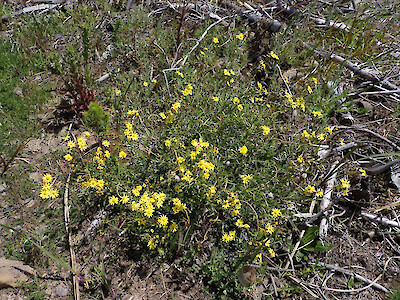
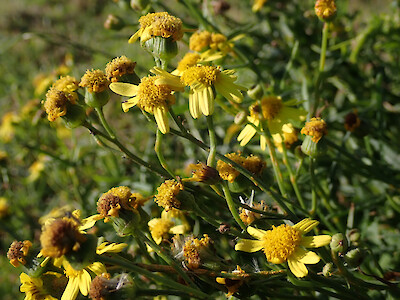
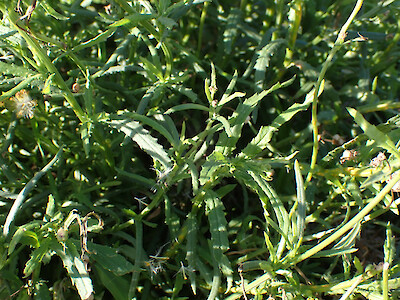
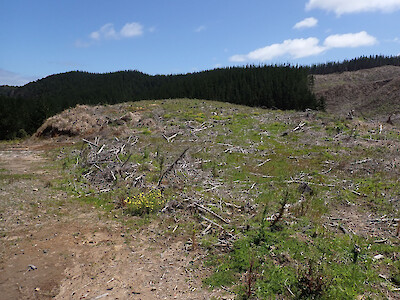
Locally common in forestry slash, Waipoua Coast Northland.<br>Photographer: Marley Ford, Date taken: 16/10/2025, Licence: <a target='_blank' href='https://creativecommons.org/licenses/by-nc/4.0'>CC BY-NC</a>. <a class='member-message' href='/nzpcn/why-join-nzpcn/' target='_blank'>Members can view a larger version of this image.</a>
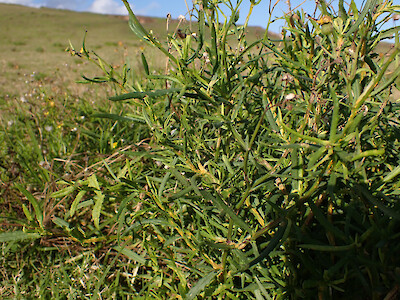
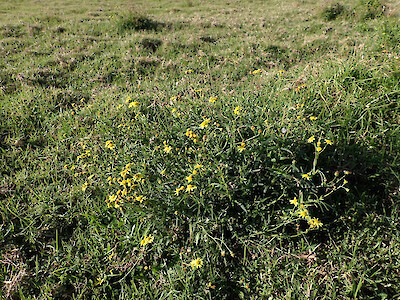
Local patch in distributed costal pasture on rear dunes, Hokianga Coast.<br>Photographer: Marley Ford, Date taken: 15/06/2026, Licence: <a target='_blank' href='https://creativecommons.org/licenses/by-nc/4.0'>CC BY-NC</a>. <a class='member-message' href='/nzpcn/why-join-nzpcn/' target='_blank'>Members can view a larger version of this image.</a>
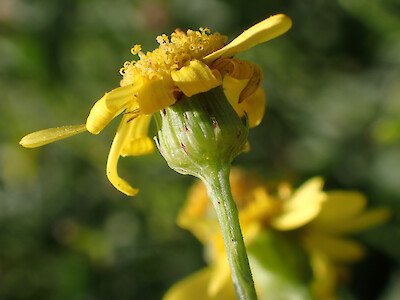
Locally common in forestry slash, Waipoua Coast Northland.<br>Photographer: Marley Ford, Date taken: 16/10/2025, Licence: <a target='_blank' href='https://creativecommons.org/licenses/by-nc/4.0'>CC BY-NC</a>. <a class='member-message' href='/nzpcn/why-join-nzpcn/' target='_blank'>Members can view a larger version of this image.</a>
Download PDF Comment on factsheet

NZPCN members can select up to 20 plant species and automatically create a full colour, fully illustrated A4 book describing them (in PDF format).

  • Find out more...
  • Join NZPCN...
Find in plant lists
iNaturalist NZ View observations Donate Support NZPCN

Common names

Fireweed, Madagascar ragwort

Biostatus

Exotic

Conservation status

Not applicable

Category

Vascular

Structural class

Herbs - Dicotyledonous composites

Simplified description

An erect, yellow-flowered annual or short-lived perennial daisy with narrow, non-fleshy, lanceolate leaves and a small fibrous root. It produces many small yellow-rayed flower heads whose outer (calycular) bracts are narrow, 0.5–0.8 mm wide. The small seeds are wind-dispersed.

Flower colours

Yellow

Detailed description

Annual or short-lived perennial herb, erect, upright and less branched than S. skirrhodon. Root system a small fibrous root. Leaves narrow-lanceolate, not fleshy, length:width ratio 5–12. Flower heads yellow-rayed. Calycular bracts narrow, 0.5–0.8 mm wide. Seeds small and wind-dispersed.

Similar taxa

Senecio madagascariensis is most likely to be confused with Senecio skirrhodon DC., a longer-established and largely non-invasive species. Senecio skirrhodon was first recorded as naturalised in 1920 and is found throughout New Zealand. The most reliable distinguishing character is the width of the calycular bracts, which holds regardless of plant condition: 0.5–0.8 mm in S. madagascariensis and 0.8–1.5 mm in S. skirrhodon. Senecio madagascariensis is an upright annual or short-lived perennial with a small fibrous root. Its leaves are narrow-lanceolate and not fleshy, with a length:width ratio of 5–12. Senecio skirrhodon is a perennial with a better-developed rootstock and a more divided, spreading, flaccid habit. Its leaves are broader, more velvety and often fleshy, with a length:width ratio of 3–9. Leaf shape and texture are less reliable on mown plants.
Distribution

The fireweed complex is native to Africa. True S. madagascariensis is a distinct lineage confined to Madagascar. The invasive lineage that carries the name elsewhere originates from continental southern Africa. Its exact source is unclear but possibly the Eastern Cape. This lineage is naturalised in Australia, Hawai’i, Japan and South America. The New Zealand, Australian, Hawaiian and Japanese populations belong to one lineage (Clade V), and the South American populations belong to another (Clade VI).

In New Zealand its presence was confirmed genetically in 2024. It is known from Te Tai Tokerau / Northland, where it has spread south since 2020 from Hokianga to south of Dargaville. It is also known from Cape Palliser Road, South Wairarapa. The Wairarapa population was first noticed by Pat Enright in 2022 and confirmed by morphology and genetic data in 2026. It may be more widespread than records indicate, because populations may have been overlooked or misidentified as S. skirrhodon.

Habitat

In Northland it grows in pasture in sand country, roadsides, quarries and forestry. At Cape Palliser it is scattered along roadside gravel and up into the gravel fans above the road. It favours disturbed, open, well-drained, low-competition ground.

Detailed taxonomy

Genus

Senecio

Family

Asteraceae

Authority

Asteraceae Bercht. & J.Presl

Taxonomic notes

New Zealand fireweed-complex plants were long all treated as S. skirrhodon until genetic data showed that two species are present (Schmidt-Lebuhn et al. 2024). A later global study found that Madagascan S. madagascariensis is deeply divergent from all continental African and invasive material (Schmidt-Lebuhn et al. 2025). The type of S. madagascariensis is Madagascan, so the invasive lineage would need another name if it were formally recognised as a separate species. Senecio ruderalis Harv. is the oldest available name, but the change has not yet been formally made.

Endemic genus

No

Endemic family

No

Other information

Etymology

senecio: From the Latin senex ‘old man’ (probably referring to the bearded seeds)

madagascariensis: “from Madagascar”

Referencing and citations

References and further reading

Dymock, J.J. & Winks, C.J. 2025. New Zealand Journal of Agricultural Research 68(7): 1799–1808.

Ford, M.; Shepherd, L. 2026. A new population of highly-invasive fireweed in southern Wairarapa, and a taxonomic complication. Trilepidea 264: 16–21. https://www.nzpcn.org.nz/site/assets/files/0/01/02/336/trilepidea_july_2026_final.pdf

Schmidt-Lebuhn, A.N. et al. 2024. New Zealand Journal of Botany 62(1): 1–13.

Schmidt-Lebuhn, A.N. et al. 2025. Biological Invasions 27: 243.

Webb, C.J., Sykes, W.R. & Garnock-Jones, P.J. 1988. Flora of New Zealand Vol. IV.

Wijayabandara, K. et al. 2022. Plants 11(1): 107.

Attribution

Factsheet prepared by M. Ford from Ford, M.; Shepherd, L. 2026. A new population of highly-invasive fireweed in southern Wairarapa, and a taxonomic complication. Trilepidea 264: 16–21. https://www.nzpcn.org.nz/site/assets/files/0/01/02/336/trilepidea_july_2026_final.pdf

▲ Back to top
  • Home
  • Flora
  • Threats
  • Ecosystems
  • Publications
  • Conservation
  • NZPCN
  • Help
  • Contact us

© 2026 New Zealand Plant Conservation Network • Website Terms of Use • Website by RS

Coastlands Plant Nursery Wildlands

Website sponsor

  • Home
  • Flora
    • Flora species
    • Tag names
    • Vascular
      • Ferns
        • King fern
        • True ferns
        • Adder's tongue ferns
        • Fork ferns and whisk ferns
        • Horsetails
      • Conifers
        • Celery pines
        • Kauri
        • Podocarps
          • Podocarpus
          • Dacrydium
          • Prumnopitys
          • Dacrycarpus
          • Halocarpus
          • Lepidothamnus
          • Manoao
        • Cypress
      • Flowering plants
        • Parasites
          • Leafy mistletoes
          • Pygmy mistletoes
            • Korthalsella flowers
            • Korthalsella hosts
            • Dispersal of Korthalsella
            • Associates of Korthalsella
          • Root parasites
          • Saprophytes
        • Epiphytes
          • NZ
            • Typical
            • Occasional
            • Hemi-epiphytes
            • Ephemeral
            • NZ list
        • Monocots
          • Orchids
            • Structure
          • Grasses
        • Dicots
          • Hebes
          • Kowhai
          • Coprosma
          • Beech
          • Rata
        • Carnivorous
        • Deciduous plants
        • Aquatic plants
      • Poisonous natives
      • Threatened plant lists
      • What's a vascular plant?
      • Club mosses
    • Non-vascular
      • Bryophytes
        • Liverworts
        • Mosses
        • Hornworts
      • Algae
        • Seaweeds
    • Lichens
    • Plant identification
      • Written descriptions
      • Experts
      • Plant keys
        • Key to parasitic plant genera
      • Collecting plants
        • Should I collect
        • Choosing a specimen
        • Field notes
        • Fresh plant material
        • Pressing and drying
        • Mounting specimens
        • Labelling specimens
    • Fungi
    • Make your own book
    • Quiz
  • Threats
    • Exotic Plants (Weeds)
      • Unwanted organisms
      • DOC weeds
      • Plant me instead
      • Pest Plant Accord
    • Pest Animals
      • Mammals
        • Mustelids
        • Rodents
        • Ungulates
        • Possums
      • Fish
      • Insects
    • Other threats
      • Natural events
        • Insects
      • Human induced
        • Habitat loss
        • Collection
        • Climate change
  • Ecosystems
    • Plant communities
      • Dunes
        • Volcanic
        • Coastal
          • Threats
          • Common species
          • Research on dunes
          • Pingao research
          • What you can do
      • Wetlands
        • Estuaries
          • Common estuarine species
          • Research on estuaries
        • Ephemeral
        • Restiad peat bogs
      • Forests
        • Kauri-podocarp-broadleaved
        • Podocarp broadleaved
        • Beech
      • Scrub/shrublands
        • Geothermal
          • Distribution of geothermal vegetation
          • Geothermal plants
          • Geothermal vegetation types
          • Threats to geothermal vegetation
        • Frost flat/hollow
        • Manuka fens
        • Gumlands
      • Grasslands
        • Tussock grasslands
      • Bare ground
        • Braided rivers
        • Alpine
        • Cliff
        • Scree and boulderfields
        • Shingle beaches
      • Herbfields
        • Saltpan
    • Ecosystem services
    • Novel ecosystems
  • Publications
    • Documents
    • Newsletter
    • Plant lists
      • Search plant lists
      • Plant lists by political region/district
      • Plant lists by ecological region/district
      • National plant lists
      • How to prepare a plant list
    • Botanical Society journals
    • NZPCN publications
  • Conservation
    • Seedbank
      • Project 1 - Pohutukawa, Rata and Myrtaceae
      • Project 2 - Alpine flora and the Forget-Me-Nots
      • Project 3 - Kowhai and its relatives
      • Project 4 - Podocarps and trees of the forest
    • Training
      • Module 1: Plant life
      • Module 2: Covenants
      • Module 3: Propagation
      • Module 4: Wetlands
      • Pilot course 2006
    • Restoration
      • Gardening
        • Being weed wise
        • Garden plants
          • Trees and shrubs
          • Broad-leaved herbs
          • Grass-like herbs
          • Climbers
          • Ferns
        • Attracting wildlife
        • Planting for lizards
          • Rules
      • Species recovery
        • Plant translocations
      • Ecological restoration
        • Case studies
          • Tavora Reserve
          • Waiwhakareke
      • Revegetation
      • Eco-sourcing
      • Find a restoration group
    • Monitoring
      • Number count
        • Number count method
        • Pros and cons of number counts
        • Data analysis and interpretation
      • Presence/absence surveys
        • Presence/absence survey methods
        • Pros and cons of presence/absence surveys
        • Data analysis and interpretation
      • Mapping spatial extent
        • Spatial extent mapping methods
        • Pros and cons of spatial extent mapping
        • Data analysis and interpretation
      • Photo points
        • Photo point guidelines
    • Habitat protection
      • Legal protection
        • Nga Whenua Rahui
        • QEII covenants
        • DOC Covenants
      • Animal pest control
      • Weed control
      • Fencing
    • Funding
    • Botanic gardens
    • Botanic Societies
  • NZPCN
    • News
    • Trilepidea newsletter
    • Events
      • 2026 NZPCN conference
        • 2026 Conference field trips
        • 2026 Conference workshops
        • 2026 conference sponsors
        • 2026 Conference keynote speakers
      • 2026 AGM
      • Code of conduct
      • 2024 AGM
      • Conference 2024
        • 2024 conference overview
        • Conference 2024 workshops
        • Conference 2024 Field Trips
        • 2024 conference sponsors
        • Conference 2024 accommodation options
        • 2024 Conference Programme
      • Conference 2022
        • Conference programme summary
        • 2022 conference workshops
        • 2022 conference field trips
        • COVID-19 information
        • 2022 conference sponsors
        • Abstract and poster submission
        • 2022 Conference venue and accommodation
        • Conference Workshop: Restoration Pathways
        • 2022 conference postponement
      • Conference 2019
      • Conference 2017
      • Conference 2015
        • Speakers
        • Workshops
        • Field trips
        • Charity auction
      • Conference 2013
        • Speakers
        • Timetable
      • 2023 Restoration Pathways Workshop
      • 2023 AGM
    • David Given Scholarship
      • David Given Scholarship Recipients
    • He Pihi Kāuru
    • Council members
      • NZPCN council member profiles
      • Council 2023
      • Council 2022
      • Council 2021
      • Council 2020
      • Council 2019
      • Council 2018
      • Council 2017
      • Council 2016
      • Council 2015
      • Council 2014
      • Council 2024
      • Council 2013
      • 2025
      • Council 2012
      • Council 2011
      • Council 2010
      • Council 2009
      • Council 2008
      • Council 2007
      • Council 2006
      • Council 2005
      • Council 2004
      • Council 2003
    • Awards
      • NZPCN Awards
        • 2024 Plant Conservation Awards
        • 2022
        • 2019
        • 2018
        • 2017
        • 2016
        • 2015
        • 2014
        • 2013
        • 2012
        • 2011
        • 2010
        • 2009
        • 2008
        • 2007
        • 2006
        • 2005
    • Shop
    • Donate
    • Favourite Plant
    • Why join NZPCN?
    • Join
  • Help
    • FAQ
      • Joining the Network
      • The Network
      • Frequently asked questions
      • New Zealand plants
      • The law
      • Your discoveries
    • Query
    • Glossary
    • Website Terms of Use
  • Contact us
  • Facebook