
Veronica javanica
Common names
Javan speedwell
Biostatus
Exotic
Conservation status
Not applicable
Category
Vascular
Structural class
Herbs - Dicotyledons other than Composites
Flower colours
Blue, White
Detailed description
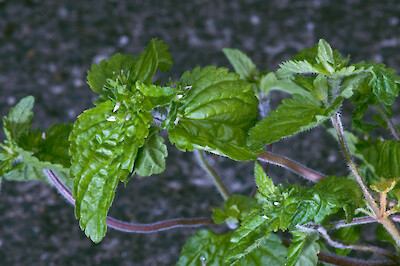
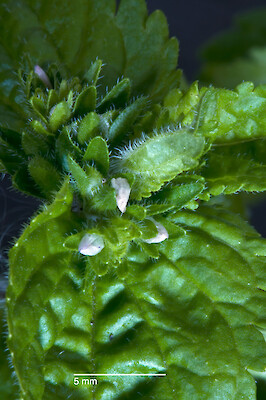
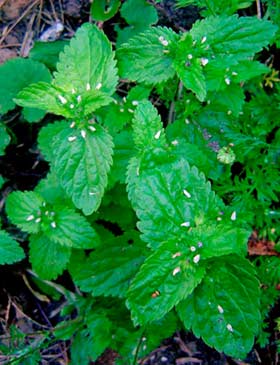
Annual, decumbent or ascending herb to about 15 cm. tall, much branched; branches up to 25 cm. long, usually densely greyish-white pilose. Leaves opposite; lamina 5.5–25 x 5–16 mm., broadly ovate, apex obtuse, truncate, subcuneate to subcordate, obtuse at base, coarsely creante-serrate, of ten less densely pilose above, subglabrescent; petiole 1.5–2(3.5) mm. long. Racemes axillary, 1.5–2.5 mm. long, few-flowered; flowers blue to whitish, bracteate. Bracts 2–2.3 x 0.4–0.5 mm., narrowly oblong, obtuse, shortly ciliate. Pedicels 0.5–1 mm. long, stout. Calyx 1.8–2.5 mm. long at flowering, up to 3.4 mm. long in fruit; lobes 0.5–1 mm. wide, oblong to obovate-oblong, obtuse, glabrous to sparsely pilose, ciliate. Corolla up to 2 mm. long. Capsule 1.25–2.6 x 2.25–2.8 mm., broadly obcordate in outline, compressed, glabrous, ciliate on suture.
Similar taxa
Stachys arvensis from which it differs by its smaller lilac to lavender flowers which scarcely open, and larger broadly obcordate, flattened capsules which open widely to expose numerous greenish-yellow to yellow-brown fine seeds
Habitat
Weed of nurseries - often as a contaminant of potted up plants, also found as a casual of recently planted land (spread from nurseries).
Detailed taxonomy
Genus
Family
Taxonomic notes
Probably cold sensitive - not likely to be a major threat
Endemic genus
No
Endemic family
No
Ecology
Flowering
Summer
Fruiting
Summer
Year naturalised
2007
Origin
Presumably Java though recorded from Africa, India, Sri Lanka, Malesia, and Indonesia.
Reason for introduction
Accidental
Control techniques
Disposal Method
Hand pull, spray, and sterilise contaminated soil.
Life cycle and dispersal
Short lived perennial. Reproduces by seed which is freely produced. Dispersed by translocation of garden waste and compost, seed dispersed in air and water
Other information
Etymology
veronica: Named after Saint Veronica, who gave Jesus her veil to wipe his brow as he carried the cross through Jerusalem, perhaps because the common name of this plant is ‘speedwell’. The name Veronica is often believed to derive from the Latin vera ‘truth’ and iconica ‘image’, but it is actually derived from the Macedonian name Berenice which means ‘bearer of victory’.