
New Zealand Plant Conservation Network
  • Member login
  • Join
Facebook
  • Home
  • Flora
    • Flora species
    • Tag names
    • Vascular
    • Non-vascular
    • Lichens
    • Plant identification
    • Fungi
    • Make your own book
    • Quiz
  • Threats
    • Exotic Plants (Weeds)
    • Pest Animals
    • Other threats
  • Ecosystems
    • Plant communities
    • Ecosystem services
    • Novel ecosystems
  • Publications
    • Documents
    • Newsletter
    • Plant lists
    • Botanical Society journals
    • NZPCN publications
  • Conservation
    • Seedbank
    • Training
    • Restoration
    • Monitoring
    • Habitat protection
    • Funding
    • Botanic gardens
    • Botanic Societies
  • NZPCN
    • News
    • Trilepidea newsletter
    • Events
    • David Given Scholarship
    • Council members
    • Awards
    • Shop
    • Donate
    • Favourite Plant
    • Why join NZPCN?
    • Join
  • Help
    • FAQ
    • Query
    • Glossary
  • Contact us

Search flora

  1. Home
  2. Flora
  3. Flora species
  4. Viola banksii

Viola banksii

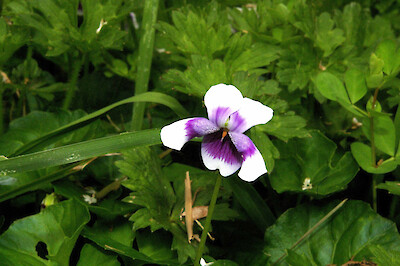
Viola hederacea.<br>Photographer: John Smith-Dodsworth, Licence: <a target='_blank' href='https://creativecommons.org/licenses/by-nc/4.0'>CC BY-NC</a>.
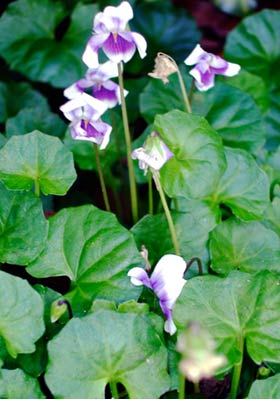
Auckland. May 2007.<br>Photographer: Peter J de Lange, Licence: <a target='_blank' href='https://creativecommons.org/licenses/by-nc/4.0'>CC BY-NC</a>.
Download PDF Comment on factsheet

NZPCN members can select up to 20 plant species and automatically create a full colour, fully illustrated A4 book describing them (in PDF format).

  • Find out more...
  • Join NZPCN...
Find in plant lists
iNaturalist NZ View observations Biota of NZ Click here to view NZ Flora Click here to view Herbarium View AVH specimens Donate Support NZPCN

Biostatus

Exotic

Category

Vascular

Structural class

Herbs - Dicotyledons other than Composites

Flower colours

Violet/Purple, White

Detailed description

Vigorous perennial herb spreading by stolons; rootstock sometimes somewhat swollen and bulbous at the stem bases. Stems contracted so that the leaves form rosettes. Leaves broad-reniform to orbicular, the largest 12–35 mm long (from the base of the sinus to the apex of the lamina), 20–65 mm wide, 1.0–2.0 times wider than long, with a narrow basal sinus; lamina with 10–20 +/- prominent teeth, glabrous, +/- concolorous bright green; stipules narrowly triangular to broadly triangular, usually with several small or elongate, glandular teeth on each side. Flowers on scapes to 15 cm long and exceeding the leaves, strongly discolorous violet-and-white; anterior petal 7–12 mm long, 5–10 mm wide, distinctly and regularly ovate to broad-elliptic, broadest in the middle third, usually emarginate, with a large green v-shaped blotch at the base then rich violet for over half its length contrasting sharply with a prominent white apex, prominently 3-nerved, the midnerve not or scarcely anastomosing with the lateral nerves which branch +/- regularly towards the margins; lateral petals widely spreading, 8–14 mm long, strongly twisted to c. 180°, rich violet at the base grading to white distally; beard covering half or more of the width of the lateral petals; dorsal petals 8–15 mm long, 4–9 mm wide, ovate to broadly obovate, erect to strongly reflexed, rich violet at the flexure, white for most of their length. Anthers 2.0–5.0 mm long, cream, often flushed or flecked with violet, the terminal appendages straw-coloured, with short, irregular hairs on the outer margins of the anther cells; anther glands whitish green (never purplish), almost as long as the anther cells, very prominent, broad and high, +/- smooth; pollen and interior margins of the anther cells yellow to golden. Ovary and fruit whitish or pale green, often flecked or flushed purple; style distinctly geniculate at its insertion on the ovary. Seeds 1.8–2.5 mm long, glossy purplish-black, +/- smooth to irregularly rugose.

Similar taxa

V. banksii differs from V. hederacea in having larger, more richly coloured flowers, broad-ovate to broad-elliptic, almost semicircular anterior petals with triplinerved-pinnate rather than irregular venation, more strongly twisted, broader lateral petals with a more extensive beard, very large, prominent anther glands that are tall, broad and smooth, and purple-black seeds (Thiele & Prober 2003). Plants matching Viola banksii seem to be the only plant within the V. hederacea complex cultivated and wild in New Zealand.

Distribution

Sparingly naturalised in North and South Islands. Indigenous to Eastern Australia (Queensland, New South Wales)

Habitat

Waste land and rough lawn. A cultivation escape which seems to rarely (if ever) set seed in New Zealand, so spread is mostly (probably entirely) vegetative. Most occurrences are in urban areas where garden plants have spread onto footpaths or into lawns. However, increasingly this species is also seen establishing from garden waste dumped near settlements.

Conservation status

Not applicable

Detailed taxonomy

Genus

Viola

Family

Violaceae

Authority

Viola banksii K.R.Thiele & Prober

Synonyms

Viola hederacea auct. non. N.Z. authorshttp://anpsa.org.au/ points out “research has shown that the commonly grown plant is different to the true V.hederacea.”

Taxonomic notes

The type of Viola hederacea came from Tasmania and plants matching the type are not present in New Zealand (c.f. Webb et al. 1988). Viola hedracea looks like this https://www.inaturalist.org/observations/19024215 at / or close to its type locality. Such plants are scarce in cultivation worldwide, whereas another plant long ascribed to V. hederacea is very commonly grown, and that plant seems to be the only one present in New Zealand (usually seen as an escape from cultivation). That plant has been segregated from Viola hederacea and is now know as V. banksii (Thiele & Prober 2003).

Although this species (as Viola hederacea) was recorded as ‘naturalised’ in New Zealand in 1988 (Webb et al. 1988) that date of naturalisation reflects the first published record of it’s self-establishment in New Zealand. Viola banksii has been grown in New Zealand for a long time and the naturalisation process has been ongoing for much of that time than the 1988 would suggest.

Endemic genus

No

Endemic family

No

Ecology

Flowering

November - February

Year naturalised

1988

Origin

Australia

Other information

Etymology

viola: The Latin name for violet

banksii: Named after Sir Joseph Banks, 1st Baronet, GCB, PRS (24 February 1743 - 19 June 1820) was an English naturalist, botanist and patron of the natural sciences.

Referencing and citations

References and further reading

Thiele, K.R.; Prober, S.M. 2003: Two new species and a new hybrid in the Viola hederacea species complex, with notes on Viola hederacea Labill. Muelleria 18: 7-25.

Webb CJ, Sykes WR, Garnock-Jones PJ 1988. Flora of New Zealand. Vol. IV. Botany Division, DSIR, Christchurch.

Attribution

Fact Sheet prepared for NZPCN by P.J. de Lange 21 December 2012. Description from Thiele & Prober 2003)

▲ Back to top
  • Home
  • Flora
  • Threats
  • Ecosystems
  • Publications
  • Conservation
  • NZPCN
  • Help
  • Contact us
  • Facebook

© 2026 New Zealand Plant Conservation Network • Website by RS

Coastlands Plant Nursery Wildlands

Website sponsor

  • Home
  • Flora
    • Flora species
    • Tag names
    • Vascular
      • Ferns
        • King fern
        • True ferns
        • Adder's tongue ferns
        • Fork ferns and whisk ferns
        • Horsetails
      • Conifers
        • Celery pines
        • Kauri
        • Podocarps
          • Podocarpus
          • Dacrydium
          • Prumnopitys
          • Dacrycarpus
          • Halocarpus
          • Lepidothamnus
          • Manoao
        • Cypress
      • Flowering plants
        • Parasites
          • Leafy mistletoes
          • Pygmy mistletoes
            • Korthalsella flowers
            • Korthalsella hosts
            • Dispersal of Korthalsella
            • Associates of Korthalsella
          • Root parasites
          • Saprophytes
        • Epiphytes
          • NZ
            • Typical
            • Occasional
            • Hemi-epiphytes
            • Ephemeral
            • NZ list
        • Monocots
          • Orchids
            • Structure
          • Grasses
        • Dicots
          • Hebes
          • Kowhai
          • Coprosma
          • Beech
          • Rata
        • Carnivorous
        • Deciduous plants
        • Aquatic plants
      • Poisonous natives
      • Threatened plant lists
      • What's a vascular plant?
      • Club mosses
    • Non-vascular
      • Bryophytes
        • Liverworts
        • Mosses
        • Hornworts
      • Algae
        • Seaweeds
    • Lichens
    • Plant identification
      • Written descriptions
      • Experts
      • Plant keys
        • Key to parasitic plant genera
      • Collecting plants
        • Should I collect
        • Choosing a specimen
        • Field notes
        • Fresh plant material
        • Pressing and drying
        • Mounting specimens
        • Labelling specimens
    • Fungi
    • Make your own book
    • Quiz
  • Threats
    • Exotic Plants (Weeds)
      • Unwanted organisms
      • DOC weeds
      • Plant me instead
      • Pest Plant Accord
    • Pest Animals
      • Mammals
        • Mustelids
        • Rodents
        • Ungulates
        • Possums
      • Fish
      • Insects
    • Other threats
      • Natural events
        • Insects
      • Human induced
        • Habitat loss
        • Collection
        • Climate change
  • Ecosystems
    • Plant communities
      • Dunes
        • Volcanic
        • Coastal
          • Threats
          • Common species
          • Research on dunes
          • Pingao research
          • What you can do
      • Wetlands
        • Estuaries
          • Common estuarine species
          • Research on estuaries
        • Ephemeral
        • Restiad peat bogs
      • Forests
        • Kauri-podocarp-broadleaved
        • Podocarp broadleaved
        • Beech
      • Scrub/shrublands
        • Geothermal
          • Distribution of geothermal vegetation
          • Geothermal plants
          • Geothermal vegetation types
          • Threats to geothermal vegetation
        • Frost flat/hollow
        • Manuka fens
        • Gumlands
      • Grasslands
        • Tussock grasslands
      • Bare ground
        • Braided rivers
        • Alpine
        • Cliff
        • Scree and boulderfields
        • Shingle beaches
      • Herbfields
        • Saltpan
    • Ecosystem services
    • Novel ecosystems
  • Publications
    • Documents
    • Newsletter
    • Plant lists
      • Search plant lists
      • Plant lists by political region/district
      • Plant lists by ecological region/district
      • National plant lists
      • How to prepare a plant list
    • Botanical Society journals
    • NZPCN publications
  • Conservation
    • Seedbank
      • Project 1 - Pohutukawa, Rata and Myrtaceae
      • Project 2 - Alpine flora and the Forget-Me-Nots
      • Project 3 - Kowhai and its relatives
      • Project 4 - Podocarps and trees of the forest
    • Training
      • Module 1: Plant life
      • Module 2: Covenants
      • Module 3: Propagation
      • Module 4: Wetlands
      • Pilot course 2006
    • Restoration
      • Gardening
        • Being weed wise
        • Garden plants
          • Trees and shrubs
          • Broad-leaved herbs
          • Grass-like herbs
          • Climbers
          • Ferns
        • Attracting wildlife
        • Planting for lizards
          • Rules
      • Species recovery
        • Plant translocations
      • Ecological restoration
        • Case studies
          • Tavora Reserve
          • Waiwhakareke
      • Revegetation
      • Eco-sourcing
      • Find a restoration group
    • Monitoring
      • Number count
        • Number count method
        • Pros and cons of number counts
        • Data analysis and interpretation
      • Presence/absence surveys
        • Presence/absence survey methods
        • Pros and cons of presence/absence surveys
        • Data analysis and interpretation
      • Mapping spatial extent
        • Spatial extent mapping methods
        • Pros and cons of spatial extent mapping
        • Data analysis and interpretation
      • Photo points
        • Photo point guidelines
    • Habitat protection
      • Legal protection
        • Nga Whenua Rahui
        • QEII covenants
        • DOC Covenants
      • Animal pest control
      • Weed control
      • Fencing
    • Funding
    • Botanic gardens
    • Botanic Societies
  • NZPCN
    • News
    • Trilepidea newsletter
    • Events
      • 2026 NZPCN conference
        • 2026 Conference field trips
        • 2026 Conference workshops
        • 2026 conference sponsor
      • 2024 AGM
      • Conference 2024
        • 2024 conference overview
        • Conference 2024 workshops
        • Conference 2024 Field Trips
        • 2024 conference sponsors
        • Conference 2024 accommodation options
        • 2024 Conference Programme
      • Conference 2022
        • Conference programme summary
        • 2022 conference workshops
        • 2022 conference field trips
        • Code of conduct
        • COVID-19 information
        • 2022 conference sponsors
        • Abstract and poster submission
        • 2022 Conference venue and accommodation
        • Conference Workshop: Restoration Pathways
        • 2022 conference postponement
      • Conference 2019
      • Conference 2017
      • Conference 2015
        • Speakers
        • Workshops
        • Field trips
        • Charity auction
      • Conference 2013
        • Speakers
        • Timetable
      • 2023 Restoration Pathways Workshop
      • 2023 AGM
    • David Given Scholarship
      • David Given Scholarship Recipients
    • Council members
      • NZPCN council member profiles
      • Council 2023
      • Council 2022
      • Council 2021
      • Council 2020
      • Council 2019
      • Council 2018
      • Council 2017
      • Council 2016
      • Council 2015
      • Council 2014
      • Council 2024
      • Council 2013
      • Council 2012
      • Council 2011
      • Council 2010
      • Council 2009
      • Council 2008
      • Council 2007
      • Council 2006
      • Council 2005
      • Council 2004
      • Council 2003
    • Awards
      • NZPCN Awards
        • 2024 Plant Conservation Awards
        • 2022
        • 2019
        • 2018
        • 2017
        • 2016
        • 2015
        • 2014
        • 2013
        • 2012
        • 2011
        • 2010
        • 2009
        • 2008
        • 2007
        • 2006
        • 2005
    • Shop
    • Donate
    • Favourite Plant
    • Why join NZPCN?
    • Join
  • Help
    • FAQ
      • Joining the Network
      • The Network
      • Network website
      • New Zealand plants
      • The law
      • Your discoveries
    • Query
    • Glossary
  • Contact us
  • Facebook