
New Zealand Plant Conservation Network
  • Member login
  • Join
Facebook
  • Home
  • Flora
    • Flora species
    • Tag names
    • Vascular
    • Non-vascular
    • Lichens
    • Plant identification
    • Fungi
    • Make your own book
    • Quiz
  • Threats
    • Exotic Plants (Weeds)
    • Pest Animals
    • Other threats
  • Ecosystems
    • Plant communities
    • Ecosystem services
    • Novel ecosystems
  • Publications
    • Documents
    • Newsletter
    • Plant lists
    • Botanical Society journals
    • NZPCN publications
  • Conservation
    • Seedbank
    • Training
    • Restoration
    • Monitoring
    • Habitat protection
    • Funding
    • Botanic gardens
    • Botanic Societies
  • NZPCN
    • News
    • Trilepidea newsletter
    • Events
    • David Given Scholarship
    • Council members
    • Awards
    • Shop
    • Donate
    • Favourite Plant
    • Why join NZPCN?
    • Join
  • Help
    • FAQ
    • Query
    • Glossary
    • Website Terms of Use
  • Contact us
  • NZPCN
    • News
    • Trilepidea newsletter
    • Events
      • 2026 NZPCN conference
        • 2026 Conference field trips
        • 2026 Conference workshops
        • 2026 conference sponsors
        • 2026 Conference keynote speakers
      • 2026 AGM
      • Code of conduct
      • 2024 AGM
      • Conference 2024
        • 2024 conference overview
        • Conference 2024 workshops
        • Conference 2024 Field Trips
        • 2024 conference sponsors
        • Conference 2024 accommodation options
        • 2024 Conference Programme
      • Conference 2022
        • Conference programme summary
        • 2022 conference workshops
        • 2022 conference field trips
        • COVID-19 information
        • 2022 conference sponsors
        • Abstract and poster submission
        • 2022 Conference venue and accommodation
        • Conference Workshop: Restoration Pathways
        • 2022 conference postponement
      • Conference 2019
      • Conference 2017
      • Conference 2015
        • Speakers
        • Workshops
        • Field trips
        • Charity auction
      • Conference 2013
        • Speakers
        • Timetable
      • 2023 Restoration Pathways Workshop
      • 2023 AGM
    • David Given Scholarship
      • David Given Scholarship Recipients
    • Council members
      • NZPCN council member profiles
      • Council 2023
      • Council 2022
      • Council 2021
      • Council 2020
      • Council 2019
      • Council 2018
      • Council 2017
      • Council 2016
      • Council 2015
      • Council 2014
      • Council 2024
      • Council 2013
      • Council 2012
      • Council 2011
      • Council 2010
      • Council 2009
      • Council 2008
      • Council 2007
      • Council 2006
      • Council 2005
      • Council 2004
      • Council 2003
    • Awards
      • NZPCN Awards
        • 2024 Plant Conservation Awards
        • 2022
        • 2019
        • 2018
        • 2017
        • 2016
        • 2015
        • 2014
        • 2013
        • 2012
        • 2011
        • 2010
        • 2009
        • 2008
        • 2007
        • 2006
        • 2005
    • Shop
    • Donate
    • Favourite Plant
    • Why join NZPCN?
    • Join
  1. Home
  2. NZPCN
  3. News
  4. News article

News article

‘It’s tragic’ - farmer destroys threatened native shrub

A Canterbury farmer has laid waste to a threatened native shrub, knocking out a third of its national population in one fell swoop.
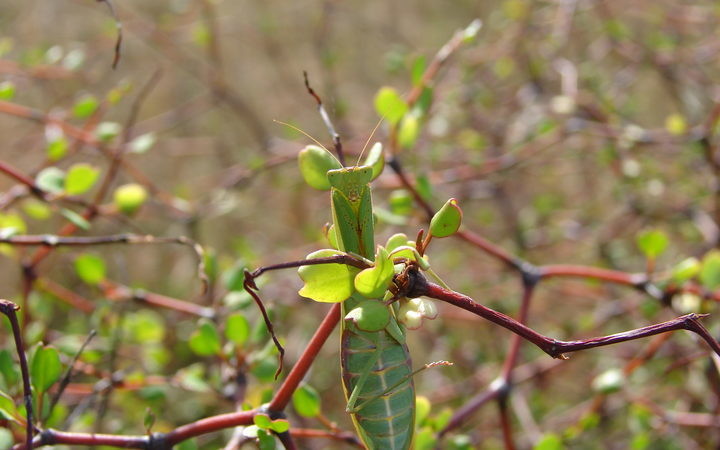


Praying Mantis are found in the shrub. Photo: RNZ / Supplied

Once abundant along the East Coast, shrubby tororaro is now down to 3700 plants, most of those on private farmland on Kaitorete Spit near Banks Peninsula.

Forest and Bird’s Jen Miller said farmer Brent Thomas sprayed the shrubs with a herbicide before the land was sown with oats for winter feed.

About 1000 shrubs were lost.

“And so we’ve sought an enforcement order which is effectively seeking that the owner does no more work and attempts some rehabilitation of the site… our advice is it’s possible but will take many decades.”

http://www.radionz.co.nz/news/national/356316/it-s-tragic-farmer-destroys-threatened-native-shrub

Ms Miller said the damage was done within a month of Mr Thomas buying the farm earlier this year.

“It’s hugely disappointing this has never been purchased by perhaps the department of Conservation or Environment Canterbury… it’s too special, it’s too wonderful and important nationally for this kind of thing to happen to it.”

Landcare Research ecologist Susan Walker said the shrub was important in Māori medicine and considered a taonga.

It was a slow growing hardy plant that had managed to survive for thousands of years but had been pushed to the edge by intensive farming on the Canterbury Plains, she said.

“[It’s] tragic really, especially given the significance of this population and the state it’s in and you know you sort of think, well how was this allowed to happen, surely this was a population that should have been an absolute priority for protection on private land.”

Department of Conservation manager Andy Thompson said an attempt was made to purchase the land when it went on the market in February, but it had already been sold.


Shrubby tororaro. Photo: RNZ / Supplied

When they spoke to the new owner in March, just a few weeks later, 1000 of the shrubs had already been destroyed, he said.

Mr Thompson accepted assurances from the farmer that he did not realise how rare and important the shrubs were.

“I was sitting beside him when we showed him the maps of where the plants were and if I hadn’t seen his jaw drop myself I would probably be sceptical of that reaction but I have to say he’s been quite genuine in his concern for the plants and also about what we’re trying to achieve in the future.”

DOC was now trying to buy 109 hectares from the farmer to be turned in to a reserve, protecting 1500 of the shrubs.

But Mr Thompson said it would not be possible to replant the 1000 shrubs that Mr Thomas had removed, as the land had been sprayed and it did not do well when it was transplanted from one area to another.

Forest and Bird wanted to know if Mr Thomas intended to remove the 900 shrubs on the land he would continue to own once the DOC sale went through.

Mr Thomas responded to RNZ’s questions through a public relations consultant, who said due to poor cellphone reception Mr Thomas was not able to give an interview.

In a statement Mr Thomas said he was horrified to find himself in this situation and was continuing to work towards reaching a collaborative long-term solution.

Posted: 01/05/2018

Prev article
All articles
Next article
▲ Back to top
  • Home
  • Flora
  • Threats
  • Ecosystems
  • Publications
  • Conservation
  • NZPCN
  • Help
  • Contact us

© 2026 New Zealand Plant Conservation Network • Website Terms of Use • Website by RS

Coastlands Plant Nursery Wildlands

Website sponsor

  • Home
  • Flora
    • Flora species
    • Tag names
    • Vascular
      • Ferns
        • King fern
        • True ferns
        • Adder's tongue ferns
        • Fork ferns and whisk ferns
        • Horsetails
      • Conifers
        • Celery pines
        • Kauri
        • Podocarps
          • Podocarpus
          • Dacrydium
          • Prumnopitys
          • Dacrycarpus
          • Halocarpus
          • Lepidothamnus
          • Manoao
        • Cypress
      • Flowering plants
        • Parasites
          • Leafy mistletoes
          • Pygmy mistletoes
            • Korthalsella flowers
            • Korthalsella hosts
            • Dispersal of Korthalsella
            • Associates of Korthalsella
          • Root parasites
          • Saprophytes
        • Epiphytes
          • NZ
            • Typical
            • Occasional
            • Hemi-epiphytes
            • Ephemeral
            • NZ list
        • Monocots
          • Orchids
            • Structure
          • Grasses
        • Dicots
          • Hebes
          • Kowhai
          • Coprosma
          • Beech
          • Rata
        • Carnivorous
        • Deciduous plants
        • Aquatic plants
      • Poisonous natives
      • Threatened plant lists
      • What's a vascular plant?
      • Club mosses
    • Non-vascular
      • Bryophytes
        • Liverworts
        • Mosses
        • Hornworts
      • Algae
        • Seaweeds
    • Lichens
    • Plant identification
      • Written descriptions
      • Experts
      • Plant keys
        • Key to parasitic plant genera
      • Collecting plants
        • Should I collect
        • Choosing a specimen
        • Field notes
        • Fresh plant material
        • Pressing and drying
        • Mounting specimens
        • Labelling specimens
    • Fungi
    • Make your own book
    • Quiz
  • Threats
    • Exotic Plants (Weeds)
      • Unwanted organisms
      • DOC weeds
      • Plant me instead
      • Pest Plant Accord
    • Pest Animals
      • Mammals
        • Mustelids
        • Rodents
        • Ungulates
        • Possums
      • Fish
      • Insects
    • Other threats
      • Natural events
        • Insects
      • Human induced
        • Habitat loss
        • Collection
        • Climate change
  • Ecosystems
    • Plant communities
      • Dunes
        • Volcanic
        • Coastal
          • Threats
          • Common species
          • Research on dunes
          • Pingao research
          • What you can do
      • Wetlands
        • Estuaries
          • Common estuarine species
          • Research on estuaries
        • Ephemeral
        • Restiad peat bogs
      • Forests
        • Kauri-podocarp-broadleaved
        • Podocarp broadleaved
        • Beech
      • Scrub/shrublands
        • Geothermal
          • Distribution of geothermal vegetation
          • Geothermal plants
          • Geothermal vegetation types
          • Threats to geothermal vegetation
        • Frost flat/hollow
        • Manuka fens
        • Gumlands
      • Grasslands
        • Tussock grasslands
      • Bare ground
        • Braided rivers
        • Alpine
        • Cliff
        • Scree and boulderfields
        • Shingle beaches
      • Herbfields
        • Saltpan
    • Ecosystem services
    • Novel ecosystems
  • Publications
    • Documents
    • Newsletter
    • Plant lists
      • Search plant lists
      • Plant lists by political region/district
      • Plant lists by ecological region/district
      • National plant lists
      • How to prepare a plant list
    • Botanical Society journals
    • NZPCN publications
  • Conservation
    • Seedbank
      • Project 1 - Pohutukawa, Rata and Myrtaceae
      • Project 2 - Alpine flora and the Forget-Me-Nots
      • Project 3 - Kowhai and its relatives
      • Project 4 - Podocarps and trees of the forest
    • Training
      • Module 1: Plant life
      • Module 2: Covenants
      • Module 3: Propagation
      • Module 4: Wetlands
      • Pilot course 2006
    • Restoration
      • Gardening
        • Being weed wise
        • Garden plants
          • Trees and shrubs
          • Broad-leaved herbs
          • Grass-like herbs
          • Climbers
          • Ferns
        • Attracting wildlife
        • Planting for lizards
          • Rules
      • Species recovery
        • Plant translocations
      • Ecological restoration
        • Case studies
          • Tavora Reserve
          • Waiwhakareke
      • Revegetation
      • Eco-sourcing
      • Find a restoration group
    • Monitoring
      • Number count
        • Number count method
        • Pros and cons of number counts
        • Data analysis and interpretation
      • Presence/absence surveys
        • Presence/absence survey methods
        • Pros and cons of presence/absence surveys
        • Data analysis and interpretation
      • Mapping spatial extent
        • Spatial extent mapping methods
        • Pros and cons of spatial extent mapping
        • Data analysis and interpretation
      • Photo points
        • Photo point guidelines
    • Habitat protection
      • Legal protection
        • Nga Whenua Rahui
        • QEII covenants
        • DOC Covenants
      • Animal pest control
      • Weed control
      • Fencing
    • Funding
    • Botanic gardens
    • Botanic Societies
  • NZPCN
    • News
    • Trilepidea newsletter
    • Events
      • 2026 NZPCN conference
        • 2026 Conference field trips
        • 2026 Conference workshops
        • 2026 conference sponsors
        • 2026 Conference keynote speakers
      • 2026 AGM
      • Code of conduct
      • 2024 AGM
      • Conference 2024
        • 2024 conference overview
        • Conference 2024 workshops
        • Conference 2024 Field Trips
        • 2024 conference sponsors
        • Conference 2024 accommodation options
        • 2024 Conference Programme
      • Conference 2022
        • Conference programme summary
        • 2022 conference workshops
        • 2022 conference field trips
        • COVID-19 information
        • 2022 conference sponsors
        • Abstract and poster submission
        • 2022 Conference venue and accommodation
        • Conference Workshop: Restoration Pathways
        • 2022 conference postponement
      • Conference 2019
      • Conference 2017
      • Conference 2015
        • Speakers
        • Workshops
        • Field trips
        • Charity auction
      • Conference 2013
        • Speakers
        • Timetable
      • 2023 Restoration Pathways Workshop
      • 2023 AGM
    • David Given Scholarship
      • David Given Scholarship Recipients
    • Council members
      • NZPCN council member profiles
      • Council 2023
      • Council 2022
      • Council 2021
      • Council 2020
      • Council 2019
      • Council 2018
      • Council 2017
      • Council 2016
      • Council 2015
      • Council 2014
      • Council 2024
      • Council 2013
      • Council 2012
      • Council 2011
      • Council 2010
      • Council 2009
      • Council 2008
      • Council 2007
      • Council 2006
      • Council 2005
      • Council 2004
      • Council 2003
    • Awards
      • NZPCN Awards
        • 2024 Plant Conservation Awards
        • 2022
        • 2019
        • 2018
        • 2017
        • 2016
        • 2015
        • 2014
        • 2013
        • 2012
        • 2011
        • 2010
        • 2009
        • 2008
        • 2007
        • 2006
        • 2005
    • Shop
    • Donate
    • Favourite Plant
    • Why join NZPCN?
    • Join
  • Help
    • FAQ
      • Joining the Network
      • The Network
      • Frequently asked questions
      • New Zealand plants
      • The law
      • Your discoveries
    • Query
    • Glossary
    • Website Terms of Use
  • Contact us
  • Facebook