
New Zealand Plant Conservation Network
  • Member login
  • Join
Facebook
  • Home
  • Flora
    • Flora species
    • Tag names
    • Vascular
    • Non-vascular
    • Lichens
    • Plant identification
    • Fungi
    • Make your own book
    • Quiz
  • Threats
    • Exotic Plants (Weeds)
    • Pest Animals
    • Other threats
  • Ecosystems
    • Plant communities
    • Ecosystem services
    • Novel ecosystems
  • Publications
    • Documents
    • Newsletter
    • Plant lists
    • Botanical Society journals
    • NZPCN publications
  • Conservation
    • Seedbank
    • Training
    • Restoration
    • Monitoring
    • Habitat protection
    • Funding
    • Botanic gardens
    • Botanic Societies
  • NZPCN
    • News
    • Trilepidea newsletter
    • Events
    • David Given Scholarship
    • Council members
    • Awards
    • Shop
    • Donate
    • Favourite Plant
    • Why join NZPCN?
    • Join
  • Help
    • FAQ
    • Query
    • Glossary
    • Website Terms of Use
  • Contact us
  • NZPCN
    • News
    • Trilepidea newsletter
    • Events
      • 2026 NZPCN conference
        • 2026 Conference field trips
        • 2026 Conference workshops
        • 2026 conference sponsors
        • 2026 Conference keynote speakers
      • 2026 AGM
      • Code of conduct
      • 2024 AGM
      • Conference 2024
        • 2024 conference overview
        • Conference 2024 workshops
        • Conference 2024 Field Trips
        • 2024 conference sponsors
        • Conference 2024 accommodation options
        • 2024 Conference Programme
      • Conference 2022
        • Conference programme summary
        • 2022 conference workshops
        • 2022 conference field trips
        • COVID-19 information
        • 2022 conference sponsors
        • Abstract and poster submission
        • 2022 Conference venue and accommodation
        • Conference Workshop: Restoration Pathways
        • 2022 conference postponement
      • Conference 2019
      • Conference 2017
      • Conference 2015
        • Speakers
        • Workshops
        • Field trips
        • Charity auction
      • Conference 2013
        • Speakers
        • Timetable
      • 2023 Restoration Pathways Workshop
      • 2023 AGM
    • David Given Scholarship
      • David Given Scholarship Recipients
    • Council members
      • NZPCN council member profiles
      • Council 2023
      • Council 2022
      • Council 2021
      • Council 2020
      • Council 2019
      • Council 2018
      • Council 2017
      • Council 2016
      • Council 2015
      • Council 2014
      • Council 2024
      • Council 2013
      • Council 2012
      • Council 2011
      • Council 2010
      • Council 2009
      • Council 2008
      • Council 2007
      • Council 2006
      • Council 2005
      • Council 2004
      • Council 2003
    • Awards
      • NZPCN Awards
        • 2024 Plant Conservation Awards
        • 2022
        • 2019
        • 2018
        • 2017
        • 2016
        • 2015
        • 2014
        • 2013
        • 2012
        • 2011
        • 2010
        • 2009
        • 2008
        • 2007
        • 2006
        • 2005
    • Shop
    • Donate
    • Favourite Plant
    • Why join NZPCN?
    • Join
  1. Home
  2. NZPCN
  3. News
  4. News article

News article

Remembering Colin Burrows
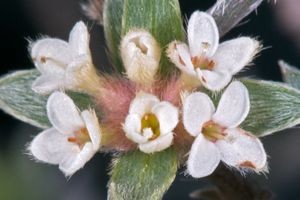
The nationally critical Pimelea mimosa, one of the many native daphnes described by by Colin. Photo: Jeremy Rolfe.The nationally critical Pimelea mimosa, one of the many native daphnes described by by Colin. Photo: Jeremy Rolfe.Dr Colin Burrows, ecologist, paleoecologist, biosystematist and conservationist has passed away after a brief illness.

Colin Burrows first started his career undertaking an M.Sc. study on three Pimelea growing near the Mt Cass Field Station, Canterbury. His work resulted in the formal description of Pimelea oreophila and P. pulvinaris in one of his first papers published in 1962 in the Transactions of the Royal Society of New Zealand (Botany). Always a keen mountaineer and observer, Colin collected plants widely throughout the mountains of the eastern South Island particularly, and always had an eye for the unusual. Despite an ‘accidental’ start into taxonomy, Colin soon switched to ecology for his PhD, from which he started his career as lecturer at the University of Canterbury in 1960 (retiring from there officially in 1993). In that position Colin oversaw the supervision of numerous future botanists and university academics and from there he also established himself as an expert on New Zealand Quaternary Sciences for which he was eventually awarded a D.Sc. He was renowned for his in depth knowledge of the indigenous flora and vegetation of New Zealand, for his research into alpine grasslands, wetlands, forests and glacial phenomena. He dabbled in lichens, pedology and even became an early expert on the diet of moa. He was the botanist for Arthur’s Pass National Park and wrote a wide body of work on the germination behaviour of New Zealand plant species. In his later years Colin decided to revisit Pimelea, a taxonomically ‘tricky’ genus. As a result he added 35 new taxa to our flora though this was only after he completed a seminal work on Julius von Haast (published 2005) and helped edit the third revision of the Natural History of Canterbury (published 2008). In his later life Colin received the Loder Cup (2010) of which he was immensely proud.

Colin is remembered fondly by many as an excellent mentor and a very humble man. He was the quiet one who sat at the back and politely came up to you afterward to suggest alternatives to your scientific reasoning. He was also very old school, writing manuscripts by hand, or on a type writer, he eschewed computers, and never had email. Peter de Lange worked with Colin briefly on Pimelea, during which time he recalls being sent manuscripts that his daughter Julia had typed up, often these had maps drawn by hand and coloured in with pencil. He says “While we did not always see eye to eye on that difficult genus, together we described the Northland endemic Pimelea acra and I was able to present Colin with a range of entities, many of which he subsequently described.”

During his retirement from Canterbury University, he was a major contributor to and driving force behind the Quail Island/Otamahua Restoration Trust that is working to restore the native vegetation on Quail Island in Lyttelton Harbour.

The family have asked that instead of sending flowers, people make donations to the Quail Island Restoration Trust.

Posted: 19/01/2014

Prev article
All articles
Next article
▲ Back to top
  • Home
  • Flora
  • Threats
  • Ecosystems
  • Publications
  • Conservation
  • NZPCN
  • Help
  • Contact us

© 2026 New Zealand Plant Conservation Network • Website Terms of Use • Website by RS

Coastlands Plant Nursery Wildlands

Website sponsor

  • Home
  • Flora
    • Flora species
    • Tag names
    • Vascular
      • Ferns
        • King fern
        • True ferns
        • Adder's tongue ferns
        • Fork ferns and whisk ferns
        • Horsetails
      • Conifers
        • Celery pines
        • Kauri
        • Podocarps
          • Podocarpus
          • Dacrydium
          • Prumnopitys
          • Dacrycarpus
          • Halocarpus
          • Lepidothamnus
          • Manoao
        • Cypress
      • Flowering plants
        • Parasites
          • Leafy mistletoes
          • Pygmy mistletoes
            • Korthalsella flowers
            • Korthalsella hosts
            • Dispersal of Korthalsella
            • Associates of Korthalsella
          • Root parasites
          • Saprophytes
        • Epiphytes
          • NZ
            • Typical
            • Occasional
            • Hemi-epiphytes
            • Ephemeral
            • NZ list
        • Monocots
          • Orchids
            • Structure
          • Grasses
        • Dicots
          • Hebes
          • Kowhai
          • Coprosma
          • Beech
          • Rata
        • Carnivorous
        • Deciduous plants
        • Aquatic plants
      • Poisonous natives
      • Threatened plant lists
      • What's a vascular plant?
      • Club mosses
    • Non-vascular
      • Bryophytes
        • Liverworts
        • Mosses
        • Hornworts
      • Algae
        • Seaweeds
    • Lichens
    • Plant identification
      • Written descriptions
      • Experts
      • Plant keys
        • Key to parasitic plant genera
      • Collecting plants
        • Should I collect
        • Choosing a specimen
        • Field notes
        • Fresh plant material
        • Pressing and drying
        • Mounting specimens
        • Labelling specimens
    • Fungi
    • Make your own book
    • Quiz
  • Threats
    • Exotic Plants (Weeds)
      • Unwanted organisms
      • DOC weeds
      • Plant me instead
      • Pest Plant Accord
    • Pest Animals
      • Mammals
        • Mustelids
        • Rodents
        • Ungulates
        • Possums
      • Fish
      • Insects
    • Other threats
      • Natural events
        • Insects
      • Human induced
        • Habitat loss
        • Collection
        • Climate change
  • Ecosystems
    • Plant communities
      • Dunes
        • Volcanic
        • Coastal
          • Threats
          • Common species
          • Research on dunes
          • Pingao research
          • What you can do
      • Wetlands
        • Estuaries
          • Common estuarine species
          • Research on estuaries
        • Ephemeral
        • Restiad peat bogs
      • Forests
        • Kauri-podocarp-broadleaved
        • Podocarp broadleaved
        • Beech
      • Scrub/shrublands
        • Geothermal
          • Distribution of geothermal vegetation
          • Geothermal plants
          • Geothermal vegetation types
          • Threats to geothermal vegetation
        • Frost flat/hollow
        • Manuka fens
        • Gumlands
      • Grasslands
        • Tussock grasslands
      • Bare ground
        • Braided rivers
        • Alpine
        • Cliff
        • Scree and boulderfields
        • Shingle beaches
      • Herbfields
        • Saltpan
    • Ecosystem services
    • Novel ecosystems
  • Publications
    • Documents
    • Newsletter
    • Plant lists
      • Search plant lists
      • Plant lists by political region/district
      • Plant lists by ecological region/district
      • National plant lists
      • How to prepare a plant list
    • Botanical Society journals
    • NZPCN publications
  • Conservation
    • Seedbank
      • Project 1 - Pohutukawa, Rata and Myrtaceae
      • Project 2 - Alpine flora and the Forget-Me-Nots
      • Project 3 - Kowhai and its relatives
      • Project 4 - Podocarps and trees of the forest
    • Training
      • Module 1: Plant life
      • Module 2: Covenants
      • Module 3: Propagation
      • Module 4: Wetlands
      • Pilot course 2006
    • Restoration
      • Gardening
        • Being weed wise
        • Garden plants
          • Trees and shrubs
          • Broad-leaved herbs
          • Grass-like herbs
          • Climbers
          • Ferns
        • Attracting wildlife
        • Planting for lizards
          • Rules
      • Species recovery
        • Plant translocations
      • Ecological restoration
        • Case studies
          • Tavora Reserve
          • Waiwhakareke
      • Revegetation
      • Eco-sourcing
      • Find a restoration group
    • Monitoring
      • Number count
        • Number count method
        • Pros and cons of number counts
        • Data analysis and interpretation
      • Presence/absence surveys
        • Presence/absence survey methods
        • Pros and cons of presence/absence surveys
        • Data analysis and interpretation
      • Mapping spatial extent
        • Spatial extent mapping methods
        • Pros and cons of spatial extent mapping
        • Data analysis and interpretation
      • Photo points
        • Photo point guidelines
    • Habitat protection
      • Legal protection
        • Nga Whenua Rahui
        • QEII covenants
        • DOC Covenants
      • Animal pest control
      • Weed control
      • Fencing
    • Funding
    • Botanic gardens
    • Botanic Societies
  • NZPCN
    • News
    • Trilepidea newsletter
    • Events
      • 2026 NZPCN conference
        • 2026 Conference field trips
        • 2026 Conference workshops
        • 2026 conference sponsors
        • 2026 Conference keynote speakers
      • 2026 AGM
      • Code of conduct
      • 2024 AGM
      • Conference 2024
        • 2024 conference overview
        • Conference 2024 workshops
        • Conference 2024 Field Trips
        • 2024 conference sponsors
        • Conference 2024 accommodation options
        • 2024 Conference Programme
      • Conference 2022
        • Conference programme summary
        • 2022 conference workshops
        • 2022 conference field trips
        • COVID-19 information
        • 2022 conference sponsors
        • Abstract and poster submission
        • 2022 Conference venue and accommodation
        • Conference Workshop: Restoration Pathways
        • 2022 conference postponement
      • Conference 2019
      • Conference 2017
      • Conference 2015
        • Speakers
        • Workshops
        • Field trips
        • Charity auction
      • Conference 2013
        • Speakers
        • Timetable
      • 2023 Restoration Pathways Workshop
      • 2023 AGM
    • David Given Scholarship
      • David Given Scholarship Recipients
    • Council members
      • NZPCN council member profiles
      • Council 2023
      • Council 2022
      • Council 2021
      • Council 2020
      • Council 2019
      • Council 2018
      • Council 2017
      • Council 2016
      • Council 2015
      • Council 2014
      • Council 2024
      • Council 2013
      • Council 2012
      • Council 2011
      • Council 2010
      • Council 2009
      • Council 2008
      • Council 2007
      • Council 2006
      • Council 2005
      • Council 2004
      • Council 2003
    • Awards
      • NZPCN Awards
        • 2024 Plant Conservation Awards
        • 2022
        • 2019
        • 2018
        • 2017
        • 2016
        • 2015
        • 2014
        • 2013
        • 2012
        • 2011
        • 2010
        • 2009
        • 2008
        • 2007
        • 2006
        • 2005
    • Shop
    • Donate
    • Favourite Plant
    • Why join NZPCN?
    • Join
  • Help
    • FAQ
      • Joining the Network
      • The Network
      • Frequently asked questions
      • New Zealand plants
      • The law
      • Your discoveries
    • Query
    • Glossary
    • Website Terms of Use
  • Contact us
  • Facebook