New Zealand Plant Conservation Network
  • Member login
  • Join
Facebook
  • Home
  • Flora
    • Flora species
    • Tag names
    • Vascular
    • Non-vascular
    • Lichens
    • Plant identification
    • Fungi
    • Make your own book
    • Quiz
  • Threats
    • Exotic Plants (Weeds)
    • Pest Animals
    • Other threats
  • Ecosystems
    • Plant communities
    • Ecosystem services
    • Novel ecosystems
  • Publications
    • Documents
    • Newsletter
    • Plant lists
    • Botanical Society journals
    • NZPCN publications
  • Conservation
    • Seedbank
    • Training
    • Restoration
    • Monitoring
    • Habitat protection
    • Funding
    • Botanic gardens
    • Botanic Societies
  • NZPCN
    • News
    • Trilepidea newsletter
    • Events
    • David Given Scholarship
    • Council members
    • Awards
    • Shop
    • Donate
    • Favourite Plant
    • Why join NZPCN?
    • Join
  • Help
    • FAQ
    • Query
    • Glossary
  • Contact us

Search flora

  1. Home
  2. Flora
  3. Flora species
  4. Sabdariffa diversifolia subsp. diversifolia

Sabdariffa diversifolia subsp. diversifolia
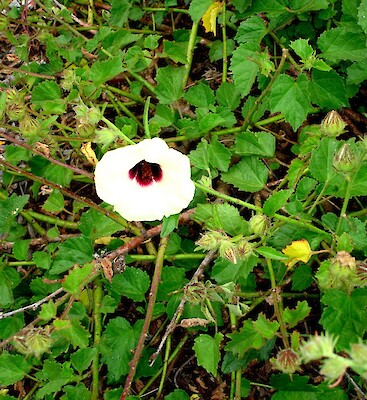
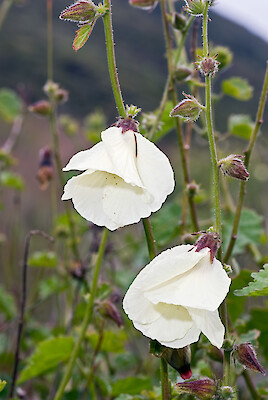
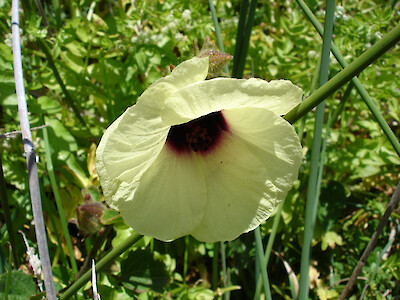
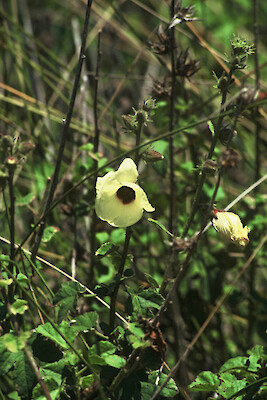
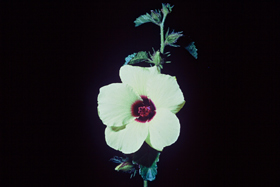
Hibiscus diversifolius in flower.<br>Photographer: Peter J de Lange, Licence: <a target='_blank' href='https://creativecommons.org/licenses/by-nc/4.0'>CC BY-NC</a>. <a class='member-message' href='/nzpcn/why-join-nzpcn/' target='_blank'>Members can view a larger version of this image.</a>
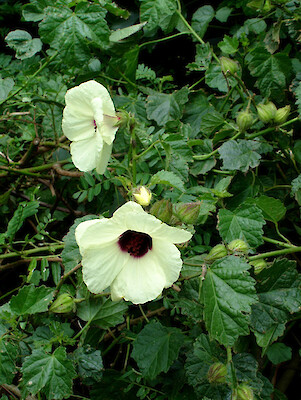
In coastal seep, Ahipara, Far North.<br>Photographer: Marley Ford, Date taken: 07/11/2023, Licence: <a target='_blank' href='https://creativecommons.org/licenses/by-nc/4.0'>CC BY-NC</a>. <a class='member-message' href='/nzpcn/why-join-nzpcn/' target='_blank'>Members can view a larger version of this image.</a>
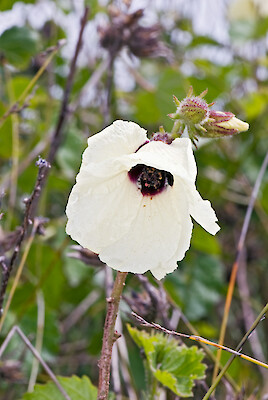
Hibiscus diversifolius in flower.<br>Photographer: Peter J de Lange, Licence: <a target='_blank' href='https://creativecommons.org/licenses/by-nc/4.0'>CC BY-NC</a>. <a class='member-message' href='/nzpcn/why-join-nzpcn/' target='_blank'>Members can view a larger version of this image.</a>
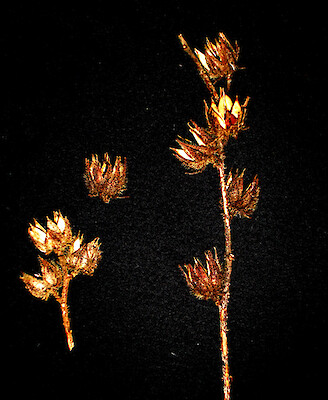
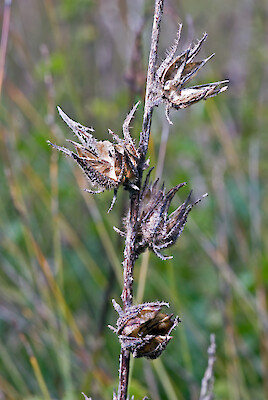
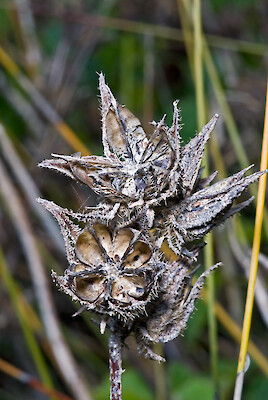
Hibiscus diversifolius seed pods.<br>Photographer: Peter J de Lange, Licence: <a target='_blank' href='https://creativecommons.org/licenses/by-nc/4.0'>CC BY-NC</a>. <a class='member-message' href='/nzpcn/why-join-nzpcn/' target='_blank'>Members can view a larger version of this image.</a>
Te Paki.<br>Photographer: Jeremy R. Rolfe, Date taken: 07/11/2007, Licence: <a target='_blank' href='https://creativecommons.org/licenses/by/4.0'>CC BY</a>. <a class='member-message' href='/nzpcn/why-join-nzpcn/' target='_blank'>Members can view a larger version of this image.</a>
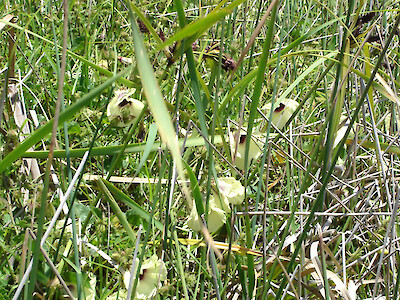
Flower buds. Te Paki.<br>Photographer: Jeremy R. Rolfe, Date taken: 07/11/2007, Licence: <a target='_blank' href='https://creativecommons.org/licenses/by/4.0'>CC BY</a>. <a class='member-message' href='/nzpcn/why-join-nzpcn/' target='_blank'>Members can view a larger version of this image.</a>
Te Paki.<br>Photographer: Jeremy R. Rolfe, Date taken: 07/11/2007, Licence: <a target='_blank' href='https://creativecommons.org/licenses/by/4.0'>CC BY</a>. <a class='member-message' href='/nzpcn/why-join-nzpcn/' target='_blank'>Members can view a larger version of this image.</a>
Fruit capsules after dehiscence. Te Paki.<br>Photographer: Jeremy R. Rolfe, Date taken: 07/11/2007, Licence: <a target='_blank' href='https://creativecommons.org/licenses/by/4.0'>CC BY</a>. <a class='member-message' href='/nzpcn/why-join-nzpcn/' target='_blank'>Members can view a larger version of this image.</a>
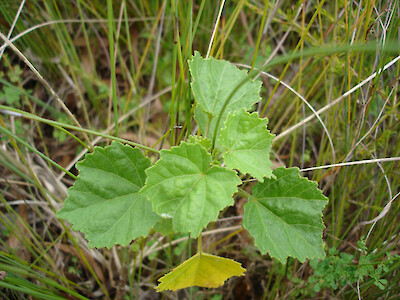
Foliage. Te Paki.<br>Photographer: Jeremy R. Rolfe, Date taken: 07/11/2007, Licence: <a target='_blank' href='https://creativecommons.org/licenses/by/4.0'>CC BY</a>. <a class='member-message' href='/nzpcn/why-join-nzpcn/' target='_blank'>Members can view a larger version of this image.</a>
Hibiscus diversifolius flower at Tauroa Point.<br>Photographer: Bill Campbell, Date taken: 21/12/2007, Licence: <a target='_blank' href='https://creativecommons.org/licenses/by-nc/4.0'>CC BY-NC</a>. <a class='member-message' href='/nzpcn/why-join-nzpcn/' target='_blank'>Members can view a larger version of this image.</a>
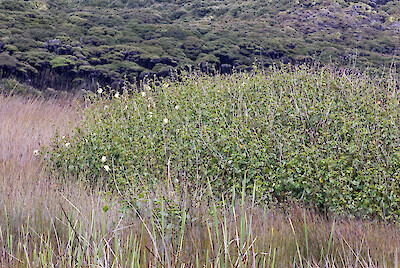
Hibiscus diversifolius growing in wetland at Tauroa Point.<br>Photographer: Bill Campbell, Date taken: 21/12/2007, Licence: <a target='_blank' href='https://creativecommons.org/licenses/by-nc/4.0'>CC BY-NC</a>. <a class='member-message' href='/nzpcn/why-join-nzpcn/' target='_blank'>Members can view a larger version of this image.</a>
Hibiscus diversifolius in flower at Tauroa Point.<br>Photographer: Bill Campbell, Date taken: 21/12/2007, Licence: <a target='_blank' href='https://creativecommons.org/licenses/by-nc/4.0'>CC BY-NC</a>. <a class='member-message' href='/nzpcn/why-join-nzpcn/' target='_blank'>Members can view a larger version of this image.</a>
Hibiscus diversifolius at Puwheke Beach, Karikari Peninsula.<br>Photographer: Bill Campbell, Date taken: 01/12/2007, Licence: <a target='_blank' href='https://creativecommons.org/licenses/by-nc/4.0'>CC BY-NC</a>. <a class='member-message' href='/nzpcn/why-join-nzpcn/' target='_blank'>Members can view a larger version of this image.</a>
Waikuku Beach.<br>Photographer: Gillian M. Crowcroft, Licence: All rights reserved. <a class='member-message' href='/nzpcn/why-join-nzpcn/' target='_blank'>Members can view a larger version of this image.</a>
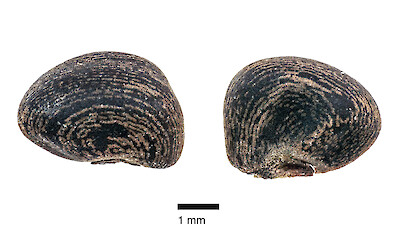
Seeds, in cultivation ex Te Paki.<br>Photographer: Jeremy R. Rolfe, Date taken: 12/03/2015, Licence: <a target='_blank' href='https://creativecommons.org/licenses/by/4.0'>CC BY</a>. <a class='member-message' href='/nzpcn/why-join-nzpcn/' target='_blank'>Members can view a larger version of this image.</a>
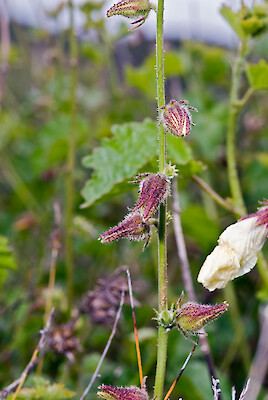
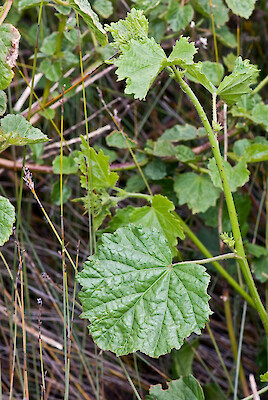
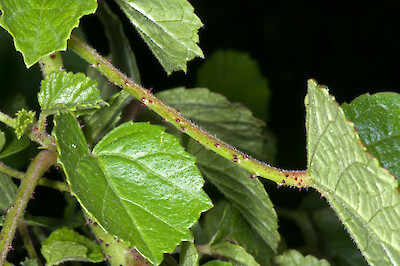
Prickles and hairs on petioles and stems. Te Paki.<br>Photographer: Jeremy R. Rolfe, Date taken: 07/11/2007, Licence: <a target='_blank' href='https://creativecommons.org/licenses/by/4.0'>CC BY</a>. <a class='member-message' href='/nzpcn/why-join-nzpcn/' target='_blank'>Members can view a larger version of this image.</a>
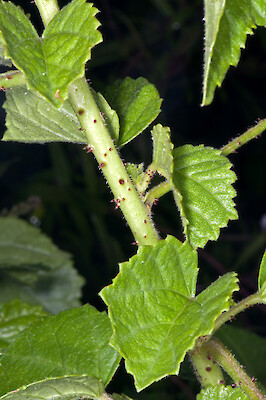
Prickles and hairs on stems and petioles. Te Paki.<br>Photographer: Jeremy R. Rolfe, Date taken: 07/11/2007, Licence: <a target='_blank' href='https://creativecommons.org/licenses/by/4.0'>CC BY</a>. <a class='member-message' href='/nzpcn/why-join-nzpcn/' target='_blank'>Members can view a larger version of this image.</a>
In coastal seep, Ahipara, Far North.<br>Photographer: Marley Ford, Date taken: 07/11/2023, Licence: <a target='_blank' href='https://creativecommons.org/licenses/by-nc/4.0'>CC BY-NC</a>. <a class='member-message' href='/nzpcn/why-join-nzpcn/' target='_blank'>Members can view a larger version of this image.</a>
Flower, ex. cult.<br>Photographer: John Smith-Dodsworth, Licence: <a target='_blank' href='https://creativecommons.org/licenses/by-nc/4.0'>CC BY-NC</a>.
Growing in the wild, Waitangi Creek, Tom Bowling Bay.<br>Photographer: John Smith-Dodsworth, Licence: <a target='_blank' href='https://creativecommons.org/licenses/by-nc/4.0'>CC BY-NC</a>.
Download PDF Comment on factsheet

NZPCN members can select up to 20 plant species and automatically create a full colour, fully illustrated A4 book describing them (in PDF format).

  • Find out more...
  • Join NZPCN...
Find in plant lists
iNaturalist NZ View observations Biota of NZ Click here to view NZ Flora Click here to view Herbarium View AVH specimens Donate Support NZPCN

Common names

puarangi, native hibiscus, swamp hibiscus, prickly hibiscus

Biostatus

Native

Category

Vascular

Structural class

Trees & Shrubs - Dicotyledons

Simplified description

Sprawling tangled thorny shrub bearing broad thin leaves and large dark-centred flowers forming dense thickets by streamsides and in wetlands in northern Northland. Stems with small hooks. Leaves to 100mm long and 80mm wide, with 3-5 uneven irregular teeth, on long thorny stalk. Fruit a dry hairy 20mm long capsule.

Flower colours

White, Yellow

Detailed description

Semi-erect, erect or prostrate, widely spreading, much branched subshrub or shrub typically forming dense intertangled thickets up to 2 × 3 m, or creeping masses. Stems stout and woody, especially near base. Young branches and leaf petioles copiously clad in numerous small, sharp, 1–2 mm conical prickles and dense, fine stellate hairs. Petioles up to 80 mm long. Leaves 50–100 × 30–80 mm, lamina ovate, orbicular to suborbicular, shallowly to deeply palmately 3–5-lobed, broadly to shallowly cordate or truncate, margins irregularly crenate–dentate to dentate–serrate, upper surface sparsely hispid hairy, undersides often densely so. Inflorescences in 5–20-flowered (sometimes more) terminal apparent racemes. Flowers 50–80 mm diameter; pedicels 1–3 mm long, prickly. Epicalyx segments 7–12, narrowly lanceolate, 8–12 mm long, shortly connate at base, hispid. Calyx 7–12 mm long, densely clad in hispid or stiff straight hyaline hairs, lobes narrowly deltoid to lanceolate, c. 10 mm long. Petals 35–40 × 50–58 mm, obovate, pale lemon–yellow, with a dark maroon base. Capsule 20 × 20 mm, ovoid, clad in long stiff hairs. Seeds 3.6–5.0 mm long, reniform to irregularly triangular, pale to dark brown or black-brown, sometimes with paler stripes, surface glabrous, smooth or irregular.

Similar taxa

A well marked species easily distinguished from other Hibiscus and Sabdariffa species cultivated or naturalised in New Zealand by the prickly stems and leaf petioles.

Distribution

Indigenous. In New Zealand this species has apparently always been restricted to the northern most extremity of the North Island (from about Reef Point and Doubtless Bay north). The largest populations known occur on the eastern side of Te Paki. However, several of these owe to their origins to deliberate plantings by conservation minded locals. Outside New Zealand this species is also known from tropical Africa, Australia, New Guinea, the Philippines, many Pacific Islands and Central and South America. The majority of New Zealand plants match Sabdariffa diversifolia subsp. diversifolia.

Habitat

Coastal wetlands and streamsides. Often growing amongst raupo (Typha orientalis C.B.Presl) at the back of dune slacks or close to brackish streams. Very rarely in gumland scrub or on ultramafic rubble.

Current conservation status

The conservation status of all known New Zealand vascular plant taxa at the rank of species and below were reassessed in 2022-2023 using the New Zealand Threat Classification System (NZTCS) – more information about this can be found on the NZTCS website. This report includes replaces all previous NZTCS lists for vascular plants. Previous assessments can be found here.

  • Conservation status of vascular plants in Aotearoa New Zealand, 2023. 2024. Peter J. de Lange, Jane Gosden, Shannel P. Courtney, Alexander J. Fergus, John W. Barkla, Sarah M. Beadel, Paul D. Champion, Rowan Hindmarsh-Walls, Troy Makan and Pascale Michel Department of Conservation. Source: NZTCS and licensed by DOC for reuse under the Creative Commons Attribution 4.0 International licence.

2023 | Threatened – Nationally Critical | Qualifiers: RR, SO

Jump to previous conservation statuses

Threats

This species is under severe threat from the actions of browsing animals, particularly wild cattle and horses which greedily devour it wherever they can find accessible plants. Some populations at Tokerau Beach have been eliminated by coastal housing development.

Detailed taxonomy

Genus

Sabdariffa

Family

Malvaceae

Authority

Sabdariffa diversifolia (Jacq.) McLay & R.L.Barrett subsp. diversifolia

Synonyms

Hibiscus diversifolius Jacq. subsp. diversifolius, Hibiscus taylorii Buchanan nom. nud.

Endemic taxon

No

Endemic genus

No

Endemic family

No

Ecology

Flowering

September - April (but sporadic flowering may occur at anytime of the year)

Fruiting

October to May (but fruit may be found at anytime of the year)

Life cycle and dispersal

Seeds are dispersed by wind, water and possibly by accidental ingestion of seed by birds (Barrett et al. 2025).

Propagation technique

Very easily grown from fresh seed and semi-hardwood cuttings. An attractive shrub, ideal for a coastal garden or sheltered situation when grown inland. Rather frost tender, in cooler areas it can be treated as a vine and grown up walls which protects it from frost. The prickly stems and petioles can be unpleasant. The creeping form reputedly from the Surville Cliffs makes an ideal ground cover. Hibiscus diversifolius can be grown around ponds and in boggy ground.

Wetland plant indicator status rating

Information derived from the revised national wetland plant list prepared to assist councils in delineating and monitoring wetlands (Clarkson et al., 2021 Manaaki Whenua – Landcare Research Contract Report LC3975 for Hawke’s Bay Regional Council). The national plant list categorises plants by the extent to which they are found in wetlands and not ‘drylands’. The indicator status ratings are OBL (obligate wetland), FACW (facultative wetland), FAC (facultative), FACU (facultative upland), and UPL (obligate upland). If you have suggestions for the Wetland Indicator Status Rating, please contact: [Enable JavaScript to view protected content]

FACU: Facultative Upland

Occasionally is a hydrophyte but usually occurs in uplands (non-wetlands).

Other information

Cultivation

Periodically offered by most commercial garden centres. Plants are held by several specialist native plant nurseries. Two forms seem to be available, an erect shrub-forming plant typical of the wild New Zealand form, and another prostrate, creeping form, which came from the ultramafic rocks of the Surville Cliffs, North Cape (where it is now probably extinct).

Plant of the Month

This plant has been featured as a Plant of the Month – see Trilepidea: NZPCN newsletter for February 2023 for the full story.

Chromosome number

2n = 72

Previous conservation statuses

The conservation status of all known New Zealand vascular plant taxa at the rank of species and below were reassessed in 2022-2023 using the New Zealand Threat Classification System (NZTCS) – more information about this can be found on the NZTCS website. This report includes replaces all previous NZTCS lists for vascular plants. Previous assessments can be found here.

  • Conservation status of vascular plants in Aotearoa New Zealand, 2023. 2024. Peter J. de Lange, Jane Gosden, Shannel P. Courtney, Alexander J. Fergus, John W. Barkla, Sarah M. Beadel, Paul D. Champion, Rowan Hindmarsh-Walls, Troy Makan and Pascale Michel Department of Conservation. Source: NZTCS and licensed by DOC for reuse under the Creative Commons Attribution 4.0 International licence.

2017 | Threatened – Nationally Critical | Qualifiers: DP, RR, SO

2012 | Threatened – Nationally Critical | Qualifiers: DP, RR, SO, Sp

2009 | Threatened – Nationally Endangered | Qualifiers: SO, Sp

2004 | Threatened – Nationally Vulnerable

Jump to current conservation status

Referencing and citations

References and further reading

Barrett, R.L.; Nobuko Yoshikawa, V.; McLay, T.G.B.; Cristina Duarte, M.; Mwachala, G.; Hanes, M.M. 2025: Reinstatement of Sabdariffa and new combinations to support a monophyletic concept of Hibiscus (Malvaceae: Hibisceae). Australian Systematic Botany 38, SB24013. doi:10.1071/SB24013

de Lange, P.J.; Heenan, P.B.; Norton, D.A.; Rolfe, J.R.; Sawyer, J.W.D. 2010: Threatened Plants of New Zealand. Canterbury University Press, Christchurch.

Johnson, A. T. and Smith, H. A (1986). Plant Names Simplified: Their pronunciation, derivation and meaning. Landsman Bookshop Ltd: Buckenhill, UK.

Attribution

Fact Sheet Prepared by P.J. de Lange (1 November 2009). Description by P.J. de Lange subsequently published in de Lange et al (2010).

NZPCN Fact Sheet citation

Please cite as: de Lange, P.J. (Year at time of access): Sabdariffa diversifolia subsp. diversifolia Fact Sheet (content continuously updated). New Zealand Plant Conservation Network. https://www.nzpcn.org.nz/flora/species/sabdariffa-diversifolia-subsp-diversifolia/ (Date website was queried)

▲ Back to top
  • Home
  • Flora
  • Threats
  • Ecosystems
  • Publications
  • Conservation
  • NZPCN
  • Help
  • Contact us
  • Facebook

© 2026 New Zealand Plant Conservation Network • Website by RS

Coastlands Plant Nursery Wildlands

Website sponsor

  • Home
  • Flora
    • Flora species
    • Tag names
    • Vascular
      • Ferns
        • King fern
        • True ferns
        • Adder's tongue ferns
        • Fork ferns and whisk ferns
        • Horsetails
      • Conifers
        • Celery pines
        • Kauri
        • Podocarps
          • Podocarpus
          • Dacrydium
          • Prumnopitys
          • Dacrycarpus
          • Halocarpus
          • Lepidothamnus
          • Manoao
        • Cypress
      • Flowering plants
        • Parasites
          • Leafy mistletoes
          • Pygmy mistletoes
            • Korthalsella flowers
            • Korthalsella hosts
            • Dispersal of Korthalsella
            • Associates of Korthalsella
          • Root parasites
          • Saprophytes
        • Epiphytes
          • NZ
            • Typical
            • Occasional
            • Hemi-epiphytes
            • Ephemeral
            • NZ list
        • Monocots
          • Orchids
            • Structure
          • Grasses
        • Dicots
          • Hebes
          • Kowhai
          • Coprosma
          • Beech
          • Rata
        • Carnivorous
        • Deciduous plants
        • Aquatic plants
      • Poisonous natives
      • Threatened plant lists
      • What's a vascular plant?
      • Club mosses
    • Non-vascular
      • Bryophytes
        • Liverworts
        • Mosses
        • Hornworts
      • Algae
        • Seaweeds
    • Lichens
    • Plant identification
      • Written descriptions
      • Experts
      • Plant keys
        • Key to parasitic plant genera
      • Collecting plants
        • Should I collect
        • Choosing a specimen
        • Field notes
        • Fresh plant material
        • Pressing and drying
        • Mounting specimens
        • Labelling specimens
    • Fungi
    • Make your own book
    • Quiz
  • Threats
    • Exotic Plants (Weeds)
      • Unwanted organisms
      • DOC weeds
      • Plant me instead
      • Pest Plant Accord
    • Pest Animals
      • Mammals
        • Mustelids
        • Rodents
        • Ungulates
        • Possums
      • Fish
      • Insects
    • Other threats
      • Natural events
        • Insects
      • Human induced
        • Habitat loss
        • Collection
        • Climate change
  • Ecosystems
    • Plant communities
      • Dunes
        • Volcanic
        • Coastal
          • Threats
          • Common species
          • Research on dunes
          • Pingao research
          • What you can do
      • Wetlands
        • Estuaries
          • Common estuarine species
          • Research on estuaries
        • Ephemeral
        • Restiad peat bogs
      • Forests
        • Kauri-podocarp-broadleaved
        • Podocarp broadleaved
        • Beech
      • Scrub/shrublands
        • Geothermal
          • Distribution of geothermal vegetation
          • Geothermal plants
          • Geothermal vegetation types
          • Threats to geothermal vegetation
        • Frost flat/hollow
        • Manuka fens
        • Gumlands
      • Grasslands
        • Tussock grasslands
      • Bare ground
        • Braided rivers
        • Alpine
        • Cliff
        • Scree and boulderfields
        • Shingle beaches
      • Herbfields
        • Saltpan
    • Ecosystem services
    • Novel ecosystems
  • Publications
    • Documents
    • Newsletter
    • Plant lists
      • Search plant lists
      • Plant lists by political region/district
      • Plant lists by ecological region/district
      • National plant lists
      • How to prepare a plant list
    • Botanical Society journals
    • NZPCN publications
  • Conservation
    • Seedbank
      • Project 1 - Pohutukawa, Rata and Myrtaceae
      • Project 2 - Alpine flora and the Forget-Me-Nots
      • Project 3 - Kowhai and its relatives
      • Project 4 - Podocarps and trees of the forest
    • Training
      • Module 1: Plant life
      • Module 2: Covenants
      • Module 3: Propagation
      • Module 4: Wetlands
      • Pilot course 2006
    • Restoration
      • Gardening
        • Being weed wise
        • Garden plants
          • Trees and shrubs
          • Broad-leaved herbs
          • Grass-like herbs
          • Climbers
          • Ferns
        • Attracting wildlife
        • Planting for lizards
          • Rules
      • Species recovery
        • Plant translocations
      • Ecological restoration
        • Case studies
          • Tavora Reserve
          • Waiwhakareke
      • Revegetation
      • Eco-sourcing
      • Find a restoration group
    • Monitoring
      • Number count
        • Number count method
        • Pros and cons of number counts
        • Data analysis and interpretation
      • Presence/absence surveys
        • Presence/absence survey methods
        • Pros and cons of presence/absence surveys
        • Data analysis and interpretation
      • Mapping spatial extent
        • Spatial extent mapping methods
        • Pros and cons of spatial extent mapping
        • Data analysis and interpretation
      • Photo points
        • Photo point guidelines
    • Habitat protection
      • Legal protection
        • Nga Whenua Rahui
        • QEII covenants
        • DOC Covenants
      • Animal pest control
      • Weed control
      • Fencing
    • Funding
    • Botanic gardens
    • Botanic Societies
  • NZPCN
    • News
    • Trilepidea newsletter
    • Events
      • 2026 NZPCN conference
        • 2026 Conference field trips
        • 2026 Conference workshops
      • 2024 AGM
      • Conference 2024
        • 2024 conference overview
        • Conference 2024 workshops
        • Conference 2024 Field Trips
        • 2024 conference sponsors
        • Conference 2024 accommodation options
        • 2024 Conference Programme
      • Conference 2022
        • Conference programme summary
        • 2022 conference workshops
        • 2022 conference field trips
        • Code of conduct
        • COVID-19 information
        • 2022 conference sponsors
        • Abstract and poster submission
        • 2022 Conference venue and accommodation
        • Conference Workshop: Restoration Pathways
        • 2022 conference postponement
      • Conference 2019
      • Conference 2017
      • Conference 2015
        • Speakers
        • Workshops
        • Field trips
        • Charity auction
      • Conference 2013
        • Speakers
        • Timetable
      • 2023 Restoration Pathways Workshop
      • 2023 AGM
    • David Given Scholarship
      • David Given Scholarship Recipients
    • Council members
      • NZPCN council member profiles
      • Council 2023
      • Council 2022
      • Council 2021
      • Council 2020
      • Council 2019
      • Council 2018
      • Council 2017
      • Council 2016
      • Council 2015
      • Council 2014
      • Council 2024
      • Council 2013
      • Council 2012
      • Council 2011
      • Council 2010
      • Council 2009
      • Council 2008
      • Council 2007
      • Council 2006
      • Council 2005
      • Council 2004
      • Council 2003
    • Awards
      • NZPCN Awards
        • 2024 Plant Conservation Awards
        • 2022
        • 2019
        • 2018
        • 2017
        • 2016
        • 2015
        • 2014
        • 2013
        • 2012
        • 2011
        • 2010
        • 2009
        • 2008
        • 2007
        • 2006
        • 2005
    • Shop
    • Donate
    • Favourite Plant
    • Why join NZPCN?
    • Join
  • Help
    • FAQ
      • Joining the Network
      • The Network
      • Network website
      • New Zealand plants
      • The law
      • Your discoveries
    • Query
    • Glossary
  • Contact us
  • Facebook