
New Zealand Plant Conservation Network
  • Member login
  • Join
Facebook
  • Home
  • Flora
    • Flora species
    • Tag names
    • Vascular
    • Non-vascular
    • Lichens
    • Plant identification
    • Fungi
    • Make your own book
    • Quiz
  • Threats
    • Exotic Plants (Weeds)
    • Pest Animals
    • Other threats
  • Ecosystems
    • Plant communities
    • Ecosystem services
    • Novel ecosystems
  • Publications
    • Documents
    • Newsletter
    • Plant lists
    • Botanical Society journals
    • NZPCN publications
  • Conservation
    • Seedbank
    • Training
    • Restoration
    • Monitoring
    • Habitat protection
    • Funding
    • Botanic gardens
    • Botanic Societies
  • NZPCN
    • News
    • Trilepidea newsletter
    • Events
    • David Given Scholarship
    • Council members
    • Awards
    • Shop
    • Donate
    • Favourite Plant
    • Why join NZPCN?
    • Join
  • Help
    • FAQ
    • Query
    • Glossary
  • Contact us

Search flora

  1. Tracheophyta
    • Tracheophyta
  2. Magnoliopsida
    • Lycopodiopsida
    • Magnoliopsida
    • Pinopsida
    • Polypodiopsida
  3. Asterales
    • Alismatales
    • Apiales
    • Arecales
    • Asparagales
    • Asterales
    • Boraginales
    • Brassicales
    • Canellales
    • Caryophyllales
    • Celastrales
    • Chloranthales
    • Crossosomatales
    • Cucurbitales
    • Dioscoreales
    • Ericales
    • Fabales
    • Fagales
    • Gentianales
    • Geraniales
    • Gunnerales
    • Lamiales
    • Laurales
    • Liliales
    • Malpighiales
    • Malvales
    • Myrtales
    • Nymphaeales
    • Oxalidales
    • Pandanales
    • Paracryphiales
    • Piperales
    • Poales
    • Proteales
    • Ranunculales
    • Rosales
    • Santalales
    • Sapindales
    • Saxifragales
    • Solanales
  4. Asteraceae
    • Alseuosmiaceae
    • Argophyllaceae
    • Asteraceae
    • Campanulaceae
    • Goodeniaceae
    • Menyanthaceae
    • Rousseaceae
    • Stylidiaceae
  5. Solenogyne
    • Abrotanella
    • Anaphalioides
    • Argyrotegium
    • Brachyglottis
    • Brachyscome
    • Cassinia
    • Celmisia
    • Centipeda
    • Cotula
    • Craspedia
    • Damnamenia
    • Dolichoglottis
    • Euchiton
    • Ewartiothamnus
    • Haastia
    • Helichrysum
    • Lagenophora
    • Leptinella
    • Leucogenes
    • Macrolearia
    • Microseris
    • Olearia
    • Ozothamnus
    • Pachystegia
    • Picris
    • Pleurophyllum
    • Pseudognaphalium
    • Rachelia
    • Raoulia
    • Senecio
    • Shawia
    • Solenogyne
    • Sonchus
    • Taraxacum
    • Traversia
    • Vittadinia
  6. Solenogyne christensenii
    • Solenogyne dominii
    • Solenogyne gunnii
    • Solenogyne mikadoi
    • Solenogyne christensenii

Solenogyne christensenii
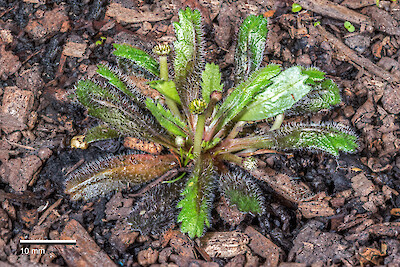
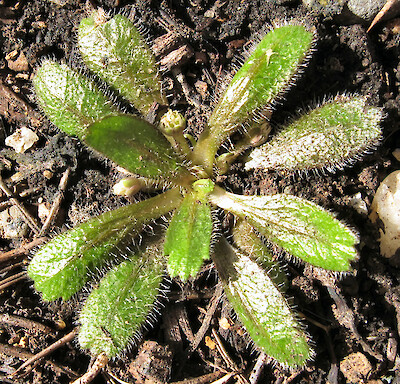
Solenogyne christensenii plant in cultivation.<br>Photographer: Jeremy R. Rolfe, Date taken: 06/03/2016, Licence: <a target='_blank' href='https://creativecommons.org/licenses/by/4.0'>CC BY</a>. <a class='member-message' href='/nzpcn/why-join-nzpcn/' target='_blank'>Members can view a larger version of this image.</a>
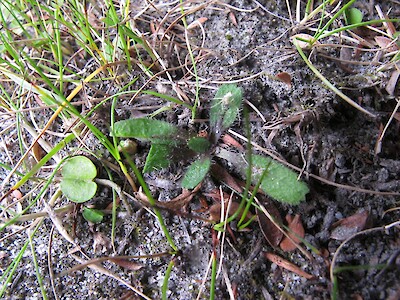
Solenogyne christensenii, cultivated plant.<br>Photographer: John Barkla, Date taken: 08/05/2010, Licence: <a target='_blank' href='https://creativecommons.org/licenses/by/4.0'>CC BY</a>. <a class='member-message' href='/nzpcn/why-join-nzpcn/' target='_blank'>Members can view a larger version of this image.</a>
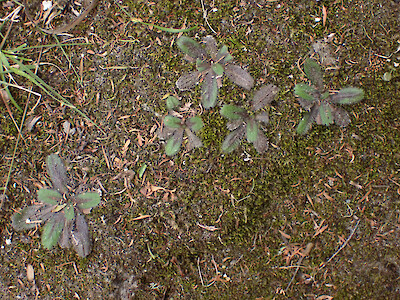
Solenogyne christensenii in silty riverbank habitat.<br>Photographer: John Barkla, Date taken: 14/04/2013, Licence: <a target='_blank' href='https://creativecommons.org/licenses/by/4.0'>CC BY</a>. <a class='member-message' href='/nzpcn/why-join-nzpcn/' target='_blank'>Members can view a larger version of this image.</a>
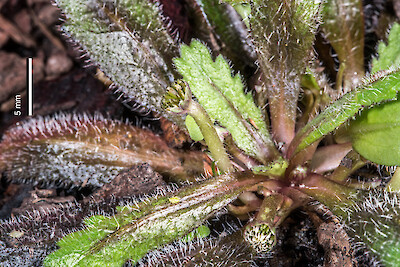
Solenogyne christensenii plant in cultivation.<br>Photographer: Jeremy R. Rolfe, Date taken: 06/03/2016, Licence: <a target='_blank' href='https://creativecommons.org/licenses/by/4.0'>CC BY</a>. <a class='member-message' href='/nzpcn/why-join-nzpcn/' target='_blank'>Members can view a larger version of this image.</a>
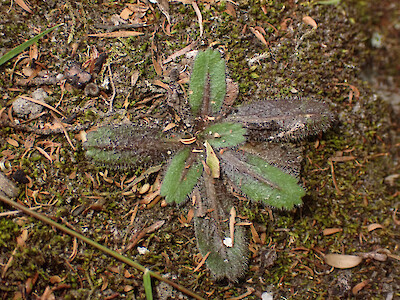
Silty riverbank.<br>Photographer: Jane Gosden, Date taken: 04/01/2024, Licence: <a target='_blank' href='https://creativecommons.org/licenses/by-nc-sa/4.0'>CC BY-NC-SA</a>. <a class='member-message' href='/nzpcn/why-join-nzpcn/' target='_blank'>Members can view a larger version of this image.</a>
Download PDF Comment on factsheet

NZPCN members can select up to 20 plant species and automatically create a full colour, fully illustrated A4 book describing them (in PDF format).

  • Find out more...
  • Join NZPCN...
Find in plant lists
Biota of NZ Click here to view NZ Flora Click here to view Herbarium View AVH specimens Donate Support NZPCN

Biostatus

Native – Endemic taxon

Current conservation status

The conservation status of all known New Zealand vascular plant taxa at the rank of species and below were reassessed in 2022-2023 using the New Zealand Threat Classification System (NZTCS) – more information about this can be found on the NZTCS website. This report includes replaces all previous NZTCS lists for vascular plants. Previous assessments can be found here.

  • Conservation status of vascular plants in Aotearoa New Zealand, 2023. 2024. Peter J. de Lange, Jane Gosden, Shannel P. Courtney, Alexander J. Fergus, John W. Barkla, Sarah M. Beadel, Paul D. Champion, Rowan Hindmarsh-Walls, Troy Makan and Pascale Michel Department of Conservation. Source: NZTCS and licensed by DOC for reuse under the Creative Commons Attribution 4.0 International licence.

2023 | Threatened – Nationally Critical | Qualifiers: DPT, EF, OL

Jump to previous conservation statuses

Category

Vascular

Structural class

Herbs - Dicotyledonous composites

Simplified description

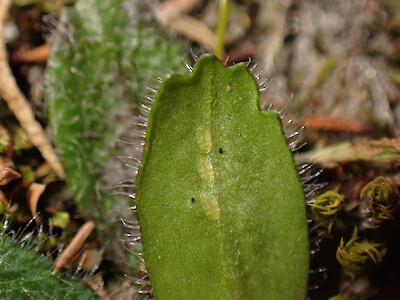
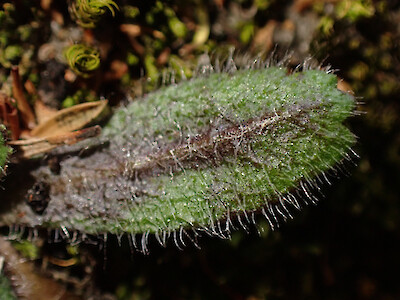
Diminutive, rosette-forming daisy, with hispid dark green, mottled maroon oblanceolate tridentate, serrate leaves. Infloresences, scapose, scapes hispid, capitula c. 2 mm diameter, bracts ovate to broadly oblong with pinkish ciliate margins; ray florets tubular, cream to pale pink, disc florets pale yellow.

Flower colours

Red/Pink

Detailed description

Small perennial rhizomatous tufted herb up to 30 mm tall × 50 mm across; roots and rhizomes fibrous; stem very short (leaves in basal rosette); leaves and scapes firmly attached to stem and/or rootstock. Leaves 15–25, oblanceolate, obdeltoid to cuneate, 10–20–(25) × 5–8 mm (10–5× longer than wide), with a winged petiole-like base 8–10 mm long; leaf apex tridentate; leaf margins serrated (rarely repand-sinuate), usually with 4–6 teeth either side, each lobe 0.5–1.0 mm long; adaxial leaf surface glossy, initially green, maturing bronze-green or brown mottled, or maroon-brown; adaxial surface pilose, hairs patent eglandular, 0.3–1.8 mm long, 3–8 per square mm; abaxial leaf surface pale glossy green, ± glabrescent; hairs present on young leaves, unevenly shedding with leaf maturation, eglandular, pubescent, ± appressed, 0.4–0.8 mm long, 0–2 per square mm, hairs; both leaf surfaces papillate, papillae c. 0.01 mm long, more or less evenly distributed; leaf margins pilose, hairs eglandular patent 3‒4 per square mm, 0.2–1.0 mm long; lateral veins slightly raised and usually visible adaxially, obscure abaxially. Scapes terete and smooth on fresh specimens, channelled on dry ones, 4–8 per tuft, each 5–20 mm long at anthesis, 10–30 mm long at fruiting stage, 1.5–2.5 mm diameter throughout; scape bracts 0, or occasionally furnished with 1, ovate to orbicular, chartaceous c.1.5 × 0.4 mm bract; scape indumentum including eglandular hairs 0.3–1.0 mm long, patent, spreading or mixed weakly appressed / retrorse; 1–6 hairs per mm2; and papillae to c.0.01 mm long, scattered throughout the scape. Capitula 1.8–2.2 mm long, 2.8–3.0 mm diameter; involucral bracts 18–22 in 2 rows, glabrous or occasionally papillate along midrib on outer surface, ovate to broadly oblong, apex obtuse to rounded, margins pink, ciliate in upper distal ½–¾; outer bracts 1.2–1.6 × 1.0–1.6 mm, inner bracts 1.1–1.2 × 0.9–1.0 mm. Receptacle flat to slightly convex, 0.8–1.2 mm diameter. Ray florets tubular, creamy to pale pink, 18–20 in 2–3 rows; tube 0.4–0.7 mm long, 0.1–0.12 mm wide; style 0.5–0.8; stigma 2-branched c.0.02 mm long. Disc florets 0–3; corolla pale yellow, tubular, c.1 mm long, outer surface glabrous; corolla lobes 5, deltate, c. 0.1 × 0.1 mm; stamens 5, to c. 0.4 mm long; style c. 0.6 mm long; sterile ovary c. 0.3 mm long. Achenes glabrous, more or less flattened, narrowly obovoid, straight or slightly curved, 0.9–1.1 mm long by 0.3–0.5 mm wide excluding beak, uniformly yellow green, darkening to brown at maturity; achene edges smooth; achene beak 0.1–0.2 mm long, without obvious annular collar at its apex, c. 0.1 mm diameter.

Similar taxa

Allied to Solenogyne gunnii from which it differs by: the leaf size (usually 10–20 × 5–8 mm for S. christensenii; usually 20–100 × 5–20 mm for S. gunnii) and leaf shape (usually oblanceolate, obdeltoid to cuneate for S. christensenii; narrowly obovate and obtuse for S. gunnii); the obtusely serrate leaf margins (sinuate to undulate for S. gunnii); the short and hirsute scape to 30 mm long in fruit (up to 100 mm long in fruit and woolly for S. gunnii); the fewer and shorter disc florets (0–3 and c.1 mm long for S. christensenii; usually 7–9 and c.2 mm long for S. gunnii); the smaller achene size (0.9–1.1 mm long for S. christensenii; 2.0–2.5 mm long for S. gunnii); and the flattened achene edges (achene edges more or less thickened for S. gunnii). Solenogyne christensenii also resembles S. dominii, from which it differs by: the pilose leaves (glabrate for S. dominii); smaller leaf size (usually 30–50 × 7–12 mm for S. dominii); the shorter scape (up to 70 mm long in fruit for S. dominii); the fewer and shorter ray flower (18–20 and 0.4–0.7 mm long for S. christensenii; usually 35–60 and 0.8–1.2 mm long for S. dominii); the fewer and shorter disc flower (usually 10–14 and 2.0–2.5 mm long for S. dominii); the smaller achene size (2.0–2.5 mm long for S. dominii).
Distribution

Endemic. New Zealand: South Island. Known with certainty from the type locality (Hanmer Plain where it is probably extinct), and from the headwaters of the Clutha River.

Habitat

Recorded from ‘bare spots in dry fescue (Festuca novae-zelandiae) tussock steppe by Petrie (1915) and from herbfield developed on a silty riverbank under dappled shade provided by 2‒4 m tall kahikatoa (Leptospermum scoparium s.l.) by de Lange et al. (2020).

Detailed taxonomy

Genus

Solenogyne

Family

Asteraceae

Authority

Solenogyne christensenii (Petrie) de Lange, Jian Wang ter & Barkla
Synonyms

Abrotanella christensenii Petrie

Endemic taxon

Yes

Endemic genus

No

Endemic family

No

Ecology

Flowering

January–April

Fruiting

April–May

Other information

Etymology

christensenii: Commemorating Charles E. Christensen (1876‒1938) as in Solenogyne christensenii who made a detailed exploration of the vegetation of the Hanmer Plain, Amuri District, North Canterbury.
Previous conservation status

The conservation status of all known New Zealand vascular plant taxa at the rank of species and below were reassessed in 2022-2023 using the New Zealand Threat Classification System (NZTCS) – more information about this can be found on the NZTCS website. This report includes replaces all previous NZTCS lists for vascular plants. Previous assessments can be found here.

  • Conservation status of vascular plants in Aotearoa New Zealand, 2023. 2024. Peter J. de Lange, Jane Gosden, Shannel P. Courtney, Alexander J. Fergus, John W. Barkla, Sarah M. Beadel, Paul D. Champion, Rowan Hindmarsh-Walls, Troy Makan and Pascale Michel Department of Conservation. Source: NZTCS and licensed by DOC for reuse under the Creative Commons Attribution 4.0 International licence.

2017 | Threatened – Nationally Critical | Qualifiers: DP, EF

Jump to current conservation status

Regional conservation statuses

Otago: 2025 | Regionally Threatened – Regionally Critical | Qualifiers: NS, NStr, OL, RE

The regional threat classification system leverages off the national assessments in the NZTCS, providing information relevant for the regional context. Otago conservation status information is sourced from the “Conservation Status of Indigenous Vascular Plants in Otago, 2025” Jarvie S et al. (2025) report.

Referencing and citations

References and further reading

de Lange PJ, Wang J, Barkla JW, Marshall A. 2020. Solenogyne christensenii, comb. nov. (Asteraceae; Astereae), a new combination for a New Zealand species. Ukrainian Botanical Journal 77(2): 73–80. https://doi.org/10.15407/ukrbotj77.02.073.

Petrie, D. 1915 [volume of 1914]. Descriptions of New Native Phanerogams, with other Short Notices. Transactions & Proceedings of the New Zealand Institute 47: 48–59. https://paperspast.natlib.govt.nz/periodicals/TPRSNZ1914-47.2.4.1.4.

Attribution

Fact Sheet prepared by P.J. de Lange (1 May 2020). Description from de Lange et al. (2020)

NZPCN Fact Sheet citation

Please cite as: de Lange, P.J. (Year at time of access): Solenogyne christensenii Fact Sheet (content continuously updated). New Zealand Plant Conservation Network. https://www.nzpcn.org.nz/flora/species/solenogyne-christensenii/ (Date website was queried)

▲ Back to top
  • Home
  • Flora
  • Threats
  • Ecosystems
  • Publications
  • Conservation
  • NZPCN
  • Help
  • Contact us

© 2026 New Zealand Plant Conservation Network • Website by RS

Coastlands Plant Nursery Wildlands

Website sponsor

  • Home
  • Flora
    • Flora species
    • Tag names
    • Vascular
      • Ferns
        • King fern
        • True ferns
        • Adder's tongue ferns
        • Fork ferns and whisk ferns
        • Horsetails
      • Conifers
        • Celery pines
        • Kauri
        • Podocarps
          • Podocarpus
          • Dacrydium
          • Prumnopitys
          • Dacrycarpus
          • Halocarpus
          • Lepidothamnus
          • Manoao
        • Cypress
      • Flowering plants
        • Parasites
          • Leafy mistletoes
          • Pygmy mistletoes
            • Korthalsella flowers
            • Korthalsella hosts
            • Dispersal of Korthalsella
            • Associates of Korthalsella
          • Root parasites
          • Saprophytes
        • Epiphytes
          • NZ
            • Typical
            • Occasional
            • Hemi-epiphytes
            • Ephemeral
            • NZ list
        • Monocots
          • Orchids
            • Structure
          • Grasses
        • Dicots
          • Hebes
          • Kowhai
          • Coprosma
          • Beech
          • Rata
        • Carnivorous
        • Deciduous plants
        • Aquatic plants
      • Poisonous natives
      • Threatened plant lists
      • What's a vascular plant?
      • Club mosses
    • Non-vascular
      • Bryophytes
        • Liverworts
        • Mosses
        • Hornworts
      • Algae
        • Seaweeds
    • Lichens
    • Plant identification
      • Written descriptions
      • Experts
      • Plant keys
        • Key to parasitic plant genera
      • Collecting plants
        • Should I collect
        • Choosing a specimen
        • Field notes
        • Fresh plant material
        • Pressing and drying
        • Mounting specimens
        • Labelling specimens
    • Fungi
    • Make your own book
    • Quiz
  • Threats
    • Exotic Plants (Weeds)
      • Unwanted organisms
      • DOC weeds
      • Plant me instead
      • Pest Plant Accord
    • Pest Animals
      • Mammals
        • Mustelids
        • Rodents
        • Ungulates
        • Possums
      • Fish
      • Insects
    • Other threats
      • Natural events
        • Insects
      • Human induced
        • Habitat loss
        • Collection
        • Climate change
  • Ecosystems
    • Plant communities
      • Dunes
        • Volcanic
        • Coastal
          • Threats
          • Common species
          • Research on dunes
          • Pingao research
          • What you can do
      • Wetlands
        • Estuaries
          • Common estuarine species
          • Research on estuaries
        • Ephemeral
        • Restiad peat bogs
      • Forests
        • Kauri-podocarp-broadleaved
        • Podocarp broadleaved
        • Beech
      • Scrub/shrublands
        • Geothermal
          • Distribution of geothermal vegetation
          • Geothermal plants
          • Geothermal vegetation types
          • Threats to geothermal vegetation
        • Frost flat/hollow
        • Manuka fens
        • Gumlands
      • Grasslands
        • Tussock grasslands
      • Bare ground
        • Braided rivers
        • Alpine
        • Cliff
        • Scree and boulderfields
        • Shingle beaches
      • Herbfields
        • Saltpan
    • Ecosystem services
    • Novel ecosystems
  • Publications
    • Documents
    • Newsletter
    • Plant lists
      • Search plant lists
      • Plant lists by political region/district
      • Plant lists by ecological region/district
      • National plant lists
      • How to prepare a plant list
    • Botanical Society journals
    • NZPCN publications
  • Conservation
    • Seedbank
      • Project 1 - Pohutukawa, Rata and Myrtaceae
      • Project 2 - Alpine flora and the Forget-Me-Nots
      • Project 3 - Kowhai and its relatives
      • Project 4 - Podocarps and trees of the forest
    • Training
      • Module 1: Plant life
      • Module 2: Covenants
      • Module 3: Propagation
      • Module 4: Wetlands
      • Pilot course 2006
    • Restoration
      • Gardening
        • Being weed wise
        • Garden plants
          • Trees and shrubs
          • Broad-leaved herbs
          • Grass-like herbs
          • Climbers
          • Ferns
        • Attracting wildlife
        • Planting for lizards
          • Rules
      • Species recovery
        • Plant translocations
      • Ecological restoration
        • Case studies
          • Tavora Reserve
          • Waiwhakareke
      • Revegetation
      • Eco-sourcing
      • Find a restoration group
    • Monitoring
      • Number count
        • Number count method
        • Pros and cons of number counts
        • Data analysis and interpretation
      • Presence/absence surveys
        • Presence/absence survey methods
        • Pros and cons of presence/absence surveys
        • Data analysis and interpretation
      • Mapping spatial extent
        • Spatial extent mapping methods
        • Pros and cons of spatial extent mapping
        • Data analysis and interpretation
      • Photo points
        • Photo point guidelines
    • Habitat protection
      • Legal protection
        • Nga Whenua Rahui
        • QEII covenants
        • DOC Covenants
      • Animal pest control
      • Weed control
      • Fencing
    • Funding
    • Botanic gardens
    • Botanic Societies
  • NZPCN
    • News
    • Trilepidea newsletter
    • Events
      • 2026 NZPCN conference
        • 2026 Conference field trips
        • 2026 Conference workshops
        • 2026 conference sponsors
        • 2026 Conference keynote speakers
      • 2024 AGM
      • Conference 2024
        • 2024 conference overview
        • Conference 2024 workshops
        • Conference 2024 Field Trips
        • 2024 conference sponsors
        • Conference 2024 accommodation options
        • 2024 Conference Programme
      • Conference 2022
        • Conference programme summary
        • 2022 conference workshops
        • 2022 conference field trips
        • Code of conduct
        • COVID-19 information
        • 2022 conference sponsors
        • Abstract and poster submission
        • 2022 Conference venue and accommodation
        • Conference Workshop: Restoration Pathways
        • 2022 conference postponement
      • Conference 2019
      • Conference 2017
      • Conference 2015
        • Speakers
        • Workshops
        • Field trips
        • Charity auction
      • Conference 2013
        • Speakers
        • Timetable
      • 2023 Restoration Pathways Workshop
      • 2023 AGM
    • David Given Scholarship
      • David Given Scholarship Recipients
    • Council members
      • NZPCN council member profiles
      • Council 2023
      • Council 2022
      • Council 2021
      • Council 2020
      • Council 2019
      • Council 2018
      • Council 2017
      • Council 2016
      • Council 2015
      • Council 2014
      • Council 2024
      • Council 2013
      • Council 2012
      • Council 2011
      • Council 2010
      • Council 2009
      • Council 2008
      • Council 2007
      • Council 2006
      • Council 2005
      • Council 2004
      • Council 2003
    • Awards
      • NZPCN Awards
        • 2024 Plant Conservation Awards
        • 2022
        • 2019
        • 2018
        • 2017
        • 2016
        • 2015
        • 2014
        • 2013
        • 2012
        • 2011
        • 2010
        • 2009
        • 2008
        • 2007
        • 2006
        • 2005
    • Shop
    • Donate
    • Favourite Plant
    • Why join NZPCN?
    • Join
  • Help
    • FAQ
      • Joining the Network
      • The Network
      • Network website
      • New Zealand plants
      • The law
      • Your discoveries
    • Query
    • Glossary
  • Contact us
  • Facebook