
New Zealand Plant Conservation Network
  • Member login
  • Join
Facebook
  • Home
  • Flora
    • Flora species
    • Tag names
    • Vascular
    • Non-vascular
    • Lichens
    • Plant identification
    • Fungi
    • Make your own book
    • Quiz
  • Threats
    • Exotic Plants (Weeds)
    • Pest Animals
    • Other threats
  • Ecosystems
    • Plant communities
    • Ecosystem services
    • Novel ecosystems
  • Publications
    • Documents
    • Newsletter
    • Plant lists
    • Botanical Society journals
    • NZPCN publications
  • Conservation
    • Seedbank
    • Training
    • Restoration
    • Monitoring
    • Habitat protection
    • Funding
    • Botanic gardens
    • Botanic Societies
  • NZPCN
    • News
    • Trilepidea newsletter
    • Events
    • David Given Scholarship
    • Council members
    • Awards
    • Shop
    • Donate
    • Favourite Plant
    • Why join NZPCN?
    • Join
  • Help
    • FAQ
    • Query
    • Glossary
    • Website Terms of Use
  • Contact us
  • NZPCN
    • News
    • Trilepidea newsletter
    • Events
      • 2026 NZPCN conference
        • 2026 Conference field trips
        • 2026 Conference workshops
        • 2026 conference sponsors
        • 2026 Conference keynote speakers
      • 2026 AGM
      • Code of conduct
      • 2024 AGM
      • Conference 2024
        • 2024 conference overview
        • Conference 2024 workshops
        • Conference 2024 Field Trips
        • 2024 conference sponsors
        • Conference 2024 accommodation options
        • 2024 Conference Programme
      • Conference 2022
        • Conference programme summary
        • 2022 conference workshops
        • 2022 conference field trips
        • COVID-19 information
        • 2022 conference sponsors
        • Abstract and poster submission
        • 2022 Conference venue and accommodation
        • Conference Workshop: Restoration Pathways
        • 2022 conference postponement
      • Conference 2019
      • Conference 2017
      • Conference 2015
        • Speakers
        • Workshops
        • Field trips
        • Charity auction
      • Conference 2013
        • Speakers
        • Timetable
      • 2023 Restoration Pathways Workshop
      • 2023 AGM
    • David Given Scholarship
      • David Given Scholarship Recipients
    • Council members
      • NZPCN council member profiles
      • Council 2023
      • Council 2022
      • Council 2021
      • Council 2020
      • Council 2019
      • Council 2018
      • Council 2017
      • Council 2016
      • Council 2015
      • Council 2014
      • Council 2024
      • Council 2013
      • Council 2012
      • Council 2011
      • Council 2010
      • Council 2009
      • Council 2008
      • Council 2007
      • Council 2006
      • Council 2005
      • Council 2004
      • Council 2003
    • Awards
      • NZPCN Awards
        • 2024 Plant Conservation Awards
        • 2022
        • 2019
        • 2018
        • 2017
        • 2016
        • 2015
        • 2014
        • 2013
        • 2012
        • 2011
        • 2010
        • 2009
        • 2008
        • 2007
        • 2006
        • 2005
    • Shop
    • Donate
    • Favourite Plant
    • Why join NZPCN?
    • Join
  1. Home
  2. NZPCN
  3. News
  4. News article

News article

2014 Winner of the Allan Mere Announced
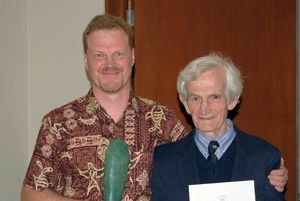
Brian Molloy and Peter de Lange on the occasion of Peter de Lange receiving the 2006 Allan Mere Award from the New Zealand Botanical Society at the Cheeseman Conferences, Auckland, November 2006. Photo: Peter HeenanBrian Molloy and Peter de Lange on the occasion of Peter de Lange receiving the 2006 Allan Mere Award from the New Zealand Botanical Society at the Cheeseman Conferences, Auckland, November 2006. Photo: Peter HeenanCongratulations to Dr Brian Molloy of Riccarton, Christchurch who is the 2014 recipient of the New Zealand Botanical Society’s highest honour – the Allan Mere

Dr Brian Molloy, hugely respected member of New Zealand’s botanical community, has been successfully nominated for the 2014 New Zealand Botanical Society Allan Mere by Dr(s) Peter de Lange (Department of Conservation), Peter Heenan (Allan Herbarium, Landcare Research) and Brian’s late son Michael Molloy.

Brian Molloy has been (and continues to be) an extremely influential force behind the careers of many of New Zealand’s top botanists, conservationists and environmentalists. Of course it’s unlikely that Brian could have ever foreseen (indeed if anyone ever can) how his working life would pan out. Brian had once admitted that when he ‘grew up’ all he really wanted to be was a farmer. One thing lead to another and after a PhD examining the ecology of briar rose (Rosa rubiginosa), he started his career with the Ministry of Agriculture and Fisheries, before his skills were recognised by the then Director of DSIR Botany Division the late Dr Eric Godley, and Brian switched departments and roles.

In his early years at Botany Division Brian worked mostly on ecological surveys of reserves, and national parks, picking the Peel Range near Geraldine for his most intensive work. During his time in the field Brian encouraged and mentored many people, and became a firm friend with the late A.P. (Tony) Druce with whom he shared many memorable field trips.  Brian soon gained a reputation as a ‘tough nut’ once preferring a ‘short cut’ through a valley full of Aciphylla, so that he could get home slightly earlier for a meeting and score an ice cream on the way as well – the alternative ‘kinder’ route would have got him and his companion out at night fall and by then the ice cream shop would have been closed!
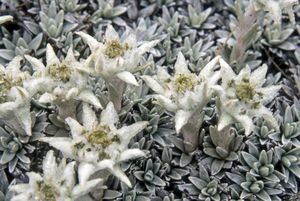
Mt Peel edelweiss (Leucogenes tarahoa) Threatened - Nationally Vulnerable. Photo: Barbara Mitcalf.Mt Peel edelweiss (Leucogenes tarahoa) Threatened - Nationally Vulnerable. Photo: Barbara Mitcalf.It is not clear when Brian first took a serious interest in biosystematics, though it was probably through his interests in New Zealand’s mistletoes and karaka (Corynocarpus laevigatus). Whilst most of that research was never published it provided the foundation for his future work on New Zealand orchids, conifers, Melicytus and the eastern South Island limestone flora. Brian also explored the Chatham Islands, dabbled in lichens – finding a number of new species, and by the time of his retirement in 1995 had started a series of revisions leading to the publication of two new species of Leucogenes (L. neglecta, L. tarahaoa), a new conifer genus (Manoao), a new name for toatoa (Phyllocladus toatoa), and a bevy of orchids. In his field his contributions have been honoured by the genus Molloybas and kowhai Sophora molloyi.

The New Zealand Plant Conservation has long appreciated Brian’s help – he was the society’s inaugural Tane Ngahere Lecturer (2008), and his contributions to plant conservation were recognised in 2006 by the Network giving him a Lifetime Achievement Award. His conservation work has been perhaps his least recognised but in many ways most important contribution – Brian was an early supporter of the Queen Elizabeth II National Trust (QEII), and was instrumental in changing the way that land was covenanted. In his role as QEII rep, and then Director, Brian was at his best with a steaming cuppa either out bush or in a landowner’s house working toward a common goal of sensible, sustainable conservation. Many of our most treasured covenants came from his patient work. Brian has a well-respected ‘knack’ of calming even the most fractious person.
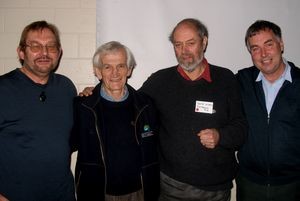
Loder Cup recipients together at the 2005 NZPCN conference in Christchurch, from left to right Dr Colin Meurk, Brian Molloy, David Given and Gerry McSweeny. Photo: John SawyerLoder Cup recipients together at the 2005 NZPCN conference in Christchurch, from left to right Dr Colin Meurk, Brian Molloy, David Given and Gerry McSweeny. Photo: John SawyerBrian also led a charmed botanical life in the field. His encouragement of others lead to the rediscovery of Geum divergens in 1992, and the rediscovery of Leptinella filiformis in 1999 – then in the throes of being declared extinct. In the case of the Leptinella, Brian’s quick work prevented its extinction for the site he found it in was up for sale, and had plants not been taken (with permission) that species would now be extinct for sure. Alas though even his famous ‘luck’ failed with searches for Trilepidea adamsii.

Aside from the New Zealand Plant Conservation Network, Brian’s nomination was supported by the Auckland, Canterbury and Nelson Botanical Societies, Riccarton Bush Trust, Queen Elizabeth II National Trust, National Biodiversity Trust (UK), Landcare Research and by individual letters from Dr Ian St George (Wellington), Dr Joshua Salter (Auckland), Dr Rob Smissen (Christchurch), Dr David Galloway (Dunedin) and Dr Rod Hitchmough (Wellington).

We wish Brian all the best for the future, which we know will still be enlivened by his ongoing interest in our indigenous flora and – though he may not say this – the work of his botanical disciples.

Posted: 08/09/2014

Prev article
All articles
Next article
▲ Back to top
  • Home
  • Flora
  • Threats
  • Ecosystems
  • Publications
  • Conservation
  • NZPCN
  • Help
  • Contact us

© 2026 New Zealand Plant Conservation Network • Website Terms of Use • Website by RS

Coastlands Plant Nursery Wildlands

Website sponsor

  • Home
  • Flora
    • Flora species
    • Tag names
    • Vascular
      • Ferns
        • King fern
        • True ferns
        • Adder's tongue ferns
        • Fork ferns and whisk ferns
        • Horsetails
      • Conifers
        • Celery pines
        • Kauri
        • Podocarps
          • Podocarpus
          • Dacrydium
          • Prumnopitys
          • Dacrycarpus
          • Halocarpus
          • Lepidothamnus
          • Manoao
        • Cypress
      • Flowering plants
        • Parasites
          • Leafy mistletoes
          • Pygmy mistletoes
            • Korthalsella flowers
            • Korthalsella hosts
            • Dispersal of Korthalsella
            • Associates of Korthalsella
          • Root parasites
          • Saprophytes
        • Epiphytes
          • NZ
            • Typical
            • Occasional
            • Hemi-epiphytes
            • Ephemeral
            • NZ list
        • Monocots
          • Orchids
            • Structure
          • Grasses
        • Dicots
          • Hebes
          • Kowhai
          • Coprosma
          • Beech
          • Rata
        • Carnivorous
        • Deciduous plants
        • Aquatic plants
      • Poisonous natives
      • Threatened plant lists
      • What's a vascular plant?
      • Club mosses
    • Non-vascular
      • Bryophytes
        • Liverworts
        • Mosses
        • Hornworts
      • Algae
        • Seaweeds
    • Lichens
    • Plant identification
      • Written descriptions
      • Experts
      • Plant keys
        • Key to parasitic plant genera
      • Collecting plants
        • Should I collect
        • Choosing a specimen
        • Field notes
        • Fresh plant material
        • Pressing and drying
        • Mounting specimens
        • Labelling specimens
    • Fungi
    • Make your own book
    • Quiz
  • Threats
    • Exotic Plants (Weeds)
      • Unwanted organisms
      • DOC weeds
      • Plant me instead
      • Pest Plant Accord
    • Pest Animals
      • Mammals
        • Mustelids
        • Rodents
        • Ungulates
        • Possums
      • Fish
      • Insects
    • Other threats
      • Natural events
        • Insects
      • Human induced
        • Habitat loss
        • Collection
        • Climate change
  • Ecosystems
    • Plant communities
      • Dunes
        • Volcanic
        • Coastal
          • Threats
          • Common species
          • Research on dunes
          • Pingao research
          • What you can do
      • Wetlands
        • Estuaries
          • Common estuarine species
          • Research on estuaries
        • Ephemeral
        • Restiad peat bogs
      • Forests
        • Kauri-podocarp-broadleaved
        • Podocarp broadleaved
        • Beech
      • Scrub/shrublands
        • Geothermal
          • Distribution of geothermal vegetation
          • Geothermal plants
          • Geothermal vegetation types
          • Threats to geothermal vegetation
        • Frost flat/hollow
        • Manuka fens
        • Gumlands
      • Grasslands
        • Tussock grasslands
      • Bare ground
        • Braided rivers
        • Alpine
        • Cliff
        • Scree and boulderfields
        • Shingle beaches
      • Herbfields
        • Saltpan
    • Ecosystem services
    • Novel ecosystems
  • Publications
    • Documents
    • Newsletter
    • Plant lists
      • Search plant lists
      • Plant lists by political region/district
      • Plant lists by ecological region/district
      • National plant lists
      • How to prepare a plant list
    • Botanical Society journals
    • NZPCN publications
  • Conservation
    • Seedbank
      • Project 1 - Pohutukawa, Rata and Myrtaceae
      • Project 2 - Alpine flora and the Forget-Me-Nots
      • Project 3 - Kowhai and its relatives
      • Project 4 - Podocarps and trees of the forest
    • Training
      • Module 1: Plant life
      • Module 2: Covenants
      • Module 3: Propagation
      • Module 4: Wetlands
      • Pilot course 2006
    • Restoration
      • Gardening
        • Being weed wise
        • Garden plants
          • Trees and shrubs
          • Broad-leaved herbs
          • Grass-like herbs
          • Climbers
          • Ferns
        • Attracting wildlife
        • Planting for lizards
          • Rules
      • Species recovery
        • Plant translocations
      • Ecological restoration
        • Case studies
          • Tavora Reserve
          • Waiwhakareke
      • Revegetation
      • Eco-sourcing
      • Find a restoration group
    • Monitoring
      • Number count
        • Number count method
        • Pros and cons of number counts
        • Data analysis and interpretation
      • Presence/absence surveys
        • Presence/absence survey methods
        • Pros and cons of presence/absence surveys
        • Data analysis and interpretation
      • Mapping spatial extent
        • Spatial extent mapping methods
        • Pros and cons of spatial extent mapping
        • Data analysis and interpretation
      • Photo points
        • Photo point guidelines
    • Habitat protection
      • Legal protection
        • Nga Whenua Rahui
        • QEII covenants
        • DOC Covenants
      • Animal pest control
      • Weed control
      • Fencing
    • Funding
    • Botanic gardens
    • Botanic Societies
  • NZPCN
    • News
    • Trilepidea newsletter
    • Events
      • 2026 NZPCN conference
        • 2026 Conference field trips
        • 2026 Conference workshops
        • 2026 conference sponsors
        • 2026 Conference keynote speakers
      • 2026 AGM
      • Code of conduct
      • 2024 AGM
      • Conference 2024
        • 2024 conference overview
        • Conference 2024 workshops
        • Conference 2024 Field Trips
        • 2024 conference sponsors
        • Conference 2024 accommodation options
        • 2024 Conference Programme
      • Conference 2022
        • Conference programme summary
        • 2022 conference workshops
        • 2022 conference field trips
        • COVID-19 information
        • 2022 conference sponsors
        • Abstract and poster submission
        • 2022 Conference venue and accommodation
        • Conference Workshop: Restoration Pathways
        • 2022 conference postponement
      • Conference 2019
      • Conference 2017
      • Conference 2015
        • Speakers
        • Workshops
        • Field trips
        • Charity auction
      • Conference 2013
        • Speakers
        • Timetable
      • 2023 Restoration Pathways Workshop
      • 2023 AGM
    • David Given Scholarship
      • David Given Scholarship Recipients
    • Council members
      • NZPCN council member profiles
      • Council 2023
      • Council 2022
      • Council 2021
      • Council 2020
      • Council 2019
      • Council 2018
      • Council 2017
      • Council 2016
      • Council 2015
      • Council 2014
      • Council 2024
      • Council 2013
      • Council 2012
      • Council 2011
      • Council 2010
      • Council 2009
      • Council 2008
      • Council 2007
      • Council 2006
      • Council 2005
      • Council 2004
      • Council 2003
    • Awards
      • NZPCN Awards
        • 2024 Plant Conservation Awards
        • 2022
        • 2019
        • 2018
        • 2017
        • 2016
        • 2015
        • 2014
        • 2013
        • 2012
        • 2011
        • 2010
        • 2009
        • 2008
        • 2007
        • 2006
        • 2005
    • Shop
    • Donate
    • Favourite Plant
    • Why join NZPCN?
    • Join
  • Help
    • FAQ
      • Joining the Network
      • The Network
      • Frequently asked questions
      • New Zealand plants
      • The law
      • Your discoveries
    • Query
    • Glossary
    • Website Terms of Use
  • Contact us
  • Facebook