
Lemna aequinoctialis
Common names
tropical duckweed
Biostatus
Native
Current conservation status
The conservation status of all known New Zealand vascular plant taxa at the rank of species and below were reassessed in 2022-2023 using the New Zealand Threat Classification System (NZTCS) – more information about this can be found on the NZTCS website. This report includes replaces all previous NZTCS lists for vascular plants. Previous assessments can be found here.
- Conservation status of vascular plants in Aotearoa New Zealand, 2023. 2024. Peter J. de Lange, Jane Gosden, Shannel P. Courtney, Alexander J. Fergus, John W. Barkla, Sarah M. Beadel, Paul D. Champion, Rowan Hindmarsh-Walls, Troy Makan and Pascale Michel Department of Conservation. Source: NZTCS and licensed by DOC for reuse under the Creative Commons Attribution 4.0 International licence.
2023 | Non-resident Native – Coloniser | Qualifiers: SO
Category
Vascular
Structural class
Herbs - Dicotyledons other than Composites
Simplified description
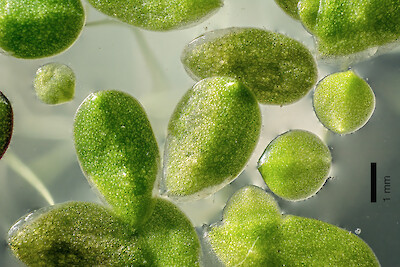
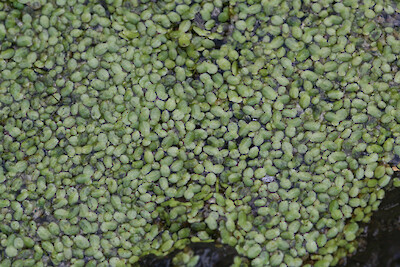
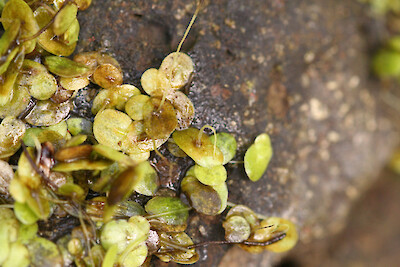
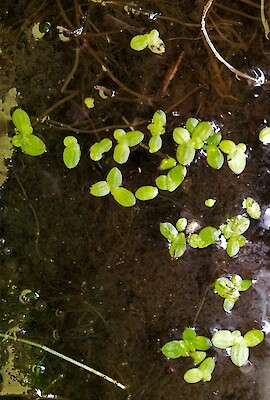
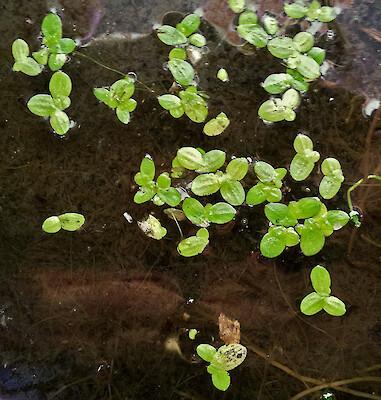
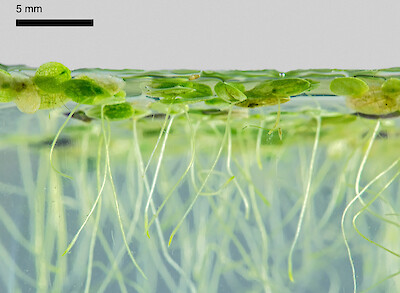
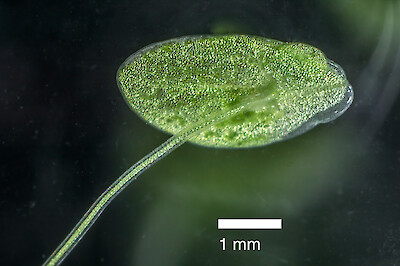
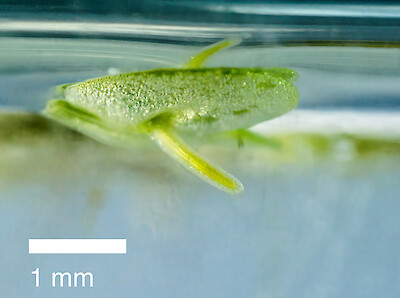
Tiny, surface floating aquatic plant with bright green plate-like leaves (3 × 2 mm) that have a pale underside and one root per leaf.
Flower colours
Green
Detailed description
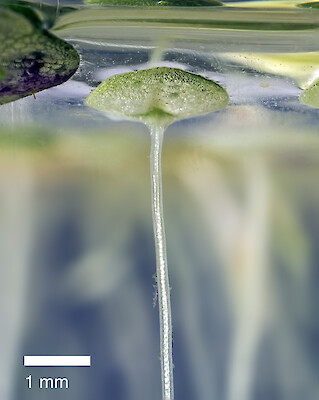
Platelets usually with bright green uppersides, paler undersides and one root per platelet. A characteristic of this species is the single root that arises from a winged sheath.
Similar taxa
The native Lemna disperma is very similar but the root does not arise from a winged sheath. Landoltia has two or more roots arising from each platelet. Watermeal (Wolffia australiana) is much smaller and lacking roots. Azolla is an aquatic fern and has scale like leaves that overlap.
Distribution
Only collected once from Auckland Zoo.
Habitat
Clear, still fertile water including, troughs, dams, drains and backwaters.
Detailed taxonomy
Genus
Family
Endemic genus
No
Endemic family
No
Ecology
Flowering
Unknown
Fruiting
Unknown
Year naturalised
2010
Origin
Throughout the warmer parts of the world, including northern Australia
Reason for introduction
Probably a contaminant of imported plants or animals.
Control techniques
Difficult to control once established.
Life cycle and dispersal
These tiny plants are readily spread by waterfowl.
Other information
Previous conservation status
The conservation status of all known New Zealand vascular plant taxa at the rank of species and below were reassessed in 2022-2023 using the New Zealand Threat Classification System (NZTCS) – more information about this can be found on the NZTCS website. This report includes replaces all previous NZTCS lists for vascular plants. Previous assessments can be found here.
- Conservation status of vascular plants in Aotearoa New Zealand, 2023. 2024. Peter J. de Lange, Jane Gosden, Shannel P. Courtney, Alexander J. Fergus, John W. Barkla, Sarah M. Beadel, Paul D. Champion, Rowan Hindmarsh-Walls, Troy Makan and Pascale Michel Department of Conservation. Source: NZTCS and licensed by DOC for reuse under the Creative Commons Attribution 4.0 International licence.
2017 | Non-resident Native – Coloniser | Qualifiers: SO
Regional conservation statuses
Auckland: 2025 | Regionally Data Deficient | Qualifiers: DPR, SO
Current regional threat status assessments prepared according to Crisp et al. (2025) are displayed when available. The Auckland conservation status information is sourced from the “Conservation status of vascular plant species in Tāmaki Makaurau / Auckland” Simpkins E et al. (2025) report.
Referencing and citations
References and further reading
Crawford DJ, Landolt E, Les DH, Kimball RT. 2001. Allozyme studies in Lemnaceae. Taxon 50(4): 987–999. https://doi.org/10.2307/1224716.
Attribution
Factsheet prepared by Paul Champion and Deborah Hofstra (NIWA).