New Zealand Plant Conservation Network
  • Member login
  • Join
Facebook
  • Home
  • Flora
    • Flora species
    • Tag names
    • Vascular
    • Non-vascular
    • Lichens
    • Plant identification
    • Fungi
    • Make your own book
    • Quiz
  • Threats
    • Exotic Plants (Weeds)
    • Pest Animals
    • Other threats
  • Ecosystems
    • Plant communities
    • Ecosystem services
    • Novel ecosystems
  • Publications
    • Documents
    • Newsletter
    • Plant lists
    • Botanical Society journals
    • NZPCN publications
  • Conservation
    • Seedbank
    • Training
    • Restoration
    • Monitoring
    • Habitat protection
    • Funding
    • Botanic gardens
    • Botanic Societies
  • NZPCN
    • News
    • Trilepidea newsletter
    • Events
    • David Given Scholarship
    • Council members
    • Awards
    • Shop
    • Donate
    • Favourite Plant
    • Why join NZPCN?
    • Join
  • Help
    • FAQ
    • Query
    • Glossary
  • Contact us

Search flora

  1. Tracheophyta
    • Tracheophyta
  2. Magnoliopsida
    • Lycopodiopsida
    • Magnoliopsida
    • Pinopsida
    • Polypodiopsida
  3. Piperales
    • Alismatales
    • Apiales
    • Arecales
    • Asparagales
    • Asterales
    • Boraginales
    • Brassicales
    • Canellales
    • Caryophyllales
    • Celastrales
    • Chloranthales
    • Crossosomatales
    • Cucurbitales
    • Dioscoreales
    • Ericales
    • Fabales
    • Fagales
    • Gentianales
    • Geraniales
    • Gunnerales
    • Lamiales
    • Laurales
    • Liliales
    • Malpighiales
    • Malvales
    • Myrtales
    • Nymphaeales
    • Oxalidales
    • Pandanales
    • Paracryphiales
    • Piperales
    • Poales
    • Proteales
    • Ranunculales
    • Rosales
    • Santalales
    • Sapindales
    • Saxifragales
    • Solanales
  4. Piperaceae
    • Piperaceae
  5. Piper
    • Peperomia
    • Piper
  6. Piper excelsum subsp. delangei
    • Piper excelsum subsp. delangei
    • Piper excelsum subsp. peltatum
    • Piper excelsum subsp. psittacorum
    • Piper melchior
    • Piper excelsum subsp. excelsum

Piper excelsum subsp. delangei

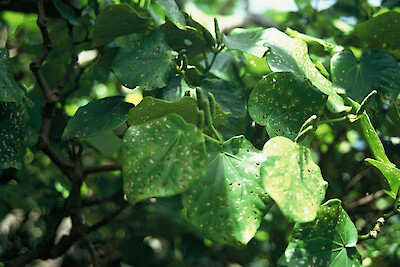
Macropiper excelsum subsp. peltatum f. delangei.<br>Photographer: Peter J de Lange, Licence: <a target='_blank' href='https://creativecommons.org/licenses/by-nc/4.0'>CC BY-NC</a>. <a class='member-message' href='/nzpcn/why-join-nzpcn/' target='_blank'>Members can view a larger version of this image.</a>
Macropiper excelsum subsp. peltatum f. delangei.<br>Photographer: Peter J de Lange, Licence: <a target='_blank' href='https://creativecommons.org/licenses/by-nc/4.0'>CC BY-NC</a>.
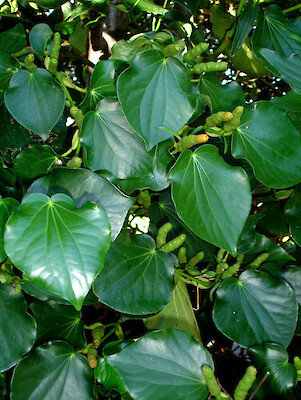
South West Island, December 1995.<br>Photographer: Peter J de Lange, Licence: <a target='_blank' href='https://creativecommons.org/licenses/by-nc/4.0'>CC BY-NC</a>. <a class='member-message' href='/nzpcn/why-join-nzpcn/' target='_blank'>Members can view a larger version of this image.</a>
Download PDF Comment on factsheet

NZPCN members can select up to 20 plant species and automatically create a full colour, fully illustrated A4 book describing them (in PDF format).

  • Find out more...
  • Join NZPCN...
Find in plant lists
iNaturalist NZ View observations Biota of NZ Click here to view NZ Flora Click here to view Herbarium View AVH specimens Donate Support NZPCN

Common names

de Lange’s kawakawa, de Lange’s pepper

Biostatus

Native – Endemic taxon

Current conservation status

The conservation status of all known New Zealand vascular plant taxa at the rank of species and below were reassessed in 2022-2023 using the New Zealand Threat Classification System (NZTCS) – more information about this can be found on the NZTCS website. This report includes replaces all previous NZTCS lists for vascular plants. Previous assessments can be found here.

  • Conservation status of vascular plants in Aotearoa New Zealand, 2023. 2024. Peter J. de Lange, Jane Gosden, Shannel P. Courtney, Alexander J. Fergus, John W. Barkla, Sarah M. Beadel, Paul D. Champion, Rowan Hindmarsh-Walls, Troy Makan and Pascale Michel Department of Conservation. Source: NZTCS and licensed by DOC for reuse under the Creative Commons Attribution 4.0 International licence.

2023 | At Risk – Naturally Uncommon | Qualifiers: CD, IE

Jump to previous conservation statuses

Category

Vascular

Structural class

Trees & Shrubs - Dicotyledons

Simplified description

Fleshy shrub with jointed green twigs bearing large dark green glossy heart-shaped fleshy leaves with hard green flower spikes inhabiting the Three Kings Islands. Leaves to 160mm wide, veins radiating from middle, peppery to taste. Fruit orange.

Detailed description

Shrub or small tree to at least 3 m tall; stems ± erect, not notably lenticellate, new shoots green (without reddish colouring), taste oily-aromatic and extremely peppery; pith of axes (including rachis of spike) usually without a mucilage core (but this sometimes present in sucker shoots), in older (leafless, secondarily thickened) stems the pith not more than 0.5× stem diameter, and remaining intact in the largest trunks. Prophyll a collar to 0.5(-2.0) mm high. Leaf blades coriaceous, fleshy ± suborbicular, at vegetative nodes to 100(-160) mm diameter, usually with 7 or 9 principal nerves, cordate at base, with a very narrow or closed sinus, occasionally basal lobes overlapping, or sometimes the blade peltate with the petiole inserted up to 5(-20) mm inside blade margin, upper surface of blade not bullate; petiole to 40(-60) mm long, c.0.4×as long as blade, the sheath 0.3-1.0(-2)× as long as non-sheathing part, truncate-rounded at apex and not produced there, the non-sheathing part of petiole to 3.5 mm diam. Inflorescences solitary or 2-3 together on a short (rarely more than I cm long) axillary shoot, and (usually solitary) on the adjacent terminal shoot (occasionally this shoot not fertile); reduced leaf at apex of fertile shoot with a glabrous petiole and usually with a green oblong lamina at least 5 mm long, but lamina often ± lacking, especially on terminal fertile shoot. Female inflorescence erect in flowering and remaining so into fruit, peduncle to c. 1.5 cm long, spike to 60(-100) × c.6 mm diameter, with uniseriate usually 5-10-cellular hairs to 0.15 mm long on lower part of bract stalks and sparingly on rachis, these hairs not obvious on the peduncle just below the lowermost bracts; bracts peltate, bract heads 0.40-0.75 mm diameter; flowers at full emergence centred c.1.3 mm apart, emergent part of ovary ovoid; stigmas 3-4(-5), together c. 1.2 mm diameter. Male inflorescence erect, spike to c.110 mm long, proximally c.6 mm diameter, bracts and hairs as in female inflorescence; staminal filaments c. 0.25 mm long, anthers c.1.00 × 0.75 mm wide. Ripe infructescence c.10 mm diameter; fruitlets coalescent, sunken apically about the persistent dark stigmas, exocarp and mesocarp orange; seed oblong to slightly obovoid, apiculate at apex, c.2.0 × 1.5 dark brown, with (3-)4-5(-7) broad longitudinal furrows.

Similar taxa

Piper excelsum subsp. peltatum has an allopatric distribution, it is otherwise superficially similar differing mainly by its much thinner, less fleshy, and less frequently peltate leaves, more weakly ornamented seeds and less distinctly spicy taste.

Distribution

Endemic. Three Kings Islands: Manawa Tawhi (Great Island), South West and North East Islands

Habitat

Coastal forest where it is often an important component of the shrub layer. On South West Island it is sympatric with, and forms hybrids with Piper melchior.

Threats

Not Threatened. Listed because it is a narrow range endemic confined to a small geographic area

Detailed taxonomy

Genus

Piper

Family

Piperaceae

Authority

Piper excelsum subsp. delangei (R.O. Gardner) de Lange

Synonyms

Macropiper excelsum subsp. peltatum f. delangei R.O. Gardner

Taxonomic notes

‘The generic distinction between Macropiper and Piper has always been tenuous. Recently Jaramillo et al. (2008) have shown that Macropiper should be merged in Piper. However, they did not effect the full transfer of the New Zealand taxa to Piper. This action was taken by de Lange (2012) for Macropiper excelsum subsp. psittacorum, Macropiper excelsum subsp. peltatum f. peltatum and f. delangei.

Endemic taxon

Yes

Endemic genus

No

Endemic family

No

Ecology

Flowering

August - December

Fruiting

September - May

Propagation technique

Easy from semi-hardwood cuttings and fresh seed. Frost tender. Does best in semi-shade. It is remarkably drought tolerant. The dark green, thick, somewhat glossy, typically peltate leaves are quite unusual.

Other information

Etymology

piper: Pepper

excelsum: Tall

delangei: Commemorating the New Zealand botanist Peter J. de Lange (1966-); de Lange specialises in threat classification systems, plant systematics, cytology and insular floras.

Chromosome number

2n = 26

Previous conservation statuses

The conservation status of all known New Zealand vascular plant taxa at the rank of species and below were reassessed in 2022-2023 using the New Zealand Threat Classification System (NZTCS) – more information about this can be found on the NZTCS website. This report includes replaces all previous NZTCS lists for vascular plants. Previous assessments can be found here.

  • Conservation status of vascular plants in Aotearoa New Zealand, 2023. 2024. Peter J. de Lange, Jane Gosden, Shannel P. Courtney, Alexander J. Fergus, John W. Barkla, Sarah M. Beadel, Paul D. Champion, Rowan Hindmarsh-Walls, Troy Makan and Pascale Michel Department of Conservation. Source: NZTCS and licensed by DOC for reuse under the Creative Commons Attribution 4.0 International licence.

2017 | At Risk – Naturally Uncommon | Qualifiers: CD, IE

2012 | At Risk – Naturally Uncommon | Qualifiers: CD, IE

2009 | At Risk – Naturally Uncommon | Qualifiers: RC, IE

2004 | Range Restricted

Jump to current conservation status

Referencing and citations

References and further reading

de Lange, P.J. 2012: Taxonomic notes on the New Zealand flora: new names in Piper (Piperaceae). New Zealand Journal of Botany DOI:10.1080/0028825X.2012.708904

Gardner, R.O. 1997: Macropiper (Piperaceae) in the south-west Pacific. New Zealand Journal of Botany 35: 293-307.

Jaramillo, M.A.; Callejas, R; Davidson, C.; Smith, J.F.; Stevens, A.C.; Tepe, E.J. 2008: A phylogeny of the tropical genus Piper using ITS and the chloroplast intron psbJ-petA. Systematic Botany 33: 647-660.

Attribution

Fact sheet prepared for NZPCN by P.J. de Lange 30 August 2005. Description based on Gardner (1997).

NZPCN Fact Sheet citation

Please cite as: de Lange, P.J. (Year at time of access): Piper excelsum subsp. delangei Fact Sheet (content continuously updated). New Zealand Plant Conservation Network. https://www.nzpcn.org.nz/flora/species/piper-excelsum-subsp-delangei/ (Date website was queried)
▲ Back to top
  • Home
  • Flora
  • Threats
  • Ecosystems
  • Publications
  • Conservation
  • NZPCN
  • Help
  • Contact us

© 2026 New Zealand Plant Conservation Network • Website by RS

Coastlands Plant Nursery Wildlands

Website sponsor

  • Home
  • Flora
    • Flora species
    • Tag names
    • Vascular
      • Ferns
        • King fern
        • True ferns
        • Adder's tongue ferns
        • Fork ferns and whisk ferns
        • Horsetails
      • Conifers
        • Celery pines
        • Kauri
        • Podocarps
          • Podocarpus
          • Dacrydium
          • Prumnopitys
          • Dacrycarpus
          • Halocarpus
          • Lepidothamnus
          • Manoao
        • Cypress
      • Flowering plants
        • Parasites
          • Leafy mistletoes
          • Pygmy mistletoes
            • Korthalsella flowers
            • Korthalsella hosts
            • Dispersal of Korthalsella
            • Associates of Korthalsella
          • Root parasites
          • Saprophytes
        • Epiphytes
          • NZ
            • Typical
            • Occasional
            • Hemi-epiphytes
            • Ephemeral
            • NZ list
        • Monocots
          • Orchids
            • Structure
          • Grasses
        • Dicots
          • Hebes
          • Kowhai
          • Coprosma
          • Beech
          • Rata
        • Carnivorous
        • Deciduous plants
        • Aquatic plants
      • Poisonous natives
      • Threatened plant lists
      • What's a vascular plant?
      • Club mosses
    • Non-vascular
      • Bryophytes
        • Liverworts
        • Mosses
        • Hornworts
      • Algae
        • Seaweeds
    • Lichens
    • Plant identification
      • Written descriptions
      • Experts
      • Plant keys
        • Key to parasitic plant genera
      • Collecting plants
        • Should I collect
        • Choosing a specimen
        • Field notes
        • Fresh plant material
        • Pressing and drying
        • Mounting specimens
        • Labelling specimens
    • Fungi
    • Make your own book
    • Quiz
  • Threats
    • Exotic Plants (Weeds)
      • Unwanted organisms
      • DOC weeds
      • Plant me instead
      • Pest Plant Accord
    • Pest Animals
      • Mammals
        • Mustelids
        • Rodents
        • Ungulates
        • Possums
      • Fish
      • Insects
    • Other threats
      • Natural events
        • Insects
      • Human induced
        • Habitat loss
        • Collection
        • Climate change
  • Ecosystems
    • Plant communities
      • Dunes
        • Volcanic
        • Coastal
          • Threats
          • Common species
          • Research on dunes
          • Pingao research
          • What you can do
      • Wetlands
        • Estuaries
          • Common estuarine species
          • Research on estuaries
        • Ephemeral
        • Restiad peat bogs
      • Forests
        • Kauri-podocarp-broadleaved
        • Podocarp broadleaved
        • Beech
      • Scrub/shrublands
        • Geothermal
          • Distribution of geothermal vegetation
          • Geothermal plants
          • Geothermal vegetation types
          • Threats to geothermal vegetation
        • Frost flat/hollow
        • Manuka fens
        • Gumlands
      • Grasslands
        • Tussock grasslands
      • Bare ground
        • Braided rivers
        • Alpine
        • Cliff
        • Scree and boulderfields
        • Shingle beaches
      • Herbfields
        • Saltpan
    • Ecosystem services
    • Novel ecosystems
  • Publications
    • Documents
    • Newsletter
    • Plant lists
      • Search plant lists
      • Plant lists by political region/district
      • Plant lists by ecological region/district
      • National plant lists
      • How to prepare a plant list
    • Botanical Society journals
    • NZPCN publications
  • Conservation
    • Seedbank
      • Project 1 - Pohutukawa, Rata and Myrtaceae
      • Project 2 - Alpine flora and the Forget-Me-Nots
      • Project 3 - Kowhai and its relatives
      • Project 4 - Podocarps and trees of the forest
    • Training
      • Module 1: Plant life
      • Module 2: Covenants
      • Module 3: Propagation
      • Module 4: Wetlands
      • Pilot course 2006
    • Restoration
      • Gardening
        • Being weed wise
        • Garden plants
          • Trees and shrubs
          • Broad-leaved herbs
          • Grass-like herbs
          • Climbers
          • Ferns
        • Attracting wildlife
        • Planting for lizards
          • Rules
      • Species recovery
        • Plant translocations
      • Ecological restoration
        • Case studies
          • Tavora Reserve
          • Waiwhakareke
      • Revegetation
      • Eco-sourcing
      • Find a restoration group
    • Monitoring
      • Number count
        • Number count method
        • Pros and cons of number counts
        • Data analysis and interpretation
      • Presence/absence surveys
        • Presence/absence survey methods
        • Pros and cons of presence/absence surveys
        • Data analysis and interpretation
      • Mapping spatial extent
        • Spatial extent mapping methods
        • Pros and cons of spatial extent mapping
        • Data analysis and interpretation
      • Photo points
        • Photo point guidelines
    • Habitat protection
      • Legal protection
        • Nga Whenua Rahui
        • QEII covenants
        • DOC Covenants
      • Animal pest control
      • Weed control
      • Fencing
    • Funding
    • Botanic gardens
    • Botanic Societies
  • NZPCN
    • News
    • Trilepidea newsletter
    • Events
      • 2026 NZPCN conference
        • 2026 Conference field trips
        • 2026 Conference workshops
        • 2026 conference sponsors
        • 2026 Conference keynote speakers
      • 2024 AGM
      • Conference 2024
        • 2024 conference overview
        • Conference 2024 workshops
        • Conference 2024 Field Trips
        • 2024 conference sponsors
        • Conference 2024 accommodation options
        • 2024 Conference Programme
      • Conference 2022
        • Conference programme summary
        • 2022 conference workshops
        • 2022 conference field trips
        • Code of conduct
        • COVID-19 information
        • 2022 conference sponsors
        • Abstract and poster submission
        • 2022 Conference venue and accommodation
        • Conference Workshop: Restoration Pathways
        • 2022 conference postponement
      • Conference 2019
      • Conference 2017
      • Conference 2015
        • Speakers
        • Workshops
        • Field trips
        • Charity auction
      • Conference 2013
        • Speakers
        • Timetable
      • 2023 Restoration Pathways Workshop
      • 2023 AGM
    • David Given Scholarship
      • David Given Scholarship Recipients
    • Council members
      • NZPCN council member profiles
      • Council 2023
      • Council 2022
      • Council 2021
      • Council 2020
      • Council 2019
      • Council 2018
      • Council 2017
      • Council 2016
      • Council 2015
      • Council 2014
      • Council 2024
      • Council 2013
      • Council 2012
      • Council 2011
      • Council 2010
      • Council 2009
      • Council 2008
      • Council 2007
      • Council 2006
      • Council 2005
      • Council 2004
      • Council 2003
    • Awards
      • NZPCN Awards
        • 2024 Plant Conservation Awards
        • 2022
        • 2019
        • 2018
        • 2017
        • 2016
        • 2015
        • 2014
        • 2013
        • 2012
        • 2011
        • 2010
        • 2009
        • 2008
        • 2007
        • 2006
        • 2005
    • Shop
    • Donate
    • Favourite Plant
    • Why join NZPCN?
    • Join
  • Help
    • FAQ
      • Joining the Network
      • The Network
      • Network website
      • New Zealand plants
      • The law
      • Your discoveries
    • Query
    • Glossary
  • Contact us
  • Facebook