
New Zealand Plant Conservation Network
  • Member login
  • Join
Facebook
  • Home
  • Flora
    • Flora species
    • Tag names
    • Vascular
    • Non-vascular
    • Lichens
    • Plant identification
    • Fungi
    • Make your own book
    • Quiz
  • Threats
    • Exotic Plants (Weeds)
    • Pest Animals
    • Other threats
  • Ecosystems
    • Plant communities
    • Ecosystem services
    • Novel ecosystems
  • Publications
    • Documents
    • Newsletter
    • Plant lists
    • Botanical Society journals
    • NZPCN publications
  • Conservation
    • Seedbank
    • Training
    • Restoration
    • Monitoring
    • Habitat protection
    • Funding
    • Botanic gardens
    • Botanic Societies
  • NZPCN
    • News
    • Trilepidea newsletter
    • Events
    • David Given Scholarship
    • Council members
    • Awards
    • Shop
    • Donate
    • Favourite Plant
    • Why join NZPCN?
    • Join
  • Help
    • FAQ
    • Query
    • Glossary
  • Contact us

Search flora

  1. Tracheophyta
    • Tracheophyta
  2. Magnoliopsida
    • Lycopodiopsida
    • Magnoliopsida
    • Pinopsida
    • Polypodiopsida
  3. Myrtales
    • Alismatales
    • Apiales
    • Arecales
    • Asparagales
    • Asterales
    • Boraginales
    • Brassicales
    • Canellales
    • Caryophyllales
    • Celastrales
    • Chloranthales
    • Crossosomatales
    • Cucurbitales
    • Dioscoreales
    • Ericales
    • Fabales
    • Fagales
    • Gentianales
    • Geraniales
    • Gunnerales
    • Lamiales
    • Laurales
    • Liliales
    • Malpighiales
    • Malvales
    • Myrtales
    • Nymphaeales
    • Oxalidales
    • Pandanales
    • Paracryphiales
    • Piperales
    • Poales
    • Proteales
    • Ranunculales
    • Rosales
    • Santalales
    • Sapindales
    • Saxifragales
    • Solanales
  4. Myrtaceae
    • Myrtaceae
    • Onagraceae
  5. Leptospermum
    • Kunzea
    • Leptospermum
    • Lophomyrtus
    • Metrosideros
    • Neomyrtus
    • Syzygium
  6. Leptospermum repo
    • Leptospermum scoparium var. incanum
    • Leptospermum scoparium var. scoparium
    • Leptospermum polygalifolium subsp. polygalifolium
    • Leptospermum spectabile
    • Leptospermum variabile
    • Leptospermum petersonii
    • Leptospermum minutifolium
    • Leptospermum repo
    • Leptospermum hoipolloi f. hoipolloi
    • Leptospermum tairawhitiense

Leptospermum repo

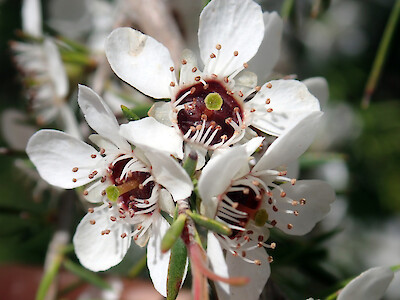
Flowers, Kneebone Road, Te Mimiha Peat Bog, Hamilton Basin, Waikato.<br>Photographer: Peter J de Lange, Date taken: 12/12/2020, Licence: <a target='_blank' href='https://creativecommons.org/licenses/by/4.0'>CC BY</a>. <a class='member-message' href='/nzpcn/why-join-nzpcn/' target='_blank'>Members can view a larger version of this image.</a>
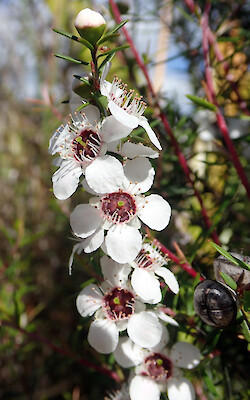
Leptospermum repo flowers, type locality, Southern Island Block Road, Whangamarino, Huntly Basin, Waikato.<br>Photographer: Peter J de Lange, Date taken: 12/12/2020, Licence: <a target='_blank' href='https://creativecommons.org/licenses/by/4.0'>CC BY</a>. <a class='member-message' href='/nzpcn/why-join-nzpcn/' target='_blank'>Members can view a larger version of this image.</a>
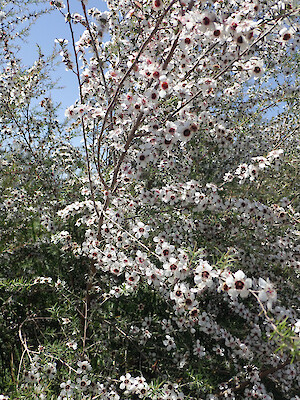
Flowering branches, Kneebone Road, Te Mimiha Peat Bog, Hamilton Basin, Waikato.<br>Photographer: Peter J de Lange, Date taken: 12/12/2020, Licence: <a target='_blank' href='https://creativecommons.org/licenses/by/4.0'>CC BY</a>. <a class='member-message' href='/nzpcn/why-join-nzpcn/' target='_blank'>Members can view a larger version of this image.</a>
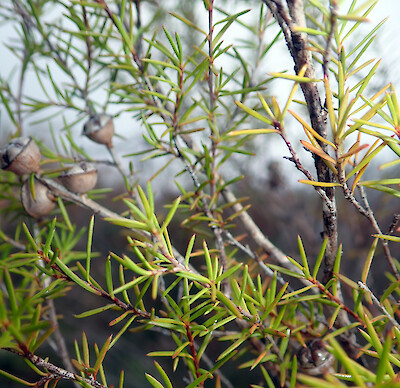
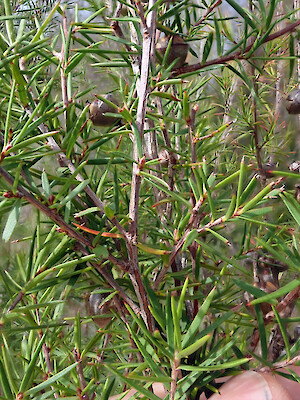
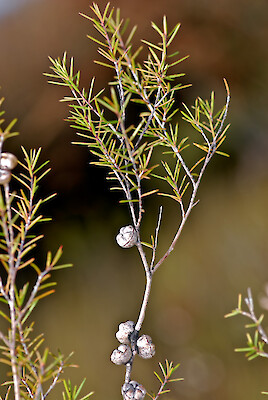
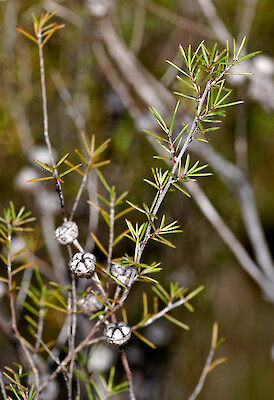
Foliage of Leptospermum repo, Kopouatai Peat Bog, Hauraki Plains, Waikato.<br>Photographer: Peter J de Lange, Date taken: 15/06/2019, Licence: <a target='_blank' href='https://creativecommons.org/licenses/by/4.0'>CC BY</a>. <a class='member-message' href='/nzpcn/why-join-nzpcn/' target='_blank'>Members can view a larger version of this image.</a>
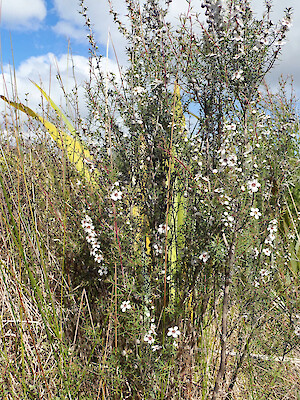
Leptospermum repo, flowering shrub at type locality, Southern Island Block, Whangamarino Peat Bog, Huntly Basin, Waikato.<br>Photographer: Peter J de Lange, Date taken: 12/12/2020, Licence: <a target='_blank' href='https://creativecommons.org/licenses/by/4.0'>CC BY</a>. <a class='member-message' href='/nzpcn/why-join-nzpcn/' target='_blank'>Members can view a larger version of this image.</a>
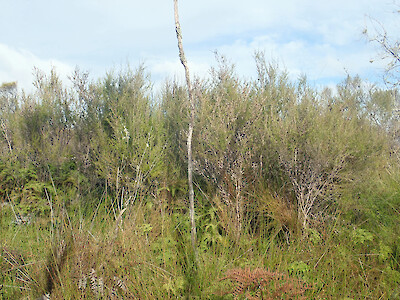
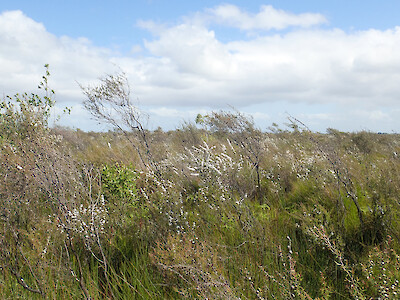
Leptospermum repo shrubs in restiad bog, Kopouatai Peat Bog, Hauraki Plains, Waikato.<br>Photographer: Peter J de Lange, Date taken: 04/06/2021, Licence: <a target='_blank' href='https://creativecommons.org/licenses/by/4.0'>CC BY</a>. <a class='member-message' href='/nzpcn/why-join-nzpcn/' target='_blank'>Members can view a larger version of this image.</a>
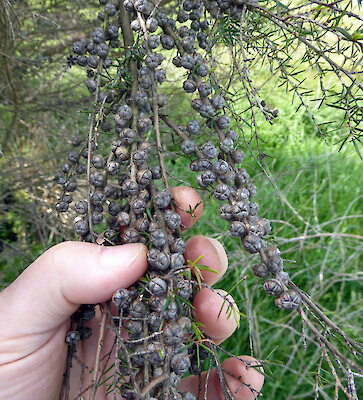
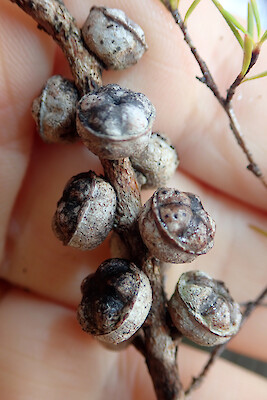
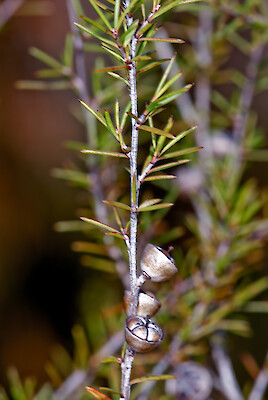
Unopened, mature fruiting capsules, Valinitine Road, Komakorau Peat Bog, Hamilton Basin, Waikato.<br>Photographer: Peter J de Lange, Date taken: 08/06/2019, Licence: <a target='_blank' href='https://creativecommons.org/licenses/by/4.0'>CC BY</a>. <a class='member-message' href='/nzpcn/why-join-nzpcn/' target='_blank'>Members can view a larger version of this image.</a>
Leptospermum repo mature, unopening capsules, Kopouatai Peat Bog, Hauraki Plains, Waikato.<br>Photographer: Peter J de Lange, Date taken: 04/06/2021, Licence: <a target='_blank' href='https://creativecommons.org/licenses/by/4.0'>CC BY</a>. <a class='member-message' href='/nzpcn/why-join-nzpcn/' target='_blank'>Members can view a larger version of this image.</a>
Leptospermum repo, flowering shrubs growing in restiad bog (type locality), southern Island Block Road, Whangamarino, Huntly Basin, Waikato.<br>Photographer: Peter J de Lange, Date taken: 12/12/2020, Licence: <a target='_blank' href='https://creativecommons.org/licenses/by/4.0'>CC BY</a>. <a class='member-message' href='/nzpcn/why-join-nzpcn/' target='_blank'>Members can view a larger version of this image.</a>
Kopouatai Peat Dome, Hauraki Plains.<br>Photographer: Jeremy R. Rolfe, Date taken: 17/07/2007, Licence: <a target='_blank' href='https://creativecommons.org/licenses/by/4.0'>CC BY</a>. <a class='member-message' href='/nzpcn/why-join-nzpcn/' target='_blank'>Members can view a larger version of this image.</a>
Download PDF Comment on factsheet

NZPCN members can select up to 20 plant species and automatically create a full colour, fully illustrated A4 book describing them (in PDF format).

  • Find out more...
  • Join NZPCN...
Find in plant lists
iNaturalist NZ View observations Biota of NZ Click here to view NZ Flora Click here to view Herbarium View AVH specimens Donate Support NZPCN

Common names

Waikato peat bog mānuka

Biostatus

Native – Endemic taxon

Current conservation status

The conservation status of all known New Zealand vascular plant taxa at the rank of species and below were reassessed in 2022-2023 using the New Zealand Threat Classification System (NZTCS) – more information about this can be found on the NZTCS website. This report includes replaces all previous NZTCS lists for vascular plants. Previous assessments can be found here.

  • Conservation status of vascular plants in Aotearoa New Zealand, 2023. 2024. Peter J. de Lange, Jane Gosden, Shannel P. Courtney, Alexander J. Fergus, John W. Barkla, Sarah M. Beadel, Paul D. Champion, Rowan Hindmarsh-Walls, Troy Makan and Pascale Michel Department of Conservation. Source: NZTCS and licensed by DOC for reuse under the Creative Commons Attribution 4.0 International licence.

2023 | At Risk – Declining

Jump to previous conservation statuses

Category

Vascular

Structural class

Trees & Shrubs - Dicotyledons

Flower colours

White

Detailed description

Shrub to small tree (1)−3−(6)m tall, sometimes much reduced in extreme acid wetlands, then attaining heights of 100 mm or less. Trunk usually unbranched at base, up to 0.1 m d.b.h, usually devoid of branches in lower ⅓ to ½. Bark firmly attached, fibrous, often deeply fissured. Branches usually 3 or more, and openly branching with semi-erect to widely spreading branches, young stems copiously covered in (0.12−0.24)–0.48−(0.80) mm long, white, straight to slightly flexuous, sericeous, antrorse-appressed hairs, becoming glabrescent with age. Vegetative buds 3−8, mostly shedding soon after vegetative growth commences, rarely with a few persistent, (0.4)−0.6−0.8−(1.0) × (0.3)−0.5−0.7−(0.9) mm, amber to red-brown, scarious, oblong to ovoid, inner surface smooth, glossy, outer with frayed, lacerate margins or entire, basal portion densely invested in white antrorse-appressed to suberect sericeous hairs up to 0.01 mm long. Leaves pleasantly spicy-scented when crushed, divergent to spreading, (5.0)−8.0−11.0−(15.0) × (0.3)−0.5−0.8−(2.0) mm, glossy yellow-green, green to dark green; lamina linear, linear-lanceolate, narrowly lanceolate, occasionally filiform, flat to weakly concave, acute, minutely cuspidate, bases narrowly cuneate, margins minutely denticulate; surfaces sericeous hairy near base and along midrib, and proximal ⅓ of leaf margin, glabrescent with hairs ± persisting on basal portion of leaf and; oil glands numerous, more evident when dry. Perules 4−6, shedding at bud burst, (0.4)−0.6−0.8−(1.0) × (0.4)−0.6−0.8−(0.9) mm, glabrous, hyaline, amber to pale red-brown, scarious, orbicular, margins usually entire, sometimes frayed inner surface smooth, glossy. Inflorescence monadic on short axillary brachyblasts, or, on occasion on long, 200 mm long or more, terminal shoots. Prophylls caducous, 2, 0.1−0.2 mm long, oblong, midrib scarcely developed, yellow-green, green to red-green when fresh, tan when dry, abaxial surface densely invested in white sericeous hairs. Pedicels sessile, or 0.1 mm long at anthesis, elongating to 2.4 mm after anthesis, terete, sparsely invested with antrorse-appressed, sericeous white hairs. Flower buds clavate, tholiform with calyx lobes not meeting. Fresh flowers when fully expanded 10−11−(15) mm in diameter. Hypanthium (2.8)−3.0−(4.0) × (1.6)−2.2 −(4.0) mm, green or honey-brown, obconic, obconic-funnelform; terminating in a slightly thicker rim bearing five calyx lobes; surface smooth (wrinkling in dry specimens) finely glandular punctate, glabrous. Calyx lobes 5, spreading, 2.4−2.6 × 2.4−2.6 mm, caducous, broadly deltoid with rounded apices, usually glabrous except for margins which may be sparsely ciliate, oil glands colourless. Receptacle dark red at anthesis. Petals 5, spreading, 4−5 × 2−3 mm, white, orbicular, apex obtuse to rotund, margins finely crimped, oil glands not evident. Stamens 15−36, in 1−2 weakly defined whorls adnate to receptacular rim, filaments white. Antipetalous stamens 3(+2), antisepalous 4−6. Outermost antipetalous stamens erect or weakly incurved, on filaments 1.20−1.68 mm long, occasional inner whorl of 2 stamens present, these erect or incurved, 0.9−1.2 mm long, positioned at base of the outermost antipetalous pair. Antisepalous stamens about half length of antipetalous, on filaments 0.6−0.84 mm long, incurved, erect or in mixtures of both. Anthers dorsifixed 0.36 × 0.12 mm, ovoid, latrorse. Pollen white to cream. Anther connective gland 0.24 mm long, amber, narrowly obovoid. Ovary 5-locular, each loculus with c. 80 ovules, set in 8 rows on each placental lobe. Style (0.96)−1.9−2.0 mm long at anthesis, elongating to 3 mm after anthesis, green (very rarely pink—one population); stigma 0.70−0.78 mm in diameter at anthesis, expanding to 0.9 mm following anthesis, flat, green, sometimes flushing pink at anthesis, finely papillate rugulose. Fruits persistent, woody, (5)−8−(9) × (5)−6 mm, pale brown-grey to grey, hemispherical / globose (sometimes broadly obconic), centre often with persistent style remnant, valves 5, exserted as a dome, indented at centre, ± symmetrical with base. Valves opening on dead branches or following fire. Seeds 2.3−2.4−(2.6) × 0.24− 0.24 mm, linear, linear-cuneiform, curved, flexuous to sigmoid, laterally compressed or terete, 2−4-angled, apex truncate or acute, testa dull or glossy, orange-brown, glabrous, longitudinally striate.

Similar taxa

From Leptospermum scoparium s.s., L. repo differs ecologically by its restriction to peat bog habitats, and morphologically by its gracile growth habit; longer, finer, linear, linear-lanceolate leaves, and larger flowers which have white petals, usually white stamen filaments and usually green style and stigma. Leptospermum scoparium s.s. has smaller flowers, which may have pink-tinged petals, usually pink-tinged or pink stamen filaments, and pink-tinged, pink or carmine coloured style and stigma; the leaves of L. scoparium s.s. are broadly ovate, oval to orbicular and sharply acuminate. Leptospermum repo is allied to three other northern New Zealand Leptospermum, only one of which is formally recognised, L. scoparium var. incanum. From that variety L. repo is by its much narrower, linear, linear-lanceolate leaves, that are only sparsely hairy – broadly lanceolate, and densely covered in hairs when young, and notably by its smaller, white rather than larger, usually pink tinged, pink or even red flowers (for other differences see de Lange & Schmid 2021).

Distribution

Endemic. New Zealand. North Island, greater Waikato lowlands, Coromandel Peninsula and Bay of Plenty (historically Northland and Taranaki).

Habitat

Restiad bog and associated wetlands

Threats

Leptospermum repo has been eliminated from all but c. 10% of its former wetland habit (it now seems to be extinct in Northland and Taranaki). Decline is still ongoing in some of the peat bogs in which remnant populations persist as a result of farming, roading and on going. The species remains common in the larger, intact peat bogs (e.g., Whangamarino, Kopouatai). One serious threat to the species is myrtle rust diseases caused by the naturalised Austropuccinia psidii. Although this rust has yet to be observed on Leptospermum repo it is believed only to be a matter of time before it does attack this species. For this reason, L. repo, as Leptospermum aff. scoparium (c) (AK 191319; “Waikato peat bog”) was listed by de Lange et al. (2018) as “Threatened / Nationally Critical” qualified “DP [Data Poor]”, “De [Designated’]”. In their paper, de Lange & Schmid (2021) saw no reason to change that status, though L. repo should also be qualified “Rel [Relict]” considering its historic loss.

Detailed taxonomy

Genus

Leptospermum

Family

Myrtaceae

Authority

Leptospermum repo de Lange et L.M.H.Schmid

Endemic taxon

Yes

Endemic genus

No

Endemic family

No

Ecology

Flowering

October–January

Fruiting

Fruits are found throughout the year.

Propagation technique

Easily grown from fresh seed. Leptospermum repo is an attractive species on account of its gracile growth habit, fine, linear, linear-lanceolate leaves, and floriferous habit.

Other information

Etymology

leptospermum: Slender seed

repo: The epithet “repo” is taken from Te Reo Māori (Māori Language) for “swamp”; it refers to the wetland habitat in which Leptospermum repo grows

Manaaki Whenua Online Interactive Key

Key to the Myrtaceae of New Zealand

NVS code

The National Vegetation Survey (NVS) Databank is a physical archive and electronic databank containing records of over 94,000 vegetation survey plots - including data from over 19,000 permanent plots. NVS maintains a standard set of species code abbreviations that correspond to standard scientific plant names from the Ngä Tipu o Aotearoa - New Zealand Plants database.

LEPRPO

Previous conservation status

The conservation status of all known New Zealand vascular plant taxa at the rank of species and below were reassessed in 2022-2023 using the New Zealand Threat Classification System (NZTCS) – more information about this can be found on the NZTCS website. This report includes replaces all previous NZTCS lists for vascular plants. Previous assessments can be found here.

  • Conservation status of vascular plants in Aotearoa New Zealand, 2023. 2024. Peter J. de Lange, Jane Gosden, Shannel P. Courtney, Alexander J. Fergus, John W. Barkla, Sarah M. Beadel, Paul D. Champion, Rowan Hindmarsh-Walls, Troy Makan and Pascale Michel Department of Conservation. Source: NZTCS and licensed by DOC for reuse under the Creative Commons Attribution 4.0 International licence.

2017 | Threatened – Nationally Critical | Qualifiers: DP, De

Jump to current conservation status

Referencing and citations

References and further reading

de Lange PJ, Schmid LMH. 2021. Leptospermum repo (Myrtaceae), a new species from northern Aotearoa / New Zealand peat bog habitats, segregated from Leptospermum scoparium s.l. Ukrainian Botanical Journal 78(4): 247–265. https://doi.org/10.15407/ukrbotj78.04.247

de Lange PJ, Rolfe JR, Barkla JW, Courtney SP, Champion PD, Perrie LR, Beadel SM, Ford KA, Breitwieser I, Schönberger I, Hindmarsh-Walls R, Heenan PB, Ladley K. 2018. Conservation status of New Zealand indigenous vascular plants, 2017. New Zealand Threat Classification Series 22. Department of Conservation, Wellington, NZ. 82 p. https://www.doc.govt.nz/globalassets/documents/science-and-technical/nztcs22entire.pdf.

Attribution

Fact sheet prepared for NZPCN by P.J. de Lange 30 August 2021. Description from de Lange & Schmid (2021).

NZPCN Fact Sheet citation

Please cite as: de Lange, P.J. (Year at time of access): Leptospermum repo Fact Sheet (content continuously updated). New Zealand Plant Conservation Network. https://www.nzpcn.org.nz/flora/species/leptospermum-repo/ (Date website was queried)

▲ Back to top
  • Home
  • Flora
  • Threats
  • Ecosystems
  • Publications
  • Conservation
  • NZPCN
  • Help
  • Contact us

© 2026 New Zealand Plant Conservation Network • Website by RS

Coastlands Plant Nursery Wildlands

Website sponsor

  • Home
  • Flora
    • Flora species
    • Tag names
    • Vascular
      • Ferns
        • King fern
        • True ferns
        • Adder's tongue ferns
        • Fork ferns and whisk ferns
        • Horsetails
      • Conifers
        • Celery pines
        • Kauri
        • Podocarps
          • Podocarpus
          • Dacrydium
          • Prumnopitys
          • Dacrycarpus
          • Halocarpus
          • Lepidothamnus
          • Manoao
        • Cypress
      • Flowering plants
        • Parasites
          • Leafy mistletoes
          • Pygmy mistletoes
            • Korthalsella flowers
            • Korthalsella hosts
            • Dispersal of Korthalsella
            • Associates of Korthalsella
          • Root parasites
          • Saprophytes
        • Epiphytes
          • NZ
            • Typical
            • Occasional
            • Hemi-epiphytes
            • Ephemeral
            • NZ list
        • Monocots
          • Orchids
            • Structure
          • Grasses
        • Dicots
          • Hebes
          • Kowhai
          • Coprosma
          • Beech
          • Rata
        • Carnivorous
        • Deciduous plants
        • Aquatic plants
      • Poisonous natives
      • Threatened plant lists
      • What's a vascular plant?
      • Club mosses
    • Non-vascular
      • Bryophytes
        • Liverworts
        • Mosses
        • Hornworts
      • Algae
        • Seaweeds
    • Lichens
    • Plant identification
      • Written descriptions
      • Experts
      • Plant keys
        • Key to parasitic plant genera
      • Collecting plants
        • Should I collect
        • Choosing a specimen
        • Field notes
        • Fresh plant material
        • Pressing and drying
        • Mounting specimens
        • Labelling specimens
    • Fungi
    • Make your own book
    • Quiz
  • Threats
    • Exotic Plants (Weeds)
      • Unwanted organisms
      • DOC weeds
      • Plant me instead
      • Pest Plant Accord
    • Pest Animals
      • Mammals
        • Mustelids
        • Rodents
        • Ungulates
        • Possums
      • Fish
      • Insects
    • Other threats
      • Natural events
        • Insects
      • Human induced
        • Habitat loss
        • Collection
        • Climate change
  • Ecosystems
    • Plant communities
      • Dunes
        • Volcanic
        • Coastal
          • Threats
          • Common species
          • Research on dunes
          • Pingao research
          • What you can do
      • Wetlands
        • Estuaries
          • Common estuarine species
          • Research on estuaries
        • Ephemeral
        • Restiad peat bogs
      • Forests
        • Kauri-podocarp-broadleaved
        • Podocarp broadleaved
        • Beech
      • Scrub/shrublands
        • Geothermal
          • Distribution of geothermal vegetation
          • Geothermal plants
          • Geothermal vegetation types
          • Threats to geothermal vegetation
        • Frost flat/hollow
        • Manuka fens
        • Gumlands
      • Grasslands
        • Tussock grasslands
      • Bare ground
        • Braided rivers
        • Alpine
        • Cliff
        • Scree and boulderfields
        • Shingle beaches
      • Herbfields
        • Saltpan
    • Ecosystem services
    • Novel ecosystems
  • Publications
    • Documents
    • Newsletter
    • Plant lists
      • Search plant lists
      • Plant lists by political region/district
      • Plant lists by ecological region/district
      • National plant lists
      • How to prepare a plant list
    • Botanical Society journals
    • NZPCN publications
  • Conservation
    • Seedbank
      • Project 1 - Pohutukawa, Rata and Myrtaceae
      • Project 2 - Alpine flora and the Forget-Me-Nots
      • Project 3 - Kowhai and its relatives
      • Project 4 - Podocarps and trees of the forest
    • Training
      • Module 1: Plant life
      • Module 2: Covenants
      • Module 3: Propagation
      • Module 4: Wetlands
      • Pilot course 2006
    • Restoration
      • Gardening
        • Being weed wise
        • Garden plants
          • Trees and shrubs
          • Broad-leaved herbs
          • Grass-like herbs
          • Climbers
          • Ferns
        • Attracting wildlife
        • Planting for lizards
          • Rules
      • Species recovery
        • Plant translocations
      • Ecological restoration
        • Case studies
          • Tavora Reserve
          • Waiwhakareke
      • Revegetation
      • Eco-sourcing
      • Find a restoration group
    • Monitoring
      • Number count
        • Number count method
        • Pros and cons of number counts
        • Data analysis and interpretation
      • Presence/absence surveys
        • Presence/absence survey methods
        • Pros and cons of presence/absence surveys
        • Data analysis and interpretation
      • Mapping spatial extent
        • Spatial extent mapping methods
        • Pros and cons of spatial extent mapping
        • Data analysis and interpretation
      • Photo points
        • Photo point guidelines
    • Habitat protection
      • Legal protection
        • Nga Whenua Rahui
        • QEII covenants
        • DOC Covenants
      • Animal pest control
      • Weed control
      • Fencing
    • Funding
    • Botanic gardens
    • Botanic Societies
  • NZPCN
    • News
    • Trilepidea newsletter
    • Events
      • 2026 NZPCN conference
        • 2026 Conference field trips
        • 2026 Conference workshops
        • 2026 conference sponsors
        • 2026 Conference keynote speakers
      • 2024 AGM
      • Conference 2024
        • 2024 conference overview
        • Conference 2024 workshops
        • Conference 2024 Field Trips
        • 2024 conference sponsors
        • Conference 2024 accommodation options
        • 2024 Conference Programme
      • Conference 2022
        • Conference programme summary
        • 2022 conference workshops
        • 2022 conference field trips
        • Code of conduct
        • COVID-19 information
        • 2022 conference sponsors
        • Abstract and poster submission
        • 2022 Conference venue and accommodation
        • Conference Workshop: Restoration Pathways
        • 2022 conference postponement
      • Conference 2019
      • Conference 2017
      • Conference 2015
        • Speakers
        • Workshops
        • Field trips
        • Charity auction
      • Conference 2013
        • Speakers
        • Timetable
      • 2023 Restoration Pathways Workshop
      • 2023 AGM
    • David Given Scholarship
      • David Given Scholarship Recipients
    • Council members
      • NZPCN council member profiles
      • Council 2023
      • Council 2022
      • Council 2021
      • Council 2020
      • Council 2019
      • Council 2018
      • Council 2017
      • Council 2016
      • Council 2015
      • Council 2014
      • Council 2024
      • Council 2013
      • Council 2012
      • Council 2011
      • Council 2010
      • Council 2009
      • Council 2008
      • Council 2007
      • Council 2006
      • Council 2005
      • Council 2004
      • Council 2003
    • Awards
      • NZPCN Awards
        • 2024 Plant Conservation Awards
        • 2022
        • 2019
        • 2018
        • 2017
        • 2016
        • 2015
        • 2014
        • 2013
        • 2012
        • 2011
        • 2010
        • 2009
        • 2008
        • 2007
        • 2006
        • 2005
    • Shop
    • Donate
    • Favourite Plant
    • Why join NZPCN?
    • Join
  • Help
    • FAQ
      • Joining the Network
      • The Network
      • Network website
      • New Zealand plants
      • The law
      • Your discoveries
    • Query
    • Glossary
  • Contact us
  • Facebook