
New Zealand Plant Conservation Network
  • Member login
  • Join
Facebook
  • Home
  • Flora
    • Flora species
    • Tag names
    • Vascular
    • Non-vascular
    • Lichens
    • Plant identification
    • Fungi
    • Make your own book
    • Quiz
  • Threats
    • Exotic Plants (Weeds)
    • Pest Animals
    • Other threats
  • Ecosystems
    • Plant communities
    • Ecosystem services
    • Novel ecosystems
  • Publications
    • Documents
    • Newsletter
    • Plant lists
    • Botanical Society journals
    • NZPCN publications
  • Conservation
    • Seedbank
    • Training
    • Restoration
    • Monitoring
    • Habitat protection
    • Funding
    • Botanic gardens
    • Botanic Societies
  • NZPCN
    • News
    • Trilepidea newsletter
    • Events
    • David Given Scholarship
    • Council members
    • Awards
    • Shop
    • Donate
    • Favourite Plant
    • Why join NZPCN?
    • Join
  • Help
    • FAQ
    • Query
    • Glossary
  • Contact us

Search flora

  1. Tracheophyta
    • Tracheophyta
  2. Magnoliopsida
    • Lycopodiopsida
    • Magnoliopsida
    • Pinopsida
    • Polypodiopsida
  3. Brassicales
    • Alismatales
    • Apiales
    • Arecales
    • Asparagales
    • Asterales
    • Boraginales
    • Brassicales
    • Canellales
    • Caryophyllales
    • Celastrales
    • Chloranthales
    • Crossosomatales
    • Cucurbitales
    • Dioscoreales
    • Ericales
    • Fabales
    • Fagales
    • Gentianales
    • Geraniales
    • Gunnerales
    • Lamiales
    • Laurales
    • Liliales
    • Malpighiales
    • Malvales
    • Myrtales
    • Nymphaeales
    • Oxalidales
    • Pandanales
    • Paracryphiales
    • Piperales
    • Poales
    • Proteales
    • Ranunculales
    • Rosales
    • Santalales
    • Sapindales
    • Saxifragales
    • Solanales
  4. Brassicaceae
    • Brassicaceae
  5. Lepidium
    • Cardamine
    • Lepidium
    • Notothlaspi
    • Pachycladon
    • Rorippa
  6. Lepidium oblitum
    • Lepidium banksii
    • Lepidium kirkii
    • Lepidium oleraceum
    • Lepidium flexicaule
    • Lepidium tenuicaule
    • Lepidium naufragorum
    • Lepidium desvauxii
    • Lepidium obtusatum
    • Lepidium solandri
    • Lepidium sisymbrioides
    • Lepidium africanum
    • Lepidium bonariense
    • Lepidium campestre
    • Lepidium densiflorum
    • Lepidium heterophyllum
    • Lepidium hyssopifolium
    • Lepidium pseudotasmanicum
    • Lepidium ruderale
    • Lepidium sativum
    • Lepidium virginicum
    • Lepidium draba
    • Lepidium didymum
    • Lepidium coronopus
    • Lepidium divaricatum
    • Lepidium pseudohyssopifolium
    • Lepidium peregrinum
    • Lepidium amissum
    • Lepidium aegrum
    • Lepidium castellanum
    • Lepidium crassum
    • Lepidium juvencum
    • Lepidium limenophylax
    • Lepidium oblitum
    • Lepidium oligodontum
    • Lepidium panniforme
    • Lepidium rekohuense
    • Lepidium seditiosum

Lepidium oblitum

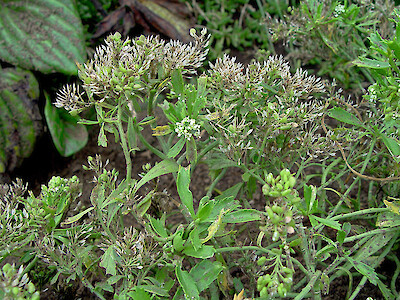
Upper stem leaves and inflorescence of Lepidium oblitum.<br>Photographer: Peter B. Heenan, Licence: <a target='_blank' href='https://creativecommons.org/licenses/by-nc/4.0'>CC BY-NC</a>.
Cultivated plant of Lepidium oblitum showing rosette leaves.<br>Photographer: Peter B. Heenan, Licence: <a target='_blank' href='https://creativecommons.org/licenses/by-nc/4.0'>CC BY-NC</a>.
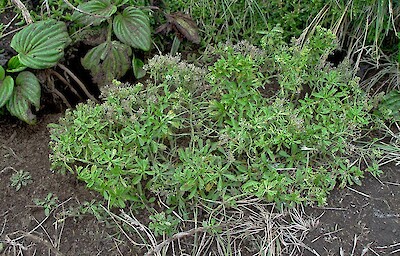
Mangere Island. Feb 2009.<br>Photographer: Graeme Taylor, Licence: All rights reserved. <a class='member-message' href='/nzpcn/why-join-nzpcn/' target='_blank'>Members can view a larger version of this image.</a>
Lepidium oblitum flowers showing arrangement of sepals, petals, androecia and gynoecia.<br>Photographer: Peter B. Heenan, Licence: <a target='_blank' href='https://creativecommons.org/licenses/by-nc/4.0'>CC BY-NC</a>.
Close-up of Lepidium oblitum flower.<br>Photographer: Peter B. Heenan, Licence: <a target='_blank' href='https://creativecommons.org/licenses/by-nc/4.0'>CC BY-NC</a>.
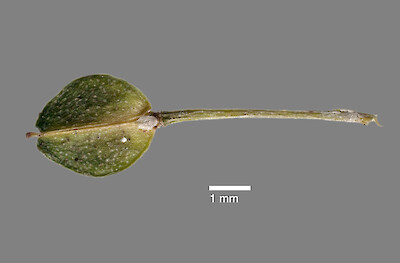
Mature silicle of the holotype of Lepidium oblitum (AK 300342).<br>Photographer: Jeremy R. Rolfe, Date taken: 25/10/2012, Licence: <a target='_blank' href='https://creativecommons.org/licenses/by/4.0'>CC BY</a>. <a class='member-message' href='/nzpcn/why-join-nzpcn/' target='_blank'>Members can view a larger version of this image.</a>
Download PDF Comment on factsheet

NZPCN members can select up to 20 plant species and automatically create a full colour, fully illustrated A4 book describing them (in PDF format).

  • Find out more...
  • Join NZPCN...
Find in plant lists
iNaturalist NZ View observations Biota of NZ Click here to view NZ Flora Click here to view Herbarium View AVH specimens Donate Support NZPCN

Common names

scurvy grass

Biostatus

Native – Endemic taxon

Current conservation status

The conservation status of all known New Zealand vascular plant taxa at the rank of species and below were reassessed in 2022-2023 using the New Zealand Threat Classification System (NZTCS) – more information about this can be found on the NZTCS website. This report includes replaces all previous NZTCS lists for vascular plants. Previous assessments can be found here.

  • Conservation status of vascular plants in Aotearoa New Zealand, 2023. 2024. Peter J. de Lange, Jane Gosden, Shannel P. Courtney, Alexander J. Fergus, John W. Barkla, Sarah M. Beadel, Paul D. Champion, Rowan Hindmarsh-Walls, Troy Makan and Pascale Michel Department of Conservation. Source: NZTCS and licensed by DOC for reuse under the Creative Commons Attribution 4.0 International licence.

2023 | Threatened – Nationally Critical | Qualifiers: CD, DPT, IE, RR

Jump to previous conservation statuses

Category

Vascular

Structural class

Herbs - Dicotyledons other than Composites

Simplified description

Perennial herb arising from stout tap-root. Plants with untidy, suberect to sprawling, leafy branches. Leaves dark green to yellow green, with toothed margins, smelling of cress when crushed. Inflorescences at branch tips, Flowers white with two-four stamens. Fruits circular, splitting cleanly into two valves, seeds orange-brown or red-brown.

Detailed description

Tap-rooted, strongly pungent, sprawling, laxly though much-branched, leafy perennial shrub, forming patches up to 1.0 × 0.9 m. Plants usually dying down to rootstock and/or previous seasons stem nodes, towards end of growing season. Stems arising from rootstock base and basal portion of main central stem, widely and unevenly spaced or closely packed, woody, lax and sprawling, sometimes arching and subascendent, weakly angled to ± terete, glabrous; mature stems 2.1–4.6 mm diameter, 0.3–0.8 m long; brittle, devoid of leaves for at least the first two-thirds with the final third distinctly leafy and often much branched when vegetative, leaves shedding at flowering and fruiting; upper stems similar, though distinctly leafy and pliant. Leaves coriaceous, fleshy, green to dark green, often glossy. Rosette leaves 5–20, mostly present in autumn – early spring usually not persisting (very rarely so) at fruiting; petioles distinct, up to 40 × 2 mm, flat or slightly concave in cross-section, succulent; lamina oblanceolate, cuneiform, obovate-oblong to spathulate up to 60 × 22 mm, margins finely to deeply incised in upper quarter to one third, teeth in 3–8 pairs running to praemorse apex, basal few teeth pair usually asymmetric, base narrowly attenuate. Middle stem leaves mostly persisting at fruiting; petiole up to 32 mm long, mostly flat in cross-section, sometimes slightly concave, usually winged; lamina narrowly oblanceolate, oblanceolate, spathulate, oblong, obdeltoid, 15.0–56.2 × 12.0–18.6 mm; margins finely to deeply incised in distal one quarter to one third, teeth in 3–8 pairs running to the usually praemorse apex, basal few teeth pairs usually asymmetric, lamina base narrowly attenuate, extending as a wing (0.8–1.2 mm wide) usually to petiole base. Upper stem leaves petiolate, petiole 12 mm long, flat or slightly concave, usually broadly winged; lamina narrowly oblanceolate, narrowly lanceolate, narrowly spathulate, to linear-cuneiform, 10.2–29.0 × 2.4–4.8 mm; margins entire or deeply dentate, if dentate then usually asymmetrically tridentate (rarely with 1–4 teeth), lamina base narrowly attenuate, extending as a wing (0.3–1.7 mm wide) almost to petiole base. Racemes 30–76 mm long, usually congested, elongating up to 100 mm at fruiting, terminal and axillary; rachis and pedicels glabrous (pedicels very rarely bearing a few minute, caducous, glandular hairs near base); pedicels, erecto-patent to patent, 0.4–1.0 mm long, elongating to 0.8–2.0 mm long at fruiting. Flower buds dark green to green, apex glabrous. Flowers 1.6–2.0 mm diameter. Sepals 4, saccate, pale to dark green with a broad white, ± undulose margin, pale to dark green with a broad white, ± undulose margin, deeply concave, adaxially weakly keeled or not; lateral sepals 0.9 × 0.6 mm, broadly ovate to oblong, ± overlapping at base, apex rounded to obtuse, adaxial surface glabrous (sometimes diffusely papillate), abaxial surface usually glabrous, sometimes hairy near base, hairs patent, weakly flexuous, 0.1–0.3 mm long, eglandular, shedding at anthesis; median sepals 1.0 × 0.9 mm, broadly ovate to oblong, apex rounded to obtuse, adaxial surface glabrous, abaxial surface glabrous. Petals over-topping sepals, white, 0.9–1.3 × 0.5–0.8 mm, patent, clawed; limb broadly obovate, apex weakly retuse. Stamens 2–4, equal. Anthers c. 0.10 mm long. Pollen bright yellow. Nectaries 2, subulate, 0.3–0.42 mm long. Silicles cartilaginous when fresh, coriaceous when dry, orbicular, orbicular-ovate to ± rhomboid, 2.8–3.3 × 2.4–3.0 mm, margin winged, notably more so toward apex, apex notched, base obtuse, valves green maturing yellow-green, glabrous, dried surface ± coarsely reticulate; style 0.1–0.3 mm long, free from the narrow wing, usually exceeding the notch; stigma 0.18–0.22 mm diameter, capitate. Seeds 2, ovoid to ellipsoid, orange-brown to dark red-brown, not winged, 1.8–1.9 × 0.9–0.93 mm.

Similar taxa

Lepidium oblitum is superficially similar to L. panniforme with which it grows, and sometimes hybridise, and from which it is best separated by the rosette, basal and upper stem leaves which while toothed are never lacerate-serrate. Both species though closely allied are also genetically distinct (see de Lange et al. 2013).

Distribution

Endemic. Chatham Islands (Mangere and Rabbit Islands)

Habitat

Coastal. Known only from coastal cliffs, ridge lines and gulches - in the latter two habitat sit often grows in and around petrel burrows.

Threats

Known only from two sites, the privately owned Rabbit Island, and Mangere Island Nature Reserve. Although the more common of the three Lepidium species on Mangere, hybrids between L. oblitum and L. panniforme have been located at several sites, suggesting that hybridism may be a threat. The species is also threatened by successional changes in the vegetation of that island. Lepidium oblitum is scarce on Rabbit Island. It should be searched for on Little Mangere island.

Detailed taxonomy

Genus

Lepidium

Family

Brassicaceae

Authority

Lepidium oblitum Houliston, Heenan et de Lange

Synonyms

None (first described in 2013)

Endemic taxon

Yes

Endemic genus

No

Endemic family

No

Ecology

Flowering

November - March

Fruiting

January - June

Propagation technique

Easily grown from seed but fickle to maintain in cultivation. Prone to white rust (Albugo candida) which in cultivation may kill plants. Cultivated plants have proved difficult to flower.

Other information

Etymology

lepidium: Scale-shaped (pods)

oblitum: The epithet “oblitum” is derived from the Latin meaning “forgotten, disregarded or neglected”

NVS code

The National Vegetation Survey (NVS) Databank is a physical archive and electronic databank containing records of over 94,000 vegetation survey plots - including data from over 19,000 permanent plots. NVS maintains a standard set of species code abbreviations that correspond to standard scientific plant names from the Ngä Tipu o Aotearoa - New Zealand Plants database.

LEPOBL

Previous conservation statuses

The conservation status of all known New Zealand vascular plant taxa at the rank of species and below were reassessed in 2022-2023 using the New Zealand Threat Classification System (NZTCS) – more information about this can be found on the NZTCS website. This report includes replaces all previous NZTCS lists for vascular plants. Previous assessments can be found here.

  • Conservation status of vascular plants in Aotearoa New Zealand, 2023. 2024. Peter J. de Lange, Jane Gosden, Shannel P. Courtney, Alexander J. Fergus, John W. Barkla, Sarah M. Beadel, Paul D. Champion, Rowan Hindmarsh-Walls, Troy Makan and Pascale Michel Department of Conservation. Source: NZTCS and licensed by DOC for reuse under the Creative Commons Attribution 4.0 International licence.

2017 | Threatened – Nationally Critical | Qualifiers: CD, DP, IE, RR

2012 | Threatened – Nationally Critical | Qualifiers: CD, DP, IE, RR

Jump to current conservation status

Referencing and citations

References and further reading

de Lange, P.J.; Heenan, P.B.; Houliston, G.; Rolfe, J.R.; Mitchell, A.D. 2013: New Lepidium (Brassicaceae) from New Zealand. Phytokeys 24:1-147pp. , doi: 10.3897/phytokeys.24.4375.

Attribution

P.J. de Lange (15 August 2013). Description from de Lange et al. (2013) - see references for free download link for that paper.

NZPCN Fact Sheet citation

Please cite as: de Lange, P.J. (Year at time of access): Lepidium oblitum Fact Sheet (content continuously updated). New Zealand Plant Conservation Network. https://www.nzpcn.org.nz/flora/species/lepidium-oblitum/ (Date website was queried)

▲ Back to top
  • Home
  • Flora
  • Threats
  • Ecosystems
  • Publications
  • Conservation
  • NZPCN
  • Help
  • Contact us

© 2026 New Zealand Plant Conservation Network • Website by RS

Coastlands Plant Nursery Wildlands

Website sponsor

  • Home
  • Flora
    • Flora species
    • Tag names
    • Vascular
      • Ferns
        • King fern
        • True ferns
        • Adder's tongue ferns
        • Fork ferns and whisk ferns
        • Horsetails
      • Conifers
        • Celery pines
        • Kauri
        • Podocarps
          • Podocarpus
          • Dacrydium
          • Prumnopitys
          • Dacrycarpus
          • Halocarpus
          • Lepidothamnus
          • Manoao
        • Cypress
      • Flowering plants
        • Parasites
          • Leafy mistletoes
          • Pygmy mistletoes
            • Korthalsella flowers
            • Korthalsella hosts
            • Dispersal of Korthalsella
            • Associates of Korthalsella
          • Root parasites
          • Saprophytes
        • Epiphytes
          • NZ
            • Typical
            • Occasional
            • Hemi-epiphytes
            • Ephemeral
            • NZ list
        • Monocots
          • Orchids
            • Structure
          • Grasses
        • Dicots
          • Hebes
          • Kowhai
          • Coprosma
          • Beech
          • Rata
        • Carnivorous
        • Deciduous plants
        • Aquatic plants
      • Poisonous natives
      • Threatened plant lists
      • What's a vascular plant?
      • Club mosses
    • Non-vascular
      • Bryophytes
        • Liverworts
        • Mosses
        • Hornworts
      • Algae
        • Seaweeds
    • Lichens
    • Plant identification
      • Written descriptions
      • Experts
      • Plant keys
        • Key to parasitic plant genera
      • Collecting plants
        • Should I collect
        • Choosing a specimen
        • Field notes
        • Fresh plant material
        • Pressing and drying
        • Mounting specimens
        • Labelling specimens
    • Fungi
    • Make your own book
    • Quiz
  • Threats
    • Exotic Plants (Weeds)
      • Unwanted organisms
      • DOC weeds
      • Plant me instead
      • Pest Plant Accord
    • Pest Animals
      • Mammals
        • Mustelids
        • Rodents
        • Ungulates
        • Possums
      • Fish
      • Insects
    • Other threats
      • Natural events
        • Insects
      • Human induced
        • Habitat loss
        • Collection
        • Climate change
  • Ecosystems
    • Plant communities
      • Dunes
        • Volcanic
        • Coastal
          • Threats
          • Common species
          • Research on dunes
          • Pingao research
          • What you can do
      • Wetlands
        • Estuaries
          • Common estuarine species
          • Research on estuaries
        • Ephemeral
        • Restiad peat bogs
      • Forests
        • Kauri-podocarp-broadleaved
        • Podocarp broadleaved
        • Beech
      • Scrub/shrublands
        • Geothermal
          • Distribution of geothermal vegetation
          • Geothermal plants
          • Geothermal vegetation types
          • Threats to geothermal vegetation
        • Frost flat/hollow
        • Manuka fens
        • Gumlands
      • Grasslands
        • Tussock grasslands
      • Bare ground
        • Braided rivers
        • Alpine
        • Cliff
        • Scree and boulderfields
        • Shingle beaches
      • Herbfields
        • Saltpan
    • Ecosystem services
    • Novel ecosystems
  • Publications
    • Documents
    • Newsletter
    • Plant lists
      • Search plant lists
      • Plant lists by political region/district
      • Plant lists by ecological region/district
      • National plant lists
      • How to prepare a plant list
    • Botanical Society journals
    • NZPCN publications
  • Conservation
    • Seedbank
      • Project 1 - Pohutukawa, Rata and Myrtaceae
      • Project 2 - Alpine flora and the Forget-Me-Nots
      • Project 3 - Kowhai and its relatives
      • Project 4 - Podocarps and trees of the forest
    • Training
      • Module 1: Plant life
      • Module 2: Covenants
      • Module 3: Propagation
      • Module 4: Wetlands
      • Pilot course 2006
    • Restoration
      • Gardening
        • Being weed wise
        • Garden plants
          • Trees and shrubs
          • Broad-leaved herbs
          • Grass-like herbs
          • Climbers
          • Ferns
        • Attracting wildlife
        • Planting for lizards
          • Rules
      • Species recovery
        • Plant translocations
      • Ecological restoration
        • Case studies
          • Tavora Reserve
          • Waiwhakareke
      • Revegetation
      • Eco-sourcing
      • Find a restoration group
    • Monitoring
      • Number count
        • Number count method
        • Pros and cons of number counts
        • Data analysis and interpretation
      • Presence/absence surveys
        • Presence/absence survey methods
        • Pros and cons of presence/absence surveys
        • Data analysis and interpretation
      • Mapping spatial extent
        • Spatial extent mapping methods
        • Pros and cons of spatial extent mapping
        • Data analysis and interpretation
      • Photo points
        • Photo point guidelines
    • Habitat protection
      • Legal protection
        • Nga Whenua Rahui
        • QEII covenants
        • DOC Covenants
      • Animal pest control
      • Weed control
      • Fencing
    • Funding
    • Botanic gardens
    • Botanic Societies
  • NZPCN
    • News
    • Trilepidea newsletter
    • Events
      • 2026 NZPCN conference
        • 2026 Conference field trips
        • 2026 Conference workshops
        • 2026 conference sponsors
        • 2026 Conference keynote speakers
      • 2024 AGM
      • Conference 2024
        • 2024 conference overview
        • Conference 2024 workshops
        • Conference 2024 Field Trips
        • 2024 conference sponsors
        • Conference 2024 accommodation options
        • 2024 Conference Programme
      • Conference 2022
        • Conference programme summary
        • 2022 conference workshops
        • 2022 conference field trips
        • Code of conduct
        • COVID-19 information
        • 2022 conference sponsors
        • Abstract and poster submission
        • 2022 Conference venue and accommodation
        • Conference Workshop: Restoration Pathways
        • 2022 conference postponement
      • Conference 2019
      • Conference 2017
      • Conference 2015
        • Speakers
        • Workshops
        • Field trips
        • Charity auction
      • Conference 2013
        • Speakers
        • Timetable
      • 2023 Restoration Pathways Workshop
      • 2023 AGM
    • David Given Scholarship
      • David Given Scholarship Recipients
    • Council members
      • NZPCN council member profiles
      • Council 2023
      • Council 2022
      • Council 2021
      • Council 2020
      • Council 2019
      • Council 2018
      • Council 2017
      • Council 2016
      • Council 2015
      • Council 2014
      • Council 2024
      • Council 2013
      • Council 2012
      • Council 2011
      • Council 2010
      • Council 2009
      • Council 2008
      • Council 2007
      • Council 2006
      • Council 2005
      • Council 2004
      • Council 2003
    • Awards
      • NZPCN Awards
        • 2024 Plant Conservation Awards
        • 2022
        • 2019
        • 2018
        • 2017
        • 2016
        • 2015
        • 2014
        • 2013
        • 2012
        • 2011
        • 2010
        • 2009
        • 2008
        • 2007
        • 2006
        • 2005
    • Shop
    • Donate
    • Favourite Plant
    • Why join NZPCN?
    • Join
  • Help
    • FAQ
      • Joining the Network
      • The Network
      • Network website
      • New Zealand plants
      • The law
      • Your discoveries
    • Query
    • Glossary
  • Contact us
  • Facebook