New Zealand Plant Conservation Network
  • Member login
  • Join
Facebook
  • Home
  • Flora
    • Flora species
    • Tag names
    • Vascular
    • Non-vascular
    • Lichens
    • Plant identification
    • Fungi
    • Make your own book
    • Quiz
  • Threats
    • Exotic Plants (Weeds)
    • Pest Animals
    • Other threats
  • Ecosystems
    • Plant communities
    • Ecosystem services
    • Novel ecosystems
  • Publications
    • Documents
    • Newsletter
    • Plant lists
    • Botanical Society journals
    • NZPCN publications
  • Conservation
    • Seedbank
    • Training
    • Restoration
    • Monitoring
    • Habitat protection
    • Funding
    • Botanic gardens
    • Botanic Societies
  • NZPCN
    • News
    • Trilepidea newsletter
    • Events
    • David Given Scholarship
    • Council members
    • Awards
    • Shop
    • Donate
    • Favourite Plant
    • Why join NZPCN?
    • Join
  • Help
    • FAQ
    • Query
    • Glossary
  • Contact us

Search flora

  1. Tracheophyta
    • Tracheophyta
  2. Magnoliopsida
    • Lycopodiopsida
    • Magnoliopsida
    • Pinopsida
    • Polypodiopsida
  3. Gentianales
    • Alismatales
    • Apiales
    • Arecales
    • Asparagales
    • Asterales
    • Boraginales
    • Brassicales
    • Canellales
    • Caryophyllales
    • Celastrales
    • Chloranthales
    • Crossosomatales
    • Cucurbitales
    • Dioscoreales
    • Ericales
    • Fabales
    • Fagales
    • Gentianales
    • Geraniales
    • Gunnerales
    • Lamiales
    • Laurales
    • Liliales
    • Malpighiales
    • Malvales
    • Myrtales
    • Nymphaeales
    • Oxalidales
    • Pandanales
    • Paracryphiales
    • Piperales
    • Poales
    • Proteales
    • Ranunculales
    • Rosales
    • Santalales
    • Sapindales
    • Saxifragales
    • Solanales
  4. Gentianaceae
    • Apocynaceae
    • Gentianaceae
    • Loganiaceae
    • Rubiaceae
  5. Gentianella
    • Gentianella
    • Sebaea
  6. Gentianella chathamica subsp. chathamica
    • Gentianella lineata
    • Gentianella antarctica
    • Gentianella antipoda
    • Gentianella astonii subsp. astonii
    • Gentianella magnifica
    • Gentianella chathamica subsp. chathamica
    • Gentianella cerina
    • Gentianella concinna
    • Gentianella filipes
    • Gentianella gibbsii
    • Gentianella lilliputiana
    • Gentianella amabilis
    • Gentianella bellidifolia
    • Gentianella corymbifera subsp. corymbifera
    • Gentianella divisa
    • Gentianella grisebachii
    • Gentianella montana subsp. montana var. stolonifera
    • Gentianella montana subsp. ionostigma
    • Gentianella patula
    • Gentianella saxosa
    • Gentianella serotina
    • Gentianella spenceri
    • Gentianella tenuifolia
    • Gentianella vernicosa
    • Gentianella angustifolia
    • Gentianella calcis subsp. calcis
    • Gentianella calcis subsp. taiko
    • Gentianella calcis subsp. manahune
    • Gentianella calcis subsp. waipara
    • Gentianella chathamica subsp. nemorosa
    • Gentianella corymbifera subsp. gracilis
    • Gentianella decumbens
    • Gentianella luteoalba
    • Gentianella stevenii
    • Gentianella stellata
    • Gentianella astonii subsp. arduana
    • Gentianella impressinervia
    • Gentianella montana subsp. montana var. montana

Gentianella chathamica subsp. chathamica

A well coloured example of Gentianella chathamica, Manaea | Ocean Mail, Rekohu | Wharekauri | Chatham Island, December 2022. This colour variant is very uncommon.<br>Photographer: Peter J de Lange, Date taken: 08/11/2022, Licence: <a target='_blank' href='https://creativecommons.org/licenses/by/4.0'>CC BY</a>. <a class='member-message' href='/nzpcn/why-join-nzpcn/' target='_blank'>Members can view a larger version of this image.</a>
Robust specimen of Gentianella chathamica growing in reverting pasture overlying peat on Monument Hill, above Te Koparuparu Bay, Waitangi West, Rekohu | Wharekauri | Chatham Island. Associates are aruhe (Pteridium esculentum) and the endemic Poa chathamica.<br>Photographer: Peter J de Lange, Date taken: 23/12/2020, Licence: <a target='_blank' href='https://creativecommons.org/licenses/by/4.0'>CC BY</a>. <a class='member-message' href='/nzpcn/why-join-nzpcn/' target='_blank'>Members can view a larger version of this image.</a>
Gentianella chathamica growing in the floodline of Te Rangatapu a large peat lake in the southern tablelands, Rekohu | Wharekauri | Chatham Island. Associated plants include Parablechnum procerum, Hymenophyllum multifidium and Dicranoloma robustum.<br>Photographer: Peter J de Lange, Date taken: 16/04/2023, Licence: <a target='_blank' href='https://creativecommons.org/licenses/by/4.0'>CC BY</a>. <a class='member-message' href='/nzpcn/why-join-nzpcn/' target='_blank'>Members can view a larger version of this image.</a>
A robust Gentianella chathamica flowering in a 4-WD track through Dracophyllum / Sporadanthus bog heading to Lake Makuku, Taia, Rekohu | Wharekauri | Chatham Island. Associates include dried off Holcus lanatus (naturalised), Lobelia arenaria, Sonchus asper (naturalised), aruhe (Pteridium esculentum), Poa chathamica (endemic) and Dracophyllyum scoparium.<br>Photographer: Peter J de Lange, Date taken: 24/03/2024, Licence: <a target='_blank' href='https://creativecommons.org/licenses/by/4.0'>CC BY</a>. <a class='member-message' href='/nzpcn/why-join-nzpcn/' target='_blank'>Members can view a larger version of this image.</a>
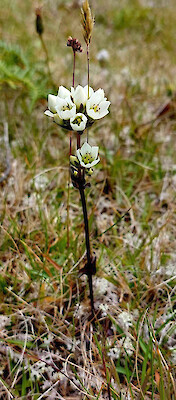
racile specimen of Gentianella chathamica flowering in rough pasture on a peaty hill overlooking Green Swamp, Wharekauri Farm Station, Rekohu | Wharekauri | Chatham Island. Assocuated include Luzula banksiana var acra, Anthoxanthum odoratum (naturalised), Rytidosperma spp., and Pulchrocladia retipora.<br>Photographer: Peter J de Lange, Date taken: 09/02/2021, Licence: <a target='_blank' href='https://creativecommons.org/licenses/by/4.0'>CC BY</a>. <a class='member-message' href='/nzpcn/why-join-nzpcn/' target='_blank'>Members can view a larger version of this image.</a>
Point Somes, Chatham islands.<br>Photographer: John Sawyer, Licence: <a target='_blank' href='https://creativecommons.org/licenses/by-nc/4.0'>CC BY-NC</a>. <a class='member-message' href='/nzpcn/why-join-nzpcn/' target='_blank'>Members can view a larger version of this image.</a>
Gracile specimens of Gentianella chathamica flowering on frequently mowed track through Dracophyllum / Sporadanthus bog, Manaea | Ocean Mail, Rekohu | Wharekauri | Chatham Island. Associates include aruhe (Pteridium esculentum), mikoikoi (Libertia peregrinans), Poa chathamica (endemic), Lobelia arenaria, pouteretere (Leptecophylla robusta) (endemic), Sagina procumbens (naturalised), Thuidiopsis furfurosa, Anthoxanthum odoratum (naturalised) and Hypochaeris radicata (naturalised).<br>Photographer: Peter J de Lange, Date taken: 19/12/2020, Licence: <a target='_blank' href='https://creativecommons.org/licenses/by/4.0'>CC BY</a>. <a class='member-message' href='/nzpcn/why-join-nzpcn/' target='_blank'>Members can view a larger version of this image.</a>
Gentianella chathamica inflorescence with Sporadanthus traversii (endemic) behind it, Manaea | Ocean Mail, Rekohu | Wharekauri | Chatham Island.<br>Photographer: Peter J de Lange, Date taken: 18/12/2020, Licence: <a target='_blank' href='https://creativecommons.org/licenses/by/4.0'>CC BY</a>. <a class='member-message' href='/nzpcn/why-join-nzpcn/' target='_blank'>Members can view a larger version of this image.</a>
Gracile, few-flowered plant, Ocean Bay, Waitangi West, A well coloured example of Gentianella chathamica, Manaea | Ocean Mail, Rekohu | Wharekauri | Chatham Island.<br>Photographer: Peter J de Lange, Date taken: 09/02/2021, Licence: <a target='_blank' href='https://creativecommons.org/licenses/by/4.0'>CC BY</a>. <a class='member-message' href='/nzpcn/why-join-nzpcn/' target='_blank'>Members can view a larger version of this image.</a>
A well coloured example of Gentianella chathamica, Manaea | Ocean Mail, Rekohu | Wharekauri | Chatham Island, December 2022. This colour variant is very uncommon.<br>Photographer: Peter J de Lange, Date taken: 08/11/2022, Licence: <a target='_blank' href='https://creativecommons.org/licenses/by/4.0'>CC BY</a>. <a class='member-message' href='/nzpcn/why-join-nzpcn/' target='_blank'>Members can view a larger version of this image.</a>
Gentianella chathamica, Rangaika, Rekohu | Wharekauri | Chatham Island.<br>Photographer: Peter J de Lange, Date taken: 08/02/2019, Licence: <a target='_blank' href='https://creativecommons.org/licenses/by/4.0'>CC BY</a>. <a class='member-message' href='/nzpcn/why-join-nzpcn/' target='_blank'>Members can view a larger version of this image.</a>
Gentianella chathamica on Walkemup | Hakepa Hill, Rangihaute | Rangiauria | Pitt Island.<br>Photographer: Peter J de Lange, Date taken: 04/10/2006, Licence: <a target='_blank' href='https://creativecommons.org/licenses/by/4.0'>CC BY</a>. <a class='member-message' href='/nzpcn/why-join-nzpcn/' target='_blank'>Members can view a larger version of this image.</a>
Side view of inflorescence of gracile specimen of Gentianella chathamica, Manaea | Ocean Mail, Rekohu | Wharekauri | Chatham Island.<br>Photographer: Peter J de Lange, Date taken: 18/12/2020, Licence: <a target='_blank' href='https://creativecommons.org/licenses/by/4.0'>CC BY</a>. <a class='member-message' href='/nzpcn/why-join-nzpcn/' target='_blank'>Members can view a larger version of this image.</a>
Rosette and stem leaves of Gentianella chathamica, Manaeae | Ocean Mail, Rekohu | Wharekauri | Chatham Island,.<br>Photographer: Peter J de Lange, Date taken: 18/12/2020, Licence: <a target='_blank' href='https://creativecommons.org/licenses/by/4.0'>CC BY</a>. <a class='member-message' href='/nzpcn/why-join-nzpcn/' target='_blank'>Members can view a larger version of this image.</a>
Download PDF Comment on factsheet

NZPCN members can select up to 20 plant species and automatically create a full colour, fully illustrated A4 book describing them (in PDF format).

  • Find out more...
  • Join NZPCN...
Find in plant lists
iNaturalist NZ View observations NZ Flora Click here to view Herbarium View AVH specimens Donate Support NZPCN

Common names

Chatham Island gentian

Biostatus

Native – Endemic taxon

Current conservation status

The conservation status of all known New Zealand vascular plant taxa at the rank of species and below were reassessed in 2022-2023 using the New Zealand Threat Classification System (NZTCS) – more information about this can be found on the NZTCS website. This report includes replaces all previous NZTCS lists for vascular plants. Previous assessments can be found here.

  • Conservation status of vascular plants in Aotearoa New Zealand, 2023. 2024. Peter J. de Lange, Jane Gosden, Shannel P. Courtney, Alexander J. Fergus, John W. Barkla, Sarah M. Beadel, Paul D. Champion, Rowan Hindmarsh-Walls, Troy Makan and Pascale Michel Department of Conservation. Source: NZTCS and licensed by DOC for reuse under the Creative Commons Attribution 4.0 International licence.

2023 | At Risk – Naturally Uncommon | Qualifiers: IE, RR

Jump to previous conservation statuses

Category

Vascular

Structural class

Herbs - Dicotyledons other than Composites

Simplified description

Slender or stout plant up to 24 cm tall, all parts hairless. Plants arising from a rosette of somewhat fleshy ovate green, olive green, maroon-tinged or maroon leaves. Stem leaves smaller than rosette leaves, sessile. Inflorescence of 1-50 (or more), white, white-crimson or pink-tinged, rarely pink or magenta “tulip-like” flowers, the petals with pale green, or crimson veins.

Flower colours

Red/Pink, White

Detailed description

Plants monocarpic, biennial, height in flower 90–235 mm. Caudex unbranched, stolons absent. Root 1.0–3.3 mm diameter at stem base. Flowering stems terminal only or terminal and lateral, 1–15 per plant, largest flowering stem 2.1–2.3 mm diameter at base, stems tinted crimson, lateral flowering stems erect, flowering stem leaves 1–3 pairs per stem, lowest pedicels from near base of flowering stem. Rosette of leaves distinct to not very distinct from flowering stem leaves; leaves ovate, 21–31 × 7–22 mm, tinted crimson above and below, flat or V-shaped, not recurved, apex acute or rounded; petiole distinct, c.9.5 × 0.6–3.0 mm. Flowering stem leaves ovate, sessile. Pedicels 1 per leaf axil, 5–20 mm long, 0.5–0.8 mm diameter. Flowers 5–50 per plant, 6–12 mm long. Calyx 4.6–7.5 mm long, green, hairs at calyx–corolla fusion line present; lobes 4.7–5.7 mm long, 1.5–2.5 mm wide at base, plane, apices acute or obtuse, margins smooth, sinus hairs absent or sparse. Corolla 5.1–11.8 mm long, white with crimson or pink tinting, rarely pink or magenta, veins pale or crimson coloured; tube 2.5–3.2 mm long; lobes 5.0–8.6 mm long, 2.7–5.2 mm wide, hairs below sinus present; nectary 0.9–1.2 mm from corolla base. Filaments 2.3–6.6 mm long from corolla base, 0.4–0.7 mm wide. Anthers 0.5–1.4 mm long, anther wall purple-red, mouth yellow or orange-red, introrse or extrorse at anthesis; pollen orange. Female flowers absent. Stigma colourless. Ovules 22–60 per ovary. Capsule 6.7–12.5 mm long.

Similar taxa

The only Gentianella present on the Chatham Islands. It is separated from G. chathamica subsp. nemorosa (https://www.nzpcn.org.nz/flora/species/gentianella-chathamica-subsp-nemorosa/) by plants mostly having a single flowering stem; 25-60 ovules per ovary; anthers that are 0.5–1.4 mm long; and a colourless stigma. The relationship to subsp. nemorosa seems somewhat ambiguous and it is more likely that subsp. chathamica is related to the other subantarctic gentians. Gentianella chathamica subsp. nemorosa is probably better treated as a distinct species.

Distribution

Endemic. New Zealand: Chatham Islands, Rekohu | Wharekauri | Chatham, Rangihaute | Rangiauria | Pitt Island.

Habitat

Coastal to inland, where it is widespread in open peatlands, restiad bog, bracken fernland overlying peat and within poorly drained pasture

Threats

A Naturally Uncommon, range-restricted island endemic under no obvious threats. Being unpalatable to stock it is often abundant in marginal farmland.

Detailed taxonomy

Genus

Gentianella

Family

Gentianaceae

Authority

Gentianella chathamica (Cheeseman) T.N.Ho et S.W.Liu subp. chathamica

Synonyms

Gentiana chathamica Cheeseman, Chionogentias chathamica (Cheeseman) L.G.Adams, Gentianella chathamica (Cheeseman) T.N.Ho et S.W.Liu; Chionogentias pleurogynoides var. umbellata Kirk

Endemic taxon

Yes

Endemic genus

No

Endemic family

No

Ecology

Flowering

July – February

Fruiting

August - May

Propagation technique

Difficult. Should not be removed from the wild.

Wetland plant indicator status rating

Information derived from the revised national wetland plant list prepared to assist councils in delineating and monitoring wetlands (Clarkson et al., 2021 Manaaki Whenua – Landcare Research Contract Report LC3975 for Hawke’s Bay Regional Council). The national plant list categorises plants by the extent to which they are found in wetlands and not ‘drylands’. The indicator status ratings are OBL (obligate wetland), FACW (facultative wetland), FAC (facultative), FACU (facultative upland), and UPL (obligate upland). If you have suggestions for the Wetland Indicator Status Rating, please contact: [Enable JavaScript to view protected content]

FAC: Facultative

Commonly occurs as either a hydrophyte or non-hydrophyte (non-wetlands).

Other information

Etymology

gentianella: Little Gentiana (named after Gentius, 6th century king of Illyria, who found the roots of the yellow gentian to have a healing effect on his malaria-stricken troops)

chathamica: From the Chatham Islands

Chromosome number

2n = 36

Previous conservation statuses

The conservation status of all known New Zealand vascular plant taxa at the rank of species and below were reassessed in 2022-2023 using the New Zealand Threat Classification System (NZTCS) – more information about this can be found on the NZTCS website. This report includes replaces all previous NZTCS lists for vascular plants. Previous assessments can be found here.

  • Conservation status of vascular plants in Aotearoa New Zealand, 2023. 2024. Peter J. de Lange, Jane Gosden, Shannel P. Courtney, Alexander J. Fergus, John W. Barkla, Sarah M. Beadel, Paul D. Champion, Rowan Hindmarsh-Walls, Troy Makan and Pascale Michel Department of Conservation. Source: NZTCS and licensed by DOC for reuse under the Creative Commons Attribution 4.0 International licence.

2017 | At Risk – Naturally Uncommon | Qualifiers: IE, RR

2012 | At Risk – Naturally Uncommon | Qualifiers: IE, RR

2009 | At Risk – Naturally Uncommon | Qualifiers: IE

2004 | Range Restricted

Jump to current conservation status

Referencing and citations

References and further reading

Glenny, D. 2004: A revision of the genus Gentianella in New Zealand. New Zealand Journal of Botany 42: 361-530.

Attribution

Fact Sheet for NZPCN prepared by P.J. de Lange (1 November 2004). Description modified from Glenny (2004)

▲ Back to top
  • Home
  • Flora
  • Threats
  • Ecosystems
  • Publications
  • Conservation
  • NZPCN
  • Help
  • Contact us

© 2026 New Zealand Plant Conservation Network • Website by RS

Coastlands Plant Nursery Wildlands

Website sponsor

  • Home
  • Flora
    • Flora species
    • Tag names
    • Vascular
      • Ferns
        • King fern
        • True ferns
        • Adder's tongue ferns
        • Fork ferns and whisk ferns
        • Horsetails
      • Conifers
        • Celery pines
        • Kauri
        • Podocarps
          • Podocarpus
          • Dacrydium
          • Prumnopitys
          • Dacrycarpus
          • Halocarpus
          • Lepidothamnus
          • Manoao
        • Cypress
      • Flowering plants
        • Parasites
          • Leafy mistletoes
          • Pygmy mistletoes
            • Korthalsella flowers
            • Korthalsella hosts
            • Dispersal of Korthalsella
            • Associates of Korthalsella
          • Root parasites
          • Saprophytes
        • Epiphytes
          • NZ
            • Typical
            • Occasional
            • Hemi-epiphytes
            • Ephemeral
            • NZ list
        • Monocots
          • Orchids
            • Structure
          • Grasses
        • Dicots
          • Hebes
          • Kowhai
          • Coprosma
          • Beech
          • Rata
        • Carnivorous
        • Deciduous plants
        • Aquatic plants
      • Poisonous natives
      • Threatened plant lists
      • What's a vascular plant?
      • Club mosses
    • Non-vascular
      • Bryophytes
        • Liverworts
        • Mosses
        • Hornworts
      • Algae
        • Seaweeds
    • Lichens
    • Plant identification
      • Written descriptions
      • Experts
      • Plant keys
        • Key to parasitic plant genera
      • Collecting plants
        • Should I collect
        • Choosing a specimen
        • Field notes
        • Fresh plant material
        • Pressing and drying
        • Mounting specimens
        • Labelling specimens
    • Fungi
    • Make your own book
    • Quiz
  • Threats
    • Exotic Plants (Weeds)
      • Unwanted organisms
      • DOC weeds
      • Plant me instead
      • Pest Plant Accord
    • Pest Animals
      • Mammals
        • Mustelids
        • Rodents
        • Ungulates
        • Possums
      • Fish
      • Insects
    • Other threats
      • Natural events
        • Insects
      • Human induced
        • Habitat loss
        • Collection
        • Climate change
  • Ecosystems
    • Plant communities
      • Dunes
        • Volcanic
        • Coastal
          • Threats
          • Common species
          • Research on dunes
          • Pingao research
          • What you can do
      • Wetlands
        • Estuaries
          • Common estuarine species
          • Research on estuaries
        • Ephemeral
        • Restiad peat bogs
      • Forests
        • Kauri-podocarp-broadleaved
        • Podocarp broadleaved
        • Beech
      • Scrub/shrublands
        • Geothermal
          • Distribution of geothermal vegetation
          • Geothermal plants
          • Geothermal vegetation types
          • Threats to geothermal vegetation
        • Frost flat/hollow
        • Manuka fens
        • Gumlands
      • Grasslands
        • Tussock grasslands
      • Bare ground
        • Braided rivers
        • Alpine
        • Cliff
        • Scree and boulderfields
        • Shingle beaches
      • Herbfields
        • Saltpan
    • Ecosystem services
    • Novel ecosystems
  • Publications
    • Documents
    • Newsletter
    • Plant lists
      • Search plant lists
      • Plant lists by political region/district
      • Plant lists by ecological region/district
      • National plant lists
      • How to prepare a plant list
    • Botanical Society journals
    • NZPCN publications
  • Conservation
    • Seedbank
      • Project 1 - Pohutukawa, Rata and Myrtaceae
      • Project 2 - Alpine flora and the Forget-Me-Nots
      • Project 3 - Kowhai and its relatives
      • Project 4 - Podocarps and trees of the forest
    • Training
      • Module 1: Plant life
      • Module 2: Covenants
      • Module 3: Propagation
      • Module 4: Wetlands
      • Pilot course 2006
    • Restoration
      • Gardening
        • Being weed wise
        • Garden plants
          • Trees and shrubs
          • Broad-leaved herbs
          • Grass-like herbs
          • Climbers
          • Ferns
        • Attracting wildlife
        • Planting for lizards
          • Rules
      • Species recovery
        • Plant translocations
      • Ecological restoration
        • Case studies
          • Tavora Reserve
          • Waiwhakareke
      • Revegetation
      • Eco-sourcing
      • Find a restoration group
    • Monitoring
      • Number count
        • Number count method
        • Pros and cons of number counts
        • Data analysis and interpretation
      • Presence/absence surveys
        • Presence/absence survey methods
        • Pros and cons of presence/absence surveys
        • Data analysis and interpretation
      • Mapping spatial extent
        • Spatial extent mapping methods
        • Pros and cons of spatial extent mapping
        • Data analysis and interpretation
      • Photo points
        • Photo point guidelines
    • Habitat protection
      • Legal protection
        • Nga Whenua Rahui
        • QEII covenants
        • DOC Covenants
      • Animal pest control
      • Weed control
      • Fencing
    • Funding
    • Botanic gardens
    • Botanic Societies
  • NZPCN
    • News
    • Trilepidea newsletter
    • Events
      • 2026 NZPCN conference
        • 2026 Conference field trips
        • 2026 Conference workshops
        • 2026 conference sponsors
        • 2026 Conference keynote speakers
      • 2024 AGM
      • Conference 2024
        • 2024 conference overview
        • Conference 2024 workshops
        • Conference 2024 Field Trips
        • 2024 conference sponsors
        • Conference 2024 accommodation options
        • 2024 Conference Programme
      • Conference 2022
        • Conference programme summary
        • 2022 conference workshops
        • 2022 conference field trips
        • Code of conduct
        • COVID-19 information
        • 2022 conference sponsors
        • Abstract and poster submission
        • 2022 Conference venue and accommodation
        • Conference Workshop: Restoration Pathways
        • 2022 conference postponement
      • Conference 2019
      • Conference 2017
      • Conference 2015
        • Speakers
        • Workshops
        • Field trips
        • Charity auction
      • Conference 2013
        • Speakers
        • Timetable
      • 2023 Restoration Pathways Workshop
      • 2023 AGM
    • David Given Scholarship
      • David Given Scholarship Recipients
    • Council members
      • NZPCN council member profiles
      • Council 2023
      • Council 2022
      • Council 2021
      • Council 2020
      • Council 2019
      • Council 2018
      • Council 2017
      • Council 2016
      • Council 2015
      • Council 2014
      • Council 2024
      • Council 2013
      • Council 2012
      • Council 2011
      • Council 2010
      • Council 2009
      • Council 2008
      • Council 2007
      • Council 2006
      • Council 2005
      • Council 2004
      • Council 2003
    • Awards
      • NZPCN Awards
        • 2024 Plant Conservation Awards
        • 2022
        • 2019
        • 2018
        • 2017
        • 2016
        • 2015
        • 2014
        • 2013
        • 2012
        • 2011
        • 2010
        • 2009
        • 2008
        • 2007
        • 2006
        • 2005
    • Shop
    • Donate
    • Favourite Plant
    • Why join NZPCN?
    • Join
  • Help
    • FAQ
      • Joining the Network
      • The Network
      • Network website
      • New Zealand plants
      • The law
      • Your discoveries
    • Query
    • Glossary
  • Contact us
  • Facebook