
Leptinella plumosa
Biostatus
Native
Current conservation status
The conservation status of all known New Zealand vascular plant taxa at the rank of species and below were reassessed in 2022-2023 using the New Zealand Threat Classification System (NZTCS) – more information about this can be found on the NZTCS website. This report includes replaces all previous NZTCS lists for vascular plants. Previous assessments can be found here.
- Conservation status of vascular plants in Aotearoa New Zealand, 2023. 2024. Peter J. de Lange, Jane Gosden, Shannel P. Courtney, Alexander J. Fergus, John W. Barkla, Sarah M. Beadel, Paul D. Champion, Rowan Hindmarsh-Walls, Troy Makan and Pascale Michel Department of Conservation. Source: NZTCS and licensed by DOC for reuse under the Creative Commons Attribution 4.0 International licence.
2023 | At Risk – Naturally Uncommon | Qualifiers: RR, SO
Category
Vascular
Structural class
Herbs - Dicotyledonous composites
Flower colours
Green, Yellow
Detailed description
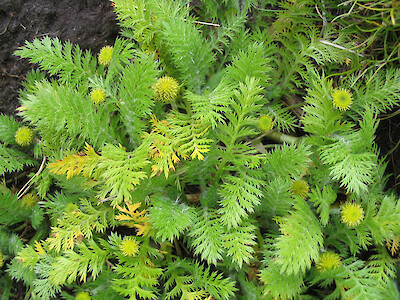
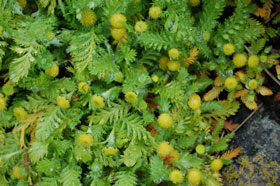
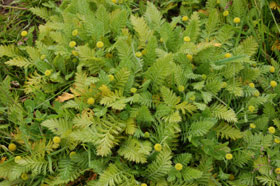
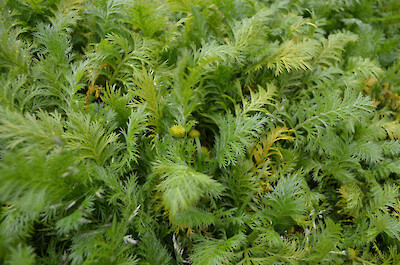
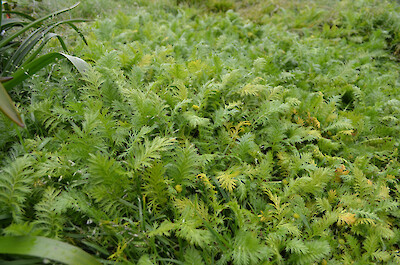
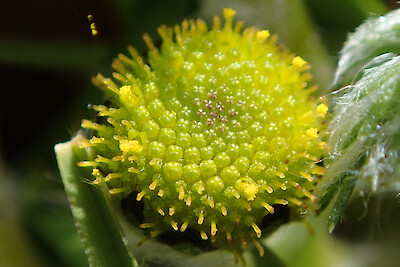
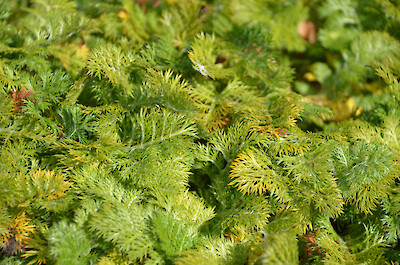
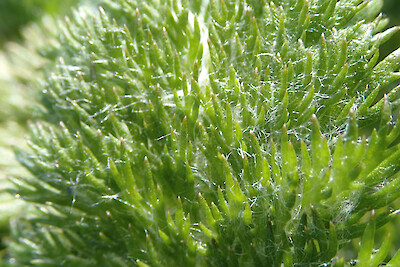
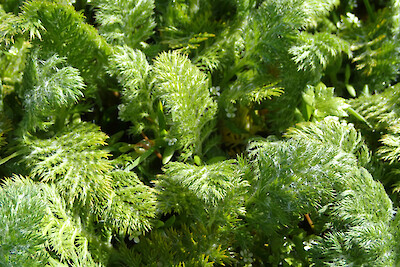
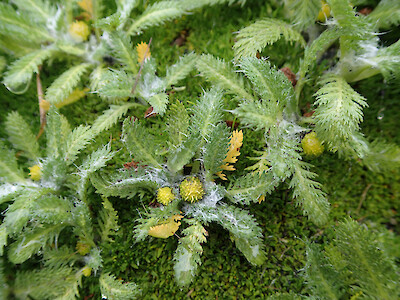
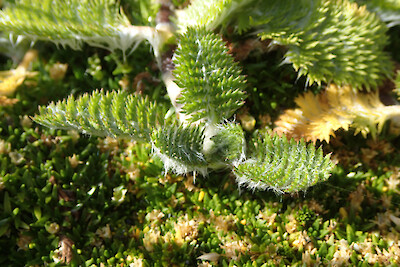
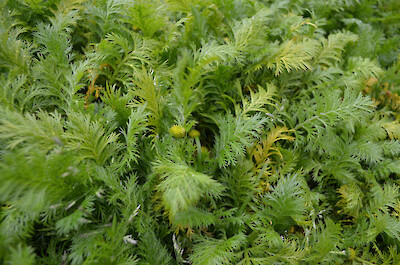
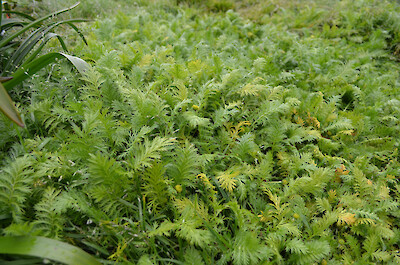
Monoecious, short creeping, somewhat variable perennial, initially rather fleshy, soon hard and more or less woody, glabrous or finely hairy, hairs when present a unform covering of tangled, lanate hairs; branches single or clustered around flowering nodes; leaves 4-8, tufted around shoot apices, older ones spaced up to 40 mm apart. Short shoots usually absent, if present sparse. Roots confined to ooder stems up to 1 mm diameter. Leaves variable in size and dissection, 1-2 pinnatifid, 50-200 x 10-60 mm; blade 40-120 mm long, light green, elliptic to broadly elliptic, rather soft, glabrous to finely villous, especially along rhachis, midrib not raised on ventral surface; pinnae 5-20 pairs, slightly overlapping, cut to rhachis, elliptic; tertiary pinnae 0-6, on outer margin of secondary pinnae, oblong or narrowly triangular; final divisions acute. Peduncles 60-120 mm, shorter than leaves, covered in dense, deciduous lanate hairs, usually ebracteate, bract if present simply or partially divided. Capitula 10 mm diameter; surface hemispherical; involucre hemispherical; involucral bracts 20, subequally biseriate, oblong, elliptic, green, thick, finely lanate hairy when young, margins (or apices only) bearing a prominent, broad, wide scarious band; pistillate florets 90-260, 3-6-seriate, 2.75 mm long, almost sraight, yellow-green; corolla twice as long as wide, dentition equal; staminate florets fewer or the same number. Cypsela 1.9 x 0.8 mm, golden-brown, obscurely 4-angled, not compressed, faintly and finely wrinkled.
Similar taxa
The stout habit, thick, fleshy to subwoody rhizomes, light green finely divided, large and very soft, feathery leaves, and large green capitula borne on short peduncles serve to distinguish this distinctive subantarctic species from any other in the genus. It can however, be rather variable in its size depending on local conditions. L. plumosa is said to fomr hybrids with L. lanata Hook.f., L. potentillina F.Muell., and L. dispersa (D.G.Lloyd) D.G.Lloyd et C.J.Webb subsp. dispersa, theonly other species of the genus with which it is sympatric in the New Zealand part of its range.
Distribution
Indigenous. Auckland, Campbell and Antipodes Islands. Also present on Macquarie, Kerguelen, Marion and Crozet Islands
Habitat
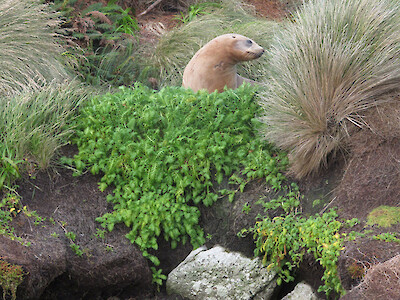
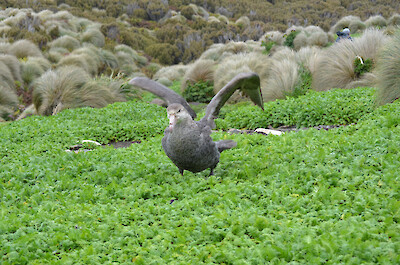
Primarily coastal, where it grows in saltmarshes, wet depressions, on bare ground in seal haulouts and sea bird nesting grounds, on exposed peat, and amongst boulders. It occasionally extends well inland, where it grows around tussocks - often near albratross colonies.
Threats
Not threatened. A narrow range, local endemic, common within its known habitats
Detailed taxonomy
Genus
Family
Synonyms
Cotula plumosa Hook.f., Cotula plumosa (Hook.f.) Hook.f.
Endemic taxon
No
Endemic genus
No
Endemic family
No
Ecology
Flowering
September - April
Fruiting
October - June
Life cycle and dispersal
Papery cypselae are dispersed by wind and possibly attachment (Thorsen et al., 2009).
Propagation technique
Probably rather difficult to grow. It has been cultivated in the past within New Zealand but from all accounts rather unsuccessfully.
Other information
Etymology
leptinella: From the Greek word leptos (meaning slender, thin or delicate), referring to the ovary
plumosa: Feathery
Chromosome number
2n = 52
Previous conservation statuses
The conservation status of all known New Zealand vascular plant taxa at the rank of species and below were reassessed in 2022-2023 using the New Zealand Threat Classification System (NZTCS) – more information about this can be found on the NZTCS website. This report includes replaces all previous NZTCS lists for vascular plants. Previous assessments can be found here.
- Conservation status of vascular plants in Aotearoa New Zealand, 2023. 2024. Peter J. de Lange, Jane Gosden, Shannel P. Courtney, Alexander J. Fergus, John W. Barkla, Sarah M. Beadel, Paul D. Champion, Rowan Hindmarsh-Walls, Troy Makan and Pascale Michel Department of Conservation. Source: NZTCS and licensed by DOC for reuse under the Creative Commons Attribution 4.0 International licence.
2017 | At Risk – Naturally Uncommon | Qualifiers: RR, SO
2012 | At Risk – Naturally Uncommon | Qualifiers: RR, SO
2009 | At Risk – Naturally Uncommon | Qualifiers: SO, IE
2004 | Range Restricted
Referencing and citations
References and further reading
Lloyd, D.G. 1972: A revision of the New Zealand, Subantarctic, and South American species of Cotula, section Leptinella. New Zealand Journal of Botany 10: 277-372.
Thorsen, M. J.; Dickinson, K. J. M.; Seddon, P. J. 2009. Seed dispersal systems in the New Zealand flora. Perspectives in Plant Ecology, Evolution and Systematics 11: 285-309
Attribution
Fact sheet prepared for NZPCN by P.J. de Lange 31 August 2006. Description from Lloyd (1972) - as Cotula plumosa