
New Zealand Plant Conservation Network
  • Member login
  • Join
Facebook
  • Home
  • Flora
    • Flora species
    • Tag names
    • Vascular
    • Non-vascular
    • Lichens
    • Plant identification
    • Fungi
    • Make your own book
    • Quiz
  • Threats
    • Exotic Plants (Weeds)
    • Pest Animals
    • Other threats
  • Ecosystems
    • Plant communities
    • Ecosystem services
    • Novel ecosystems
  • Publications
    • Documents
    • Newsletter
    • Plant lists
    • Botanical Society journals
    • NZPCN publications
  • Conservation
    • Seedbank
    • Training
    • Restoration
    • Monitoring
    • Habitat protection
    • Funding
    • Botanic gardens
    • Botanic Societies
  • NZPCN
    • News
    • Trilepidea newsletter
    • Events
    • David Given Scholarship
    • Council members
    • Awards
    • Shop
    • Donate
    • Favourite Plant
    • Why join NZPCN?
    • Join
  • Help
    • FAQ
    • Query
    • Glossary
  • Contact us

Search flora

  1. Tracheophyta
    • Tracheophyta
  2. Magnoliopsida
    • Lycopodiopsida
    • Magnoliopsida
    • Pinopsida
    • Polypodiopsida
  3. Poales
    • Alismatales
    • Apiales
    • Arecales
    • Asparagales
    • Asterales
    • Boraginales
    • Brassicales
    • Canellales
    • Caryophyllales
    • Celastrales
    • Chloranthales
    • Crossosomatales
    • Cucurbitales
    • Dioscoreales
    • Ericales
    • Fabales
    • Fagales
    • Gentianales
    • Geraniales
    • Gunnerales
    • Lamiales
    • Laurales
    • Liliales
    • Malpighiales
    • Malvales
    • Myrtales
    • Nymphaeales
    • Oxalidales
    • Pandanales
    • Paracryphiales
    • Piperales
    • Poales
    • Proteales
    • Ranunculales
    • Rosales
    • Santalales
    • Sapindales
    • Saxifragales
    • Solanales
  4. Cyperaceae
    • Cyperaceae
    • Juncaceae
    • Poaceae
    • Restionaceae
    • Sparganiaceae
    • Typhaceae
  5. Carex
    • Bolboschoenus
    • Carex
    • Carpha
    • Cyperus
    • Eleocharis
    • Ficinia
    • Fimbristylis
    • Gahnia
    • Isolepis
    • Lepidosperma
    • Machaerina
    • Morelotia
    • Netrostylis
    • Oreobolus
    • Schoenoplectus
    • Schoenus
    • Scirpus
    • Uncinia
  6. Carex cremnicola
    • Carex dolomitica
    • Carex perplexa
    • Carex inopinata
    • Carex strictissima
    • Carex litorosa
    • Carex astonii
    • Carex talbotii
    • Carex capillacea
    • Carex chathamica
    • Carex edgariae
    • Carex enysii
    • Carex kaloides
    • Carex lachenalii subsp. parkeri
    • Carex muelleri
    • Carex tenuiculmis
    • Carex subtilis
    • Carex longifructus
    • Carex purpurata
    • Carex parvispica
    • Carex albula
    • Carex decurtata
    • Carex devia
    • Carex elingamita
    • Carex filamentosa
    • Carex fretalis
    • Carex impexa
    • Carex kermadecensis
    • Carex ophiolithica
    • Carex pleiostachys
    • Carex pterocarpa
    • Carex rubicunda
    • Carex tahoata
    • Carex trachycarpa
    • Carex traversii
    • Carex uncifolia
    • Carex ventosa
    • Carex allanii
    • Carex carsei
    • Carex druceana
    • Carex raoulii
    • Carex minor
    • Carex hamlinii
    • Carex aucklandica
    • Carex banksiana
    • Carex astricta
    • Carex corynoidea
    • Carex subviridis
    • Carex edura
    • Carex drucei
    • Carex egmontiana
    • Carex megalepis
    • Carex lectissima
    • Carex penalpina
    • Carex imbecilla
    • Carex erebus
    • Carex crispa
    • Carex erythrovaginata
    • Carex cyanea
    • Carex cheesemaniana
    • Carex obtusifolia
    • Carex punicea
    • Carex horizontalis
    • Carex healyi
    • Carex silvestris
    • Carex zotovii
    • Carex buchananii
    • Carex cirrhosa
    • Carex colensoi
    • Carex comans
    • Carex dallii
    • Carex dissita
    • Carex flagellifera
    • Carex flaviformis
    • Carex forsteri
    • Carex geminata
    • Carex hectorii
    • Carex lambertiana
    • Carex lessoniana
    • Carex libera
    • Carex maorica
    • Carex ochrosaccus
    • Carex petriei
    • Carex resectans
    • Carex secta
    • Carex sectoides
    • Carex solandri
    • Carex spinirostris
    • Carex subdola
    • Carex ternaria
    • Carex testacea
    • Carex trifida
    • Carex virgata
    • Carex wakatipu
    • Carex dipsacea
    • Carex acicularis
    • Carex cockayneana
    • Carex coriacea
    • Carex goyenii
    • Carex kirkii var. elatior
    • Carex kirkii var. kirkii
    • Carex sinclairii
    • Carex appressa
    • Carex breviculmis
    • Carex diandra
    • Carex fascicularis
    • Carex gaudichaudiana
    • Carex inversa
    • Carex pumila
    • Carex echinata
    • Carex pyrenaica var. cephalotes
    • Carex potens
    • Carex uncinata
    • Carex cremnicola
    • Carex calcis
    • Carex muricata
    • Carex punctata
    • Carex spicata
    • Carex flacca
    • Carex longebrachiata
    • Carex brownii
    • Carex divisa
    • Carex divulsa
    • Carex hirta
    • Carex iynx
    • Carex longii
    • Carex otrubae
    • Carex pendula
    • Carex scoparia
    • Carex sylvatica
    • Carex vulpinoidea
    • Carex demissa
    • Carex lurida
    • Carex leporina
    • Carex pallescens
    • Carex morrowii
    • Carex bichenoviana
    • Carex hirsutella
    • Carex paniculata
    • Carex riparia
    • Carex auceps
    • Carex applanata
    • Carex maculata
    • Carex ambita

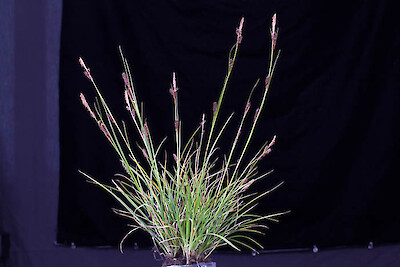
Carex cremnicola

Ex Takaka Hill.<br>Photographer: Mike Thorsen, Date taken: 04/11/2013, Licence: All rights reserved. <a class='member-message' href='/nzpcn/why-join-nzpcn/' target='_blank'>Members can view a larger version of this image.</a>
Download PDF Comment on factsheet

NZPCN members can select up to 20 plant species and automatically create a full colour, fully illustrated A4 book describing them (in PDF format).

  • Find out more...
  • Join NZPCN...
Find in plant lists
iNaturalist NZ View observations Biota of NZ Click here to view NZ Flora Click here to view Te Papa View specimens Herbarium View AVH specimens Donate Support NZPCN

Common names

sedge

Biostatus

Native – Endemic taxon

Current conservation status

The conservation status of all known New Zealand vascular plant taxa at the rank of species and below were reassessed in 2022-2023 using the New Zealand Threat Classification System (NZTCS) – more information about this can be found on the NZTCS website. This report includes replaces all previous NZTCS lists for vascular plants. Previous assessments can be found here.

  • Conservation status of vascular plants in Aotearoa New Zealand, 2023. 2024. Peter J. de Lange, Jane Gosden, Shannel P. Courtney, Alexander J. Fergus, John W. Barkla, Sarah M. Beadel, Paul D. Champion, Rowan Hindmarsh-Walls, Troy Makan and Pascale Michel Department of Conservation. Source: NZTCS and licensed by DOC for reuse under the Creative Commons Attribution 4.0 International licence.

2023 | Threatened – Nationally Vulnerable | Qualifiers: Sp, DPR, DPS, RR

Jump to previous conservation statuses

Category

Vascular

Structural class

Sedges

Detailed description

Perennial herb, caespitose, tufts rigid, erect to spreading, often surrounded by persistent dead leaves. Culms 130–1280 × 1.0–2.5 mm, spreading, trigonous, edges smooth, sometimes faintly scabrid on one edge becoming harsher distally, longer than leaves when mature. Leaves 145–795 × 2.0–6.0 mm; leaf sheaths brown, nerves distinct; leaf blades weakly double-folded or channelled, yellow-green to green; leaf margins harshly scabrid; keel and adaxial secondary veins scabrid towards apex; apex trigonous, scabrid, acuminate. Inflorescence of (3)–4–7–(8) male, androgynous, and female spikes; spikes usually borne singly at nodes, occasionally female and male spikes compound; spikes terminally congested, sessile and erect, becoming more distant, peduncled and drooping below (in high altitude plants sometimes all sessile and erect); male spikes 12–86 × 1.0–3.0 mm, linear or clavate, cylindrical, brown, forming a congested terminal cluster of 2–5 spikes, including often small male spikes subtending larger male spikes; usually 1 or 2 androgynous spikes below the terminal male cluster; remaining lower spikes female 8.0–70 × 1.5–6.0 mm, oblong, occasionally clavate, cylindrical, red-brown. Lowermost inflorescence bract leaf-like (62)–200–450–(530) × 1.5–5.0 mm, longer than inflorescence. Male glumes 3.12–5.12 × 1.08–2.2 mm, red to red-brown, obovate-oblong, concavo-convex, subcoriaceous, mid-region 3-veined, green fading to white at maturity; margins membranous, but scabrid towards apex; apex entire or emarginate with a scabrid awn. Female glumes 2.0–4.3 × 0.9–1.8 mm, those with awns longer than or subequal to utricles (those without awns usually shorter than utricles), red-brown (flecked), ovate, concavo-convex, subcoriaceous, mid-region 3-veined, green fading to white; margins membranous but scabrid near apex; apex entire or emarginate with a prominent scabrid awn up to 1.2 mm long. Stamens 3, anthers 2.2–3.5 mm long. Utricles 2.0–3.5 × 0.8–2.0 mm, spreading at maturity, ovoid, elliptic or sometimes fusiform, trigonous, red to black above and white to yellow below, nerved on both abaxial and adaxial surfaces; stipe pale, tapered; beak prominent 0.3–1.0 mm long, narrowing to a bidentate apex with long scabrid crura; orifice scabrid and weakly oblique. Stigmas 3, 1.8–3.6 mm long. Achenes 1.0–2.0 × 0.8–1.3 mm, obovate or angled-obovate, trigonous, brown.

Similar taxa

Carex cremnicola is similar to C. spinirostris Colenso but differs in a number of inflorescence and vegetative characters, especially features of the utricle The sheaths of C. cremnicola are brown rather than red, and the utricles are 2.0–3.5 × 0.8–2.0 mm, oblong or club-shaped, dark red, trigonous, elliptic sometimes fusiform, abruptly narrowed to a beak rather than 3.2–4.2 × 1.0–1.2 mm, linear, green to brown, sometimes red, triquetrous, fusiform, with a long tapering beak. Both species are allopatric.

Distribution

.Endemic. New Zealand: South Island. North-West Nelson from Takaka Hill southward to the northern slopes of Mt Arthur.

Habitat

Lowland to alpine on marble and derived substrates. Carex cremnicola is commonly found in open forest and shrubland growing in cracks, clefts, and hollows in karst terrain, at the bases of cliffs, on ledges, and in cracks of sinkhole walls. On Mt Arthur C. cremnicola reaches the penalpine zone and can be found in low shrubland in karst terrain and occasionally in rubble in tussock grassland.

Threats

Carex cremnicola is biologically sparse over its entire range and its habitat has been degraded by goats.

Detailed taxonomy

Genus

Carex

Family

Cyperaceae

Authority

Carex cremnicola K.A.Ford

Synonyms

None (first described in 2007)

Endemic taxon

Yes

Endemic genus

No

Endemic family

No

Ecology

Flowering

November

Fruiting

January–March

Life cycle and dispersal

Nuts surrounded by inflated utricles are dispersed by granivory and wind (Thorsen et al., 2009).

Propagation technique

Easily grown from fresh seed and by the division of established plants. Does best in a permanently damp, lime enriched soil in partial shade.

Other information

Etymology

carex: Latin name for a species of sedge, now applied to the whole group.

Manaaki Whenua Online Interactive Key

Key to indigenous and naturalised Carex in New Zealand

NVS code

The National Vegetation Survey (NVS) Databank is a physical archive and electronic databank containing records of over 94,000 vegetation survey plots - including data from over 19,000 permanent plots. NVS maintains a standard set of species code abbreviations that correspond to standard scientific plant names from the Ngä Tipu o Aotearoa - New Zealand Plants database.

CARCRE

Chromosome number

2n = c.60

Previous conservation statuses

The conservation status of all known New Zealand vascular plant taxa at the rank of species and below were reassessed in 2022-2023 using the New Zealand Threat Classification System (NZTCS) – more information about this can be found on the NZTCS website. This report includes replaces all previous NZTCS lists for vascular plants. Previous assessments can be found here.

  • Conservation status of vascular plants in Aotearoa New Zealand, 2023. 2024. Peter J. de Lange, Jane Gosden, Shannel P. Courtney, Alexander J. Fergus, John W. Barkla, Sarah M. Beadel, Paul D. Champion, Rowan Hindmarsh-Walls, Troy Makan and Pascale Michel Department of Conservation. Source: NZTCS and licensed by DOC for reuse under the Creative Commons Attribution 4.0 International licence.

2017 | Threatened – Nationally Vulnerable | Qualifiers: DP, RR, Sp

2012 | At Risk – Naturally Uncommon | Qualifiers: RR, Sp

2008 | At Risk – Naturally Uncommon | Qualifiers: RR, Sp

2004 | Sparse

Jump to current conservation status

Referencing and citations

References and further reading

Ford KA. 2007. Carex (Cyperaceae) – two new species from the calcareous mountains of North-West Nelson, New Zealand. New Zealand Journal of Botany 45(4): 721–730. https://doi.org/10.1080/00288250709509747

Thorsen MJ, Dickinson KJM, Seddon PJ. 2009. Seed dispersal systems in the New Zealand flora. Perspectives in Plant Ecology, Evolution and Systematics 11: 285–309.

Attribution

Fact Sheet by P.J. de Lange (1 January 2008). Description based on Ford (2007)

▲ Back to top
  • Home
  • Flora
  • Threats
  • Ecosystems
  • Publications
  • Conservation
  • NZPCN
  • Help
  • Contact us

© 2026 New Zealand Plant Conservation Network • Website by RS

Coastlands Plant Nursery Wildlands

Website sponsor

  • Home
  • Flora
    • Flora species
    • Tag names
    • Vascular
      • Ferns
        • King fern
        • True ferns
        • Adder's tongue ferns
        • Fork ferns and whisk ferns
        • Horsetails
      • Conifers
        • Celery pines
        • Kauri
        • Podocarps
          • Podocarpus
          • Dacrydium
          • Prumnopitys
          • Dacrycarpus
          • Halocarpus
          • Lepidothamnus
          • Manoao
        • Cypress
      • Flowering plants
        • Parasites
          • Leafy mistletoes
          • Pygmy mistletoes
            • Korthalsella flowers
            • Korthalsella hosts
            • Dispersal of Korthalsella
            • Associates of Korthalsella
          • Root parasites
          • Saprophytes
        • Epiphytes
          • NZ
            • Typical
            • Occasional
            • Hemi-epiphytes
            • Ephemeral
            • NZ list
        • Monocots
          • Orchids
            • Structure
          • Grasses
        • Dicots
          • Hebes
          • Kowhai
          • Coprosma
          • Beech
          • Rata
        • Carnivorous
        • Deciduous plants
        • Aquatic plants
      • Poisonous natives
      • Threatened plant lists
      • What's a vascular plant?
      • Club mosses
    • Non-vascular
      • Bryophytes
        • Liverworts
        • Mosses
        • Hornworts
      • Algae
        • Seaweeds
    • Lichens
    • Plant identification
      • Written descriptions
      • Experts
      • Plant keys
        • Key to parasitic plant genera
      • Collecting plants
        • Should I collect
        • Choosing a specimen
        • Field notes
        • Fresh plant material
        • Pressing and drying
        • Mounting specimens
        • Labelling specimens
    • Fungi
    • Make your own book
    • Quiz
  • Threats
    • Exotic Plants (Weeds)
      • Unwanted organisms
      • DOC weeds
      • Plant me instead
      • Pest Plant Accord
    • Pest Animals
      • Mammals
        • Mustelids
        • Rodents
        • Ungulates
        • Possums
      • Fish
      • Insects
    • Other threats
      • Natural events
        • Insects
      • Human induced
        • Habitat loss
        • Collection
        • Climate change
  • Ecosystems
    • Plant communities
      • Dunes
        • Volcanic
        • Coastal
          • Threats
          • Common species
          • Research on dunes
          • Pingao research
          • What you can do
      • Wetlands
        • Estuaries
          • Common estuarine species
          • Research on estuaries
        • Ephemeral
        • Restiad peat bogs
      • Forests
        • Kauri-podocarp-broadleaved
        • Podocarp broadleaved
        • Beech
      • Scrub/shrublands
        • Geothermal
          • Distribution of geothermal vegetation
          • Geothermal plants
          • Geothermal vegetation types
          • Threats to geothermal vegetation
        • Frost flat/hollow
        • Manuka fens
        • Gumlands
      • Grasslands
        • Tussock grasslands
      • Bare ground
        • Braided rivers
        • Alpine
        • Cliff
        • Scree and boulderfields
        • Shingle beaches
      • Herbfields
        • Saltpan
    • Ecosystem services
    • Novel ecosystems
  • Publications
    • Documents
    • Newsletter
    • Plant lists
      • Search plant lists
      • Plant lists by political region/district
      • Plant lists by ecological region/district
      • National plant lists
      • How to prepare a plant list
    • Botanical Society journals
    • NZPCN publications
  • Conservation
    • Seedbank
      • Project 1 - Pohutukawa, Rata and Myrtaceae
      • Project 2 - Alpine flora and the Forget-Me-Nots
      • Project 3 - Kowhai and its relatives
      • Project 4 - Podocarps and trees of the forest
    • Training
      • Module 1: Plant life
      • Module 2: Covenants
      • Module 3: Propagation
      • Module 4: Wetlands
      • Pilot course 2006
    • Restoration
      • Gardening
        • Being weed wise
        • Garden plants
          • Trees and shrubs
          • Broad-leaved herbs
          • Grass-like herbs
          • Climbers
          • Ferns
        • Attracting wildlife
        • Planting for lizards
          • Rules
      • Species recovery
        • Plant translocations
      • Ecological restoration
        • Case studies
          • Tavora Reserve
          • Waiwhakareke
      • Revegetation
      • Eco-sourcing
      • Find a restoration group
    • Monitoring
      • Number count
        • Number count method
        • Pros and cons of number counts
        • Data analysis and interpretation
      • Presence/absence surveys
        • Presence/absence survey methods
        • Pros and cons of presence/absence surveys
        • Data analysis and interpretation
      • Mapping spatial extent
        • Spatial extent mapping methods
        • Pros and cons of spatial extent mapping
        • Data analysis and interpretation
      • Photo points
        • Photo point guidelines
    • Habitat protection
      • Legal protection
        • Nga Whenua Rahui
        • QEII covenants
        • DOC Covenants
      • Animal pest control
      • Weed control
      • Fencing
    • Funding
    • Botanic gardens
    • Botanic Societies
  • NZPCN
    • News
    • Trilepidea newsletter
    • Events
      • 2026 NZPCN conference
        • 2026 Conference field trips
        • 2026 Conference workshops
        • 2026 conference sponsors
        • 2026 Conference keynote speakers
      • 2024 AGM
      • Conference 2024
        • 2024 conference overview
        • Conference 2024 workshops
        • Conference 2024 Field Trips
        • 2024 conference sponsors
        • Conference 2024 accommodation options
        • 2024 Conference Programme
      • Conference 2022
        • Conference programme summary
        • 2022 conference workshops
        • 2022 conference field trips
        • Code of conduct
        • COVID-19 information
        • 2022 conference sponsors
        • Abstract and poster submission
        • 2022 Conference venue and accommodation
        • Conference Workshop: Restoration Pathways
        • 2022 conference postponement
      • Conference 2019
      • Conference 2017
      • Conference 2015
        • Speakers
        • Workshops
        • Field trips
        • Charity auction
      • Conference 2013
        • Speakers
        • Timetable
      • 2023 Restoration Pathways Workshop
      • 2023 AGM
    • David Given Scholarship
      • David Given Scholarship Recipients
    • Council members
      • NZPCN council member profiles
      • Council 2023
      • Council 2022
      • Council 2021
      • Council 2020
      • Council 2019
      • Council 2018
      • Council 2017
      • Council 2016
      • Council 2015
      • Council 2014
      • Council 2024
      • Council 2013
      • Council 2012
      • Council 2011
      • Council 2010
      • Council 2009
      • Council 2008
      • Council 2007
      • Council 2006
      • Council 2005
      • Council 2004
      • Council 2003
    • Awards
      • NZPCN Awards
        • 2024 Plant Conservation Awards
        • 2022
        • 2019
        • 2018
        • 2017
        • 2016
        • 2015
        • 2014
        • 2013
        • 2012
        • 2011
        • 2010
        • 2009
        • 2008
        • 2007
        • 2006
        • 2005
    • Shop
    • Donate
    • Favourite Plant
    • Why join NZPCN?
    • Join
  • Help
    • FAQ
      • Joining the Network
      • The Network
      • Network website
      • New Zealand plants
      • The law
      • Your discoveries
    • Query
    • Glossary
  • Contact us
  • Facebook