
New Zealand Plant Conservation Network
  • Member login
  • Join
Facebook
  • Home
  • Flora
    • Flora species
    • Tag names
    • Vascular
    • Non-vascular
    • Lichens
    • Plant identification
    • Fungi
    • Make your own book
    • Quiz
  • Threats
    • Exotic Plants (Weeds)
    • Pest Animals
    • Other threats
  • Ecosystems
    • Plant communities
    • Ecosystem services
    • Novel ecosystems
  • Publications
    • Documents
    • Newsletter
    • Plant lists
    • Botanical Society journals
    • NZPCN publications
  • Conservation
    • Seedbank
    • Training
    • Restoration
    • Monitoring
    • Habitat protection
    • Funding
    • Botanic gardens
    • Botanic Societies
  • NZPCN
    • News
    • Trilepidea newsletter
    • Events
    • David Given Scholarship
    • Council members
    • Awards
    • Shop
    • Donate
    • Favourite Plant
    • Why join NZPCN?
    • Join
  • Help
    • FAQ
    • Query
    • Glossary
  • Contact us

Search flora

  1. Tracheophyta
    • Tracheophyta
  2. Magnoliopsida
    • Lycopodiopsida
    • Magnoliopsida
    • Pinopsida
    • Polypodiopsida
  3. Malvales
    • Alismatales
    • Apiales
    • Arecales
    • Asparagales
    • Asterales
    • Boraginales
    • Brassicales
    • Canellales
    • Caryophyllales
    • Celastrales
    • Chloranthales
    • Crossosomatales
    • Cucurbitales
    • Dioscoreales
    • Ericales
    • Fabales
    • Fagales
    • Gentianales
    • Geraniales
    • Gunnerales
    • Lamiales
    • Laurales
    • Liliales
    • Malpighiales
    • Malvales
    • Myrtales
    • Nymphaeales
    • Oxalidales
    • Pandanales
    • Paracryphiales
    • Piperales
    • Poales
    • Proteales
    • Ranunculales
    • Rosales
    • Santalales
    • Sapindales
    • Saxifragales
    • Solanales
  4. Thymelaeaceae
    • Malvaceae
    • Thymelaeaceae
  5. Pimelea
    • Kelleria
    • Pimelea
  6. Pimelea traversii subsp. exedra
    • Pimelea tomentosa
    • Pimelea villosa
    • Pimelea lyallii
    • Pimelea poppelwellii
    • Pimelea pseudolyallii
    • Pimelea microphylla
    • Pimelea suteri
    • Pimelea aridula subsp. aridula
    • Pimelea buxifolia
    • Pimelea concinna
    • Pimelea gnidia
    • Pimelea longifolia
    • Pimelea oreophila subsp. oreophila
    • Pimelea prostrata subsp. prostrata
    • Pimelea sericeovillosa subsp. pulvinaris
    • Pimelea sericeovillosa subsp. sericeovillosa
    • Pimelea traversii subsp. traversii
    • Pimelea urvilleana subsp. urvilleana
    • Pimelea actea
    • Pimelea telura
    • Pimelea traversii subsp. boreus
    • Pimelea traversii subsp. exedra
    • Pimelea prostrata subsp. seismica
    • Pimelea prostrata subsp. vulcanica
    • Pimelea prostrata subsp. thermalis
    • Pimelea prostrata subsp. ventosa
    • Pimelea sporadica
    • Pimelea urvilleana subsp. nesica
    • Pimelea eremitica
    • Pimelea carnosa
    • Pimelea xenica
    • Pimelea orthia subsp. orthia
    • Pimelea acra
    • Pimelea ignota
    • Pimelea oreophila subsp. lepta
    • Pimelea oreophila subsp. hetera
    • Pimelea oreophila subsp. ephaistica
    • Pimelea mesoa subsp. mesoa
    • Pimelea mesoa subsp. macra
    • Pimelea dura
    • Pimelea notia
    • Pimelea declivis
    • Pimelea cryptica
    • Pimelea nitens subsp. nitens
    • Pimelea nitens subsp. aspera
    • Pimelea hirta
    • Pimelea sericeovillosa subsp. alta
    • Pimelea aridula subsp. oliga
    • Pimelea barbata subsp. barbata
    • Pimelea barbata subsp. omoia
    • Pimelea mimosa
    • Pimelea orthia subsp. protea

Pimelea traversii subsp. exedra
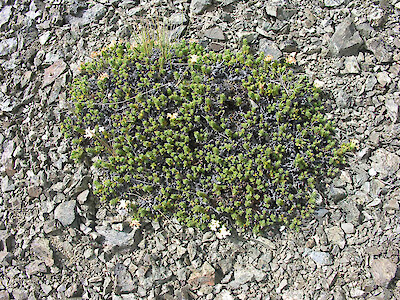
Mt Cerberus, Livingstone Range.<br>Photographer: Mike Thorsen, Licence: All rights reserved. <a class='member-message' href='/nzpcn/why-join-nzpcn/' target='_blank'>Members can view a larger version of this image.</a>
Download PDF Comment on factsheet

NZPCN members can select up to 20 plant species and automatically create a full colour, fully illustrated A4 book describing them (in PDF format).

  • Find out more...
  • Join NZPCN...
Find in plant lists
iNaturalist NZ View observations Biota of NZ Click here to view NZ Flora Click here to view Herbarium View AVH specimens Donate Support NZPCN

Biostatus

Native – Endemic taxon

Current conservation status

The conservation status of all known New Zealand vascular plant taxa at the rank of species and below were reassessed in 2022-2023 using the New Zealand Threat Classification System (NZTCS) – more information about this can be found on the NZTCS website. This report includes replaces all previous NZTCS lists for vascular plants. Previous assessments can be found here.

  • Conservation status of vascular plants in Aotearoa New Zealand, 2023. 2024. Peter J. de Lange, Jane Gosden, Shannel P. Courtney, Alexander J. Fergus, John W. Barkla, Sarah M. Beadel, Paul D. Champion, Rowan Hindmarsh-Walls, Troy Makan and Pascale Michel Department of Conservation. Source: NZTCS and licensed by DOC for reuse under the Creative Commons Attribution 4.0 International licence.

2023 | At Risk – Naturally Uncommon | Qualifiers: Sp, DPS, DPT

Jump to previous conservation statuses

Category

Vascular

Structural class

Trees & Shrubs - Dicotyledons

Simplified description

Low-growing sprawling shrub to 15cm tall with slightly hairy twigs bearing pairs of oval leaves, hairy white flowers and dry hairy fruit inhabiting ultramafic rocks on the Livingstone Range (Southland). Flowers 3–4 mm wide.

Flower colours

Red/Pink, White

Detailed description

A much-branched small to medium sized, spreading shrub up to 150 mm tall. Branches spreading; branchlets spreading or upright, with very short, sparsely hairy internodes. Node buttresses occupy the whole or most of the internode, dark brown, usually prominent after leaf fall, stems aging grey-brown, grey or black. Internodes 1–4 mm long. Leaves decussate, ascending to patent, often closely imbricate, on very short petioles (0.2 mm) or sessile. Lamina small light olive green, sometimes red-margined, thick and coriaceous, broad elliptic to broad ovate, sometimes oblong or obovate, 3–9 × 2–6 mm, slightly keeled, concave above, obtuse, base angustate or cuneate; margins thickened, slightly down-turned; midvein evident on under side, lateral veins obscure. Stomata only on abaxial side. Inflorescences many-flowered, pedicels 0.2 mm long, persistent. Involucral bracts 4, usually wider than the leaves (6–9 × 4–8 mm). Plants gynodioecious. Flowers hairy on outside; inside densely hairy in ovary portion and lower tube, sometimes sparsely hairy in upper tube; fragrant, white with reddish bases and tube. Calyx lobes open in salverform fashion. Female tube to 6 mm long, ovary portion 4 mm, calyx lobes 2.5 × 1.3 mm. Staminodes short, at mouth of tube. Female tube to 9 mm long, ovary portion 3 mm, calyx lobes 4 × 2.2 mm; anther filaments inserted below mouth of tube; anthers yellow. Hermaphrodite flower tubes 2-3 mm wide just below calyx lobes, calyx lobes 3-4 mm wide. Ovary with abundant hair at summit, less densely hairy to about half-way down. Fruits ovoid, green, drying brown, 4 mm long. Seeds ovoid, 3.5 × 1.6 mm. Dried hypanthia persistant and dispersing with fruits inside.

Similar taxa

Pimelea traversii subsp. exedra is (at least so far) known from one site on the Livingston Range where it grows on ultramafic rocks. It differs from subsp. traversii by the smaller grow habit (up to 250 mm tall) and by having larger flowers. Pimelea traversii subsp. boreus is confined to north-eastern Marlborough where it grows on limestone and other calcareous rocks. It differs from subsp. traversii and subsp. exedra by its taller size, larger leaves and by the presence of sparse hairs on the stem internodes. As some of these distinctions seem fairly arbitrary, it is clear that further critical study of the range of variation in P. traversii using cytological and molecular techniques is needed.

Distribution

Endemic. New Zealand: South Island (western Southland, where apparently confined to Mount Cerberus in the Livingstone Mountains).

Habitat

Montane. On stable, ultramafic scree and amongst boulders.

Threats

First recognised in June 2008. Very little is known about this plant. It is currently known from one small area of the ultramafic rocks on the Livingstone Range where it is said to be very uncommon. However, the habitat occupied by the plant is widespread on the mountains so further survey is needed to determine its exact status.

Detailed taxonomy

Genus

Pimelea

Family

Thymelaeaceae

Authority

Pimelea traversii subsp. exedra C.J.Burrows

Synonyms

None (first described in 2008)

Endemic taxon

Yes

Endemic genus

No

Endemic family

No

Ecology

Flowering

October–April

Fruiting

December–June

Propagation technique

Not known from cultivation–see P. traversii subsp. traversii

Other information

Where To Buy

Not commercially available.

Etymology

pimelea: from Greek pimelē, meaning “lard” or “soft fat,” presumably referring to the oily seeds or fleshy cotyledons.

traversii: Named after William Thomas Locke Travers (1819-1903) who was an Irish lawyer, magistrate, politician, explorer, naturalist, photographer. He lived in New Zealand from 1849 and was a fellow of the Linnean Society.

Previous conservation statuses

The conservation status of all known New Zealand vascular plant taxa at the rank of species and below were reassessed in 2022-2023 using the New Zealand Threat Classification System (NZTCS) – more information about this can be found on the NZTCS website. This report includes replaces all previous NZTCS lists for vascular plants. Previous assessments can be found here.

  • Conservation status of vascular plants in Aotearoa New Zealand, 2023. 2024. Peter J. de Lange, Jane Gosden, Shannel P. Courtney, Alexander J. Fergus, John W. Barkla, Sarah M. Beadel, Paul D. Champion, Rowan Hindmarsh-Walls, Troy Makan and Pascale Michel Department of Conservation. Source: NZTCS and licensed by DOC for reuse under the Creative Commons Attribution 4.0 International licence.

2017 | At Risk – Naturally Uncommon | Qualifiers: DP, Sp

2012 | Data Deficient

2009 | Data Deficient

2004 | Not Threatened

Jump to current conservation status

Referencing and citations

References and further reading

Burrows CJ. 2008. Genus Pimelea (Thymelaeaceae) in New Zealand 1. The taxonomic treatment of seven endemic, glabrous-leaved species. New Zealand Journal of Botany 46(2): 127–176. https://doi.org/10.1080/00288250809509760.

Attribution

Description based on Burrows (2008).

▲ Back to top
  • Home
  • Flora
  • Threats
  • Ecosystems
  • Publications
  • Conservation
  • NZPCN
  • Help
  • Contact us

© 2026 New Zealand Plant Conservation Network • Website by RS

Coastlands Plant Nursery Wildlands

Website sponsor

  • Home
  • Flora
    • Flora species
    • Tag names
    • Vascular
      • Ferns
        • King fern
        • True ferns
        • Adder's tongue ferns
        • Fork ferns and whisk ferns
        • Horsetails
      • Conifers
        • Celery pines
        • Kauri
        • Podocarps
          • Podocarpus
          • Dacrydium
          • Prumnopitys
          • Dacrycarpus
          • Halocarpus
          • Lepidothamnus
          • Manoao
        • Cypress
      • Flowering plants
        • Parasites
          • Leafy mistletoes
          • Pygmy mistletoes
            • Korthalsella flowers
            • Korthalsella hosts
            • Dispersal of Korthalsella
            • Associates of Korthalsella
          • Root parasites
          • Saprophytes
        • Epiphytes
          • NZ
            • Typical
            • Occasional
            • Hemi-epiphytes
            • Ephemeral
            • NZ list
        • Monocots
          • Orchids
            • Structure
          • Grasses
        • Dicots
          • Hebes
          • Kowhai
          • Coprosma
          • Beech
          • Rata
        • Carnivorous
        • Deciduous plants
        • Aquatic plants
      • Poisonous natives
      • Threatened plant lists
      • What's a vascular plant?
      • Club mosses
    • Non-vascular
      • Bryophytes
        • Liverworts
        • Mosses
        • Hornworts
      • Algae
        • Seaweeds
    • Lichens
    • Plant identification
      • Written descriptions
      • Experts
      • Plant keys
        • Key to parasitic plant genera
      • Collecting plants
        • Should I collect
        • Choosing a specimen
        • Field notes
        • Fresh plant material
        • Pressing and drying
        • Mounting specimens
        • Labelling specimens
    • Fungi
    • Make your own book
    • Quiz
  • Threats
    • Exotic Plants (Weeds)
      • Unwanted organisms
      • DOC weeds
      • Plant me instead
      • Pest Plant Accord
    • Pest Animals
      • Mammals
        • Mustelids
        • Rodents
        • Ungulates
        • Possums
      • Fish
      • Insects
    • Other threats
      • Natural events
        • Insects
      • Human induced
        • Habitat loss
        • Collection
        • Climate change
  • Ecosystems
    • Plant communities
      • Dunes
        • Volcanic
        • Coastal
          • Threats
          • Common species
          • Research on dunes
          • Pingao research
          • What you can do
      • Wetlands
        • Estuaries
          • Common estuarine species
          • Research on estuaries
        • Ephemeral
        • Restiad peat bogs
      • Forests
        • Kauri-podocarp-broadleaved
        • Podocarp broadleaved
        • Beech
      • Scrub/shrublands
        • Geothermal
          • Distribution of geothermal vegetation
          • Geothermal plants
          • Geothermal vegetation types
          • Threats to geothermal vegetation
        • Frost flat/hollow
        • Manuka fens
        • Gumlands
      • Grasslands
        • Tussock grasslands
      • Bare ground
        • Braided rivers
        • Alpine
        • Cliff
        • Scree and boulderfields
        • Shingle beaches
      • Herbfields
        • Saltpan
    • Ecosystem services
    • Novel ecosystems
  • Publications
    • Documents
    • Newsletter
    • Plant lists
      • Search plant lists
      • Plant lists by political region/district
      • Plant lists by ecological region/district
      • National plant lists
      • How to prepare a plant list
    • Botanical Society journals
    • NZPCN publications
  • Conservation
    • Seedbank
      • Project 1 - Pohutukawa, Rata and Myrtaceae
      • Project 2 - Alpine flora and the Forget-Me-Nots
      • Project 3 - Kowhai and its relatives
      • Project 4 - Podocarps and trees of the forest
    • Training
      • Module 1: Plant life
      • Module 2: Covenants
      • Module 3: Propagation
      • Module 4: Wetlands
      • Pilot course 2006
    • Restoration
      • Gardening
        • Being weed wise
        • Garden plants
          • Trees and shrubs
          • Broad-leaved herbs
          • Grass-like herbs
          • Climbers
          • Ferns
        • Attracting wildlife
        • Planting for lizards
          • Rules
      • Species recovery
        • Plant translocations
      • Ecological restoration
        • Case studies
          • Tavora Reserve
          • Waiwhakareke
      • Revegetation
      • Eco-sourcing
      • Find a restoration group
    • Monitoring
      • Number count
        • Number count method
        • Pros and cons of number counts
        • Data analysis and interpretation
      • Presence/absence surveys
        • Presence/absence survey methods
        • Pros and cons of presence/absence surveys
        • Data analysis and interpretation
      • Mapping spatial extent
        • Spatial extent mapping methods
        • Pros and cons of spatial extent mapping
        • Data analysis and interpretation
      • Photo points
        • Photo point guidelines
    • Habitat protection
      • Legal protection
        • Nga Whenua Rahui
        • QEII covenants
        • DOC Covenants
      • Animal pest control
      • Weed control
      • Fencing
    • Funding
    • Botanic gardens
    • Botanic Societies
  • NZPCN
    • News
    • Trilepidea newsletter
    • Events
      • 2026 NZPCN conference
        • 2026 Conference field trips
        • 2026 Conference workshops
        • 2026 conference sponsors
        • 2026 Conference keynote speakers
      • 2024 AGM
      • Conference 2024
        • 2024 conference overview
        • Conference 2024 workshops
        • Conference 2024 Field Trips
        • 2024 conference sponsors
        • Conference 2024 accommodation options
        • 2024 Conference Programme
      • Conference 2022
        • Conference programme summary
        • 2022 conference workshops
        • 2022 conference field trips
        • Code of conduct
        • COVID-19 information
        • 2022 conference sponsors
        • Abstract and poster submission
        • 2022 Conference venue and accommodation
        • Conference Workshop: Restoration Pathways
        • 2022 conference postponement
      • Conference 2019
      • Conference 2017
      • Conference 2015
        • Speakers
        • Workshops
        • Field trips
        • Charity auction
      • Conference 2013
        • Speakers
        • Timetable
      • 2023 Restoration Pathways Workshop
      • 2023 AGM
    • David Given Scholarship
      • David Given Scholarship Recipients
    • Council members
      • NZPCN council member profiles
      • Council 2023
      • Council 2022
      • Council 2021
      • Council 2020
      • Council 2019
      • Council 2018
      • Council 2017
      • Council 2016
      • Council 2015
      • Council 2014
      • Council 2024
      • Council 2013
      • Council 2012
      • Council 2011
      • Council 2010
      • Council 2009
      • Council 2008
      • Council 2007
      • Council 2006
      • Council 2005
      • Council 2004
      • Council 2003
    • Awards
      • NZPCN Awards
        • 2024 Plant Conservation Awards
        • 2022
        • 2019
        • 2018
        • 2017
        • 2016
        • 2015
        • 2014
        • 2013
        • 2012
        • 2011
        • 2010
        • 2009
        • 2008
        • 2007
        • 2006
        • 2005
    • Shop
    • Donate
    • Favourite Plant
    • Why join NZPCN?
    • Join
  • Help
    • FAQ
      • Joining the Network
      • The Network
      • Network website
      • New Zealand plants
      • The law
      • Your discoveries
    • Query
    • Glossary
  • Contact us
  • Facebook