
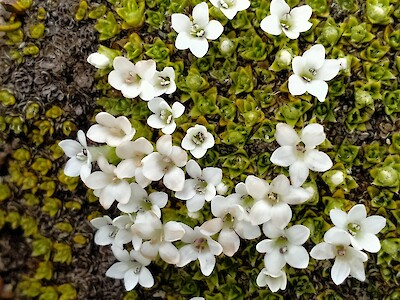
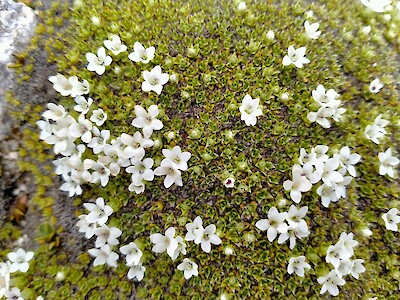
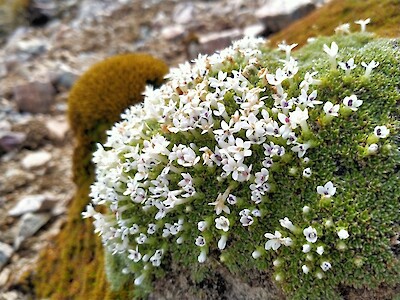
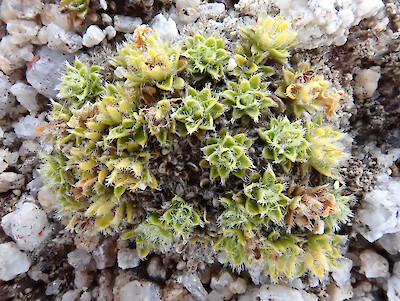
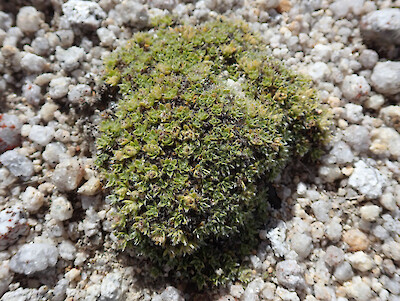
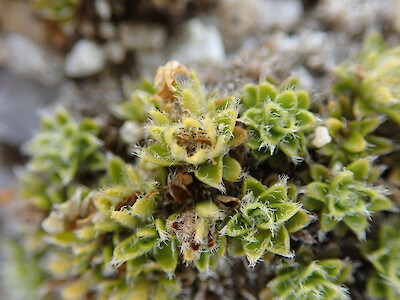
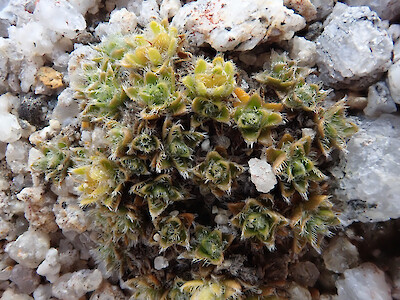
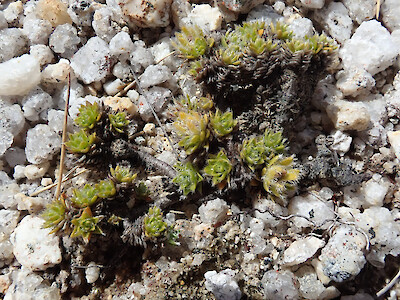
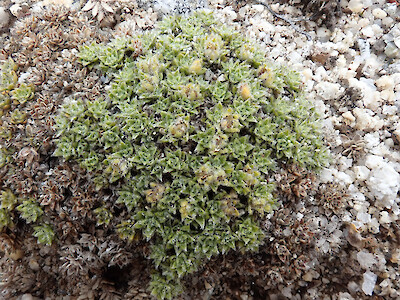
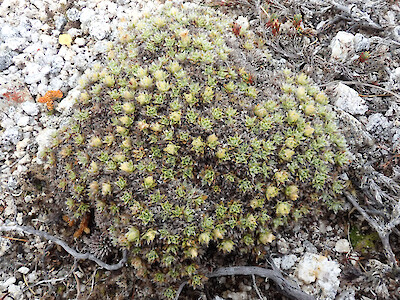
Veronica ciliolata subsp. fiordensis
Common names
cushion hebe
Biostatus
Native
Current conservation status
The conservation status of all known New Zealand vascular plant taxa at the rank of species and below were reassessed in 2022-2023 using the New Zealand Threat Classification System (NZTCS) – more information about this can be found on the NZTCS website. This report includes replaces all previous NZTCS lists for vascular plants. Previous assessments can be found here.
- Conservation status of vascular plants in Aotearoa New Zealand, 2023. 2024. Peter J. de Lange, Jane Gosden, Shannel P. Courtney, Alexander J. Fergus, John W. Barkla, Sarah M. Beadel, Paul D. Champion, Rowan Hindmarsh-Walls, Troy Makan and Pascale Michel Department of Conservation. Source: NZTCS and licensed by DOC for reuse under the Creative Commons Attribution 4.0 International licence.
2023 | At Risk – Naturally Uncommon | Qualifiers: Sp, DPS, DPT, RR, SO
Category
Vascular
Structural class
Herbs - Dicotyledons other than Composites
Flower colours
White
Detailed taxonomy
Genus
Family
Synonyms
Pygmaea ciliolata var. fiordensis Ashwin; Chionohebe ciliolata subsp. fiordensis de Lange et A.Mark, Veronica ciliolata var. fiordensis (Ashwin) Garn.-Jones
Endemic taxon
No
Endemic genus
No
Endemic family
No
Other information
Etymology
veronica: Named after Saint Veronica, who gave Jesus her veil to wipe his brow as he carried the cross through Jerusalem, perhaps because the common name of this plant is ‘speedwell’. The name Veronica is often believed to derive from the Latin vera ‘truth’ and iconica ‘image’, but it is actually derived from the Macedonian name Berenice which means ‘bearer of victory’.
ciliolata: With little cilia (hairs)
NVS code
The National Vegetation Survey (NVS) Databank is a physical archive and electronic databank containing records of over 94,000 vegetation survey plots - including data from over 19,000 permanent plots. NVS maintains a standard set of species code abbreviations that correspond to standard scientific plant names from the Ngä Tipu o Aotearoa - New Zealand Plants database.
VERCSF
Previous conservation statuses
The conservation status of all known New Zealand vascular plant taxa at the rank of species and below were reassessed in 2022-2023 using the New Zealand Threat Classification System (NZTCS) – more information about this can be found on the NZTCS website. This report includes replaces all previous NZTCS lists for vascular plants. Previous assessments can be found here.
- Conservation status of vascular plants in Aotearoa New Zealand, 2023. 2024. Peter J. de Lange, Jane Gosden, Shannel P. Courtney, Alexander J. Fergus, John W. Barkla, Sarah M. Beadel, Paul D. Champion, Rowan Hindmarsh-Walls, Troy Makan and Pascale Michel Department of Conservation. Source: NZTCS and licensed by DOC for reuse under the Creative Commons Attribution 4.0 International licence.
2017 | At Risk – Naturally Uncommon | Qualifiers: DP, RR, SO, Sp
2012 | At Risk – Naturally Uncommon | Qualifiers: RR, SO, Sp
2009 | Not Threatened
2004 | Not Threatened
Regional conservation statuses
Otago: 2025 | Regionally At Risk – Regionally Naturally Uncommon | Qualifiers: DPR, DPS, DPT, NR, NS, Sp
Current regional threat status assessments prepared according to Crisp et al. (2025) are displayed when available. The Otago conservation status information is sourced from the “Conservation Status of Indigenous Vascular Plants in Otago, 2025” Jarvie S et al. (2025) report.
Referencing and citations
References and further reading
Mark AF, de Lange PJ. 2012. New combination in Chionohebe. P. 450. In: Mark, A.F. Above the Treeline: A Nature Guide to Alpine New Zealand. Craig Potton Publishing, Nelson, NZ. 472 p.